

What a Niacinamide Serum Actually Does to Your Skin
Niacinamide is vitamin B3, and a niacinamide serum is that vitamin dissolved in a water-light base thin enough to sit under a moisturizer. Format matters more than most labels admit: the same active in a cleanser gets forty seconds of contact before you rinse it away, while a serum stays on skin for hours.
Niacinamide works on barrier strength and tone rather than fine lines, so if wrinkles are your main concern, the serums that target wrinkles rely on a different class of actives.
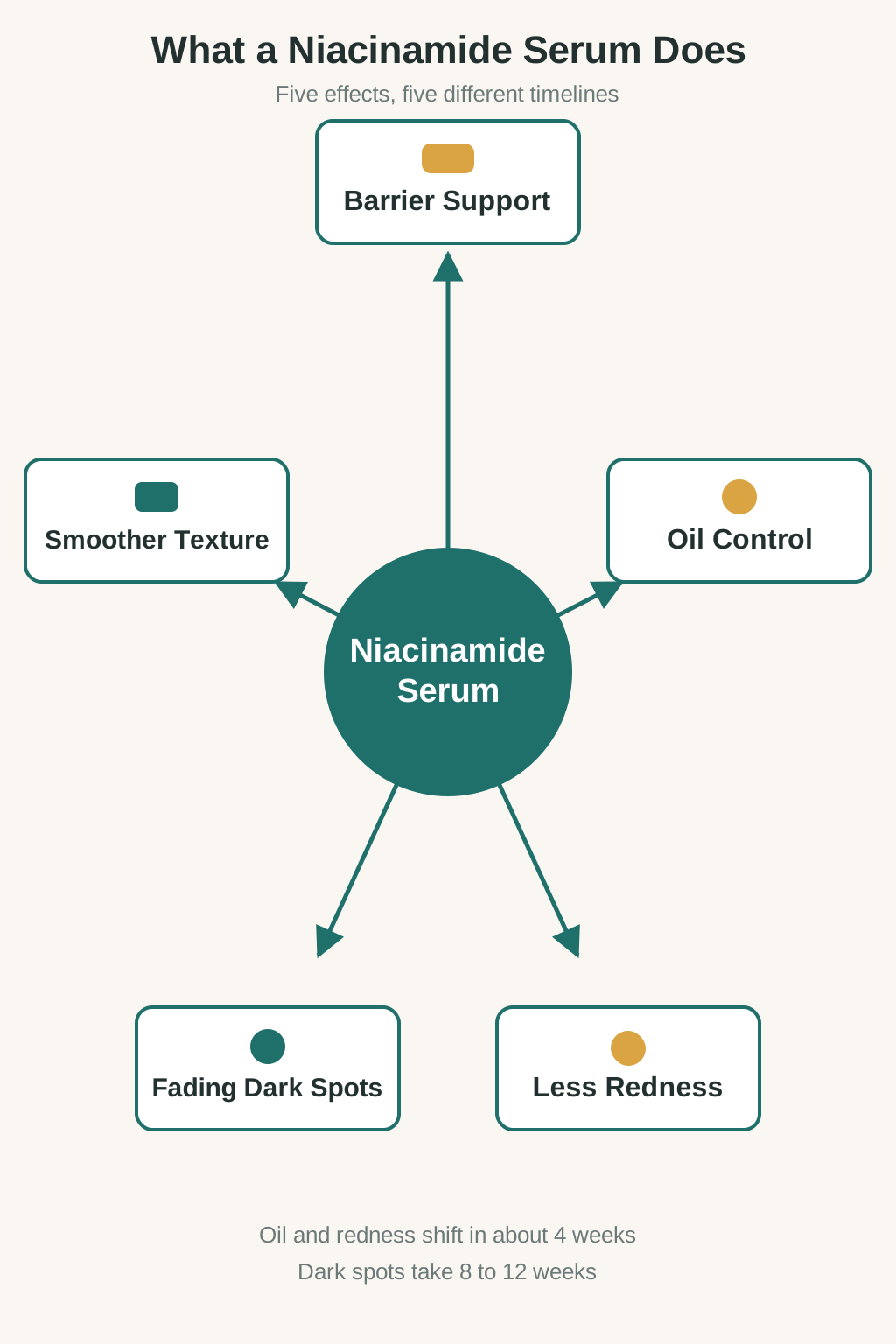
Five effects come up again and again in the published work and in clinician summaries of what niacinamide does for skin: it supports the barrier lipids that hold water in, it lowers oil output, it calms visible redness, it slows the transfer of pigment into surface skin cells, and it smooths texture over time.
Those five effects do not arrive together. Oil control and redness usually shift inside four weeks. Pigment is slower: eight to twelve weeks before a dark spot looks meaningfully lighter, and only if you wear sunscreen in between. Most people who say it did nothing quit at week three.
A niacinamide skin serum is unusually well tolerated, which is why it suits nearly every skin type and why it turns up in so many formulas as a supporting act. That tolerance is also its ceiling. It is not an exfoliant, it is not a retinoid, and it will not clear active cystic acne. Choosing a niacinamide face serum still means matching it to one concern rather than expecting all five at once.
Niacinamide Serum Concentration: 2%, 5%, 10% and 20%
The percentage on the front of the bottle is the most oversold number in this category. Nearly all of the clinical evidence behind niacinamide concentrations sits between 2% and 5%. That band is where sebum, redness and pigment endpoints were actually measured, so it is where the best niacinamide results are documented rather than assumed.
That trap is not unique to niacinamide, and how to choose a face serum shows how to weigh any active's concentration against cost per ml before the label number decides for you.
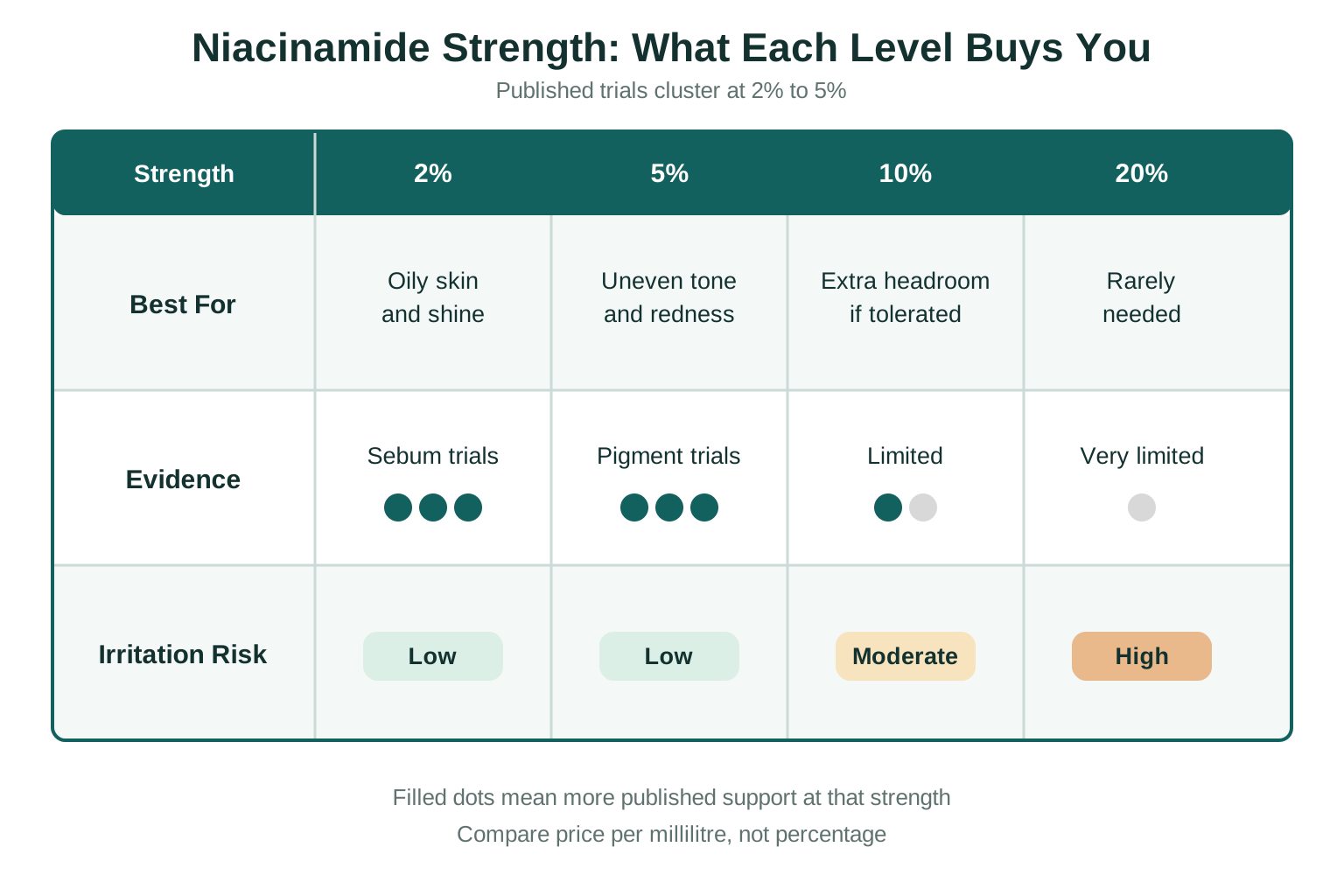
Ten percent is the marketing sweet spot, and it is defensible: it gives headroom if your skin tolerates it well, and many 10% formulas add zinc to blot shine. Twenty percent mostly buys flushing and a tight, tacky finish for the same measured benefit. If a serum stings on day one, strength is the first thing to cut, not the last.
When the front label is silent, read the ingredient list. Niacinamide listed in the first four or five ingredients, ahead of the humectants, usually means a meaningful dose. Sitting below the preservative, it is a rounding error. Then compare price per millilitre rather than percentage — two bottles at the same strength can differ threefold per use.
Supporting ingredients change the outcome more than the headline number does. Zinc PCA suits oily skin, ceramides and glycerin suit dry skin, and tranexamic acid or alpha arbutin pull more weight on pigment than an extra five percent of niacinamide ever will. A niacinamide facial serum is a formula, not a dose.
We may earn a commission if you buy through the links below.
The same skepticism applies to labels like medical grade skincare, where it pays to check what the claim really means and which actives earn the price.
Best Niacinamide Serum Picks by Skin Type and Concern
Four angles cover almost everyone shopping this shelf: shine-prone skin, reactive skin, uneven tone, and a barrier that is already struggling. One pick each, because stacking three niacinamide skincare products rarely beats one serum chosen for the right reason.
If you would rather buy the whole routine at once, the same skin-type logic drives how to pick a skincare set that pairs a niacinamide serum with a cleanser and moisturizer.
What separates the best niacinamide products on a crowded shelf is rarely the active itself. It is the base texture, whether the formula carries fragrance, and whether the packaging keeps light and air out — a wide-mouth jar oxidises faster than a pump or a dropper bottle kept closed.
We may earn a commission if you buy through the links below. Every pick states the limitation that comes with it.
Still torn between two of them? Six questions, two minutes, and you walk away with your skin type plus the concern to treat first.
Niacinamide Serum for Oily Skin and Visible Pores
The oil claim rests on a specific finding. In the research on lowering sebum production, topical 2% niacinamide lowered sebum excretion after two and four weeks in a Japanese cohort, while a parallel study in a Caucasian cohort did not reach significance. That is a real effect with a real caveat attached.
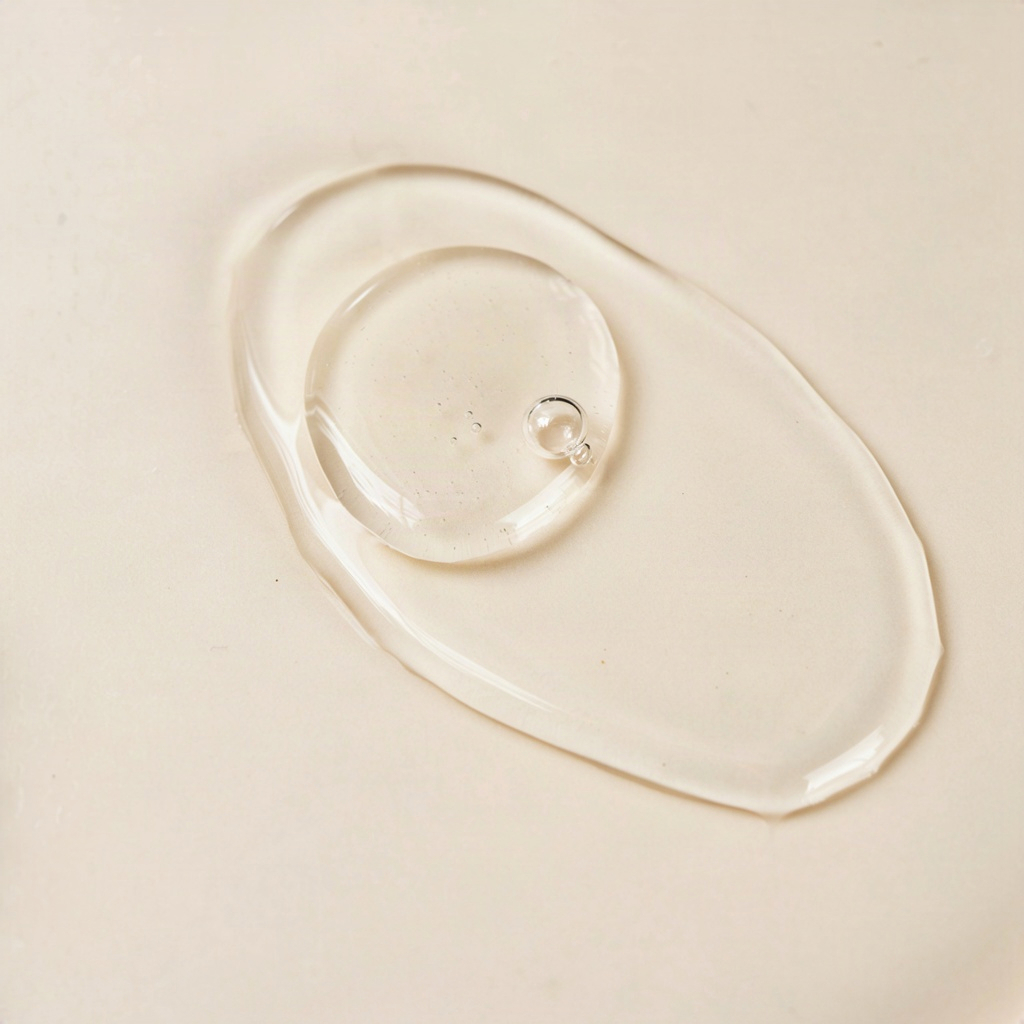
Pores do not shrink. What changes is what fills them: a pore holding less oxidised sebum casts a smaller shadow, and a smaller shadow is what people read as a smaller pore. That is why results look better in flat daylight than under a magnifying mirror.
For a niacinamide serum for oily skin, the format checklist is short — a gel or fluid base, no heavy plant oils high in the list, and a finish that has not gone glossy by hour three. The best niacinamide serum for oily skin is simply the one you can wear under sunscreen without your face sliding by noon.
The most common self-inflicted failure is skipping moisturizer to fight shine. Dehydrated skin compensates with more oil and the serum takes the blame. Pair it with a light gel cream instead, and if you are unsure which, start from a best moisturizer for oily skin shortlist that lists no occlusive waxes.
Give it four weeks. If shine is unchanged at week six with consistent daily use, niacinamide is not your lever and a topical retinoid or a prescription route is the next conversation.
Niacinamide Serum for Sensitive Skin Without the Sting
The barrier case is measurable. In a four-week study on how niacinamide strengthens the skin barrier, hydrophobicity and rigidity of corneocyte envelopes rose across facial sites in both younger and older participants. A tougher outer envelope loses less water and tolerates more.
When a niacinamide serum for sensitive skin stings, the vitamin is usually innocent. The recurring culprits are denatured alcohol high in the list, added fragrance, a low-pH partner active in the same formula, or a strength above 10% on skin that was already compromised.
Patch test on the inner forearm or beside the jaw for three nights before it goes near your whole face. Then ramp: every other night for two weeks, daily after that. Skipping the ramp is how people conclude they cannot use niacinamide at all.
The best niacinamide serum for sensitive skin is unglamorous — 4% or less, fragrance-free, a short ingredient list, and a pump or dropper rather than an open jar. You are buying fewer variables, not more features, and it will cost you speed.
Its most useful role for reactive skin is as a cushion rather than a replacement. Used on the nights you are not applying a retinoid, or underneath one once your skin is stable, it makes the retinoid ramp survivable. If that is the plan, read the retinol serum: how to choose and use it guide before you raise the strength of either one.
Niacinamide Serum for Brightening Skin and Fading Dark Spots
The pigment benchmark is a split-face trial of niacinamide compared with hydroquinone for melasma: 4% niacinamide produced good to excellent improvement in 44% of patients versus 55% for hydroquinone, with fewer side effects, 18% against 29%. Useful, honest, and clearly not a bleaching agent.
A niacinamide serum for brightening skin works upstream. It slows the handover of pigment granules from pigment-producing cells to surface skin cells, so incoming tone is more even. Pigment already sitting in the skin still has to shed on its own schedule.
That is why post-inflammatory marks from spots fade faster than melasma, and why both stall without daily sun protection. If you are photosensitive or easily irritated, choose a sunscreen for sensitive skin and wear it on the days you stay indoors too, because window glass does not block UVA.
Pairing with vitamin C in the morning is fine. The old flushing warning came from lab conditions with heat and raw acids, not finished formulas at skin pH. If you want the pairing to earn its place, judge the best vitamin C serum for face on stability and packaging rather than on percentage.
If twelve consistent weeks with sunscreen move nothing, stop buying stronger serums. Stubborn melasma is a clinic conversation, not a shelf one.
How to Use and Layer a Niacinamide Face Serum
The order is boring and it works: cleanse, tone if you use one, niacinamide face serum, moisturizer, sunscreen in the morning. Thinnest to thickest, with the serum applied while skin is still slightly damp so it spreads rather than drags.
If you want to work a peptide serum into that order, which peptide serums actually firm skin sorts the useful peptides from the hype and shows how to pair them with retinol or vitamin C.
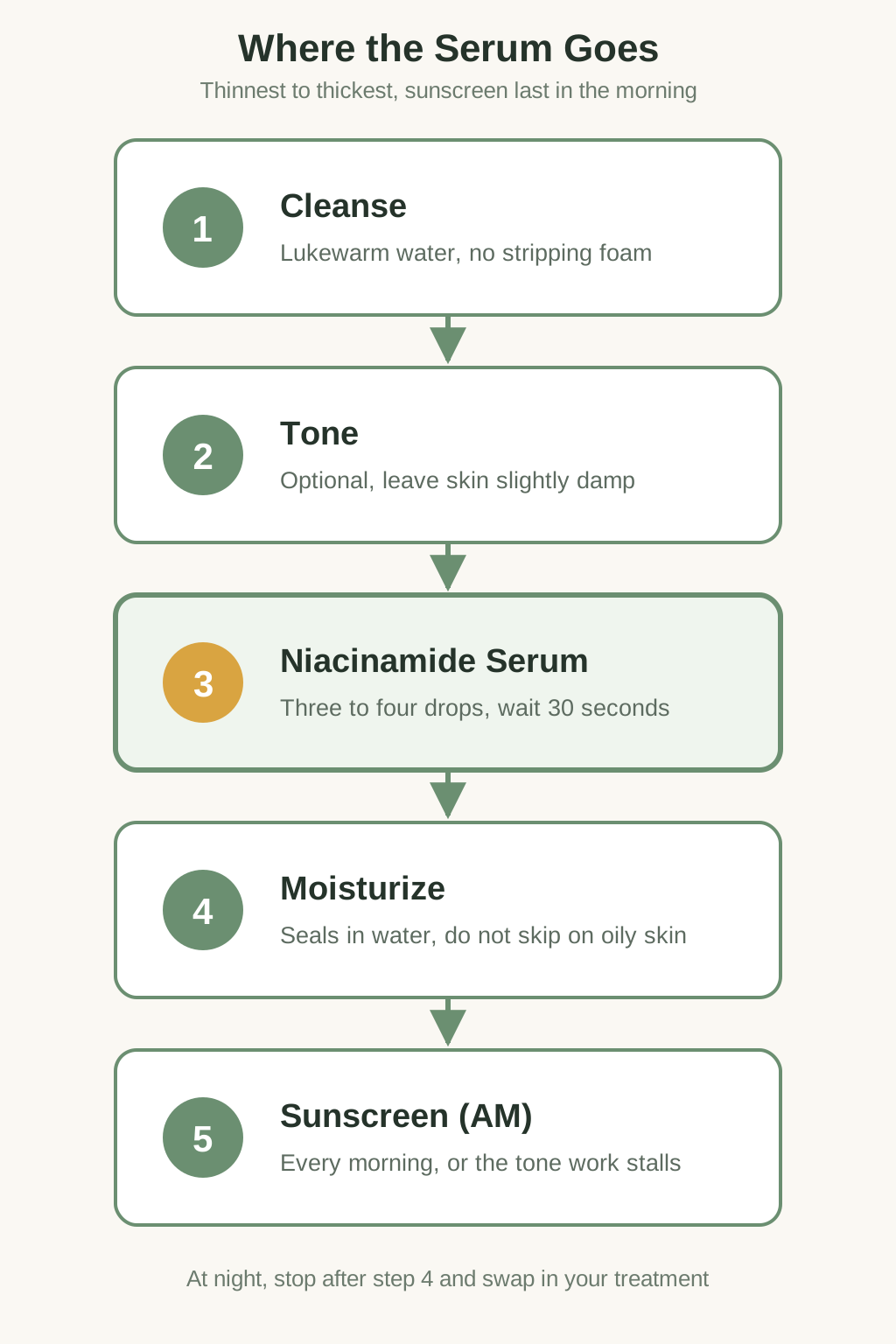
Three to four drops covers a face and neck. Wait roughly thirty seconds before the next layer, long enough for it to sink in and short enough that skin is still receptive. Start the morning by rinsing with a gentle gel cleanser, because a stripping foam undoes the barrier work you are paying for.
Most pairings are safe. Niacinamide sits comfortably with hyaluronic acid, peptides and mineral sunscreen, and it works alongside vitamin C in the morning. The two worth spacing are strong AHA or BHA exfoliants and a fresh retinoid ramp: put those on alternate nights rather than stacking them the same evening. That is also how niacinamide skincare products should be split between an AM and a PM routine.
Two serums in one routine is the practical ceiling. Apply the thinner one first, wait, then the second, and stop adding when skin feels tight by mid-afternoon. If the second serum is a humectant, the hyaluronic acid serum timing rules decide whether it belongs before or after. Finish the morning with a broad-spectrum sunscreen.
Three habits waste a bottle: applying to bone-dry skin, layering over an exfoliant the same night, and restarting the clock every time you switch products. If your routine has no fixed shape yet, settle that first with the guide on how to build a skin care routine.
Not sure whether your actives can share a night? Pick the ones you own and get a safe, caution or avoid verdict with an AM or PM slot and a reason for each.
What Niacinamide Serum Reviews Get Wrong
Most niacinamide serum reviews are written at two weeks, before the pigment endpoint has started and barely inside the window where oil changes. A two-week verdict on a twelve-week active tells you about texture, not result.
Star ratings measure what you notice on day one: how it smells, whether the dropper drips, whether it pills under makeup. Those things matter for adherence, but they are not efficacy. When you read best niacinamide serum reviews, look for three details — the reviewer's skin type, the percentage they used, and how many weeks elapsed. A review missing all three is a texture review.
Purging claims deserve scepticism here. Niacinamide does not speed cell turnover, so it has no mechanism for pushing congestion to the surface. Breakouts in week one usually trace to the base, an added oil or thickener, or to a second change you made at the same time. The same scepticism applies to any claim on any label, and the habits in choosing skincare products that actually work transfer to every shelf.
Your own record beats a stranger's: one line a day, one photo a week, same window, same time of day.
Print the one-page niacinamide reference if you would rather keep the strength, timing and pairing rules by the sink than reopen this page.
Niacinamide Serum Questions People Actually Ask
Can I use it with vitamin C, retinol or an acid?
Vitamin C in the morning is fine. Retinol is fine once your skin is stable, with niacinamide applied first as a buffer. Strong exfoliating acids belong on alternate nights, not because of a chemical clash but because two irritants in one sitting is one too many.
Since the two layer well, it is worth knowing which vitamin C serum benefits to expect, and how fast dark spots and dullness actually respond.
If you are choosing which vitamin C to pair with it, the head-to-head comparison of Timeless vitamin C serum vs C E Ferulic covers strength, pH and price per bottle.
Morning, evening, or both?
Once daily is enough for barrier and oil goals. Twice daily is worth it only for pigment work, and only if the second application does not crowd out sunscreen.
How long does one bottle last?
At three drops a day, a 30 ml bottle runs about three months: long enough to judge oil and redness, and just long enough for a first fair look at tone.
Does a niacinamide skin serum help active acne?
It calms redness and helps the marks left behind. It does not clear active lesions, which need a different active or a prescription.
One email a week, and it is the ingredient explained rather than a product dump.
One skincare ingredient explained each week. No product dumps.
Thanks — you're on the list.

