

What Separates the Best Sunscreen From the Rest
Three things decide whether a sunscreen protects you: it filters UVA as well as UVB, you apply enough of it, and you like the texture enough to do that again in two hours. Every other spec is secondary. A bottle rated SPF 70 that you spread thin and skip at noon protects less than an SPF 30 lotion you actually reapply.
That first requirement is what a broad spectrum claim promises, so work through these broad spectrum SPF label checks before you trust a bottle to cover UVA as well as UVB.
That is why shortlists of best sunscreens rarely agree. Testing labs measure filtration on 2 milligrams of product per square centimetre of skin. Real people apply roughly a quarter to a half of that, which cuts a labelled SPF 50 down to an effective SPF 15 to 25 within the first hour. Adherence, not chemistry, is the variable most roundups ignore.
The five criteria used throughout this guide
- Filter system: mineral (zinc oxide, titanium dioxide) or organic filters, and what each does to finish and eye sting.
- Finish after 10 minutes: tack, shine and white cast once the formula has actually set, not straight out of the tube.
- Water resistance: the 40-minute or 80-minute rating, which is the only water claim a label may legally make.
- Cost per ounce: a bottle you ration is a bottle you underapply, so price per ounce matters more than price per bottle.
- Two-hour behaviour: whether it pills, migrates into your eyes with sweat, or greys out on deeper skin tones.
Sun protection also works as a system rather than a single product. Shade, a wide brim and tightly woven fabric carry part of the load, which is the position taken in UV protection guidance from the American Cancer Society — sunscreen covers what cloth and shade cannot.
Search demand for this topic stacks the same word twice — sunscreen best sunscreen, sunscreen sunscreen — which tells you what people actually want: a verdict they can act on in an aisle, not a chemistry lecture. The verdict here is a decision path, because the right bottle for a commuter with reactive skin is the wrong bottle for a surfer.
The trade-off worth naming now: no formula wins on every axis. High water resistance almost always means a heavier film. A weightless, invisible finish usually means lower rub-off durability. Choosing well means deciding which compromise you can live with for your skin and your day.
SPF Numbers Decoded: What Is the Best SPF Sun Protection?
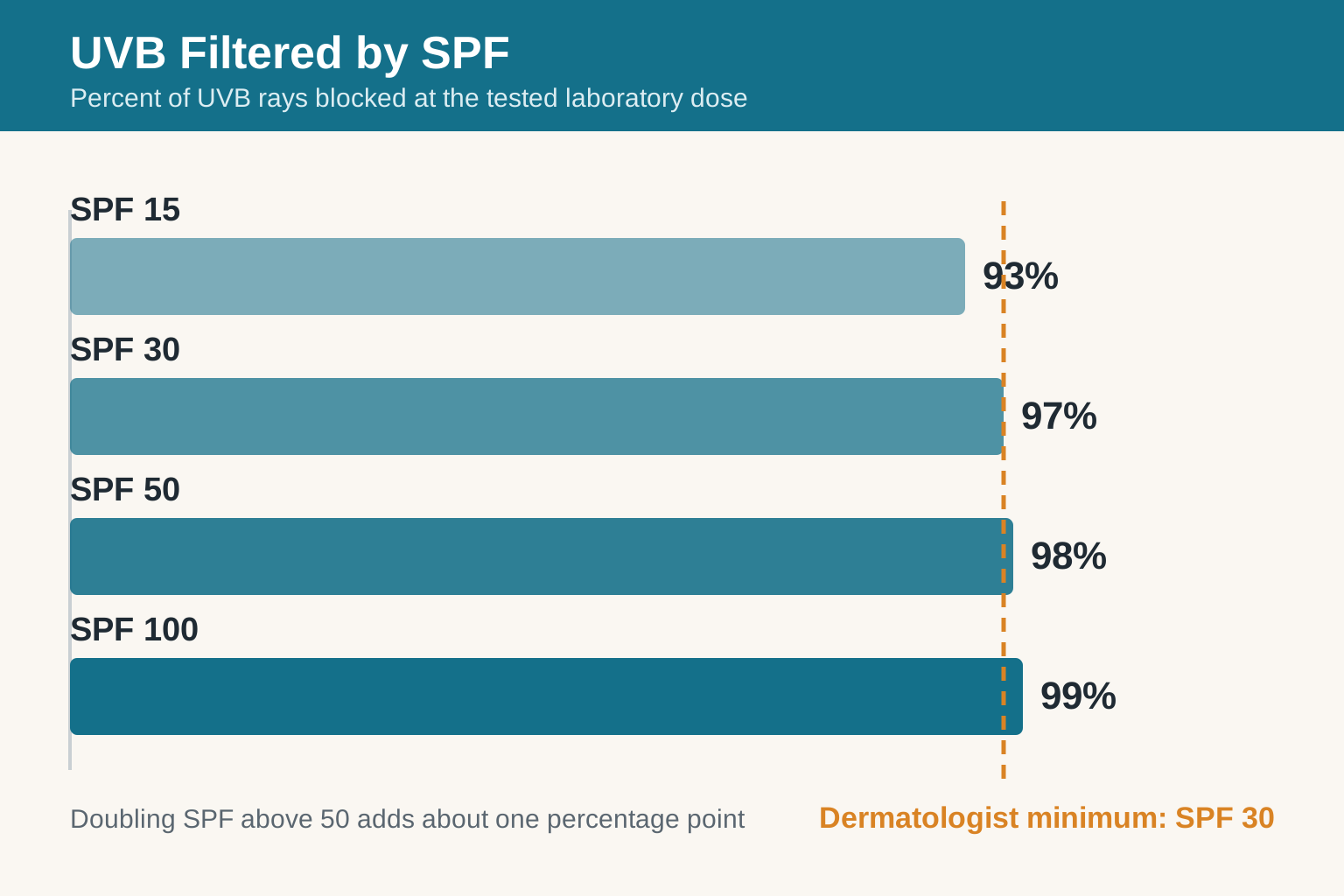
SPF measures how much longer skin takes to redden under UVB with the product on, tested at that laboratory dose. The filtration curve flattens fast: SPF 15 blocks about 93 percent of UVB, SPF 30 about 97 percent, SPF 50 about 98 percent, and SPF 100 about 99 percent. Doubling from 50 to 100 buys roughly one extra percentage point.
Lip SPF is measured by the same reddening test, though balms wear off far faster, so choosing an SPF lip balm that protects comes down to filters and staying power.
So the honest answer to what is the best spf sun protection is SPF 30 as a floor and SPF 50 for beach days, long drives, high altitude or any medication that raises photosensitivity. Anything above 50 mostly buys psychological cover, and the FDA has repeatedly flagged that high numbers encourage people to stay out longer, not to apply more. The mechanics behind the rating are set out in how sun protection factor is measured.
Why SPF alone is half a label
SPF describes UVB, the wavelength that burns. UVA penetrates deeper, drives collagen breakdown and pigment change, and passes through window glass. A bottle only earns the words broad spectrum if it passes a separate UVA test, so a high number without that phrase is an incomplete claim. Any best sun protection sunscreen has both printed on it.
Four things to read on any best body spf label, in about ten seconds in the aisle:
- The phrase broad spectrum — no phrase, no UVA data.
- The SPF value, 30 minimum.
- Water resistance stated as 40 or 80 minutes.
- The expiry date, since filters degrade and most products are rated for three years unopened.
Label wording is regulated, so the phrases on the front are not free marketing choices — dermatology guidance on what a sunscreen label can and cannot claim is the fastest way to learn which words are tested and which are decoration.
Two numbers on the shelf are worth ignoring. The first is any SPF above 50 sold at a premium, since the extra percentage point costs more than a second bottle of SPF 50 would. The second is a UV-index-style claim printed by a brand rather than a regulator, which has no standard test behind it.
One caveat on the 30-as-a-floor rule: it assumes you apply the tested dose. If you are honest that you apply thinly and rarely reapply, buying SPF 50 gives you a wider margin for that error. That is the one defensible reason to pay for a higher number, and it is a patch on a habit rather than a fix.
Mineral or Chemical: Finding the Healthiest Sunblock for You
Mineral formulas use zinc oxide and titanium dioxide, which sit largely on the surface and scatter or absorb UV. Organic filters such as avobenzone, homosalate and octisalate absorb UV inside the film and convert it to heat. Both classes must pass the same broad spectrum test to make the same claim.
Readers who want to drop synthetic filters entirely can see how to pick a safe sunscreen, which covers the zinc oxide labels worth trusting and the mineral-only face formulas that suit different skin types.
Chemical filters take the opposite approach, so if you are weighing the two, see how chemical sunscreen filters work, which UV filters are in the bottle, and what the FDA absorption data actually shows.
If zinc is the filter you want, our guide to choosing a zinc oxide sunscreen covers how much zinc you actually need, non-nano versus nano, and how to fix the white cast.
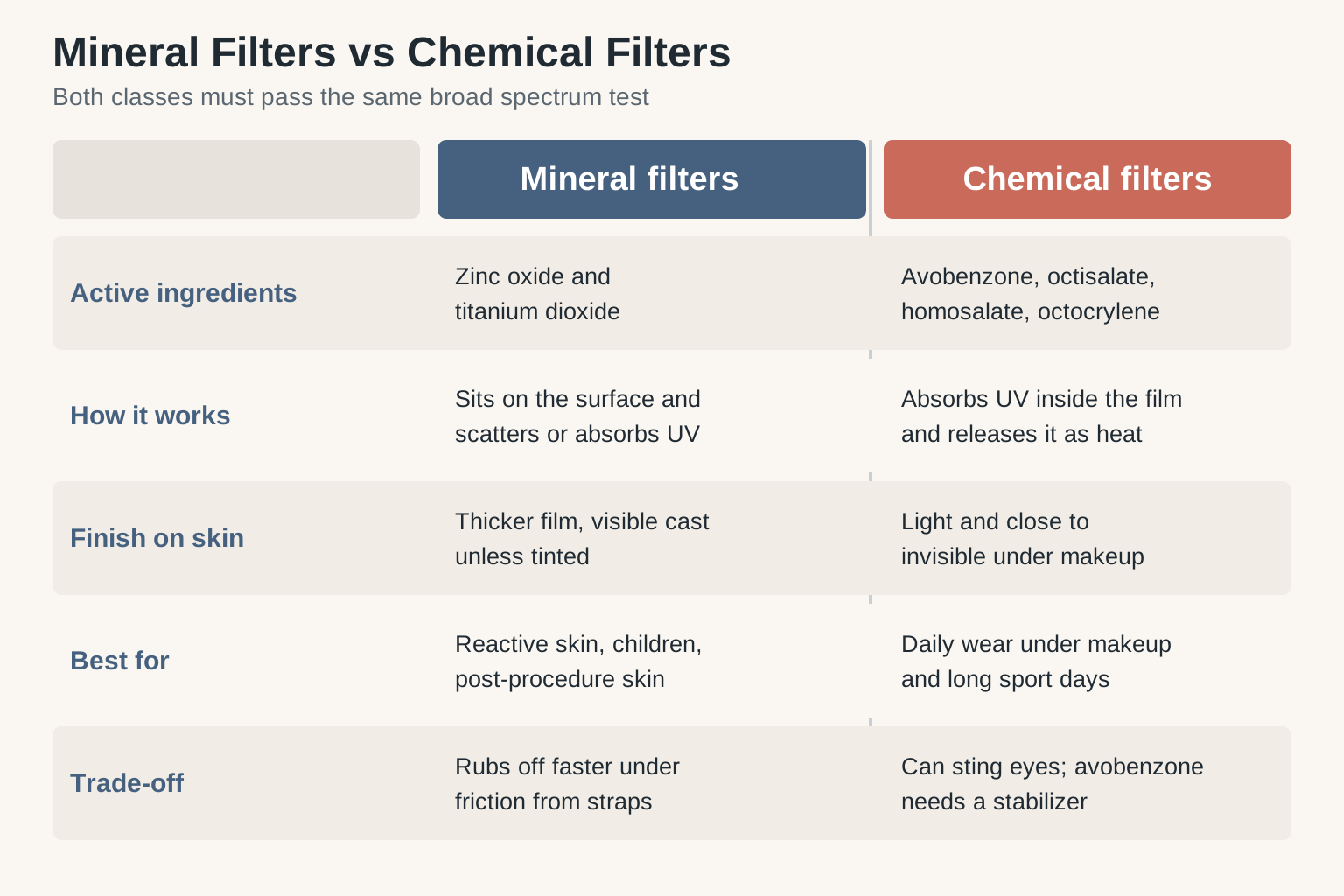
Dermatology clinics lean mineral for reactive skin because zinc rarely stings and does not photodegrade the way avobenzone can without a stabiliser. That is the practical reason the most recommended sunblock for rosacea, post-procedure skin and infants over six months is usually a zinc formula rather than a chemical one. Whether mineral genuinely outperforms chemical is examined in whether mineral filters outperform chemical ones.
What the safety debate actually established
The safest suntan lotions conversation usually starts with absorption. Studies have shown several organic filters reach measurable blood plasma levels after heavy repeated use; measurable is not the same as harmful, and no regulator has withdrawn those filters on that basis. The underlying pharmacokinetic work is summarised in a randomized trial on sunscreen absorption into blood plasma.
So the healthiest sunblock for you is the one your skin tolerates at full dose, every day, without a reason to skip it. A mineral formula you hate wearing is not safer in practice than an organic one you reapply on schedule.
Tinted mineral formulas solve the single biggest mineral complaint. Iron oxide pigments cancel the grey cast that untinted zinc leaves on medium and deep skin, and they add visible-light protection that untinted zinc does not offer — relevant if you have melasma or post-inflammatory pigmentation.
The cost is real: tints are shade-limited, they transfer onto collars, and a mismatched tone reads as a mask by mid-afternoon. If you want the full comparison of shades and finishes, the deeper breakdown lives in our guide to mineral sunscreen for face that actually works.
One more practical filter for the best sunblock decision: reapplication comfort. If a formula needs a full wash-off before the second coat, you will not do it at 2pm on a beach.
Two mineral limitations deserve naming. Zinc formulas rub off faster under friction from towels, straps and sand, so they need more diligent reapplication than a well-built organic formula. And micronised zinc that avoids a cast usually costs more per ounce, which quietly pushes people toward rationing the bottle.
Chemical filters have a mirror-image weakness: avobenzone degrades in sunlight unless it is paired with a stabiliser such as octocrylene, so a poorly formulated organic sunscreen can lose UVA protection over the same two hours it claims to cover. Check that the active list is not avobenzone alone.
Best Body Sunscreen Picks for Arms, Legs and Back
An average adult has roughly 20 square feet of exposed skin in a swimsuit. A body formula therefore has to spread fast, tolerate sweat, and cost little enough that you use a full ounce per application. Those constraints are the opposite of a facial formula, which optimises for weightlessness on a surface the size of a postcard.

Cost per ounce is the metric that separates a genuinely good best body sunscreen from a marketing exercise. A 3-ounce tube at premium pricing covers three full-body applications. At beach frequency that is one weekend. Judge top ranked sunscreens on what a season costs, not what one bottle costs.
Format by body zone
- Lotion: the only format you can measure, so it should carry your first application of the day across arms, legs, chest and back.
- Stick: best for ears, nose bridge, the tops of feet and hairline partings, where a lotion runs. Slow over large areas.
- Gel or fluid: useful on hairy shins and forearms where a thick body sunblock beads and pills instead of spreading.
Complete sun protection for body coverage fails in the same five places every time: the ears, the tops of the feet, the back of the neck, the strip between the shoulder blades, and the scalp parting. Use a mirror or a second person for the back, or accept that a shirt is doing that job.
The trade-off with any high-durability best body sunblock is texture. The formulas that survive 80 minutes in water carry more film-forming polymer, so they take longer to sink in and leave a faint cast on deep skin. That is the price of water resistance, not a manufacturing flaw.
Sensitivity to a body formula also shows up differently from a facial reaction: it presents as heat and itch across a large area rather than a defined patch, usually within an hour, and it is most often a fragrance or a preservative rather than the UV filter itself.
Pump bottles beat squeeze tubes for full-body use for a boring mechanical reason. A pump delivers a repeatable dose you can count, so four pumps per limb becomes a habit you do not have to think about, while a tube invites the thin single stripe that halves your protection.
Eyelid skin is the one area where body sunscreen should never go — it migrates and stings. Sunglasses handle it instead, in the same way an eye cream for dark circles handles the skin below it.
Best Sunscreens for Face: Daily Wear Without the Cast
Facial SPF is judged on twelve hours of wear, not on SPF alone. It sits under makeup, meets sebum, gets touched, and has to survive a commute. That is why the best sunscreens for face are usually chosen on finish, pilling behaviour and eye-sting profile once the number clears 30.
What makes a face formula survive a workday
A realistic best daily sunblock for face absorbs in under two minutes, does not creep into the eyes when you sweat on a platform, and takes powder or foundation without rolling. Alcohol-heavy fluids feel excellent at 8am and read tight and flaky by 3pm on dry skin — a genuine limitation, not a preference.
Layering order, and the real cause of pilling
Cleanse, treat, moisturise, then SPF last, and let each layer set for 60 seconds. Pilling is almost always mechanical: sunscreen applied onto a still-damp serum lifts the layer beneath it into visible rolls. Silicone-based SPF over a water-based hyaluronic serum is the classic offender.
- Wash with something matched to your skin type — the practical steps are in our guide to choosing a face wash for your skin type.
- Antioxidants pair well with SPF because they mop up the free radicals filters do not stop; see our vitamin C serum picks dermatologists approve.
- If you want coverage as well as protection, start with the tinted SPF buying guide.
Reapplication over makeup is the unsolved problem. A powder SPF touch-up delivers a fraction of the tested dose; treat it as a top-up, not a second full coat, and plan shade around it.
Skin type narrows the shortlist faster than any ranking does. Oily and acne-prone skin generally does better with a fluid or gel-cream that sets matte, while dry or mature skin needs an emollient base or the film looks powdery over fine lines by midday. Neither is a better product; they are different jobs.
The quarter-teaspoon dose matters most here, because a facial formula is the one people skimp on hardest. Two finger-lengths of product across the face and neck feels like far too much the first week, and that feeling is the exact gap between the SPF on the bottle and the SPF on your skin.
Sprays, Lotions and Sticks: Picking a Format You Will Reuse
A best sun cream spray earns its place at reapplication, not at first application. Over skin that already carries a lotion base, over a hairline, or on the backs of your own legs, an aerosol is the only format most people will realistically use a second time.
Where sprays fail
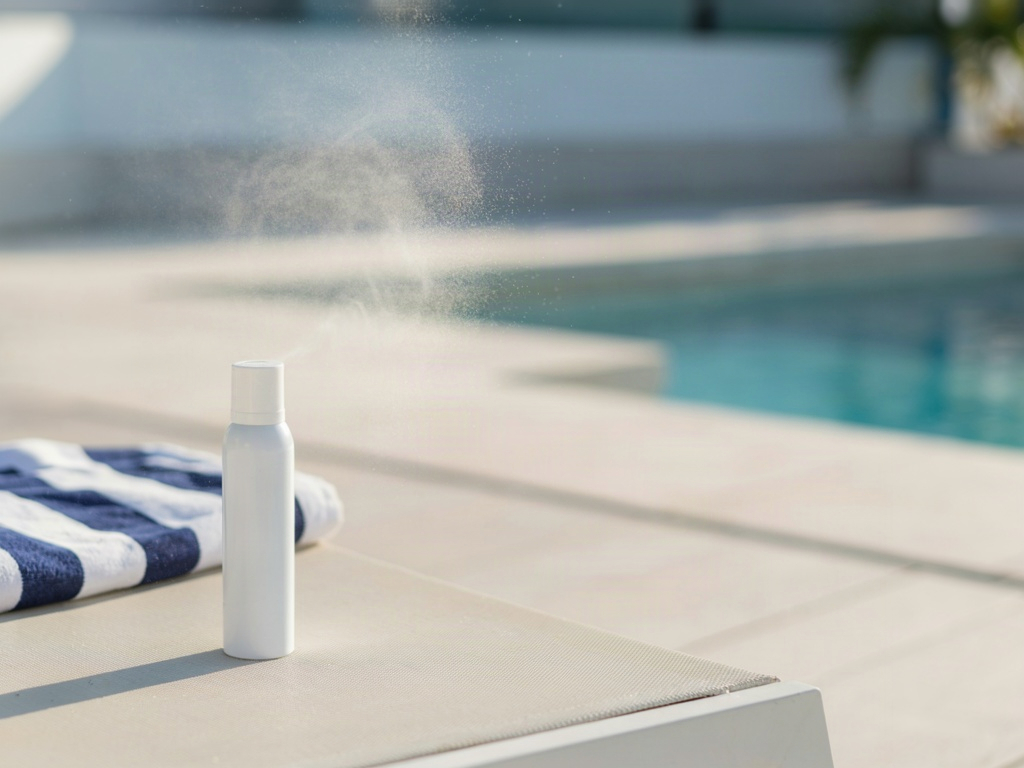
Hold the can 4 to 6 inches from skin, spray until it glistens, then rub it in. A fast pass from arm's length in any breeze puts most of the dose in the air, which is how a best spray sun tan lotion ends up delivering a tenth of its rating. Never spray directly onto a face; decant into your palm first, away from the wind.
Texture language on the front of a bottle is not marketing noise. A non greasy sun lotion usually means a lower emollient load with volatile silicone or alcohol carriers, giving a matte set — and, as a trade-off, a slightly weaker water-resistant film. Judge any best non greasy suntan lotion with a forearm test: a coin-sized amount, ten minutes, then check for tack and shine before you commit to a bottle.
Classic sun screen lotion still deserves the first application of the day for one reason: it is the only format you can measure. You can see an ounce in your hand. You cannot see two seconds of aerosol.
Sticks, and when a format choice is really a storage choice
Sticks are the format most people underrate and misuse. They are excellent on ears, noses, hairline partings and the tops of feet, and they survive a gym bag without leaking, but four passes over the same spot is the minimum dose — a single swipe leaves a stripe, not a film.
Every format has a storage cost. Aerosols are flammable and lose pressure after a summer in a hot car, lotions separate when they freeze in a winter garage, and sticks soften into an unusable smear above roughly 30 degrees Celsius. Where a bottle lives between uses decides whether it still works when you reach for it.
Match the format to the failure you actually have. If you forget to reapply, buy a spray and keep it in the bag. If you apply too thinly, buy a pump lotion and count the pumps. Buying a better formula rarely fixes a behaviour problem.
Sensitive Skin, Kids and Water: Matching SPF to Conditions
Reactive skin narrows the field fast. The best body sunscreen for sensitive skin is fragrance-free rather than unscented, alcohol-free, and built on zinc oxide with a short filter list. Patch test behind the ear for two days before you take a new bottle on a trip, because a reaction across 20 square feet of sunburnt skin is a ruined week.
Acne-prone skin narrows it in another direction, where carrier and finish matter as much as the filter itself, so weigh those first when choosing the best sunscreen for acne prone skin.
What water resistance legally means
No product sold in the United States may be called waterproof or sweatproof. Any best sunblock waterproof claim you see is shorthand for water resistant, and the label may only say 40 minutes or 80 minutes — the tested time the SPF holds during immersion. After that window, or immediately after towelling, the clock resets and you reapply.
For children, the best suntan lotion is usually a plain mineral formula in a stick or thick lotion, because it is visible while you spread it and stings less on wet faces. Under six months, shade and clothing replace sunscreen entirely. New scar tissue and post-procedure skin follow the same rule for a year: cover it, do not just coat it.
Eyes are the gap nobody closes. Eyelid skin is the thinnest on the body and sunscreen migrates off it with sweat, so UV400 lenses do the work instead.
Wraparound frames block the reflected UV that comes in around flat lenses at the beach. They also fog on humid days and look wrong with most outfits, which is the honest cost.
Conditions that raise your effective UV dose
- Altitude: UV intensity rises roughly 10 to 12 percent per 1,000 metres, so a mountain day burns faster than the same hours at sea level.
- Reflection: fresh snow bounces back up to 80 percent of UV, dry sand around 15 percent, and water surfaces vary with angle — all of it hitting you from below, where sunscreen coverage is thinnest.
- Medication: doxycycline, some diuretics and retinoids raise photosensitivity, which is a genuine reason to move from SPF 30 to SPF 50 and add cover-up clothing.
Cloud cover is the trap. Up to 80 percent of UV passes through thin cloud, so an overcast beach day produces the burns people describe as coming out of nowhere. Temperature tracks infrared, not UV, which is why a cool breezy afternoon feels safe and is not.
How Much to Apply and When to Reapply
The tested dose is 2 milligrams per square centimetre. Translated into kitchen units: about one ounce, a full shot glass, for a whole body in a swimsuit, and roughly a quarter teaspoon for the face and neck together — two finger-lengths of product squeezed onto your index and middle fingers.
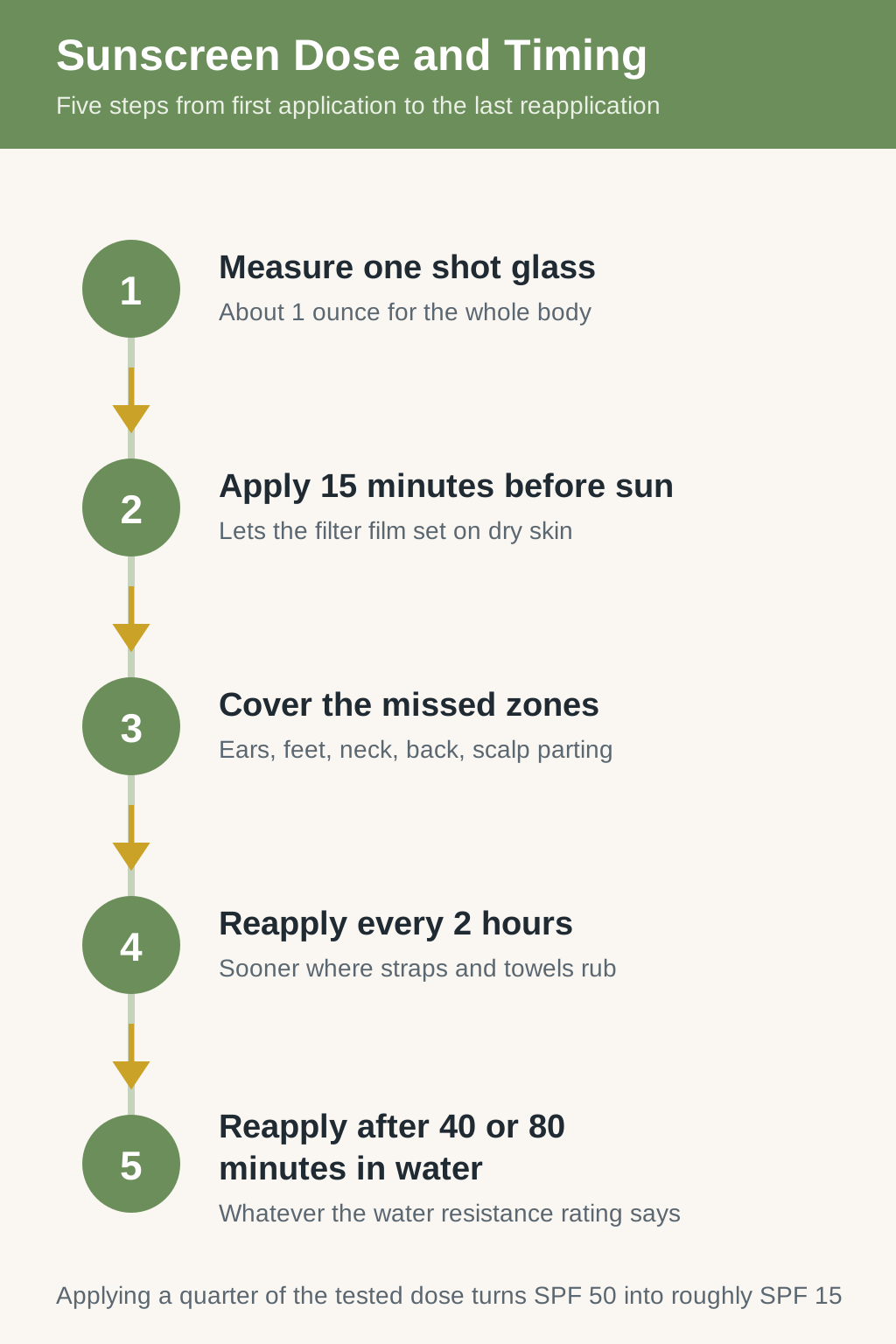
Underapplication is why lab SPF rarely survives contact with a towel. The fix is a second pass: apply, wait two minutes, then go over the same area again. That double-layer habit is what turns a best sun protection body lotion into the number printed on the bottle, and it costs about 30 seconds.
Sweat and friction, not time, are what actually strip the film. An hour of hiking with a pack strap across your shoulder removes more product than three still hours under an umbrella, so treat the two-hour rule as a ceiling and reapply earlier wherever fabric rubs.
The reapplication clock
- Apply 15 minutes before you go out, so organic filters can form a film.
- Reapply every two hours of continuous sun exposure.
- Reapply immediately after towelling, whatever the water-resistance rating says.
- Reset the clock the moment the 40 or 80-minute immersion window expires.
Audit the suntan lotion products already in your bathroom before you buy more: check the expiry date, look for separation or a watery layer on top, and bin anything that spent a summer in a hot car, since heat accelerates filter breakdown. Sunburnt or stripped skin also needs repair afterwards, which is where our guide to dry skin moisturizers worth keeping picks up.
A rough consumption benchmark keeps you honest: two adults on a full beach day should empty roughly half of a 16-ounce bottle. If a bottle lasts you an entire summer, you are not applying enough, and no amount of upgrading the formula will close that gap.
Best Sunscreen Brands and What They Should Cost
The same handful of filters appears at every price tier. Zinc oxide costs the same to a drugstore label as to a luxury one; what you pay extra for is texture engineering, packaging and shade range. That is a real difference on the face and close to irrelevant on your shins.
Compare best sunscreen brands on cost per ounce and on filter list, then on finish. A useful benchmark: body formulas worth buying land under roughly two dollars per ounce, and anything above five dollars per ounce needs to justify itself with a finish you will not skip.
Where to spend and where to save
- Save on the body. A best drugstore body sunscreen bought in a 16-ounce pump is the everyday workhorse, because volume is what makes full-dose application painless.
- Spend on the face. One well-textured facial SPF changes daily adherence more than any other purchase in a sun routine.
- Buy fresh. Check the date on discounted stock; deep end-of-season markdowns often move product with a year or less left.
- Ignore the front label. Claims like dermatologist-tested and reef-friendly carry no fixed legal definition, so the active ingredient panel on the back tells you more than the marketing on the front.
Two purchases cover most people for a season: one large pump bottle for the body and one facial formula you genuinely enjoy wearing. A third bottle only earns its place if it solves a specific gap, such as a stick for a child's face or a spray kept permanently in a bag.
The limitation of the drugstore route is shade and finish range: fewer tints, heavier casts on deep skin, and pumps that clog by the end of a season. If either matters to you, that is exactly where the extra money belongs.


