

What Makes a Face Sunscreen Worth Wearing Every Single Day
The best face sunscreen is the one that is still on your skin at 3 p.m. Filter chemistry sets the ceiling on protection; texture, finish and smell decide whether you ever reach it. A formula that stings your eyes or greys out your skin gets skipped by the second week, and a skipped SPF 50 protects less than an SPF 30 you actually reapply.
UVA is the reason this is a daily job rather than a beach job. UVA makes up roughly 95% of the ultraviolet radiation reaching the ground, its intensity barely dips in winter, and it penetrates to the dermis where collagen and elastin live. That is the wavelength band behind the leathery texture and mottled pigment people call sun damage, and it is working on overcast commutes too.
The best daily sunscreen for face wear differs from a water-resistant beach formula in three concrete ways: lighter emollients that do not slide under glasses, no heavy film that pills under makeup, and a fragrance load low enough that reactive skin tolerates it every morning. Those are wearability specs, not marketing ones, and they are what separates the best sunscreen for everyday use for face from a tube designed for four hours in the surf.
A best daily moisturizer with spf earns its place by deleting a step you were already doing. It does not earn a pass on dose. Judge it on hydration and finish first, because the SPF claim on the box is already regulated and the hydration claim is not.
SPF, Broad Spectrum and What the Label Actually Promises
SPF is a UVB number. It describes how much longer skin takes to burn under a standardized dose of lab-applied product, and it says nothing on its own about the UVA range that drives photoaging. UVA coverage is a separate claim, printed as "broad spectrum," and a product can carry a high SPF while passing that test only barely.
Broad spectrum has a measurable definition — a critical wavelength of 370 nm or more — and these broad spectrum sunscreen label checks turn it into seven things to verify on the bottle.
The arithmetic behind higher numbers flattens fast. SPF 30 filters about 96.7% of UVB, SPF 50 about 98%, SPF 100 about 99%. The jump from 30 to 50 is roughly 1.3 percentage points of extra filtration, which real-world under-application erases in a single thin coat. Treat SPF 30 as the working floor, SPF 50 as insurance for outdoor days, and dose as the variable that actually moves protection.
Read the Drug Facts panel rather than the front of the box. It lists active filters and their percentages, water resistance in minutes (40 or 80, never "waterproof"), and a skin cancer and skin aging warning on anything below SPF 15 or lacking broad spectrum. The regulator's own explainer on what the SPF number and broad spectrum claim actually mean is the plain-language version of that panel.
Picking the best spf for face use gets harder when a mineral label lists "zinc oxide 12%" instead of a familiar filter name. Percentage tells you finish more than strength: below roughly 10% zinc you get sheerness and weaker UVA coverage, above 20% you get reliable protection and a cast that deeper skin tones will see. Dermatology bodies keep their dermatologists' criteria for selecting a sunscreen deliberately short: SPF 30 or higher, broad spectrum, water resistant.
Shopping by sunscreen for face spf rating alone hides everything that determines adherence. Two products at SPF 50 can differ by a full skin type in who can wear them. Our longer walkthrough on choosing an SPF that actually protects works through the label line by line.
Mineral vs Chemical Filters: Which Sunscreen Moisturizer Suits Your Skin
Mineral filters — zinc oxide and titanium dioxide — sit on the surface and scatter and absorb UV from the moment they are spread. Organic filters such as avobenzone, octocrylene and the newer European filters absorb UV energy and convert it to heat, and they need roughly 15 minutes to settle into an even film before they perform as tested.
For a closer look at which UV filters are in the bottle, what the FDA absorption data actually shows and when mineral SPF is the better pick, see chemical sunscreen ingredients and safety.
If zinc is the filter you keep reaching for, our guide to how to pick a zinc oxide sunscreen covers non-nano versus nano, how much zinc you need and white cast fixes.
Three things get a sunscreen moisturizer abandoned by week two, and none of them is protection: a white or grey cast, pilling into little rolls under makeup, and fragrance that makes reactive skin flush. Check all three on day one, on your own face, in daylight.
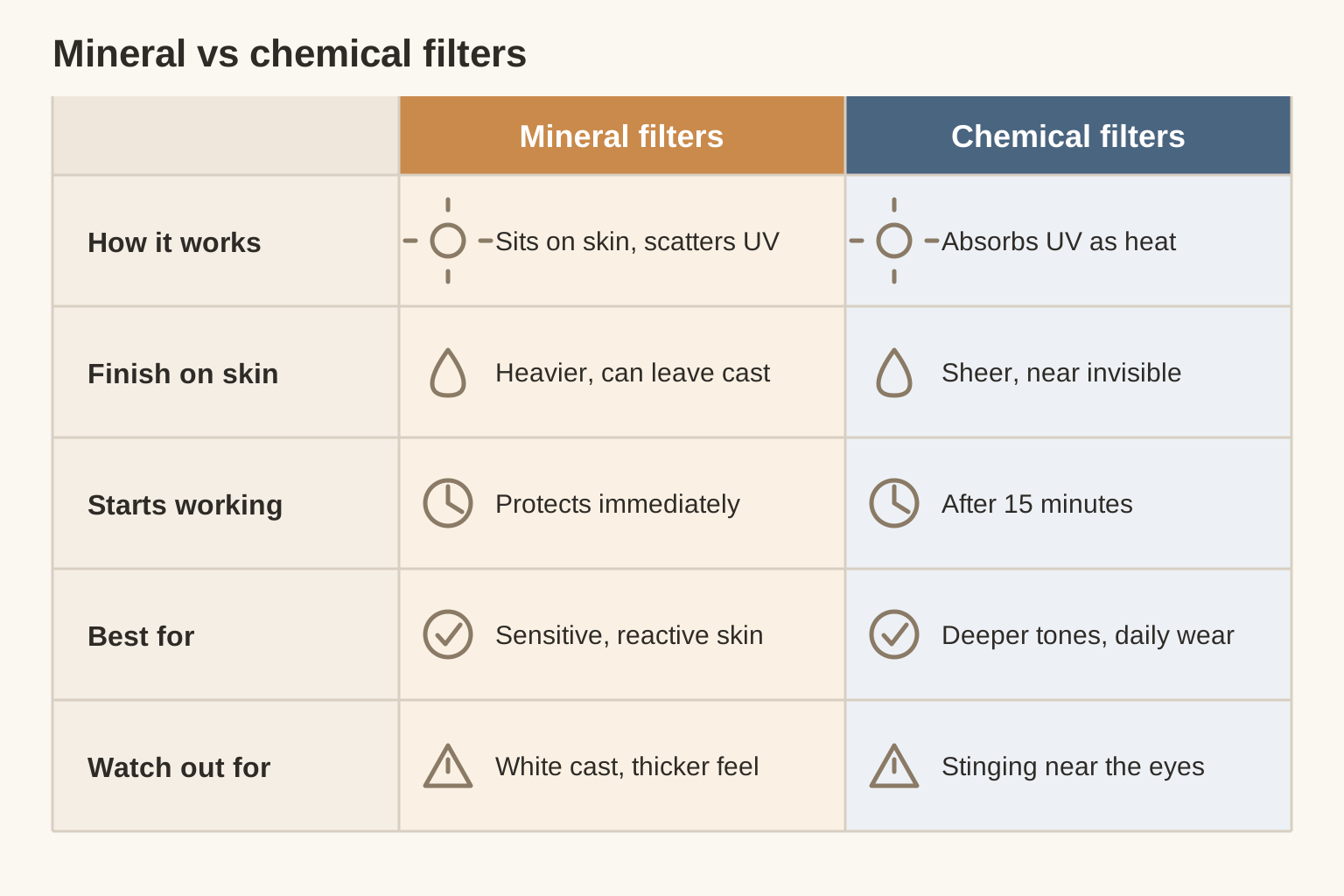
Sensitive, rosacea-prone and post-procedure skin usually tolerates zinc better, because there is no filter absorbing energy at the skin surface. The cost is finish: high-zinc formulas are heavier, they cast, and they can look dry on flaking skin. The best sunblock moisturizer for a fair, reactive face is often unwearable on a deep skin tone, which is why "best" without a skin type attached is close to meaningless. The American Cancer Society's summary of how mineral and chemical UV filters differ covers the chemistry without the marketing.
Hybrid formulas blend a low percentage of zinc with organic filters to hold UVA coverage while keeping the finish sheer. They are the practical middle for combination skin. If you have already decided on minerals, our guide to the best mineral sunscreen for face narrows it further.
Test a formula over three consecutive workdays before judging it. One wear tells you about cast; three tell you about pilling, midday shine and whether your eyes water.
Not sure which finish your skin needs? Six questions, two minutes, and you get your skin type plus the concern to shop against.
If you would rather skip chemical filters altogether, here is how to pick a safe mineral sunscreen, from the zinc oxide labels worth trusting to how much to apply.
Best Face Sunscreen Picks by Skin Type
Skin type decides the shortlist before any ranking does. Oily skin needs a formula that controls shine without alcohol-heavy drying, dry skin needs occlusives that survive a cold commute, reactive skin needs the shortest ingredient list, and deeper skin tones need a formula that does not go ashy. These picks are organized on that axis rather than by brand recognition, which is what most top moisturizers with spf lists actually sort by.
Breakout-prone skin narrows that shortlist fastest, so weigh filters, carriers and finish when choosing the best sunscreen for acne prone skin before committing to a bottle.
Some links below are affiliate links; if you buy through one, we may earn a commission at no extra cost to you.
Every pick above carries a stated limitation, because the best facial sunscreen still has a downside for someone. Texture is the tiebreaker: a best face sunscreen cream suits drier skin and colder months, while a fluid or serum texture suits nearly everyone else. If your skin reacts to most formulas, start with sensitive skin sunscreen: what to buy and why instead of working down this list.
Moisturizer With SPF vs a Separate Sunscreen: When One Bottle Is Enough
A moisturizer with spf is tested at the same density as sunscreen: 2 mg per square centimeter of skin. Almost nobody applies a moisturizer that thickly. Studies of real-world use repeatedly find people applying between a quarter and half the tested dose, which turns a labelled SPF 30 into something closer to SPF 8 to 15 on the face.
A sun protection moisturiser is genuinely enough on low-exposure days: office hours, a short commute, winter light, errands under cloud. It stops being enough on long outdoor stretches, near reflective water, snow or pale concrete, and while you are using a retinoid or acid that thins the stratum corneum.
Texture should follow the season. A moisturizing cream spf formula carries dry skin through winter; a fluid keeps oily skin comfortable in July. Judge the best moisturizer with spf on hydration, spreadability and finish, because the filter claim is regulated and the moisture claim is not.
Readers searching for the best sun protection moisturiser for face want one step rather than two, and that is a defensible trade as long as it is made knowingly. The catch with the best moisturizing face cream with spf is reapplication: a rich cream is exactly the thing you will not want to reapply over makeup at lunchtime.
Ranking the best face moisturizer sun protection options therefore means weighing three axes at once — hydration, finish and how easy the product is to reapply. Our best face moisturizer for every skin type guide covers the hydration half in more depth.
Tinted SPF for Uneven Tone, White Cast and Visible Light
Iron oxides, not the tint itself, are why tinted formulas help with melasma and post-inflammatory pigment. Iron oxides block visible light, and visible light drives pigment production in melanin-rich skin in a way that UV filters alone do not address. If pigment is your concern, look for iron oxides in the inactive ingredients rather than a shade name on the front.

Shade range is the practical limit. A single "universal" tint fails at both ends of the depth spectrum, and most lines that offer three shades still stop short of the deepest. A tinted best lotion with spf for face option can replace a light base for a workday, but it will not hold through eight hours without a touch-up.
Some links below are affiliate links; if you buy through one, we may earn a commission at no extra cost to you.
Test a shade along the jaw in daylight, never under bathroom bulbs, which run warm and flatter every mismatch. Choosing the best face cream spf shade this way takes 30 seconds and saves a return.
A face lotion with spf that reads noticeably darker an hour after application is oxidizing, which is a formula problem, not an application error. Reapplying over a tinted base needs its own technique; the Skin Cancer Foundation's advice on layering sunscreen with makeup without losing coverage is the practical version. For shade and finish comparisons, see our tinted sunscreen for face, complete buying guide.
How Much to Apply, and How Often to Reapply
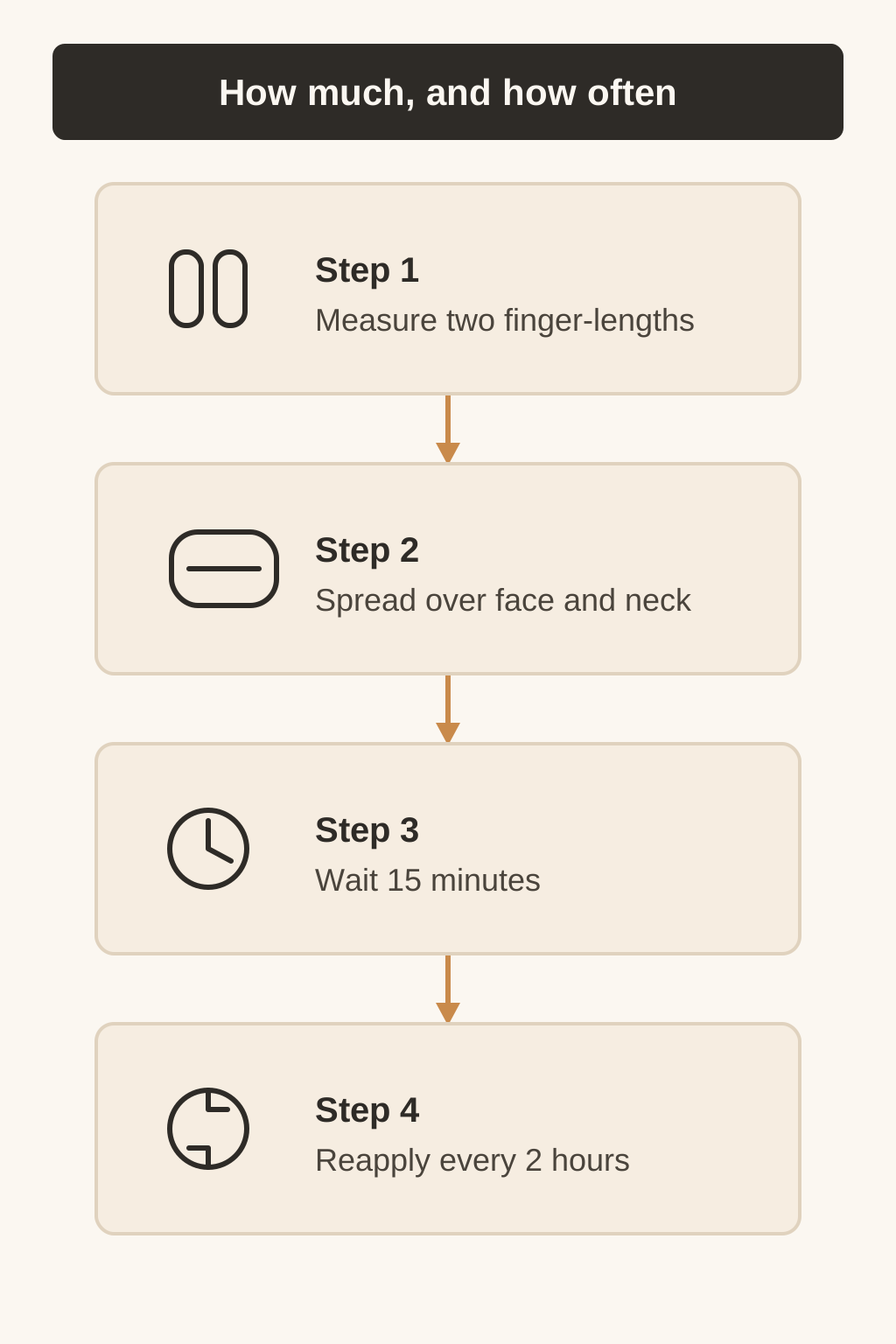
Two finger-lengths — a strip squeezed along the index and middle finger from base to tip — delivers roughly a quarter to a half teaspoon, which is what SPF testing assumes for a face and neck. Most people apply about a third of that and assume they are covered.
Halving the dose does not halve the protection. Because the SPF-to-transmission relationship is exponential, applying half the tested amount can drop effective protection to roughly the square root of the labelled number — an SPF 50 applied at half dose behaves closer to SPF 7. That is the single biggest gap between a label and a face.
A daily face moisturizer with spf needs the same dose as a dedicated sunscreen, which is more product than most moisturizer habits allow. Spread it in two thin passes rather than one thick one: the first pass covers, the second catches the hairline, ears, eyelids and the strip under the jaw. If your skin runs dry, a richer daily moisturizer is easier to dose generously than a fast-drying fluid.
Reapply every two hours outdoors, and immediately after swimming or heavy sweating; the dermatology guidance on how much sunscreen to use and when to reapply sets the same interval. Over makeup, powder and stick formats exist because a cream destroys a base — press, never rub.
If a day moisturiser spf is your only protection, shorten that interval outdoors rather than trusting the morning layer to last. Wondering exactly how much you need today and when the next coat is due?
Where an SPF Face Moisturizer Belongs in Your Morning Routine
The order is cleanse, treat, moisturize, then sunscreen — last of the skincare steps and first of everything else. Filters need an even, undisturbed film to perform as tested, and anything spread on top of them redistributes that film.
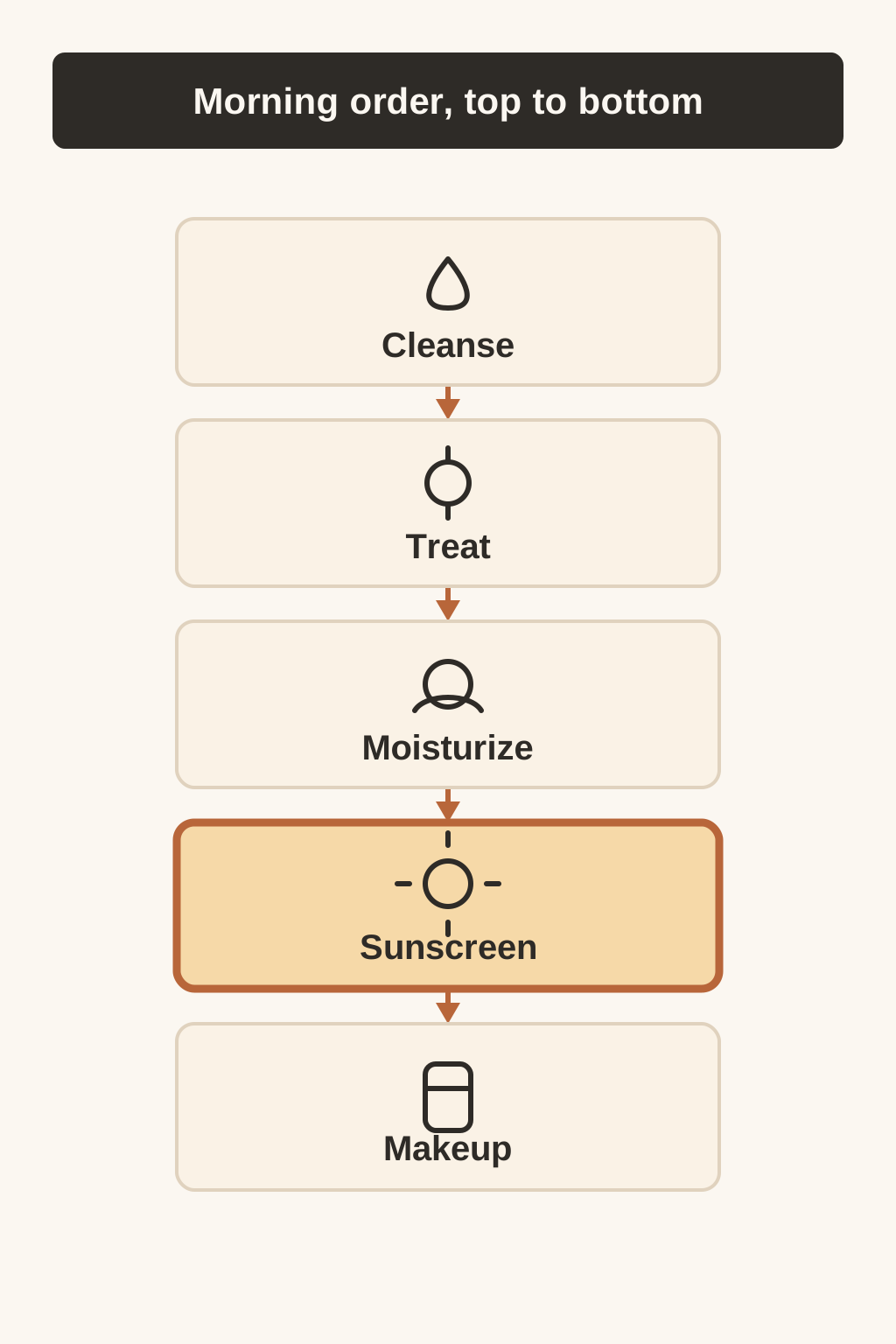
An spf face moisturizer collapses two of those steps into one, which means nothing water-based goes on top of it — no hydrating mist, no watery essence, no second serum. Anything you want underneath goes underneath.
Waiting two to three minutes between layers prevents pilling more reliably than switching products does. Pilling is usually a drying-time problem: silicones and film formers roll when they are disturbed while still wet. An spf facial moisturizer under foundation needs a fully dry base, or the makeup lifts and streaks along the nose and chin.
Seasons change the layer, not the order. In winter, add a richer cream underneath rather than a thicker SPF on top. In humidity, drop the cream and let the SPF layer carry the hydration. On days that start indoors and end outdoors, keep a stick or powder in your bag so the afternoon coat does not depend on a sink.
Common Questions About Daily SPF and Aging Skin
Does a professional spf facial replace daily sunscreen?
No. A clinic treatment can exfoliate, hydrate and brighten, and several of those treatments leave the barrier temporarily more photosensitive. You need more daily protection in the week after a peel or a resurfacing session, not less.
What can the best anti aging moisturizer with spf actually do?
It prevents. Daily sunscreen use has been shown in a controlled four-and-a-half-year trial to leave measurably less photoaging than occasional use, which is prevention rather than repair. Repair is the retinoid's job, and the two work in opposite halves of the day: retinoid at night, filters in the morning. Our walkthrough on how to choose and use a retinol serum covers the night half.
How do I judge the best rated face moisturizer with spf?
Review counts reward distribution and marketing spend, not formulation. Filter the ratings by your own skin type where a retailer allows it, read the one- and two-star reviews for cast and pilling complaints, and weight recent reviews because formulas get reformulated quietly.
Does the best skin moisturizer with spf need antioxidants?
They are a useful addition, not a substitute. Vitamin C and vitamin E mop up some of the free radicals that slip past filters, but no antioxidant blocks UV. Treat a vitamin C serum as the layer underneath, applied first, and the SPF as the layer that does the blocking.
When does sunscreen expire?
Most carry a three-year shelf life from manufacture, or a printed expiry where required. Heat is the faster killer: a bottle that has spent a summer in a car has been cycled well past 40°C and can separate or lose efficacy long before the printed date. If the texture has split or the smell has turned, replace it.
One practical note a week, and nothing else.
One sunscreen and skincare tip a week. No product dumps.
Thanks — you're on the list.


