

What a Retinol Serum Actually Does to Your Skin
Retinol is a vitamin A derivative that your skin cells convert in two enzymatic steps — retinol to retinaldehyde, retinaldehyde to retinoic acid — and only that final molecule binds the nuclear receptors that change how skin behaves. Once it does, keratinocyte turnover accelerates, the stratum corneum reorganises, and fibroblasts in the dermis increase procollagen I output.
That is the whole mechanism, and it explains the two things people get wrong about retinol. First, a retinol serum and a retinol cream carry the same molecule in different bases: the choice is about carrier, tolerance and how much your skin barrier can take, not about potency. Second, the receptor work happens on a biological clock you cannot hurry.

A vitamin A face cream sits inside a family that runs from weak retinyl esters, through retinol and retinaldehyde, up to prescription tretinoin, and each rung needs fewer conversions than the one below it. If you want the underlying nutrient science rather than the marketing, the NIH fact sheet on vitamin A and its derivatives is the reference dermatologists cite.
Expect the timeline to be slow. Surface smoothing and a brighter tone typically show at eight to twelve weeks; measurable collagen change trails it by roughly six months. Retinol skincare rewards people who keep going for a year, and quietly wastes money on people who quit in week four.
Retinol, Retinaldehyde and Retinoid Cream: What Separates Them
A prescription retinoid cream is already retinoic acid. It skips both conversion steps, which is why tretinoin at 0.025% often outperforms an over-the-counter retinol at 1% — and why it peels harder in the first month. Speed and harshness are the same property viewed from two sides.
Retinaldehyde is the useful middle rung: one conversion step away from active, roughly ten times more potent than retinol at equal percentage, and still sold over the counter. It is the sane next move for anyone who has used 0.5% retinol nightly for six months and stopped seeing change.
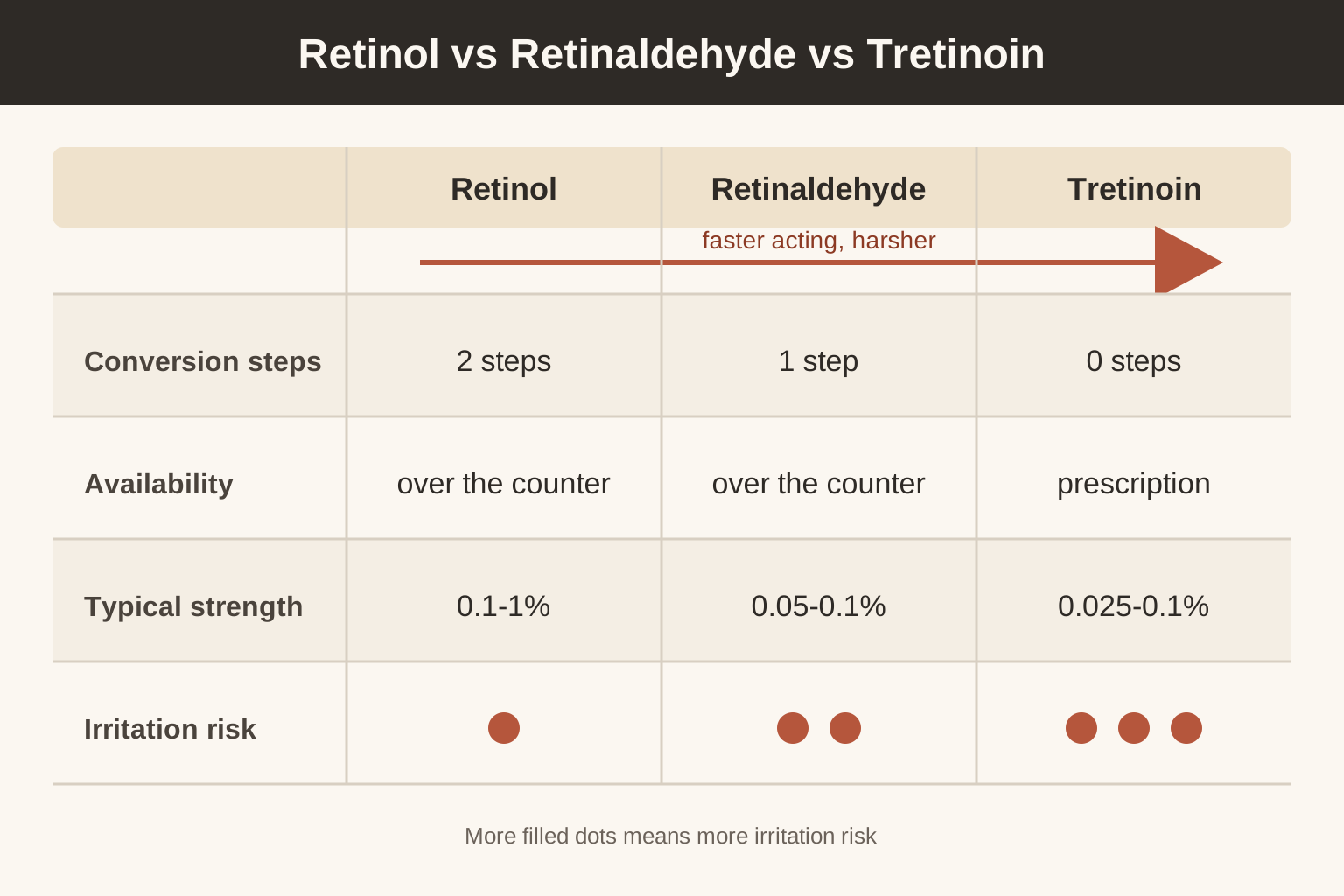
How to read the label on retinol products
The ingredient list tells you more than the front of the box. Four terms are not interchangeable:
- Retinyl palmitate — three conversion steps away, the weakest common form; treat claims about it with suspicion.
- Retinol — the benchmark, and the only one where a stated percentage means something comparable between brands.
- Granactive retinoid (hydroxypinacolone retinoate) — binds receptors directly with less irritation, but percentages do not map onto retinol percentages at all.
- Encapsulated retinol — the same molecule in a delivery shell that releases it slowly, which lowers peak irritation rather than raising the dose.
The mechanism behind all four is the same conversion cascade; how topical retinoids convert to retinoic acid in the skin is worth ten minutes if you want to judge claims yourself.
Sometimes products containing retinol are simply the wrong tool. Moderate to severe inflammatory acne, established melasma, or four consecutive months of over-the-counter retinol skin care with no visible change are all points where a dermatologist and a prescription will get you further, faster, and often for less money than a fourth serum.
What Retinol Treats, and What It Does Not
Retinol acne results come from normalising follicular keratinisation — the plug forms more slowly, so comedones and mild inflammatory papules clear over eight to sixteen weeks. Cystic and nodular acne sits deeper than a topical retinol reaches; that needs prescription treatment, and using a stronger over-the-counter product instead usually just wrecks the barrier.
A retinol anti wrinkle cream works on fine lines, crepey texture and the shallow etching around the eyes and upper lip. It does nothing for deep nasolabial folds or midface volume loss, which are structural problems that skincare cannot reach. Anyone selling you otherwise is selling you disappointment.
The collagen case, honestly stated
A retinol collagen cream can plausibly raise procollagen I in the dermis over six to twelve months of consistent use, with visible firming lagging behind the biochemistry. That is a real effect and a modest one: think a measurable reduction in fine lines, not a facelift in a jar. If you want to read the underlying work rather than the press release, start with clinical evidence on retinol and collagen in photoaged skin.
An anti ageing retinol cream underperforms in three predictable situations. Melasma pigment usually needs tyrosinase inhibitors and rigorous sun avoidance alongside it. Active rosacea flares often get worse before they get better, if they get better. And skin already stripped by daily acid exfoliation has no barrier left to spend, so retinol reads as an insult rather than a signal. Fix the barrier first, then start.
Choosing Your Strength: Why a Low Concentration Retinol Cream Wins First
Start at a low concentration retinol cream between 0.2% and 0.3%. Tolerance is the limiting factor, not potency: at twelve months, the difference in outcome between 0.3% used consistently and 1% used consistently is small, while the difference in dropout rate is enormous.
A gentle retinol cream used three nights a week for a year beats a 1% formula you abandon in week three. Frequency compounds; percentage does not.
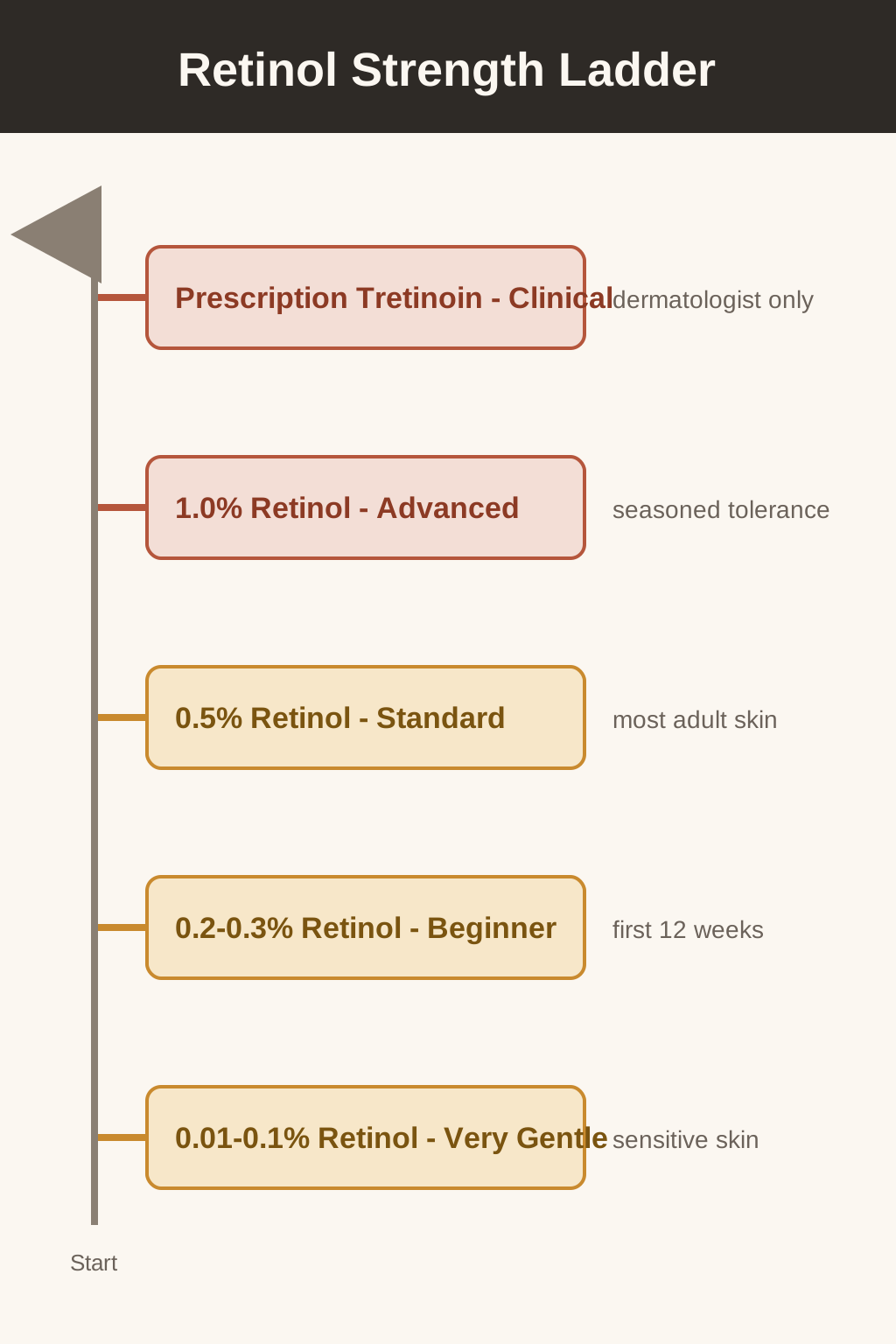
What makes an effective retinol cream on the label
- A stated percentage, not "retinol complex" or "encapsulated actives" with no number attached.
- Opaque, airless packaging — retinol oxidises in light and air, so a clear jar loses potency every time you open it.
- A buffering base with niacinamide, ceramides or panthenol, which measurably lowers reported stinging in the first month.
Treat any retinol cream best product claim as a starting point rather than a verdict. Percentage without packaging and formulation context tells you almost nothing, and a well-buffered 0.3% in an airless pump will outperform a badly formulated 1% in a clear jar. The markers worth paying for on a good retinol face cream are the pump, the buffering ingredients and a fragrance-free formula; the markers that are pure marketing are gold flakes, exotic botanical extracts and the word "clinical" on the front.
Not sure which strength band your skin belongs in? Six questions, two minutes, and you get your skin type plus a starting concentration.
Some links below are affiliate links, and we may earn a commission if you buy through them.
Serum, Cream, Lotion or Oil: Picking the Right Retinol Format
A retinol face serum spreads thin, absorbs in under a minute and layers cleanly under anything else. That suits oily and combination skin, and it is the format most beginners meet first. The tradeoff is real: a serum base offers almost no barrier support, so on dry skin it delivers the irritation without the cushioning.

Cream and moisturizer formats
A retinol moisturizer or moisturiser containing retinol gives up a little delivered dose in exchange for emollients and occlusives that hold water in the skin overnight. On dry or mature skin that is usually the better deal, because the limiting factor is tolerance, not milligrams.
A moisturizer containing retinol and a retinol face cream are, in most lines, the same product with different wording on the front panel. Compare the ingredient list and the stated percentage rather than the category name.
Lotion and oil formats
A face lotion with retinol is thin enough for humid climates and large enough to use on the neck, chest and arms without burning through a 30 ml bottle in a fortnight. A retinol oil suits reactive, lipid-depleted skin that stings on contact with alcohol-based serums, because the lipid carrier slows penetration and reinforces the barrier at the same time. The cost of an oil is finish: it sits on the skin, and it will not layer politely under makeup.
Around the eyes, formats sit at lower strengths in thicker bases for a structural reason — orbital skin is roughly half as thick as cheek skin and has far fewer sebaceous glands. If pigment rather than texture is your main concern there, our guide to choosing a circle eye cream for dark circles covers the actives that actually target it.
Some links below are affiliate links, and we may earn a commission if you buy through them.
Building the Night Routine Around a Retinol Night Serum
The order is short and the waiting is the part people skip. Cleanse, pat dry, wait until the skin is genuinely dry, apply a pea-sized dose of retinol night serum to the whole face, then seal with moisturizer.
A pea covers the entire face. More does not work faster; it works angrier, and it empties the bottle in six weeks instead of twelve.

Why the drying step matters
A night time retinol cream goes on dry skin because damp skin increases transepidermal absorption without increasing benefit. You get more irritation for the same result. Give it a full three to five minutes after cleansing — long enough to brush your teeth.
Start with a low-surfactant wash: use a creamy, non-foaming cleanser on retinol nights, since a stripping foam plus retinol is the fastest route to a compromised barrier. If you are not sure what you are using, how to choose the best face wash for your skin type sorts the categories out.
A frequency schedule that survives contact with real skin
- Weeks 1–2: two nights a week.
- Weeks 3–6: three nights a week, only if there is no persistent flaking.
- Week 7 onward: every other night, moving to nightly only when your skin has stayed calm for a fortnight.
For reactive skin, use the sandwich method: moisturizer, then a night cream with retinol, then moisturizer again. It slows delivery, cuts stinging noticeably, and costs you some potency — a fair trade if the alternative is stopping. Timing questions about the hydrating layers are covered in when to use hyaluronic acid serum: 7 timing rules.
Finally, audit the shelf. Count every product in the routine and remove the other skincare products with retinol — the eye cream, the neck cream, the "renewing" night lotion — so you are not stacking three doses without realising it. Stacked retinol is the single most common cause of a "sudden" reaction in month two.
Some links below are affiliate links, and we may earn a commission if you buy through them.
Side Effects and the Twelve-Week Adjustment Curve
Retinization follows a predictable arc. Weeks one and two bring tightness and mild flaking. Weeks three and four are the peeling peak, usually around the nose and chin. Weeks five to eight settle, and by weeks nine to twelve the texture change starts to show.
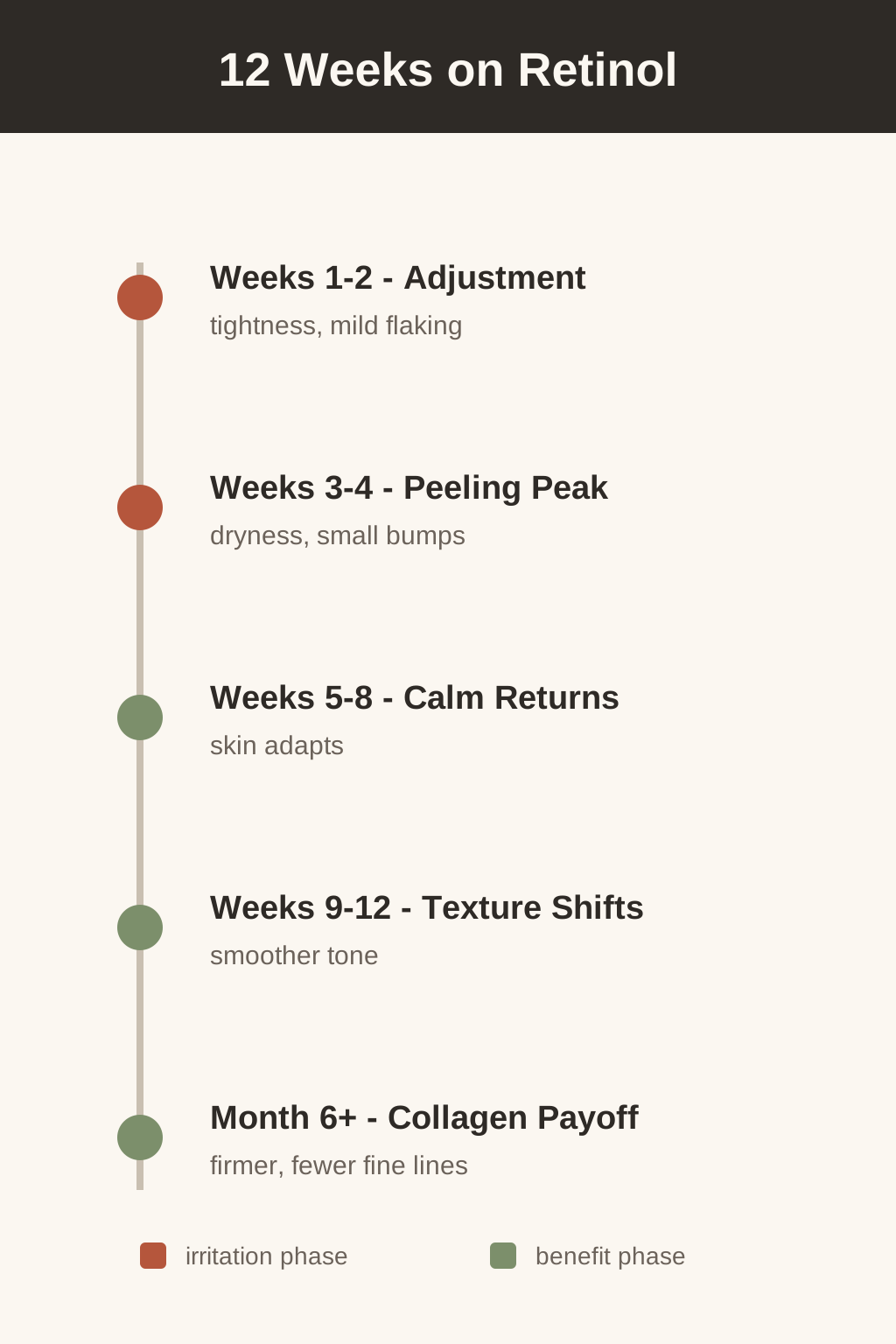
Purge or reaction?
A purge appears where you already break out, consists of the same kind of spots you usually get, and resolves within about six weeks. A reaction spreads to areas that were clear, stings on application, and often comes with itching or a rash-like flush. A purge you ride out; a reaction you stop.
When retinol skin products have gone too far, the recovery protocol is unglamorous and it works: pause retinol entirely, use a bland fragrance-free moisturizer and a gentle cleanser only, drop all exfoliation, and restart at half your previous frequency once the skin has been comfortable for a week. Save the gentle face scrub guide for weekly exfoliation for after the barrier has recovered.
Some people should not use retinol face products at all. Pregnancy and breastfeeding are the clearest cases — topical retinoid safety during pregnancy and breastfeeding explains the reasoning and the alternatives. Active eczema, an open flare of perioral dermatitis, or the week around a chemical peel are also reasons to wait.
Sun sensitivity is real but modest, and it is not the main argument for daily SPF here. The bigger issue is that unprotected daylight degrades the collagen your retinol spent six months building.
Want the whole thing on one page you can keep by the sink? This cheat sheet is for anyone starting retinol who does not want to reread a guide every night.
Layering Rules: What Pairs With Retinol and What Waits Until Morning
Three families belong in the same layer as retinol because they buffer rather than compete: niacinamide, hyaluronic acid and ceramides, with peptides a reasonable fourth. None of them deactivate retinol, and niacinamide in particular reduces reported stinging.
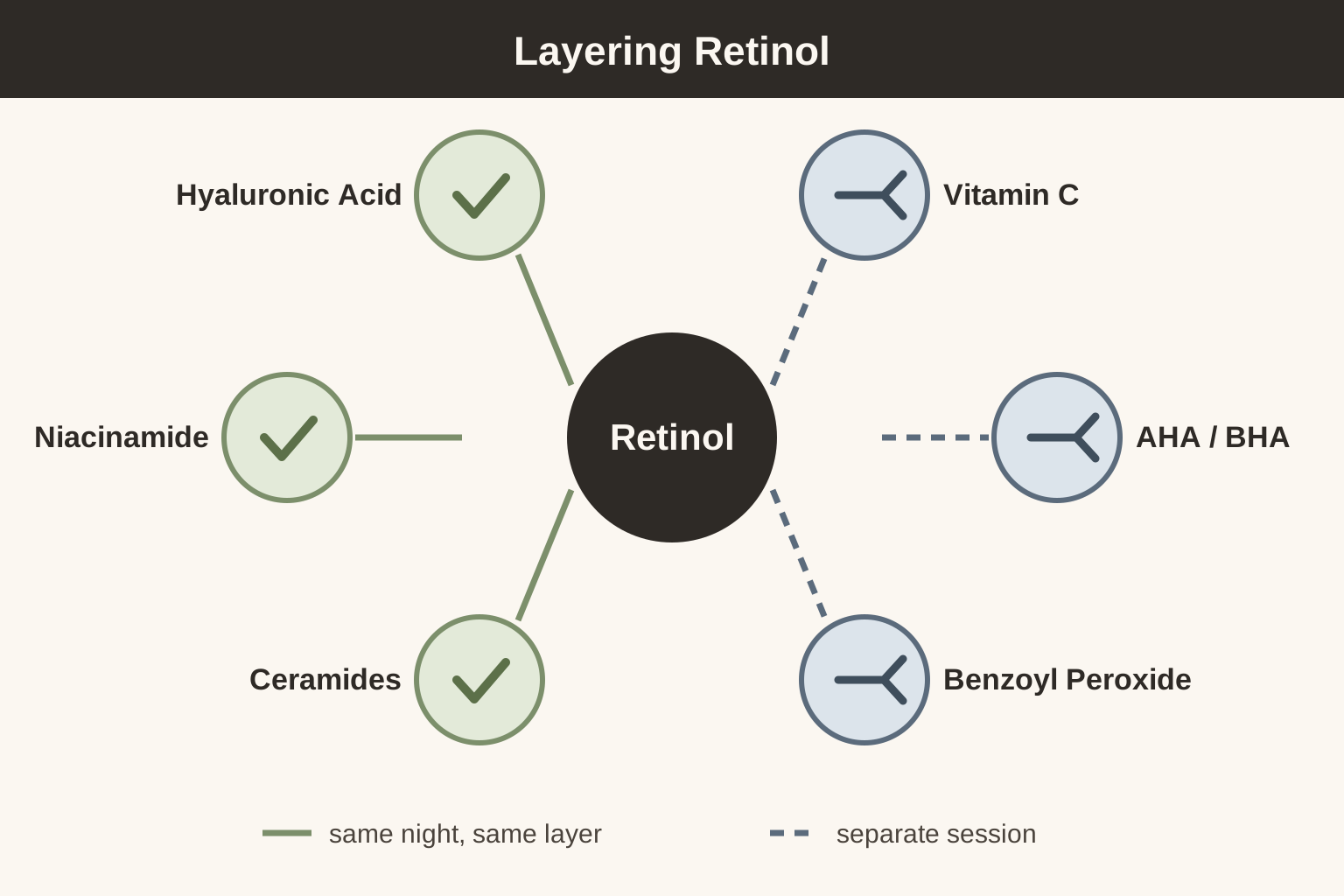
Three belong in a different session. Vitamin C works best in the morning, where its antioxidant role complements sunscreen — our picks for the best vitamin C serum for face, dermatologist-approved picks cover the stable formulations. AHA and BHA go on non-retinol nights. Benzoyl peroxide should never share a layer with retinol, because it oxidises the molecule directly.
Morning sun protection is the other half of the routine, not an optional extra: pair the routine with a broad-spectrum SPF 30 or higher every day you see daylight. Retinol products build collagen that unprotected UV exposure takes straight back, and best sunscreen: how to choose SPF that actually protects explains what the label numbers really mean.
For weekly exfoliation, stagger it: acid on Sunday, no retinol Sunday or Monday. That gives the barrier 48 hours before the next demand, which is roughly how long stratum corneum recovery takes after a mild peel.
Not sure whether your two actives can share a night? Tell the checker what is on your shelf and it returns safe, caution or avoid, plus an AM or PM slot for each.
Retinol Questions Readers Ask Most
How long before a retinol serum shows visible results?
Brightness and smoother texture at eight to twelve weeks; fine lines at four to six months; firmness later still. Nothing visible happens in week one except adjustment.
Does retinol thin the skin?
It thins the stratum corneum briefly during retinization, which is why skin looks shiny and feels fragile early on, and it thickens the viable epidermis and dermis over months. The long-run effect is the opposite of thinning.
Can you use a retinol cream on the eyes and neck?
Yes, at lower strength and lower frequency — start twice weekly on the neck, and keep face-strength formulas off the eyelid itself. Both areas flake sooner than cheeks do.
How should you store retinol?
Cool, dark, tightly closed, and out of the shower. Replace an opened bottle at six months; if the formula has yellowed or smells rancid, it has oxidised and the dose is no longer what the label says. For the wider context on protecting results, dermatologist guidance on preventing premature skin aging is a sensible companion read.
One skincare active explained each week, no product dumps — if that is useful, the sign-up is below.
One skincare active explained each week. No product dumps.
Thanks — you're on the list.

