

What Hyaluronic Acid Actually Does on Your Skin
Hyaluronic acid is a humectant: a sugar molecule your body already makes, and one that binds water and refuses to give it back easily. A quarter-teaspoon holds roughly a gallon and a half of water, and that single property is the whole mechanism behind a hyaluronic acid serum for hydration.
That mechanism has a condition attached. A humectant pulls water from wherever water is available — the damp surface of just-cleansed skin, humid air, or, in a dry room with a dry face, the deeper layers of your own skin. Applied to bone-dry skin at 20% humidity, the same serum that plumps in July can leave skin tighter in January.
The physical chemistry behind that is worth two minutes: how much water hyaluronic acid can actually hold.
This is also why the best hyaluronic acid serum is not a substitute for moisturizer. A moisturizer seals; a serum attracts. Run one without the other and you have half a system.

Expect hyaluronic acid serum skin results to show up fast and shallow: a plumper surface, softer light reflection off fine lines, and slightly better makeup wear within about 20 minutes. Expect them to fade within a day of stopping. Collagen stimulation, pigment fading and structural firming are other ingredients' jobs.
Timing changes the result more than price does.
Molecular Weight, Percentage and the Rest of the Ingredient List
Four of the seven checks live on the back of the bottle. None of them require a chemistry degree, and all four are visible before you pay.
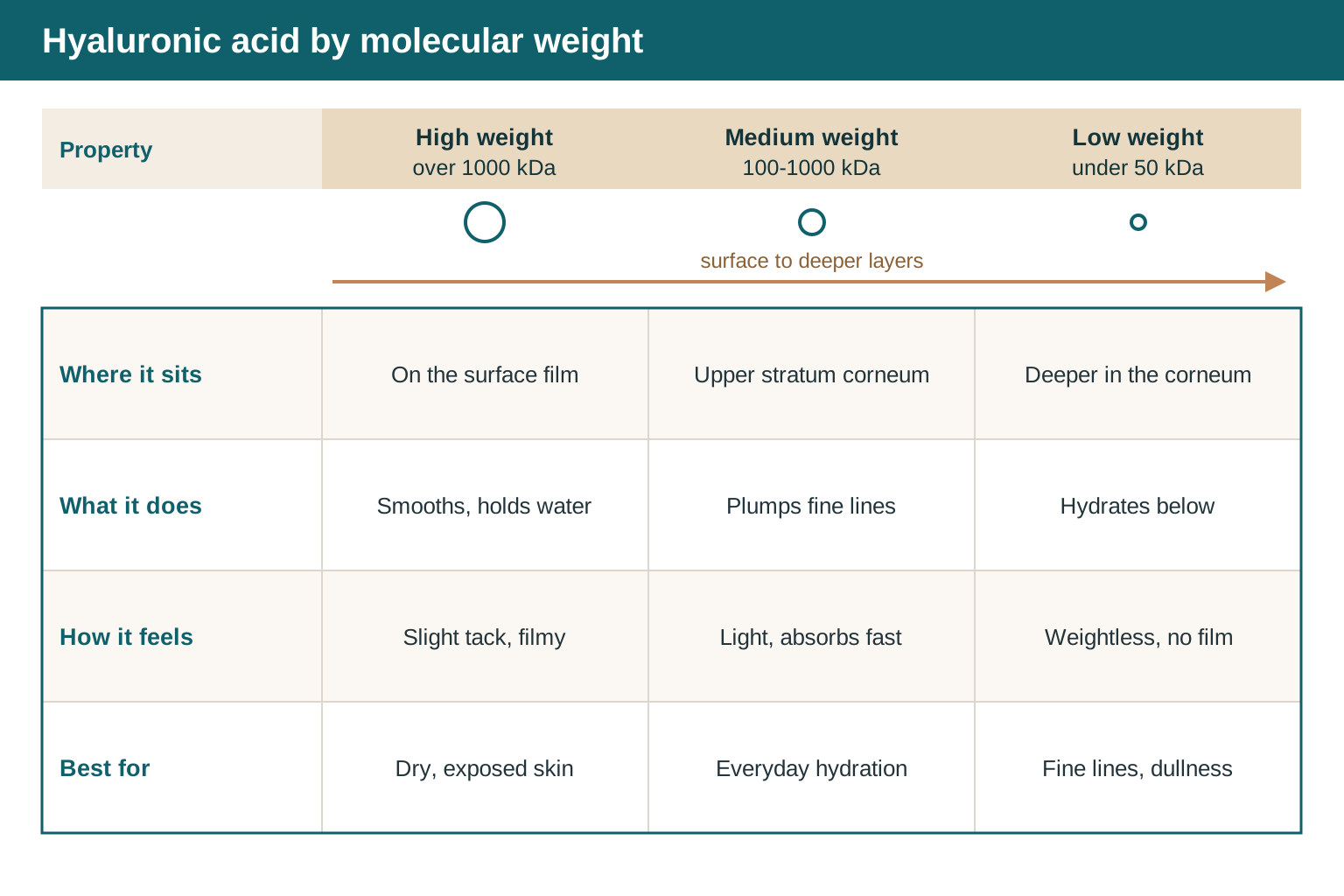
Molecular weight blend, not a single size
Hyaluronic acid is sold in fragments measured in kilodaltons. High-weight material (above 1000 kDa) stays on the surface and forms a smoothing film. Medium and low weight (roughly 10–1000 kDa) can move into the upper stratum corneum, which is where the plumping between fine lines happens.
A single-weight formula does one of those jobs. What makes the best hyaluronic acid formula on a spec sheet is usually a blend — look for two or three weights, or the phrase "multi-weight," rather than a single line item.
One controlled study of a multi-weight topical formula measured a 134% rise in skin water content immediately after application and 55% after six weeks: a clinical trial measuring skin water content after a topical hyaluronic acid serum.
Percentage between 0.5 and 2, not the highest number
Most effective formulas sit between 0.5% and 2%. Above roughly 2%, the serum turns stringy, dries to a tacky film, and in low humidity becomes better at pulling water out of skin than into it.
So the strongest hyaluronic acid serum in marketing terms is often the worst performer in a heated apartment. Treat a bold percentage on the front of the box as a reason to check the humidity where you live, not as a reason to buy.
Sodium hyaluronate high on the ingredient list
A pure hyaluronic acid serum lists water, then sodium hyaluronate or hydrolyzed hyaluronic acid within the first four ingredients, then a preservative and little else. That minimalism is genuinely useful if you react to things — fewer ingredients, fewer suspects.
It costs you something, though: a bare humectant has no emollient to soften the finish, so it needs a cream over it every time. A hyaluronic acid facial serum buffered with glycerin, panthenol or ceramides is more forgiving and easier to live with.
Supporting humectants, emollients and ceramides
Water pulled to the surface leaves again unless something slows it down. That is why the best hyaluronic acid serum for face formulas pair the humectant with an emollient and a light occlusive, either in the same bottle or in the step immediately after.
Glycerin at 3–5% does the same job for a fraction of the cost. Ceramides and squalane hold the result in place for hours instead of minutes.
Texture, Fragrance, Packaging and Price Per Milliliter
The remaining three checks are about living with the bottle for three months, which is where most serums are actually abandoned.

Texture that absorbs in under a minute
Put two drops on the back of your hand and count. A hyaluronic acid serum for face that is still tacky after 60 seconds will pill under sunscreen and roll off under foundation, every morning, forever.
A hyaluronic acid serum for dry skin can carry the slower, richer body — the extra dwell time is doing real work there. Anyone applying SPF over the top in a hurry should not buy it.
No fragrance, no denatured alcohol
Fragrance, alcohol denat. and heavy botanical extracts are the three usual reasons a hyaluronic acid serum for sensitive skin stings on application. A short ingredient list is the cheapest insurance available.
The tradeoff is honest: unfragranced serums often smell faintly of their preservative system, and some people dislike that enough to stop using them.
The same fragrance rule decides most niacinamide purchases too — how to choose a niacinamide serum that actually works.
Airless pump and cost per milliliter
An open glass dropper reintroduces air and skin bacteria at every use. An airless pump keeps a preservative-light formula stable for the full shelf life, which matters more for minimal formulas than for buffered ones.
Then do the arithmetic: divide price by millilitres. A 30 ml bottle at two drops twice daily lasts roughly three months. That calculation is what turns an affordable hyaluronic acid serum from a marketing claim into a number you can compare.
Best Hyaluronic Acid Serum Picks by Skin Type and Budget
Four picks, each judged against the seven checks above and each aimed at a different way skin loses water. There is no overall winner here, because the best hyaluronic serum is a match problem, not a ranking problem.
Absorption time, pilling under sunscreen and whether the effect survives a heated room are what separate a top rated hyaluronic acid formula from an average one in daily use. Price is a weak signal: a dermatologist recommended hyaluronic acid serum often differs from a drugstore bottle mainly in packaging and finish, though the best hyaluronic acid serum for mature skin tends to justify its cost with a richer base. Read hyaluronic acid serum reviews with that in mind — most one-star reviews describe a humectant used on dry skin in dry air, not a failed formula.

We may earn a commission from purchases made through the links below. It does not change what we recommend or what you pay.
Which Serum Fits Your Skin Type
Dehydration and dryness are different problems that get sold the same solution. Dehydrated skin lacks water and can be oily; dry skin lacks lipids and can be perfectly hydrated. Plenty of people have both, on different parts of the same face.
That distinction decides whether hyaluronic acid products help you at all. If your skin is tight but shiny by noon, a watery humectant serum is the right tool. If it is matte, flaking and rough, a humectant alone will underdeliver until you add oil back.
Narrowing the best hyaluronic acid for face to two candidates takes one question after that: does your morning include sunscreen applied in under a minute? If yes, buy the fastest-absorbing texture you can find, whatever the marketing says about the formula.
A serum is also not the only hyaluronic acid skin care products option in a cabinet. A hydrating essence, a humectant-heavy moisturizer or a toner with glycerin high on the list can cover the same ground for less money and one fewer step.
Vitamin C is the other serum most people buy at this point — dermatologist-approved vitamin C serum picks for face.
How to Apply It So It Hydrates Instead of Drying You Out
Order and timing do more work here than product choice, and they are what makes hyaluronic acid skincare products earn their place in a routine. Cleanse, leave skin visibly damp rather than towel-dry, press in two to three drops, then seal within 60 seconds — before the humectant starts drawing on the deeper layers instead of the surface water you gave it.
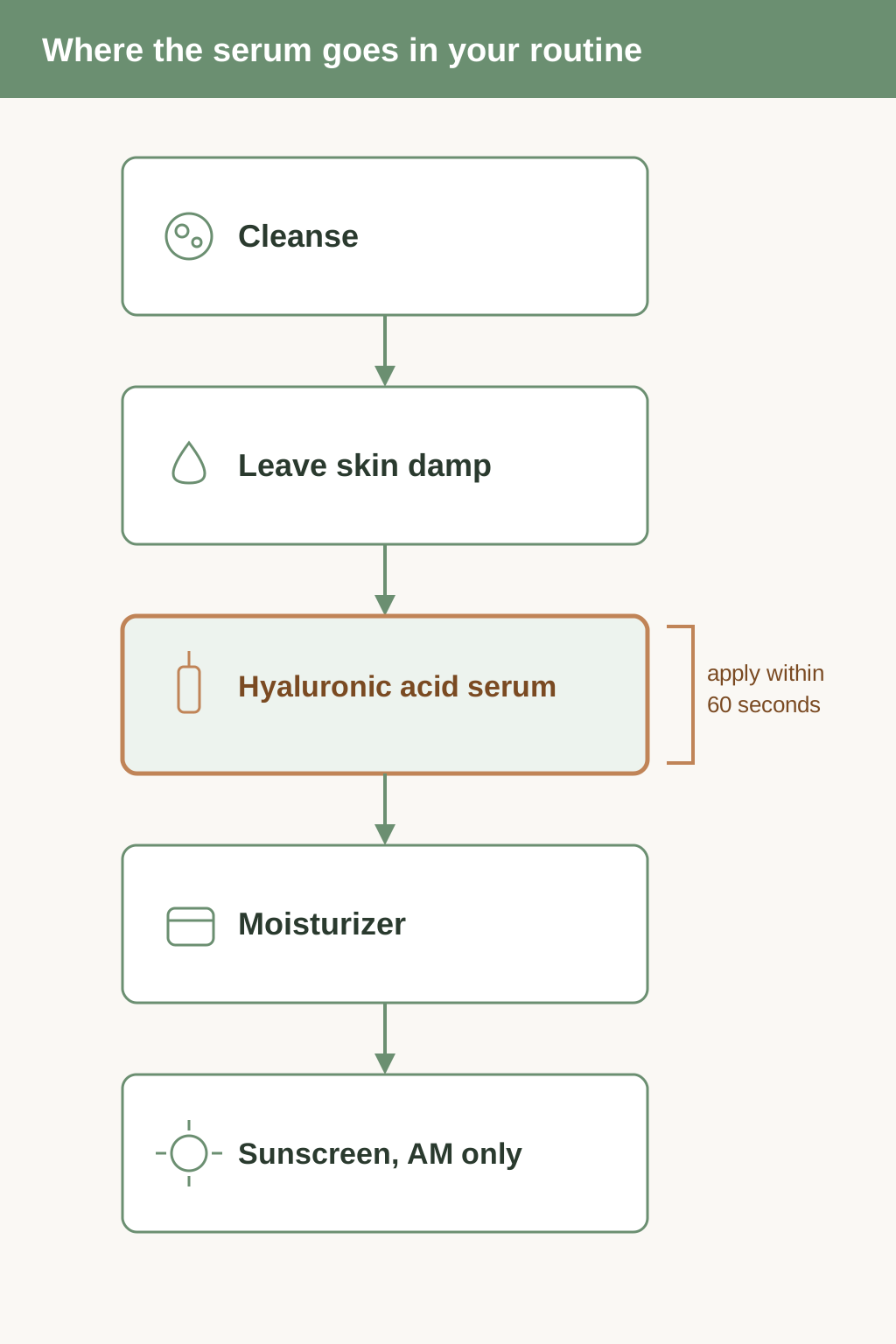
Two to three drops covers a face. More is not better: excess sits on the surface, dries tacky and pills under whatever comes next. Follow it immediately with a plain moisturizer, and in the morning sunscreen goes last.
The reason that occlusive step is non-negotiable is transepidermal water loss: why a humectant needs an occlusive layer over it.
Layering is mostly forgiving. Hyaluronic acid shares a slot with niacinamide and peptides without complaint. Applied straight onto skin still wet with an exfoliating acid it can carry stinging further than you want, so give acids and vitamin C a minute to settle first, or move them to the other half of the day.
One label note for anyone shopping abroad or online: the same formula sells as serum acido hialuronico, as sodium hyaluronate, or as hydrolyzed hyaluronic acid. Read the ingredient name, not the front of the box — the marketing name tells you nothing about weight or percentage.
The moisturizer over the top matters as much as the serum under it — face moisturizer buying guide for every skin type.
Mistakes, Misspellings and What This Ingredient Will Not Do
Searches for hydraulic acid serum, hydro acid serum and hydrochloric acid serum all land on the same molecule under a mangled name. Hydrochloric acid is stomach acid and belongs nowhere near a face; nobody is selling it as skincare.
So when the question is hydraulic acid for face, or which is the best hydraulic acid, the honest answer is that it is hyaluronic acid, sold at every price band from four dollars to ninety.

What it will not do: exfoliate, fade pigment, replace sunscreen or a retinoid, or repair a damaged barrier on its own. Three failure modes account for most disappointment — applying it to bone-dry skin, skipping the occlusive step, and expecting structural change from a molecule whose only job is holding water.
On elasticity, wound healing and the debate about low molecular weight fragments: the evidence on elasticity, wound healing and low molecular weight fragments.
For the line-smoothing it cannot do, you need a retinoid — retinol guide covering strength, frequency and irritation.
Questions Buyers Ask Before They Commit
Surface plumping shows within about 20 minutes of the first use. Anything described as cumulative — better makeup wear, less tightness on waking — takes four to six weeks of daily use to judge fairly.
A 30 ml bottle at two to three drops, twice a day, lasts roughly three months. Twice daily is fine; there is no tolerance to build and no break to take.
It sits safely alongside retinol, vitamin C and exfoliating acids, with one caveat: on already-irritated skin, apply it after the water has settled rather than onto a wet acid layer. If skin is stinging, pause every active and run cleanser, this serum and a bland moisturizer for a week.
If nothing has changed after six weeks of correct use, the problem is lipids, not water, and a richer moisturizer is the better spend.
Where it sits among everything else: building a skin care routine in the right order.
One hydration tip a week, plus what we would skip — no product dumps.
One hydration tip a week, plus what we would skip. No product dumps.
Thanks — you're on the list.

