

A hydrating toner is a leave-on water step that loads skin with humectants like glycerin and hyaluronic acid, then seals them with ceramides or squalane. For dry or sensitive skin, pick a fragrance-free, alcohol-free formula at pH 5 and apply it to damp skin within sixty seconds.
What Does a Hydrating Toner Actually Do for Dry Skin?
A hydrating toner is a leave-on water step that pulls moisture into the top layer of skin with humectants, while an astringent removes oil and usually leaves dry skin tighter. The mechanism is simple chemistry: glycerin, butylene glycol and sodium hyaluronate are hygroscopic, so they bind water molecules and hold them inside the stratum corneum instead of letting them evaporate.
An astringent does the opposite job. It dissolves sebum and surface residue, then flashes off, taking a share of the skin's own water with it. That is useful on skin that turns shiny by 11am and punishing on skin that already feels papery.
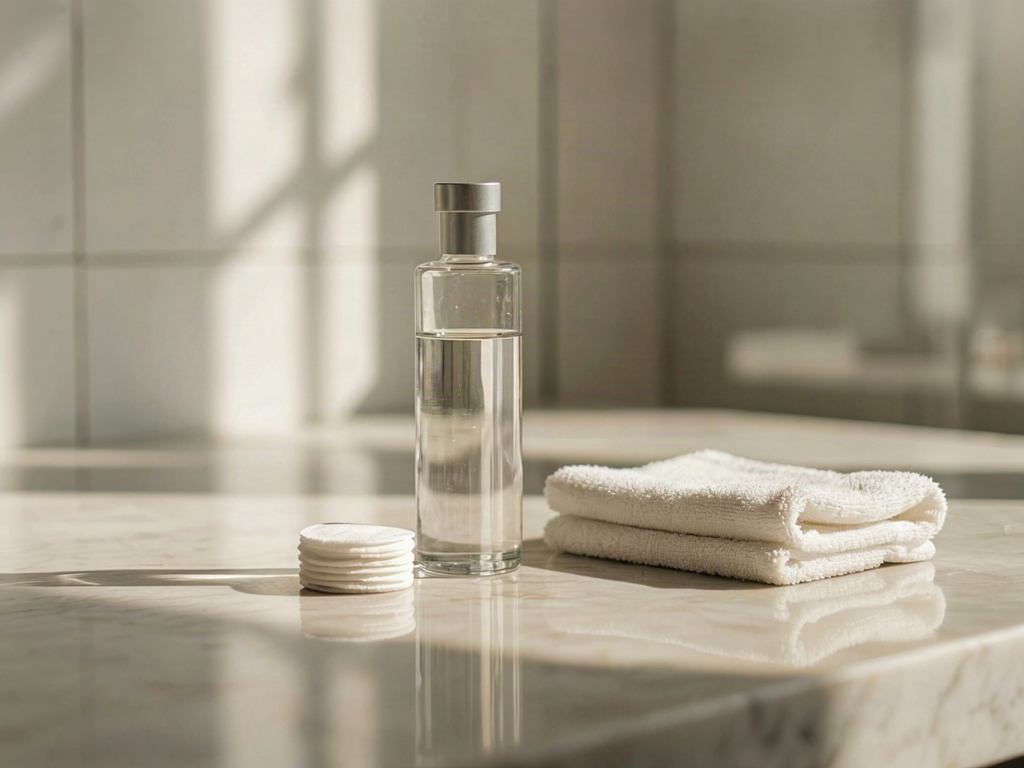
This is why a hydrating face toner fits a toner dry skin routine better than a wipe-off astringent: nothing is removed, and the layer stays on the face rather than on a pad in the bin. If you want the wider history of the category and what the step was originally for, here is what a face toner actually does.
The words on the front of the bottle carry no legal weight. A moisturizing toner is simply one whose formula leans on water-binding agents, and a moisturizing skin toner that earns the name lists glycerin, panthenol or sodium hyaluronate near the top rather than in the last three ingredients before the preservative.
You are the reader who benefits from hydrating toners if your skin feels tight, papery or visibly flaky within about a minute of rinsing your cleanser. If your skin feels comfortable at that mark, this step is optional comfort, not repair, and the money is better spent on your moisturizer.
Position matters too. The step belongs between cleanser and serum, while the skin surface still holds water from the rinse, because humectants applied to a dry face have to pull moisture from deeper tissue instead of from the surface film. The same sequencing logic runs through the skin care tips dermatologists use themselves when they treat dry, winter-stressed skin.
Which Formula Details Decide Whether a Toner Hydrates?
Four label details decide whether a toner hydrates: where humectants sit in the ingredient list, whether barrier lipids are present, a pH near 5.0, and whether the texture is watery or milky.
Humectant in the first five ingredients
Ingredient lists run in descending order of concentration down to one percent, so position is a proxy for dose. A real hydrating toner for dry skin puts glycerin, butylene glycol or sodium hyaluronate inside the first five slots, right behind water. When the humectant sits below the fragrance, you are buying scented water at a hydrating price.
The limitation is honest: position tells you roughly how much, never exactly how much. Molecular weight matters too, which is the point of the hyaluronic acid research on skin hydration.
Barrier lipids: ceramides, cholesterol, squalane
Humectants donate water. Lipids keep it. Ceramides, cholesterol, fatty acids and squalane turn a face toner for dry skin into a step that holds moisture rather than handing it to the air, which is why two bottles with identical glycerin content perform differently on a cold commute.
The cost is texture: lipid-carrying formulas feel heavier and can pill under a thick sunscreen.
A formula pH near 5.0
Healthy skin surface sits mildly acidic, roughly between pH 4.5 and 5.5, and the enzymes that build ceramides work best in that window. A formula near 5.0 leaves that acid mantle alone, which is what makes a non drying toner non drying; anything strongly alkaline swells corneocytes and slows barrier repair. Measured hydration outcomes track this kind of detail in the cosmetic formulation study on measured skin hydration.
Texture: watery essence or milky lotion
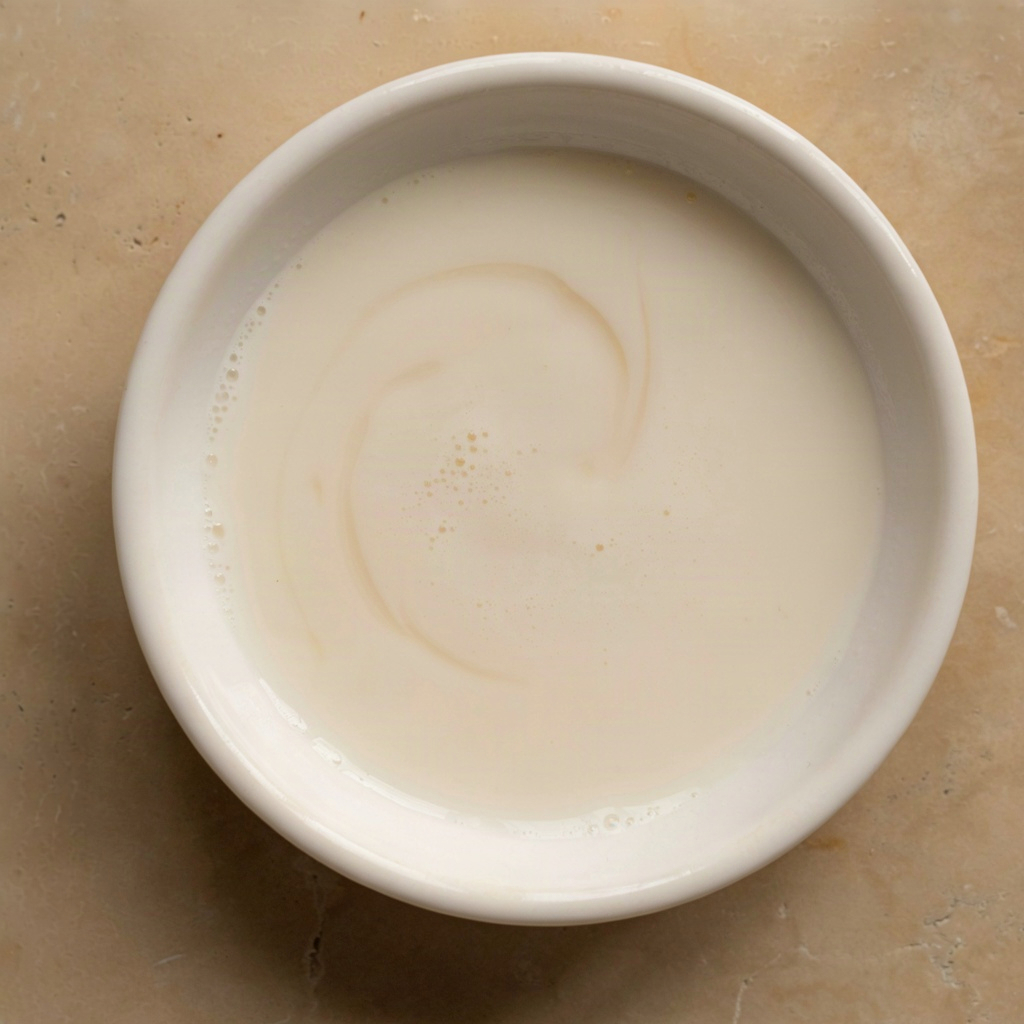
Watery formulas absorb in seconds and layer well. Milky ones carry emulsified oils, so the best moisturizing toner for very dry or wind-exposed skin is usually the opaque one, at the cost of slower absorption under makeup.
On one grid, the best hydrating toners separate by formula family rather than brand story.
| Formula family | Humectant load | Barrier lipids | Typical pH | Sting risk |
|---|---|---|---|---|
| Watery essence toner | High | None | 5.0 to 5.5 | Low |
| Milky lotion toner | Medium to high | Yes, emulsified | 5.0 to 5.5 | Low |
| Ferment or galactomyces toner | Medium | Rarely | 4.5 to 5.5 | Medium |
| Humectant-plus-lipid toner | High | Yes, ceramides | 5.0 to 5.5 | Low |
| Astringent-style toner | Low | None | Often above 6.0 | High |
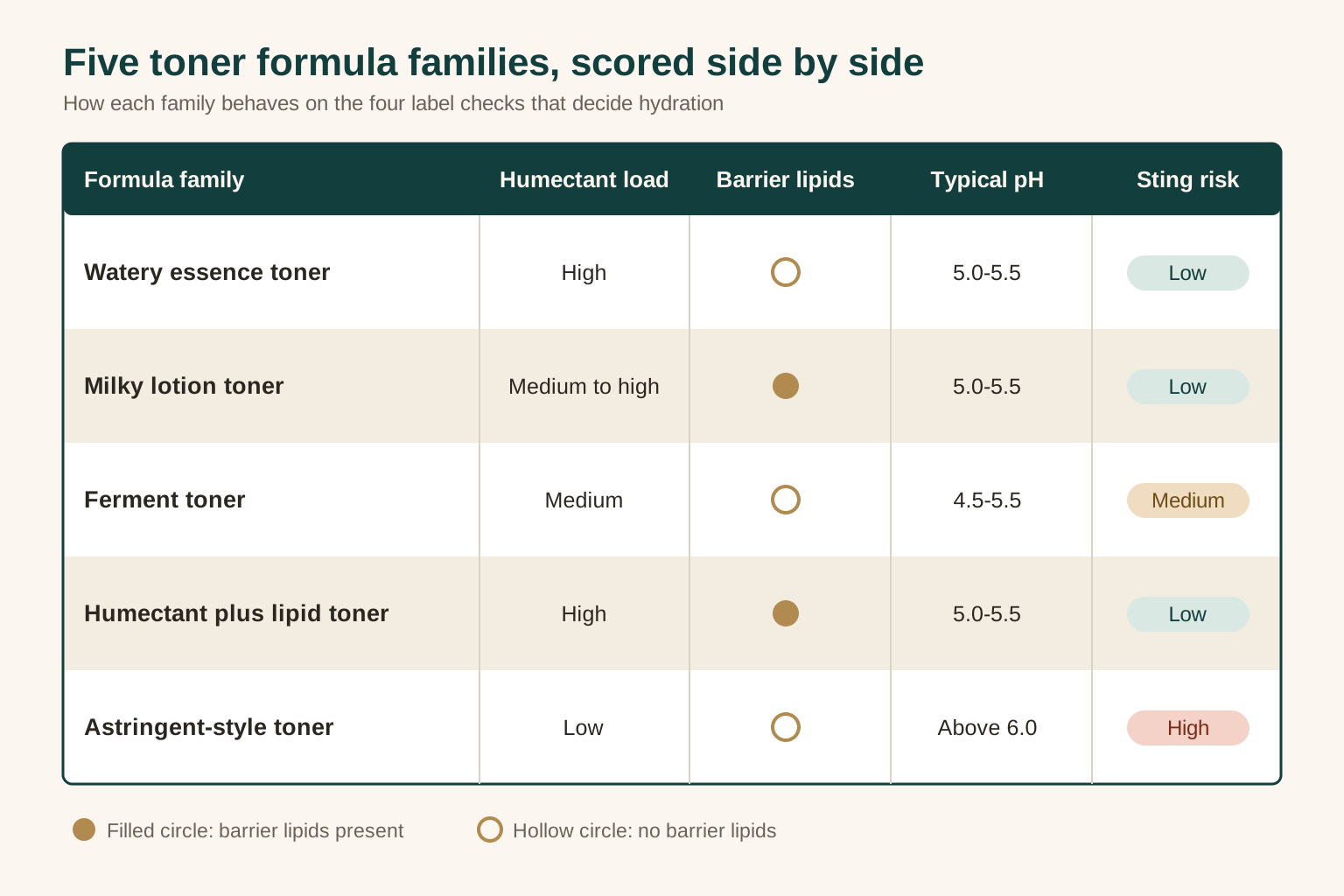
The best face toner for dry skin wins on ingredient position and pH, never on the word hydrating printed across the front. The same logic runs through how to choose the best face toner and the hyaluronic acid serum buying checklist.
How Do You Screen a Toner for Sensitive, Reactive Skin?
Screen a toner for reactive skin by ruling out fragrance, essential oils and denatured alcohol, then patch testing behind one ear for three nights before it goes near your face. Reactive skin fails on what a formula contains far more often than on what it lacks.
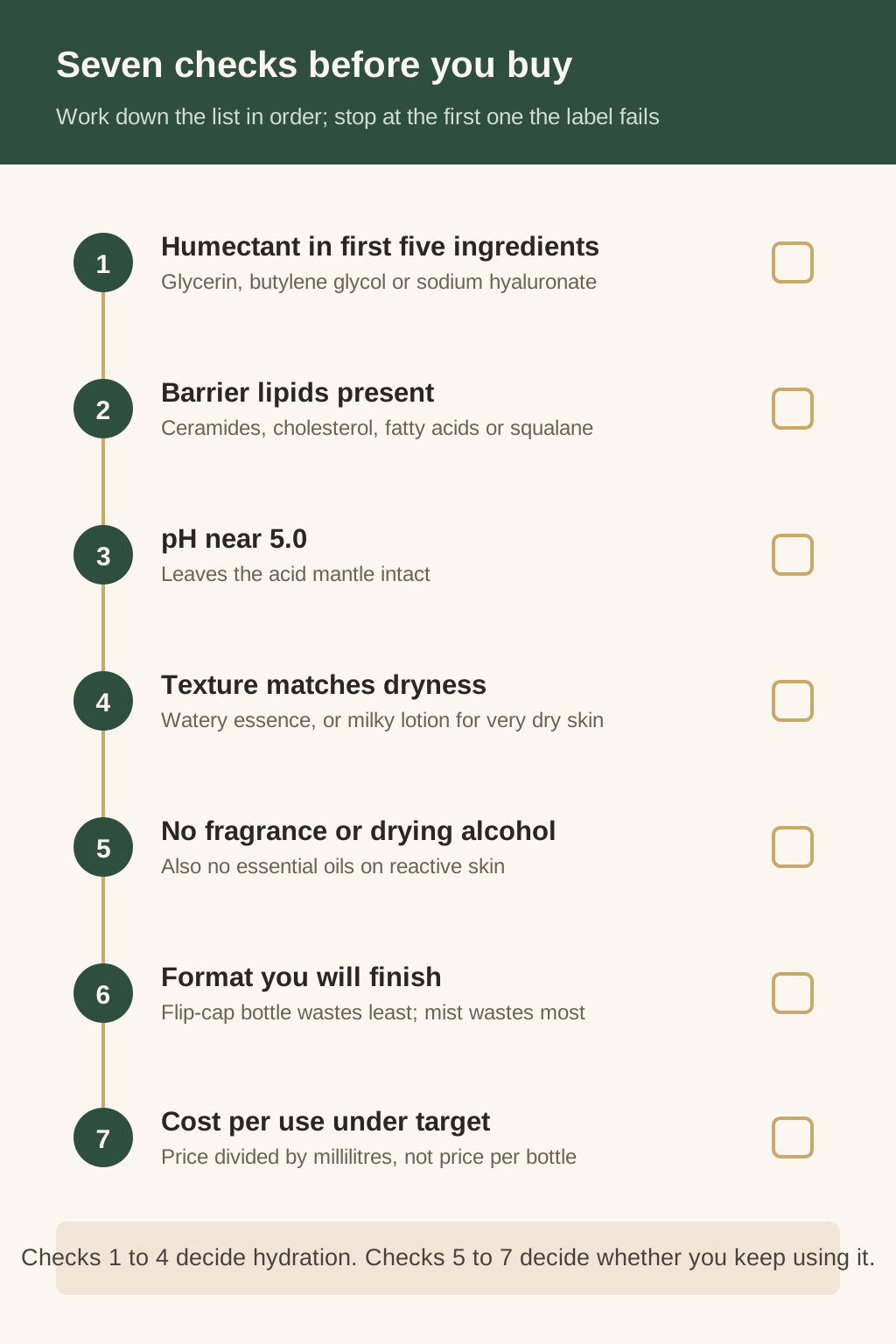
No fragrance, essential oils or drying alcohol
Three ingredient groups cause most of the stinging in a toner for dry sensitive skin: added fragrance, essential oils such as lavender and citrus peel, and alcohol denat. high in the list. Fragrance allergy builds with repeated exposure, so a product can be comfortable in March and intolerable in August.
Patch test for three consecutive nights on the same patch of skin behind one ear. That habit is what separates the best face toner for sensitive skin from a two-week rash you then blame on the wrong product. The clinical picture of reactive skin, including why symptoms often outrun visible signs, is set out in this review of sensitive skin as a clinical concept, and the method itself is described step by step in how to patch test a new skin care product.
A gentle toner for dry skin usually runs under fifteen ingredients with no botanical extract blend, because every extract added is another sensitising candidate. The tradeoff is that short lists feel plain and rarely smell of anything.
A format you will actually finish
Format decides waste. A flip-cap bottle poured into the palm delivers nearly everything you pour; a fine mist scatters a share onto your hairline and mirror; pre-soaked pads charge you for the pad and the extra liquid it holds. For a facial toner for dry sensitive skin user, pads add friction to already irritated skin as a bonus drawback.
Mists have one real advantage: no hands touch the product, which suits inflamed or broken skin. They are simply the most expensive way to apply the same formula.
Cost per use, not price per bottle
Divide millilitres by roughly one millilitre per application and you get uses per bottle; divide the price by that figure and you get the number that matters. A 100 ml bottle at twice the price of a 200 ml bottle costs four times as much per use.
Run that arithmetic before deciding the best toners for sensitive skin are unaffordable. The best toner for dry sensitive skin is not simply a gentle hydrating toner with nothing irritating in it; it has to pair proven humectants with a lipid, or you are paying for the absence of ingredients rather than the presence of useful ones. The same screening habit carries across calmer routines for sensitive skin and into gentle cleanser picks for reactive skin.
Which Hydrating Toner Fits Your Skin Type and Budget?
Match the formula family to your skin: milky lotions for very dry skin, essence-style waters for combination-dry skin, and niacinamide formulas when dullness matters as much as dryness. Skin type picks the family; budget picks the bottle inside it.
If your skin runs oily rather than dry, the label checks change, so review the best toners for oily skin before settling on a formula family.
Ferment toners suit skin that looks tired and uneven more than skin that is genuinely parched, and they carry a slightly higher sting risk than a plain humectant water. Essence waters layer well under sunscreen. Milky lotions win outdoors in winter and lose under makeup.
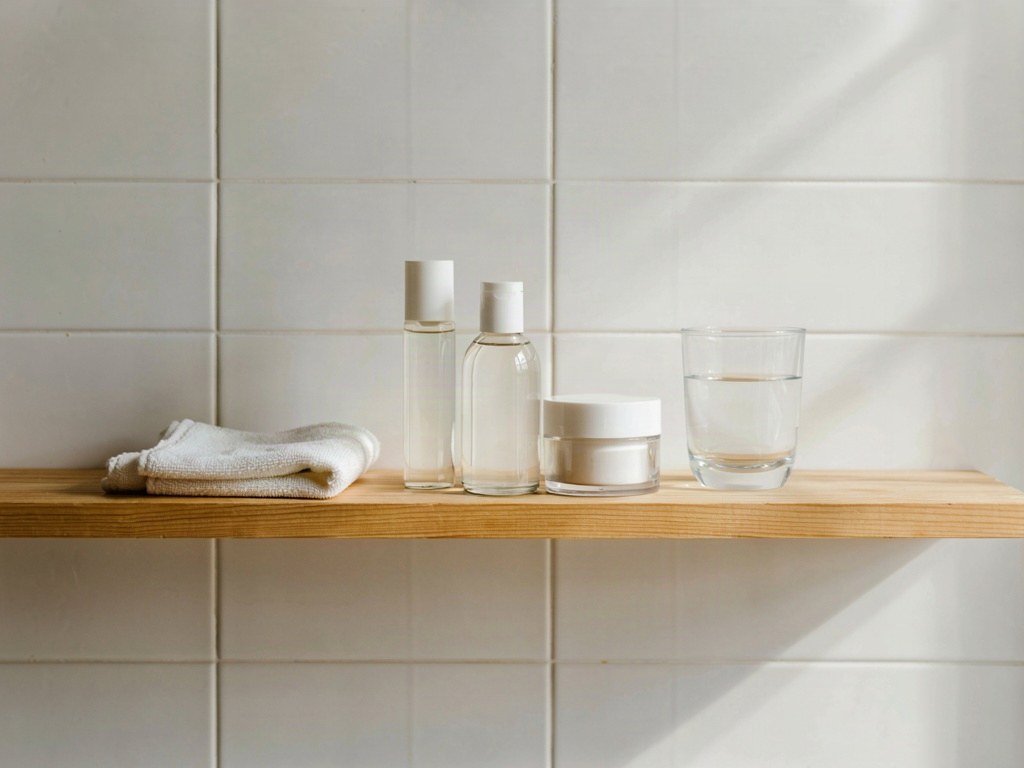
Across price bands, what changes is texture refinement, packaging and fragrance-free formulation discipline, not the humectants themselves; glycerin costs the same to every brand. That is why a good toner for dry skin rarely needs to cost more than your cleanser, and why the best toner for dry skin at the premium end often differs from the drugstore version only in bottle and fragrance policy.
If your skin is dry in January and normal in July, buy for January and use less in July rather than buying two bottles. Shortlist the best toners for dry skin by ingredient family rather than brand reputation, and remember that toners for dry skin are a post-cleanse step, unlike the hydrating mists sold for midday touch-ups over makeup.
A hydrating and brightening toner with niacinamide or tranexamic acid earns its place when dullness and dryness arrive together, but it will not fade established pigment on its own. The active does more work at serum strength, which is covered in niacinamide serum, chosen properly.
Still unsure which family is yours? Six questions, two minutes, and you get your skin type, a sensitivity flag and your top concern.
How Should You Apply a Hydrating Toner So It Actually Hydrates?
Apply a hydrating toner to skin still damp from cleansing, within about sixty seconds, using two or three thin passes pressed in with your palms rather than a cotton pad. The window is short because evaporative water loss from a freshly washed face is fastest in the first minute.
That damp-skin window only pays off if the wash before it left your barrier intact, so it is worth knowing how to check a gentle cleanser label before you blame the toner.
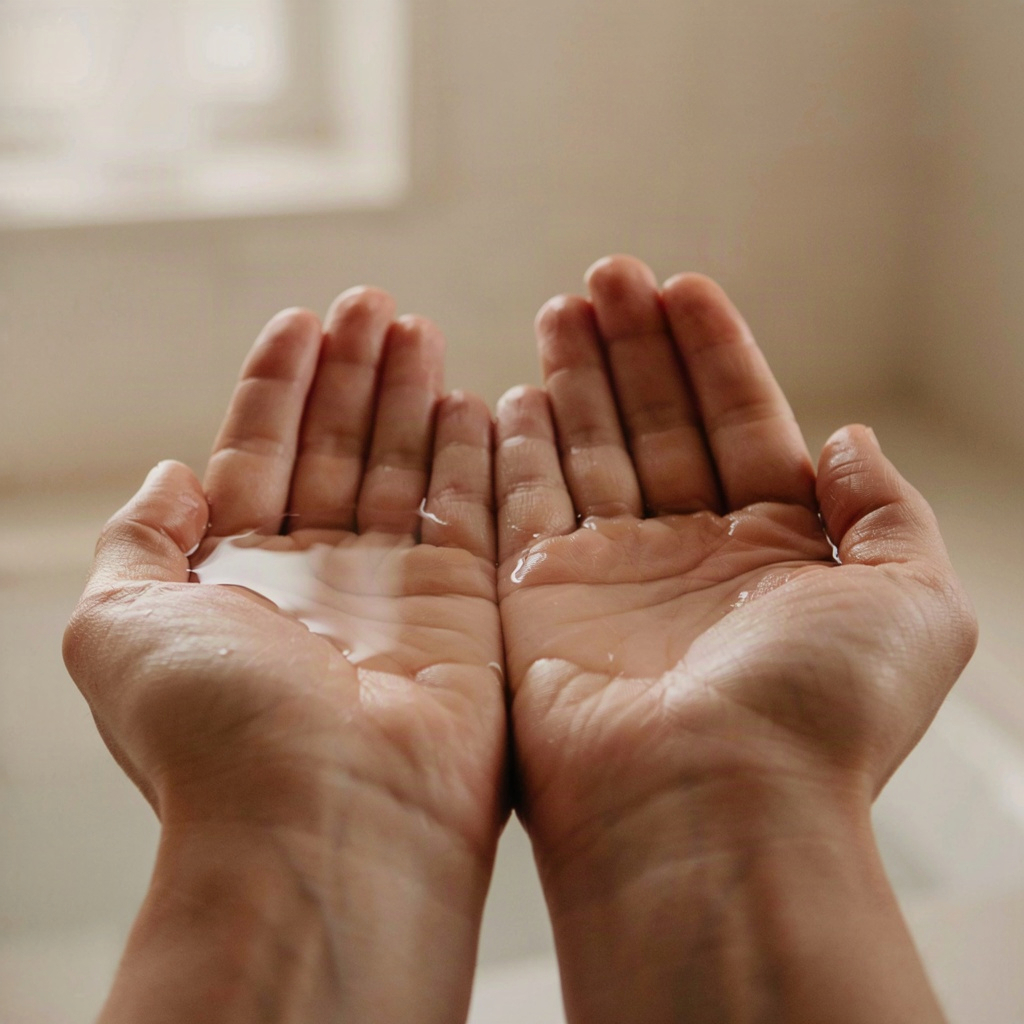
Palms beat pads on delivery. Cotton absorbs and keeps a meaningful share of every pour, and the wiping motion adds friction that dry, flaking skin does not need. Pour a coin-sized amount of your toner into one palm, warm it between both hands, then press.
Two or three thin passes of a good skin toner for dry skin outperform one heavy flood, because each pass is thin enough to absorb before the next arrives. Stop when the surface is tacky rather than wet; a face still visibly wet after the last pass is a face that will drip rather than absorb.
Warmth helps. Toner warmed briefly between the palms spreads further and needs less volume per pass, which matters when a bottle costs real money per millilitre. The tradeoff is time: three pressed passes take about forty seconds longer than one swipe with a soaked pad, every single morning.
- Cleanse and leave the face damp.
- Press the toner in within sixty seconds.
- Apply a humectant serum while the surface is still tacky.
- Seal with a cream; in dry indoor air an occlusive layer is what keeps the water in.
- Finish with sunscreen in the morning.
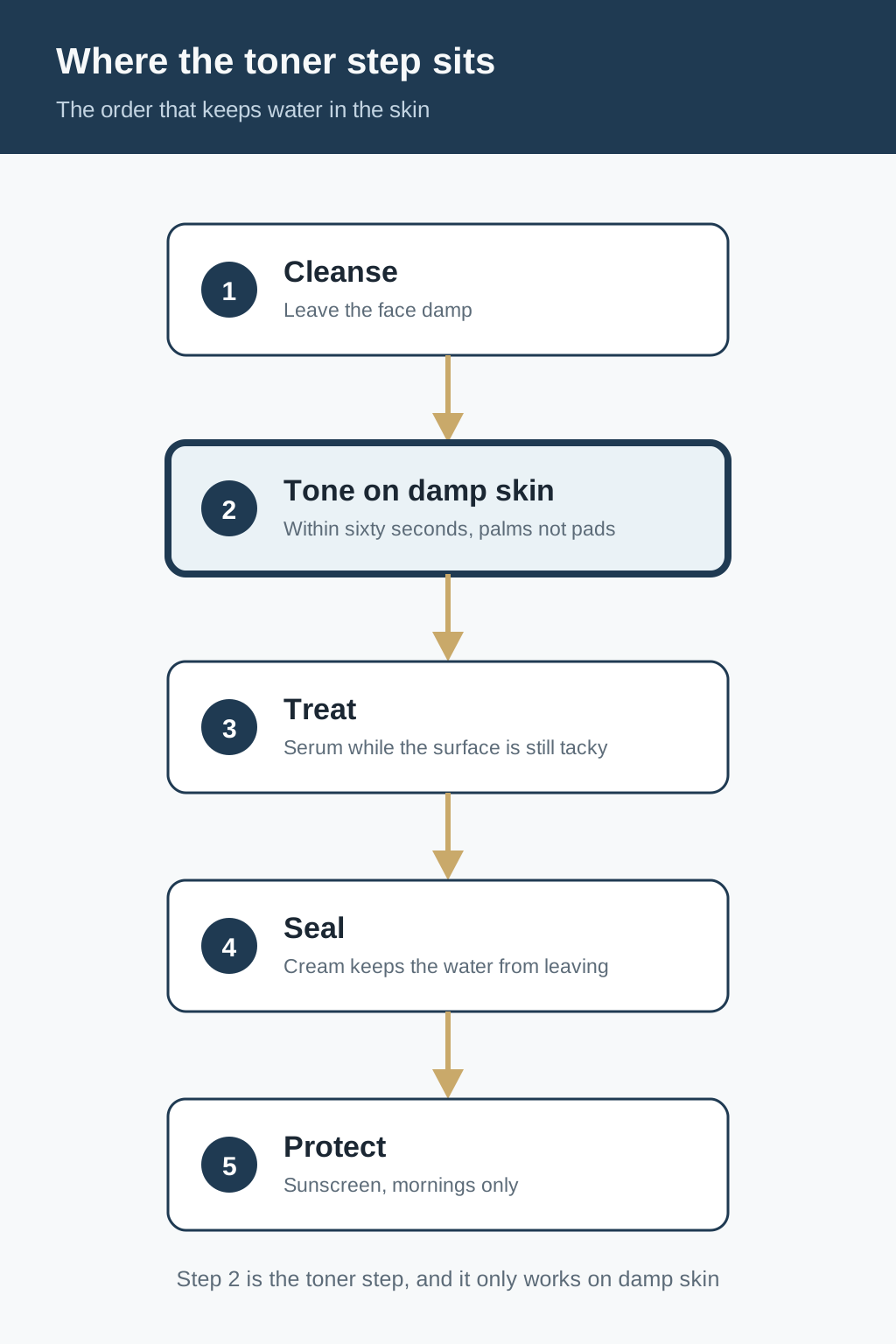
Sealing is not optional on dry skin: a best moisturising toner left bare in low humidity gives its water back to the room. For the full sequence across every product in a routine, see skincare order and which step goes first, and for the cream that goes over the top, dry skin moisturizers that actually work.
Keep retinol, strong acids and benzoyl peroxide out of the same pass as a good face toner for dry skin. Split them across morning and evening, and wait until the toner has absorbed before the active goes on, or you dilute one and destabilise the other. Check your own combination before you layer.
What Mistakes Turn a Hydrating Toner Into a Drying One?
A hydrating toner turns drying when humectants are left unsealed in low humidity, when the formula is actually an astringent, or when denatured alcohol sits high in the list. All three failures are avoidable at the point of purchase or in the thirty seconds after application.
To stop those humectants from evaporating in dry air, follow your toner with a hyaluronic acid moisturizer whose formula actually seals the water in.
Because unsealed humectants are the most common failure, press your toner in and follow it with a richer night step, and the label checks for the best night cream explain what should seal it.
The same unsealed-humectant mistake happens on lips, where a hydrating lip mask for dry lips seals that water in overnight instead of letting it evaporate.
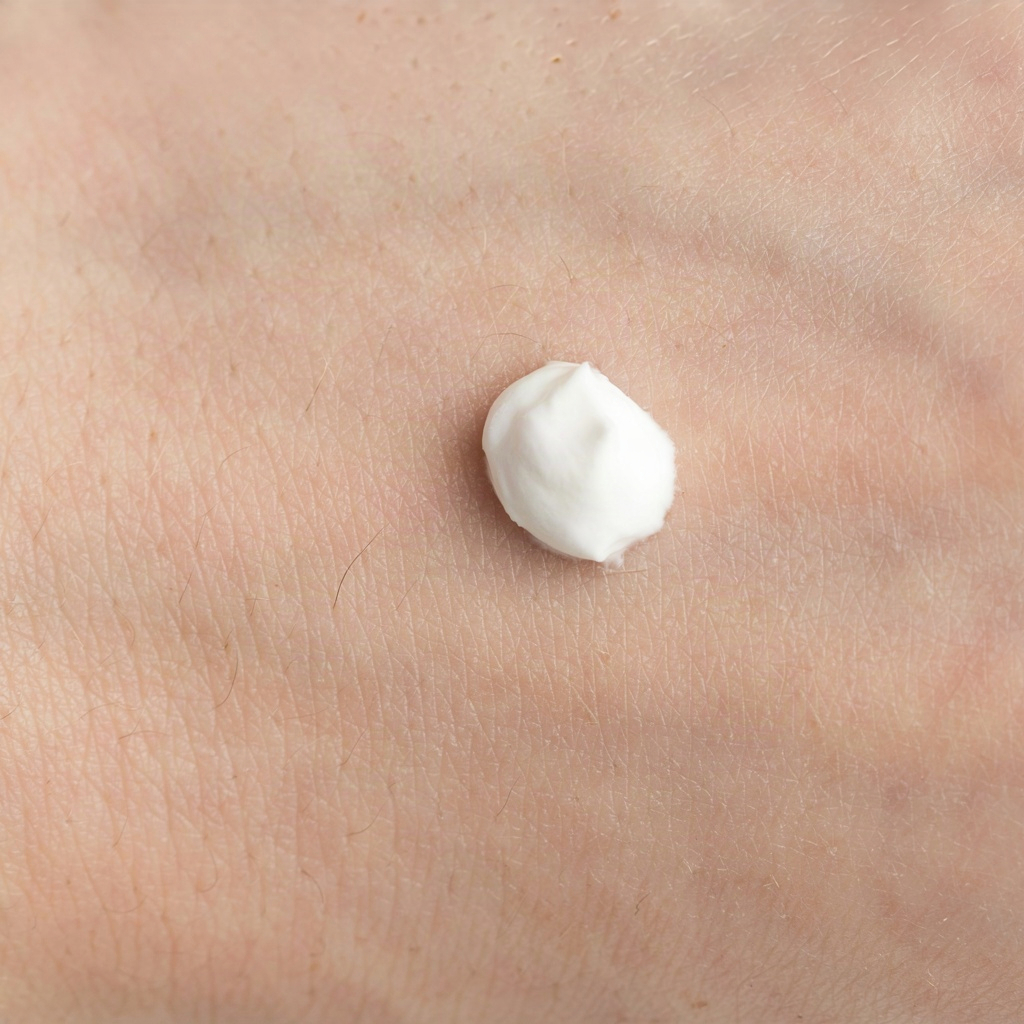
Unsealed glycerin in a heated room with low relative humidity draws water from wherever it can reach, including deeper skin, and then loses it to the air. Follow it with an occlusive cream and the same formula behaves completely differently. The underlying mechanism is set out in how moisturizers work on the stratum corneum.
The second trap is an astringent wearing hydrating packaging. When shopping for good toners for dry skin, flip the bottle: alcohol denat. or SD alcohol in the top five, witch hazel distillate as the second ingredient, or a pH claim above 6 all mark a clarifying product.
Over-application is the quiet one. Soaking skin in a best moisturizing facial toner four or five times a day leaves the surface soft, waterlogged and quicker to react, because an over-hydrated stratum corneum has a weaker mechanical barrier. Twice a day is the ceiling for most dry skin.
Two storage and label habits close the list. A hot, steamy bathroom shelf shortens preservative life months before the printed expiry, so a cool cupboard is the better home. And the word soothing carries no regulatory meaning at all; only the ingredient list tells you whether a product is fragrance-free.
If you want to track what you actually applied across a week, the printable AM and PM tracker below is built for dry and sensitive skin.
How Long Before a Hydrating Toner Shows Results?
Surface plumping shows within minutes, but measurable barrier improvement, less tightness and less flaking takes two to four weeks of twice-daily use on dry skin. Those are two different results on two different clocks, and confusing them is why people abandon a working product in week one.
Track three things weekly: how tight your face feels sixty seconds after cleansing, how much visible flaking survives your moisturizer, and how much cream you need to feel comfortable until lunchtime. Falling cream consumption is the most honest signal of the three.
Give any new formula a fair trial before judging it. Skin turns over its surface layer roughly every four weeks in younger adults and more slowly after forty, so a two-week verdict is measuring comfort, not barrier repair.
Stop and reassess if stinging lasts beyond ten minutes, if new small bumps appear along the jaw or hairline, or if nothing has measurably changed by week six. None of those outcomes means toners are useless; they mean that formula is wrong for your skin. Re-read the ingredient list and the pH figure, and one of the two usually explains the failure.
Re-check the fit each time the weather turns. A hydrating toner for dry skin that was perfect in a humid August can feel thin and insufficient once indoor heating drops the humidity in your home by half.
One practical dry-skin note lands in your inbox each week, nothing else.
One dry-skin routine tip a week. No product dumps.
Thanks — you're on the list.
Keep that timeline honest: it covers hydration and barrier repair only, so if crepey laxity below the jaw is your real concern, read up on how to tighten neck skin.
