

Toner What Is: The Skin Care Step, Explained in Plain English
A toner is a thin, water-based liquid you apply to clean skin, straight after cleansing and before anything thicker. That is the whole definition. It is not a second wash and it is not a leave-on treatment in the way a serum is — it is a fast, low-viscosity layer that resets the surface and preps it for whatever follows.
If you have read "cleanse, tone, moisturize" on a bottle at any point since the 1980s, the middle word is this step. What is a skin care toner in practical terms: water, one or two humectants, sometimes an exfoliating acid, sometimes a soothing extract, and almost no thickener. It pours like water because it is mostly water.
Two products borrow the name and confuse the search. Hair toner deposits pigment to cancel brassy tones after bleaching. Printer toner is powdered plastic. Neither is what a toner skincare shopper is holding in the aisle.
And what is toners today is not what they were in 1995. The stinging astringents that could run 40 percent denatured alcohol have largely been replaced by hydrating formulas built on glycerin, hyaluronic acid and niacinamide. If your only experience of toning is a cotton pad that made your cheeks sting, the category has moved on without you.

What Toner Does: What Does Toner Do for Your Face, Step by Step
Start with the sixty seconds after you rinse. Your cleanser leaves a trace of surfactant behind, hard water leaves mineral residue, and your towel takes off some of both but not all. A toner sweeps that last film away and replaces it with water plus a humectant, so the surface goes from bare to slightly damp instead of bare to tight.
What toner does at the barrier, without overclaiming
Washing pushes skin surface pH up. It drifts back down on its own within roughly two to six hours, and an acidic, well-buffered toner shortens that window rather than performing a repair of its own. That is the honest version of the mechanism: a faster return to normal, not a rebuilt barrier. If you want the underlying data, this research on the skin's natural surface pH is where the numbers come from.
What toners do for your skin, by skin type
- Oily and congested: removes residual oil and grit, and carries a low dose of acid or niacinamide without a second heavy layer.
- Dry: adds a water layer for the moisturizer to seal, which matters more than any active in the bottle.
- Reactive or sensitized: a fragrance-free, alcohol-free formula can calm post-wash tightness; a strong one will make things worse within a week.
Three jobs a toner cannot do
It cannot permanently shrink a pore — pore size is structural, and any tightening you see is temporary swelling of the surrounding skin. It cannot replace a cleanser, because it is not formulated to lift sunscreen or makeup. And it cannot replace a moisturizer: without an occlusive on top, the water it deposits evaporates within minutes. Where it sits in the stack matters, which is covered in how to layer skincare products in the right order.
The Purpose of Toner in a Modern Routine
The purpose toner skin care serves in 2026 is delivery, not stripping. A watery vehicle spreads a small dose of an active over the whole face more evenly than a thick cream does, and it does it in about ten seconds. That is the function of toner in one sentence: it moves water and low concentrations of actives onto skin at the moment skin is most receptive.
Why order matters more than product count
Thinnest to thickest is not a beauty superstition, it is a physical constraint: a water-based layer cannot penetrate an oil-based one. Applied out of order, a toner sits on top of your moisturizer and does almost nothing. Applied in order, on damp skin, it becomes the base every later layer spreads across. A three-product routine in the right order beats a seven-product routine in the wrong one — the argument made in building a minimalist morning regimen.
Whose routine actually needs one
The facial toner purpose changes with the cleanser above it. If you use a foaming, high-pH cleanser, the toner is doing corrective work and you will feel the difference the day you stop. If your cleanser is a gentle, low-pH gel or a cream, the purpose of skin toner narrows to hydration and active delivery, and the face toner purpose becomes a preference rather than a fix. Neither answer is wrong; they just cost different amounts of money and time.
What Do Face Toners Do? A Look Inside the Formula
Four ingredient groups do nearly all the work, and which one leads the list tells you what the bottle will do.
Humectants
Glycerin, hyaluronic acid, panthenol and butylene glycol pull water toward the skin surface. When these sit in the top five ingredients, what a facial toner does is straightforward hydration — and it needs a moisturizer over it, because how humectants pull water into the skin also explains how that water leaves again if nothing seals it. If hydration is the goal, a dedicated serum does more per application, as covered in hyaluronic acid serum for dehydrated skin.
Soothers, acids and astringents
Soothers — centella, allantoin, madecassoside, green tea — reduce visible redness for a few hours without changing the skin. Exfoliating acids at 2 to 10 percent turn the same bottle into a treatment step with a frequency limit. Astringents such as witch hazel distillate and denatured alcohol give an instant matte finish and a tight feel that fades in an hour.
The thirty-second label rule
Read the first five ingredients and the last five. If alcohol denat. appears in the first three, expect dryness on anything but oily skin. If fragrance or an essential oil blend appears at all and your skin reacts easily, put it down. That single check is what does facial toner do for your skin, answered before you pay.

Face Toner Benefits That Actually Hold Up
Ranked by how much evidence stands behind them, the face toner benefits look like this.
- Comfort after cleansing. The most reliable of the toner benefits, felt in seconds, and the reason most people keep the step.
- A damp base for the next layer. Applying a serum to damp skin spreads it further and slows water loss from the layer underneath.
- Light, frequent exfoliation. Only when acids are on the label, and only two to three nights a week for most skin.
- A gentler way to introduce an active. A 2 to 5 percent niacinamide toner is an easier entry point than a 10 percent serum; see niacinamide guide for oily, congested pores for the dose question.
Where marketing gets ahead of the evidence
"Minimizes pores", "detoxifies" and "restores radiance overnight" are cosmetic and temporary claims. The benefits of using toner that survive scrutiny are hydration, comfort and delivery — everything else depends on the active, not the format. A vitamin C toner, for instance, is limited by the same stability and pH constraints described in this clinical review of topical vitamin C, which is why most toner concentrations sit well below the 10 to 20 percent range that shows clinical effect.
Oily skin versus dry skin
For oily and combination skin, the benefits of using skin toner are mostly about control: less residual oil, a matte-ish finish, and acids delivered without an extra greasy layer. For dry or mature skin, the advantages of face toner are the opposite — a water layer that makes a rich moisturizer spread further and absorb faster. The skin toner benefits are real in both cases; they are simply not the same benefits.
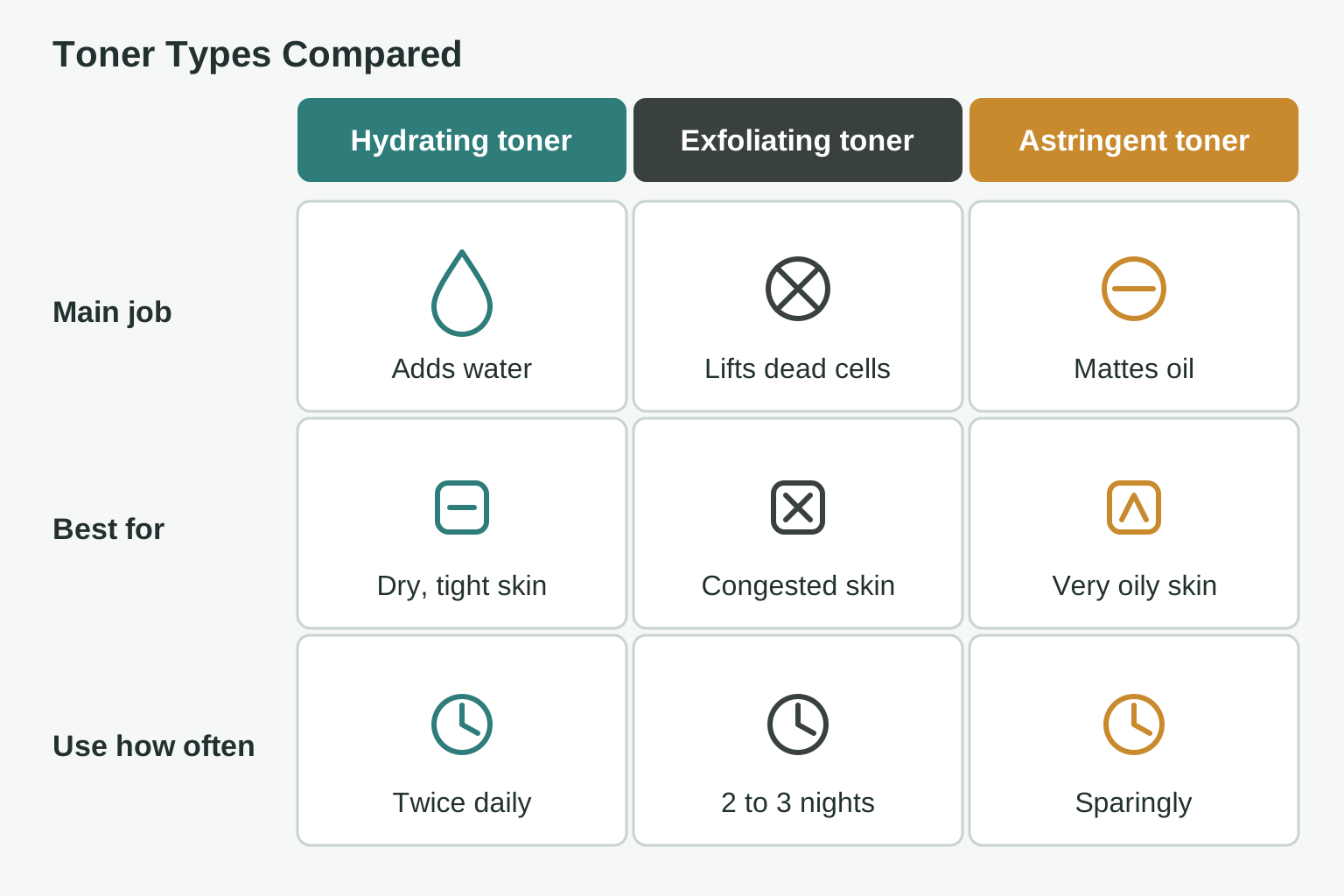
If you want the ingredient side of this on one page you can keep by the sink, the cheat sheet below covers each active in a toner, when to use it and what not to layer it with.
Toner Types: From a Cleansing Facial Toner to an Acid Exfoliant
Four families cover almost every bottle on the shelf, and what skin toner is used for changes completely between them.
Hydrating toner
Humectant-led, no acids, no alcohol. Best for dry, tight or newly retinol-adjusting skin, and safe twice a day. The tradeoff: it does nothing for congestion, and on very oily skin it can feel redundant next to a good moisturizer.
Cleansing facial toner
Built to lift the last of the cleanser, sunscreen residue and hard-water minerals, usually with a mild surfactant or a low dose of witch hazel. Useful if you live somewhere with hard water. Not a substitute for a proper second cleanse after heavy sunscreen.
Exfoliating acid toner and astringent
An acid toner carries glycolic, lactic, mandelic or salicylic acid and behaves like a treatment: two to three nights a week, never on the same night as a retinoid until you know how your skin responds. An astringent leans on alcohol for an immediate matte finish, which is why what astringents actually do to skin is worth reading before you buy one for acne. An acid toner replaces a separate weekly exfoliant; it does not stack with one. Running both is the single most common cause of a stinging, flaking face, and the fix is to drop to one exfoliating step and hold there for four weeks. The AHA-versus-BHA decision is broken down in chemical exfoliants explained: AHA versus BHA.
We may earn a commission on purchases made through the link below.
How to Use One: Toning Skin Correctly in Three Steps
Toning skin well is mostly about timing. Apply within about a minute of rinsing, while the face is still slightly damp — dry skin absorbs a watery layer more slowly and you lose most of the hydration benefit. Two to three pumps, or enough to saturate a cotton pad without it dripping, covers a whole face.
Press it in with clean palms when the formula is hydrating; you waste roughly a third of the product to the pad otherwise. Use a soaked cotton pad when the formula is cleansing or exfoliating, because the light mechanical sweep is part of the point. Wait about thirty seconds before the next layer, and skip the waiting-for-a-pH-drop ritual — for a modern acid toner it is not necessary.
In the morning, the sequence ends with sunscreen. In the evening, it ends with your moisturizer or a retinoid night. If you are deciding between removal steps before any of this, micellar water versus cleansing balm covers that choice, and gentle cleansers for sensitive, reactive faces covers the step before the toner.
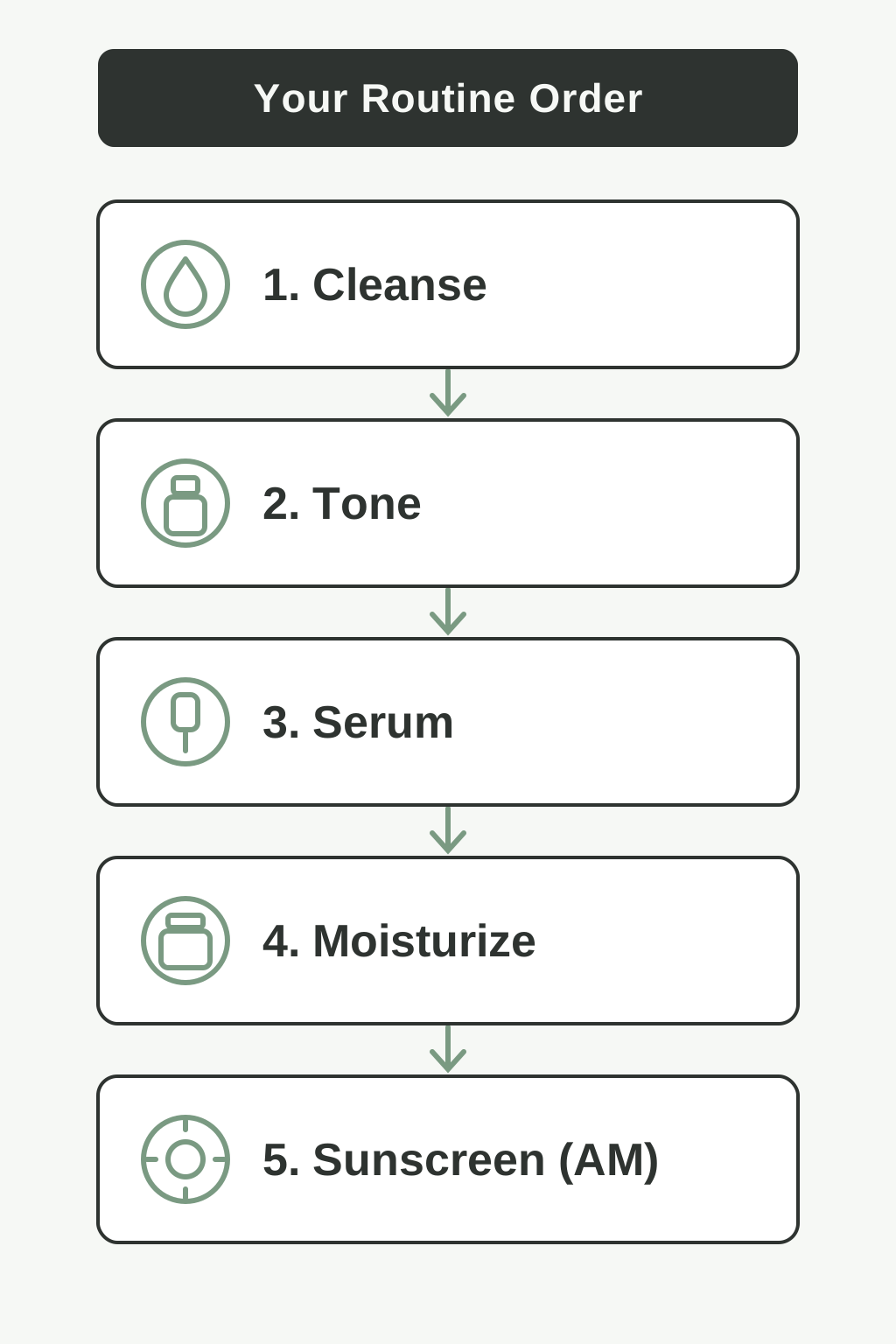
We may earn a commission on purchases made through the links in this routine.
Answer four questions and you get the same three steps ordered around your own skin type, concerns and budget.
Skin Toner Before and After: What Results Are Realistic
The honest timeline for a skin toner before and after comparison runs in three stages. Comfort arrives immediately — that is the same day, within a minute. Texture and a smoother makeup surface take two to four weeks with an acid toner, because that is one full turnover cycle. Tone and post-acne marks take twelve weeks or more, and a toner is rarely the product doing the heavy lifting there.
Be sceptical of the photographs. A face shot after cleansing looks dull and flat; the same face shot ten minutes after a hydrating layer, under warmer light and at a slightly different angle, looks transformed. Hydration alone can plump fine lines enough to change a photo without changing the skin.
Signs it is working: less tightness, makeup sitting more evenly, fewer small congested bumps by week three. Signs it is too harsh: stinging that lasts past a minute, flaking around the nose, or a face that feels tight two hours later. Any of those means fewer applications, not a stronger moisturizer to compensate.
Whatever an exfoliating toner improves, daylight can undo, so finish every morning with your sunscreen — the application details are in daily sunscreen application tips.
Who Actually Needs a Toner, and Who Can Skip It
Three profiles gain the most: oily and congested skin that wants acids without another layer, skin that feels tight within a minute of washing, and anyone washing in hard water. If you use a gentle cleanser, live with soft water and already run a hydrating serum, you can skip the step entirely — that is a reasonable decision, not a gap in your routine.
The swap test settles it. Drop the toner for two weeks, change nothing else, and note tightness, shine by midday and any new congestion. If nothing changes, you have your answer and one fewer bottle. Buy one toner and finish it before buying a second.
Not sure which type your skin needs? Six questions, two minutes, your skin type and top concern.

We may earn a commission on purchases made through the link below.
Quick Answers: Toner Questions Readers Ask Most
Is a toner mandatory? No. It is the most optional step in a standard routine.
Twice a day? Yes for hydrating formulas. Two to three nights a week for acid formulas.
Does it replace micellar water? No — micellar water removes, a toner conditions what is left behind.
Does it close pores? No. Any tightening lasts an hour at most.
Should it sting? No. Brief tingling with an acid is normal; stinging past a minute is not, so rinse and stop using it.
With retinol or vitamin C? Hydrating toner, yes. Acid toner, on a different night.
The purpose of toner for a first-time buyer, in one line: it is the water layer that makes the rest of your routine work better, and nothing more.
One honest skincare explainer a week. No product dumps.
Thanks — you're on the list.
