

What a Toner for Oily Skin Actually Does
A toner for oily skin is a thin, fast-absorbing leave-on step you press onto damp skin in the sixty seconds after cleansing, while the surface still holds water. It is not a second wash, and nothing in the bottle shrinks a pore. What a well-built skin toner for oily skin does is narrower and more useful than the marketing suggests.
Three jobs are realistic. It delivers a low, tolerable dose of a sebum-managing active such as salicylic acid or niacinamide. It adds water-binding humectants so skin stops reading dry and over-producing oil to compensate. And it resets surface pH after a foaming cleanser, which usually swings skin alkaline for twenty to thirty minutes.
What toners for oily skin cannot do is switch off the gland. Sebum output is driven by androgens and follicle size, which is why oily skin produces more sebum regardless of what sits on top. A formula that leaves your face squeaky has stripped the lipid layer, and rebound shine follows within hours.
The category also splits in two. A cleansing toner is a rinse-adjacent step that lifts residual grime, sunscreen and hard-water minerals after a first cleanse; a treatment toner leaves actives on the skin and is meant to stay. If you want the longer definition, start with what is a toner and what it actually does and come back here for the buying decision.
One last framing that saves money: toning for oily skin usually replaces an exfoliating step rather than stacking on top of one. If your acid toner and your weekly scrub both run twice a week, you are exfoliating four times a week, and a toner for oily face routines rarely survives that without flaking at the nostrils.

What to Check on the Label of a Skin Toner for Oily Skin
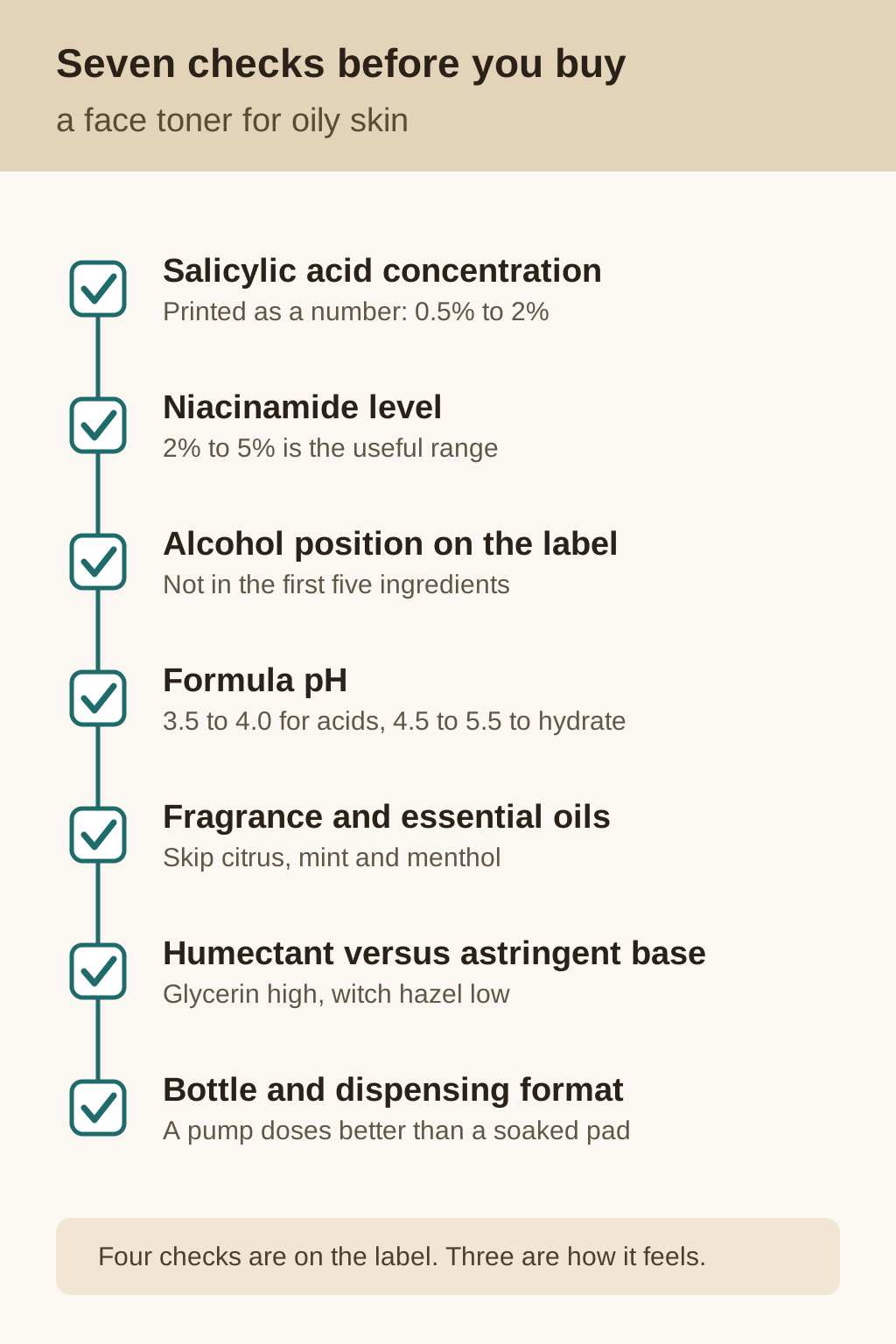
Four of the seven checks live in the ingredient list and the spec sheet. They are the ones that decide whether a bottle is a treatment or a scented water, and they are the fastest way to sort a shelf of near-identical claims.
Salicylic acid concentration
Salicylic acid works in a leave-on toner between 0.5% and 2%. Under 0.5% it is a preservative-adjacent afterthought; over 2% belongs in a rinse-off or a professional peel. The best toner for oily skin prints the number on the carton instead of hiding behind "BHA complex" or "willow bark extract," which can mean anything from 2% acid to a rounding error. If the number is absent, assume it is low and price the bottle accordingly.
Niacinamide level
Between 2% and 5% is where the useful evidence sits for sebum quality and barrier lipids, and it is the range you see in niacinamide research on sebum output. Above 5% the flushing and warm-prickle reports climb without a matching gain, so a 10% claim on a face toner for oily skin is a marketing number, not a performance one. Niacinamide is also slow: judge it at week four, not week one.
Alcohol position on the label
Alcohol denat. or SD alcohol in the first five ingredients makes the product an astringent. It flashes off, takes surface oil with it, and leaves the tight, matte feeling shoppers mistake for efficacy. That is the single fastest way to turn a promising recommended toner for oily skin into a tightness machine, and the rebound oil usually shows up by mid-afternoon. Lower down the list, past the humectants, alcohol is a solubilizer and largely harmless.
Formula pH
An acid toner has to sit near pH 3.5 to 4.0 for the salicylic acid to stay in its active free-acid form. A hydrating one should land near skin's own 4.5 to 5.5. Brands that publish the number are giving you a real spec you can hold them to; brands that do not are asking for trust. This is also where the best skin toner for oily skin separates from a mist: even coverage at a controlled pH beats a fine spray every time.
Read those four against your own tolerance rather than against a star rating. The best face toner for oily skin is usually the one with the shortest active list, because every extra acid is another chance to over-treat. And if the bottle duplicates an exfoliant you already own, drop one of the two — the alternative is the raw, shiny face described in choosing a gentle face exfoliator.
Not sure whether your skin is genuinely oily or dehydrated and overcompensating? Six questions, about two minutes, and you get a skin type plus your top concern before you spend anything.
Formula and Format Checks That Separate Good Toners From Filler
The last three checks are about how a formula behaves on your face and at your sink. They rarely appear in reviews, and they are the reason two bottles with identical actives feel nothing alike.
Fragrance and essential oils
Citrus peel oils, mint and menthol create the cooling tingle shoppers read as "working," and they are also among the most frequent triggers in leave-on irritation reports. On oily skin that is already being exfoliated, that tingle is noise you are paying for. The tradeoff is real, though: fragrance-free formulas can smell faintly of raw material, and some people will not use a product that smells like a lab.
Humectant versus astringent base
Look at what comes after water. Glycerin, panthenol, betaine or hyaluronic acid near the top means the formula puts water back — the mechanism behind hyaluronic acid and skin hydration. Witch hazel distillate or high alcohol means it takes oil away. Oily and dehydrated skin needs the first; genuinely oil-rich skin with no tightness can tolerate the second a few nights a week.
Bottle and dispensing format
A wide-mouth bottle poured onto a cotton pad loses roughly half the dose into the pad. A pump gives a repeatable two-to-three-press dose into clean palms. A mist is the wrong format for an acid because coverage is uneven and the jaw and hairline get missed. The cost of the pump is a slightly higher price and a part that can clog.
Testers judge a recommended face toner on four measurable things: sting on application, seconds to dry-down, residue at the five-minute mark, and shine at hour four. That is also how you should read any top rated face toner list — as a shortlist of formulas worth testing, never as a verdict, because the best facial toner for one face is a mismatch for the next. Good toners state a concentration, a pH, or both; copy about "balancing and purifying" with no number attached is a signal there is nothing measurable to claim. Your cleanser sets the baseline for all of this, so it is worth picking a face wash for oily skin before you blame the toner.

Oil-Control Actives: Salicylic Acid, Niacinamide, Witch Hazel and AHAs
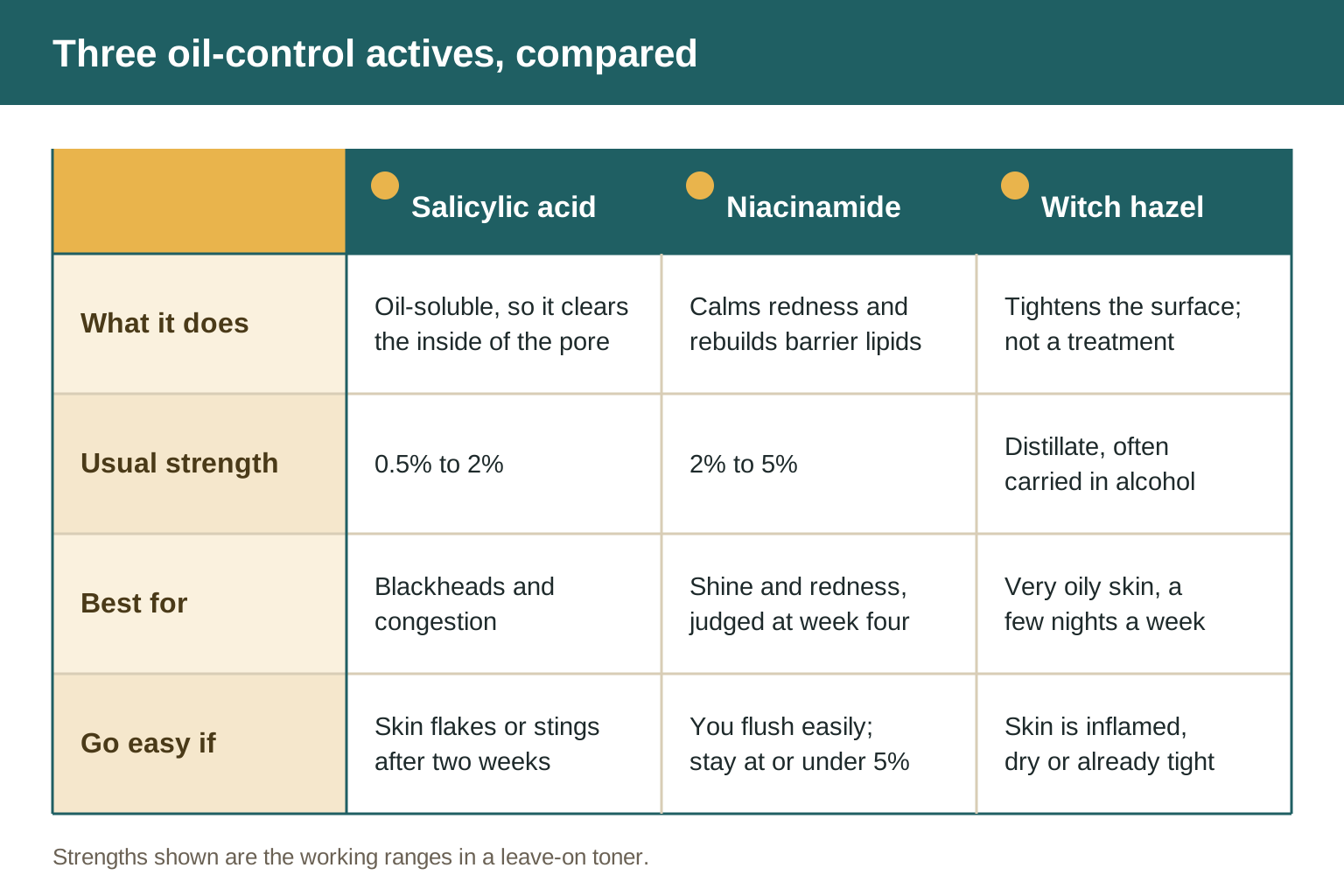
Salicylic acid is oil-soluble, so it travels into the sebum-filled pore lining instead of sitting on the surface. That single property is why it anchors the best toner for acne prone skin rather than a glycolic formula, and why it clears the closed comedones on the chin that scrubs never reach. It is also the active most likely to over-dry if you use it nightly from day one.
Niacinamide is the quiet workhorse in the best skin toner formulas. It works on sebum composition and barrier lipids over weeks, produces no immediate sensation, and layers with almost anything — which is why people wrongly assume it is doing nothing. If your toner tops out at 2%, a dedicated niacinamide serum applied afterward is the cheaper way to raise the dose without changing your toner.
Witch hazel deserves less credit than it gets. The commercial distillate is usually alcohol-carried, so what you feel is a tightening effect, not a treatment; on inflamed skin it can extend redness. Persistent adult breakouts are a medical pattern rather than a formulation puzzle, and dermatology guidance on adult acne is the better starting point than a stronger astringent.
AHAs — glycolic and lactic acid — resurface the outermost layer, which is exactly how alpha hydroxy acids resurface skin and exactly why a bottle gets sold as the best toner for glowing skin. They also raise UV sensitivity for about a week, so they belong in a PM routine with daily SPF behind them.
Three layering rules keep this from going wrong: one acid per routine, niacinamide anywhere in the stack, and no acid toner on the same night as retinol until your skin has run four to six weeks of each separately — the adaptation curve is covered in the retinol serum guide for beginners. Morning antioxidants are a separate slot, and the dermatologist-approved vitamin C serum picks go on after the toner has dried, not into a wet face.
A one-page reference that fits inside a medicine cabinet: five actives, what each one does, the working strength in a toner, when to apply it, and what not to layer it with.
Best Toners for Oily Skin, Matched to Your Skin Type and Concern
This shortlist of best toners is built one formula per angle: a stated active, a stated tradeoff, and a clear reason someone else should skip it. Nothing here is a ranking, because the best toner is the one your face tolerates on week three.
Some links below are affiliate links, and we may earn a commission if you buy through them at no extra cost to you.
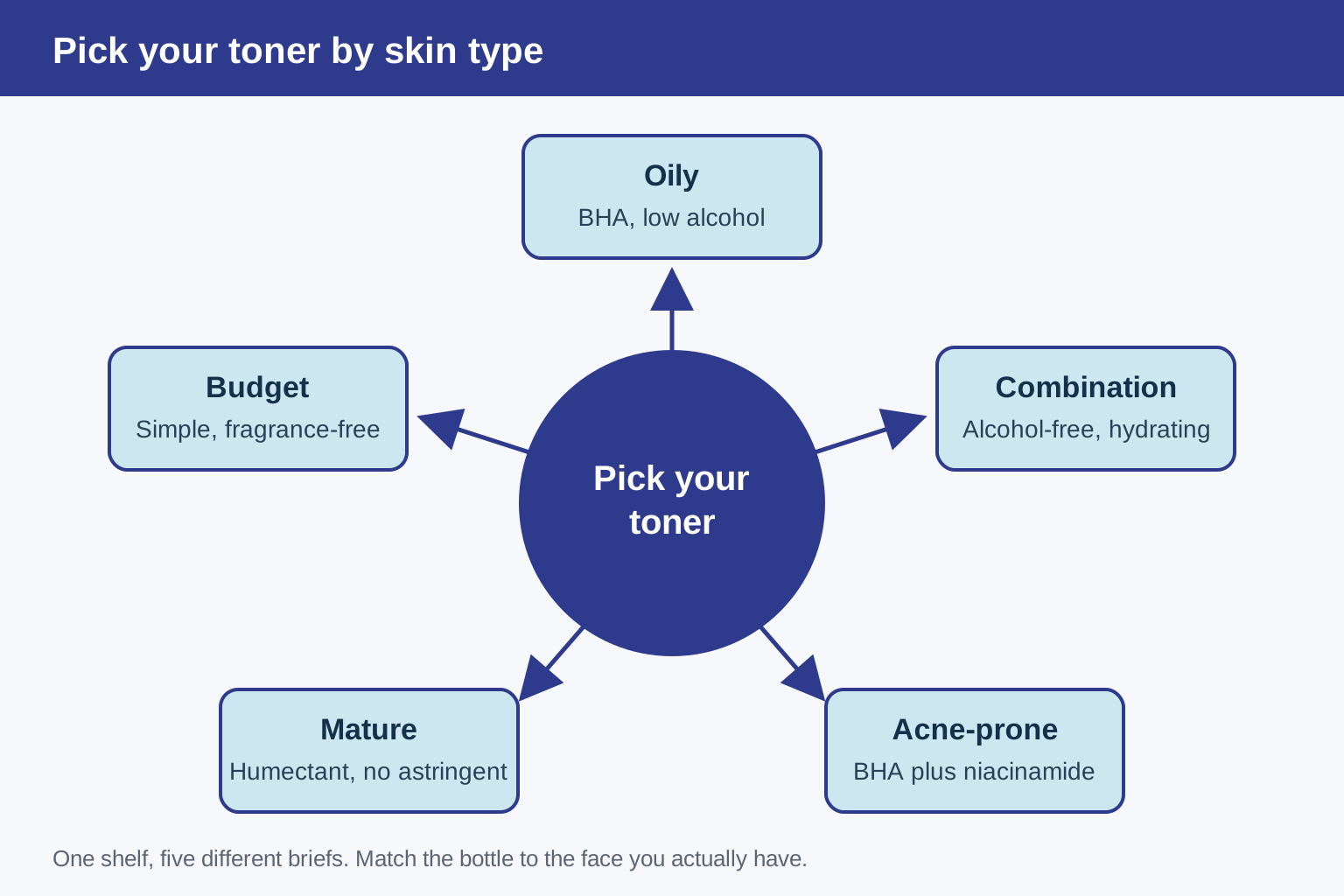
Oily skin over forty usually needs the toner and the cream to pull in opposite directions, so read this alongside face cream that works on aging skin. Treat the whole set as a shortlist: the best toner for oily skin on paper can still sting on your face.
Drugstore Versus Prestige: Where the Price Actually Changes the Formula
Extra money buys four things, and the active is not one of them: a gentler preservative system, a solubilizer that is not alcohol, tighter pH control batch to batch, and packaging that keeps light and air out. Those are real differences in comfort and shelf life, not in what the acid does.
The best drugstore toner and a prestige bottle frequently carry the same 2% salicylic acid at the same pH. So compare cost per use, not shelf position. Divide price by millilitres, then by the doses you actually get — palms yield roughly twice as many applications as a soaked cotton pad from the same bottle.
Where cheap formulas cut corners is predictable: alcohol as the solubilizer because it is cheapest, heavy fragrance to mask raw material odour, and no published pH. Screen a best skin toner drugstore option on those three and most of the shelf disqualifies itself in under a minute.
The tradeoff to accept is oxidation. A clear plastic bottle with a wide mouth loses potency faster once opened, so buy the smaller size even when the litre bottle looks like the better deal. Spend the difference on the step that has the most measurable payoff instead — usually an SPF moisturizer for daily sun protection.
How to Use a Toner for Oily Skin Without Over-Stripping
The order that works is fixed: cleanse, apply within sixty seconds while skin is still damp, wait until the surface stops feeling wet, then treat and moisturize. Applying to a bone-dry face costs you the humectant benefit, because there is no surface water left for glycerin to hold.

Dose and delivery matter more than brand. Palms waste less; a cotton pad is worth it only when you want the light mechanical sweep of a cleansing toner over sunscreen residue or hard-water film. Never scrub with the pad — one pass per zone, no return trips.
On frequency, start an acid toner two nights a week and add a night only after four clean applications. Toning for oily skin morning and night from day one is how most people trigger the rebound oil they bought the product to fix. On toner nights, skip your scrub and your retinol; if that leaves the routine feeling thin, the fix is order, not volume — see how to build a skin care routine in the right order.
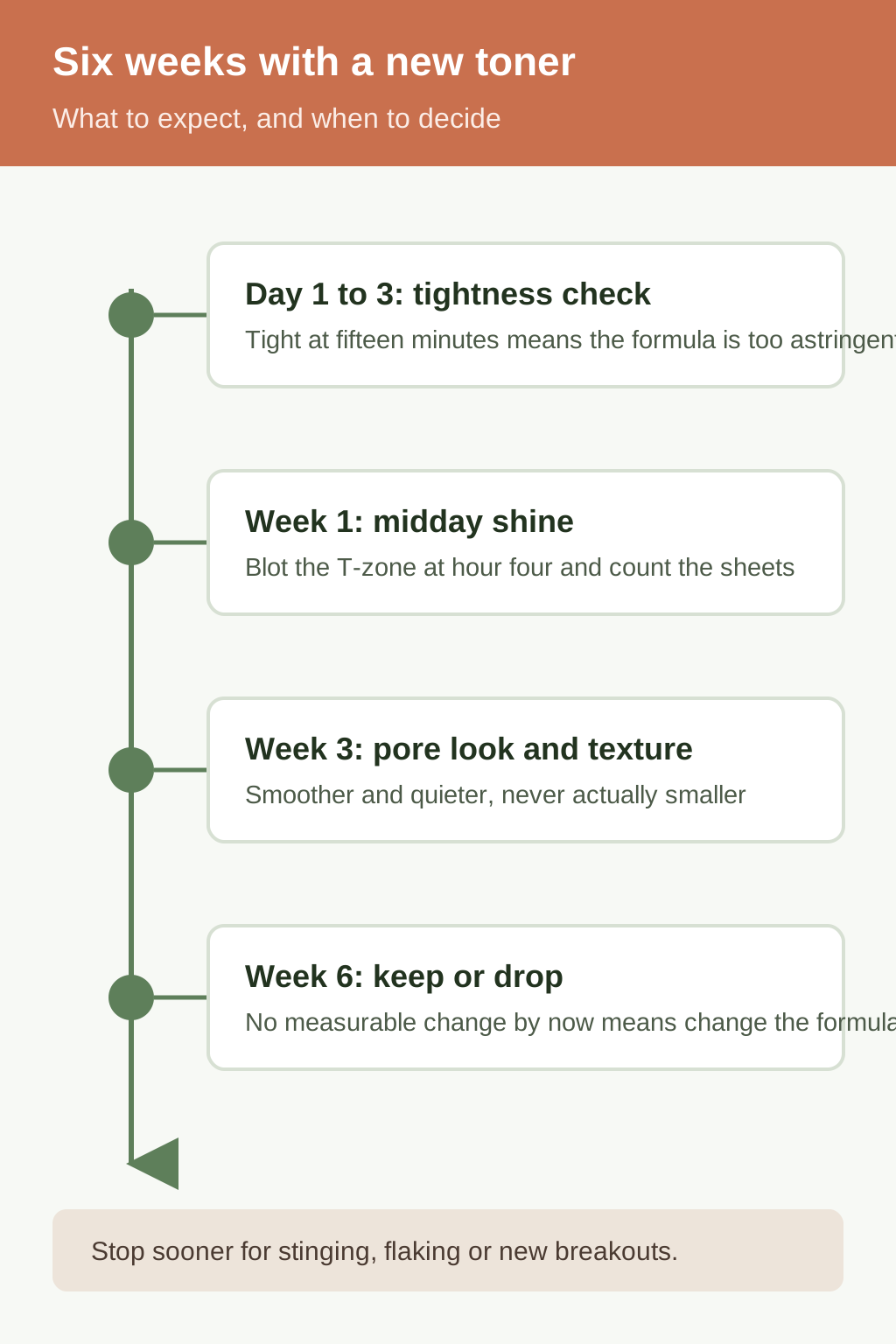
One watch-out worth stating plainly: if skin feels tight fifteen minutes after toning, the formula is too astringent for you, no matter how good its reviews are.
Answer four questions and you get an ordered five-step routine with one product slot per step, with toning placed where it belongs — between cleansing and treating.
Mistakes That Keep Oily Skin Shiny, and How to Tell a Toner Is Working
Four habits undo the step: chasing the squeaky feeling, running an acid toner twice a day, skipping moisturizer because your face is oily, and swapping formulas before a bottle is half empty. The last one is the most expensive, because nothing here resolves in under three weeks.
The realistic timeline is less midday shine by week one, smoother texture and a quieter pore look by week three, and a keep-or-drop decision at week six. Judge good toners against your own face, not the mirror at 9 p.m.: blot the T-zone at hour four and count the sheets, photograph the same cheek in the same window light weekly, and track new breakouts on a calendar.
Stop entirely if stinging persists past the first fortnight, if you flake at the nostrils and chin, or if new breakouts appear after three weeks. That is a formula mismatch, not a lack of commitment — and toners for oily skin are cheap enough to replace rather than endure.
One practical fix a week, written for people whose skin gets shiny by lunchtime.
One oily-skin routine fix a week. No product dumps, no restock alerts.
Thanks — you're on the list.
