

What makes a cleanser gentle, and what "gentle" hides
A gentle cleanser for sensitive skin is defined by what stays on your face after the rinse: an intact lipid film and a surface pH back near 5.5 within about 30 minutes. Lather has nothing to do with it. Foam volume is a surfactant-concentration side effect, not a cleaning measurement.
Sulfate-heavy surfactants, sodium lauryl sulfate first among them, bind to keratin proteins and push surface pH toward 9. That is why a squeaky, tight finish is a warning sign rather than proof of cleanliness — you are feeling swollen protein and stripped lipid, not a clean face. The same mechanism explains what actually strips oils from dry skin.
A gentle face cleanser leans on amphoteric and non-ionic surfactants at low concentration: cocamidopropyl betaine, coco-glucoside, decyl glucoside, sodium cocoyl isethionate. A gentle cleanser for skin barrier support goes further and puts back part of what the wash removes — glycerin, ceramides, cholesterol and fatty acids delivered in the rinse-off phase.
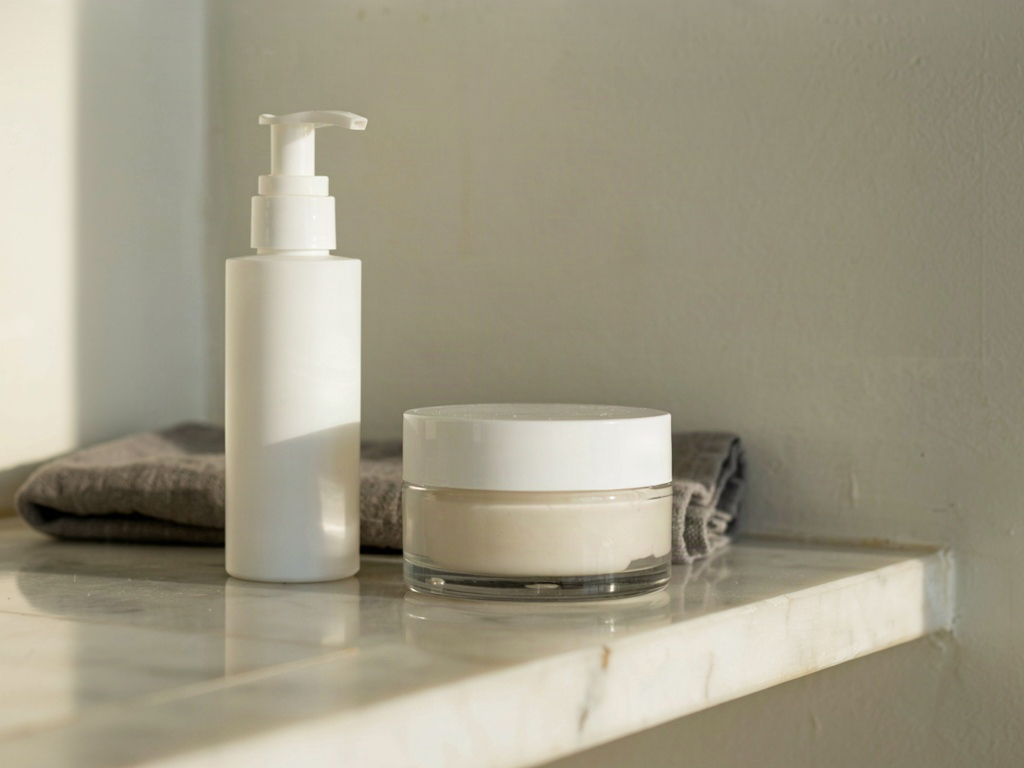
Three claims on the front of the bottle carry no legal definition in the United States: dermatologist-tested, hypoallergenic, and "for sensitive skin". Only the ingredient list and, where the brand states it, the pH are checkable. If reactivity is your baseline rather than an occasional flare, the wider habits in our guide to skincare for sensitive skin: rules for calmer skin matter more than any single bottle.
Reading the label: the ingredients that hydrate and the ones that strip
A hydrating facial cleanser earns the name through humectants placed high in the ingredient list. Glycerin inside the first five ingredients is the cheapest reliable signal; glycerin listed after the preservative is a rounding error.
A systematic pass down that list is easier with seven label checks for a gentle cleanser, which sort humectants, surfactants and pH claims into what actually matters.
Be clear about the ceiling. Contact time for a hydrating cleanser is roughly 60 seconds, and most of the formula goes down the drain, so no rinse-off product treats anything. Its job is to not make things worse, then hand a calm surface to your moisturizer.
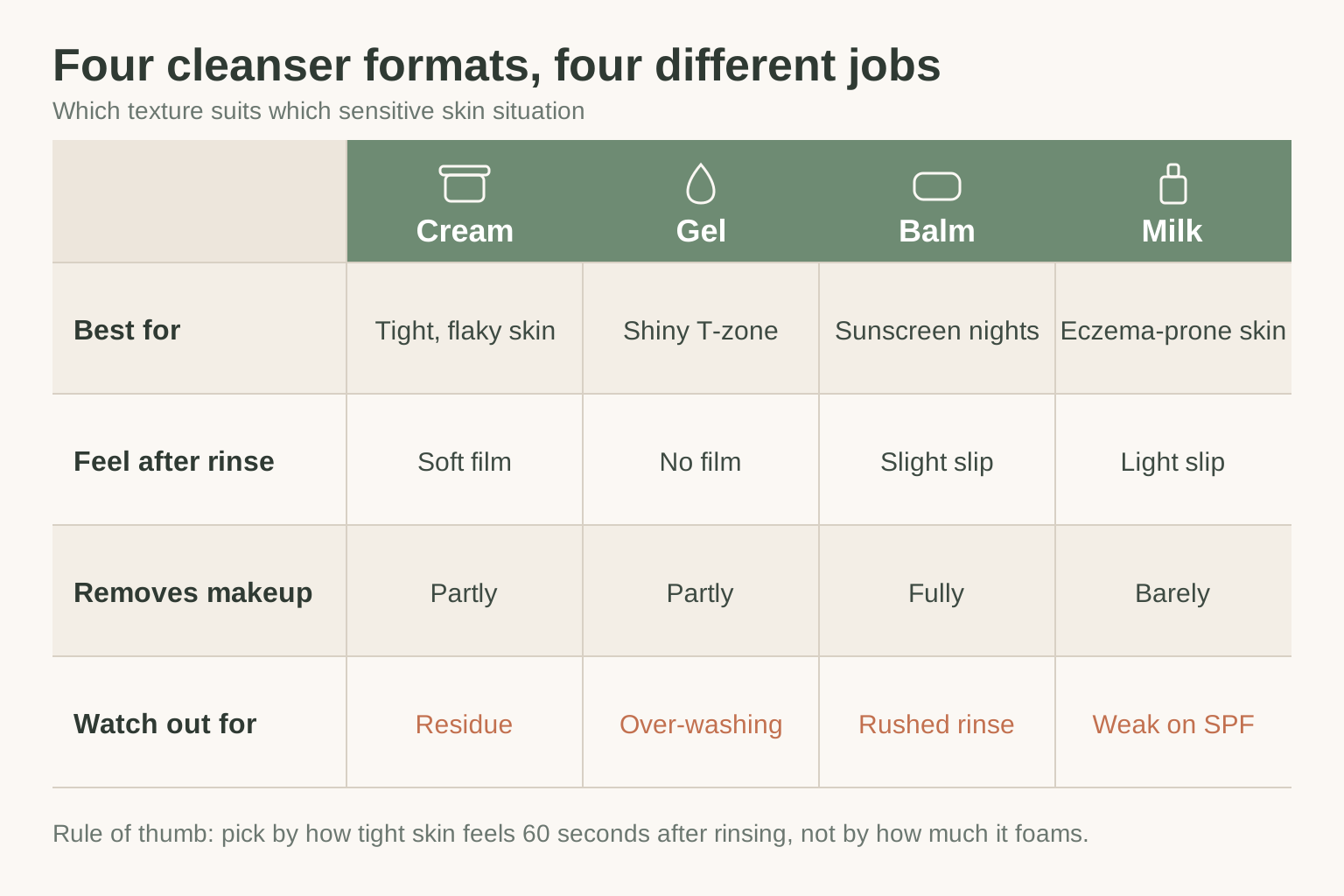
A moisturizing cleanser adds emollient or occlusive content — squalane, shea butter, dimethicone. That is why it feels filmy afterwards, and why sensitive skin that still runs oily often hates it: the residue that rescues flaking cheeks reads as congestion on a shiny T-zone.
Four ingredients cause most of the stinging reports: fragrance (listed as parfum), essential oils such as lavender and citrus, denatured alcohol high in the list, and menthol. "Unscented" is not the same claim as "fragrance-free" — unscented products can contain masking fragrance to cover a raw-material smell.
A hydrating cleanser for dry skin should name no more than two surfactants. A stack of four or five usually means stronger cleansing than sensitive skin needs. If you want the screening done for you, it is worth knowing how eczema-friendly cleansers are screened for irritants before you compare labels yourself, and our walkthrough on how to choose the best face wash for your skin type covers the same checks for other skin types.
Cream, gel, balm or milk: picking the format before the brand
Format decides more than brand does. Cream and milk textures suit skin that feels tight within a minute of rinsing. A hydrating face wash in gel form suits skin that is reactive but still shiny by midday — it clears sebum without the residue a cream leaves behind.
Foam is a format of its own, built on surfactants that lather, so check how a foaming cleanser works before deciding whether that texture suits reactive skin.
The same format-first logic applies around the eyes, where eye makeup remover formats differ in removal strength and residue, so a gentle cleanser is never asked to lift waterproof mascara alone.
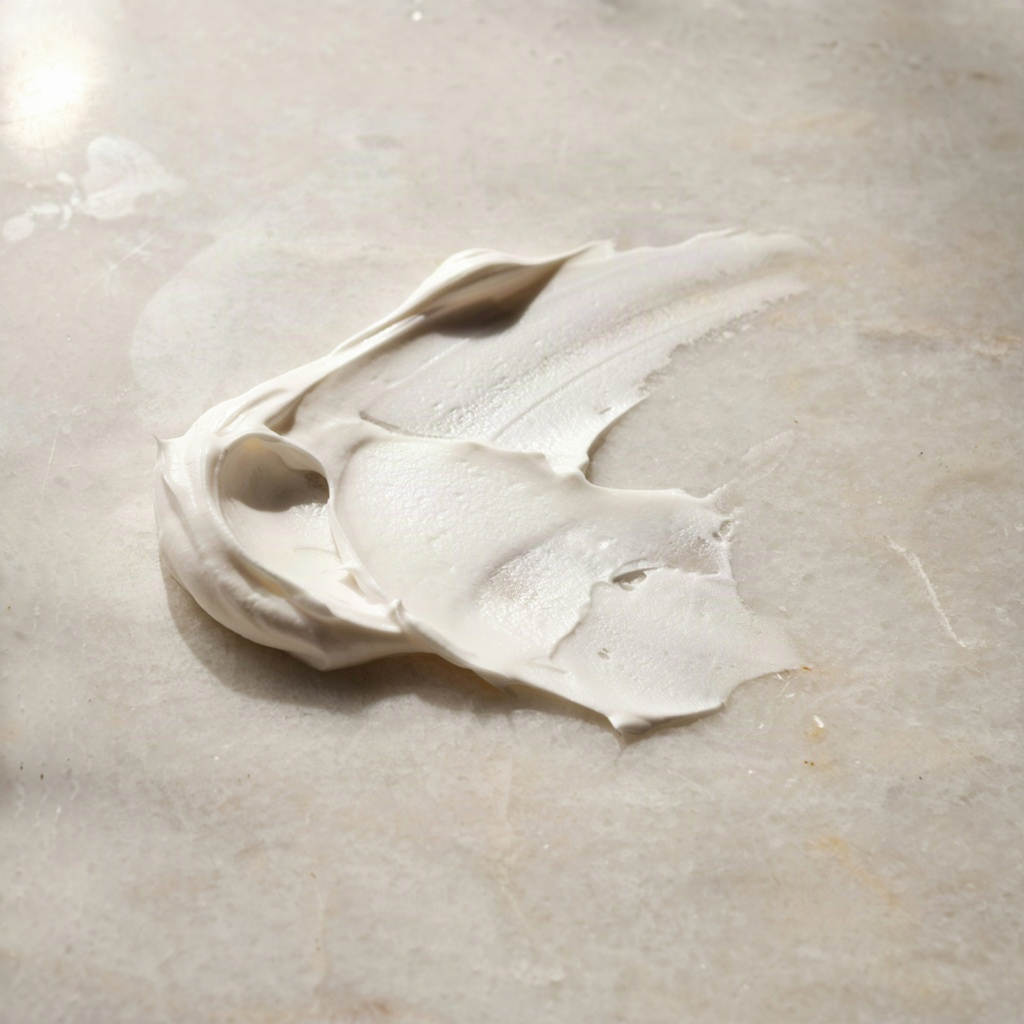
Balms and oils dissolve sunscreen and long-wear makeup in one pass, which removes the need for the scrubbing second wash that does most of the damage in a double cleanse. The cost is real: they need a proper emulsify-and-rinse step, and a rushed rinse leaves a haze that feels like congestion by morning. The trade-offs are laid out in our oil cleanser checks before you buy.
Micellar water is rinse-optional in marketing only. Leaving surfactant sitting on skin is the price of the convenience, so a water rinse afterwards is the safer default — keep it for travel days and late nights rather than every evening.
A moisturising face wash for dry skin will barely foam. If you want some lather anyway, look for sodium cocoyl isethionate rather than a sulfate. And syndet bars, despite the shape, are not soap: they sit near skin pH and make a solid facial cleanser dry skin option when you are travelling with liquid limits.
Match the cleanser to your skin, not to the review you read
Sensitive is a reactivity pattern, not a skin type. A facial cleanser for sensitive skin still has to fit your oil level, which is why two people with identical redness need opposite textures.
If your skin has grown more reactive with age, the best face wash for aging skin follows the same no-stripping logic, with mild surfactants, ceramides and a pH near 5.
When that reactivity shows up as breakouts rather than redness, the rules change, so check how to pick an acne face wash that calms spots without stripping an already touchy barrier.
Run the 60-minute test: wash with plain water, apply nothing, and check in an hour. Tight and flaky means dry. Shine on the nose and forehead with tight cheeks means combination. Comfortable everywhere means normal, and your sensitivity is situational rather than structural.
Rosacea-prone and eczema-prone skin need different things. Rosacea reacts to heat, menthol and physical friction; eczema-prone skin reacts to anything that opens the barrier further, which makes surfactant choice and rinse temperature the priority. Advice written for one group regularly makes the other worse.
Introduce a gentle facial cleanser for sensitive skin alone. No other new product for two weeks, or a flare tells you nothing about which bottle caused it. Patch test a face cleanser for sensitive skin twice: two days on the inner forearm catches obvious irritants, five days along the jaw catches the slow contact reactions that only show on facial skin.
Once the bottle fits, technique carries the rest: the standing dermatologist advice on washing with a mild cleanser is fingertips, small circles, no cloth and no pressure, because scrubbing worsens whatever condition is already there.
Not sure which texture your skin is asking for? Six questions, two minutes, and you get your skin type plus the cleanser format that fits it.
The picks, by the situation your skin is actually in
There is no single best cleanser for dry sensitive skin, because the formula that rescues flaking cheeks in February clogs an oily T-zone in July. Each pick below is judged on surfactant type, where the humectants sit in the ingredient list, fragrance status, and how skin feels ten minutes after rinsing rather than two seconds after. Skin cleansers for sensitive skin carrying a National Eczema Association seal have at least passed irritation testing, which narrows a crowded shelf faster than reading reviews. Note that the best face wash for dry sensitive skin in winter is often not your summer bottle, and that pump design matters more than price: a pump meters a pea-sized dose, a wide jar invites three times as much.
When flaking cheeks are the year-round pattern rather than a February episode, a dedicated face wash for dry skin beats a formula that compromises for an oily T-zone.
Some links below are affiliate links. If you buy through them we may earn a commission, at no extra cost to you.
Whichever you choose, the moisturizer that follows does the heavy lifting — see our picks for dry skin moisturizers worth pairing with a wash.
The wash itself: water, timing and the thirty seconds after
Water above roughly 40°C increases transepidermal water loss on its own, before any product touches your face. Lukewarm is not a comfort preference, it is a barrier decision.
A gentle cleanser for dry skin works with a pea-sized amount and about 60 seconds of contact. Longer does not clean more; it only removes more lipid. Morning washing is optional for a cleanser for dry sensitive skin — if your evening wash is thorough, water alone at 7 a.m. is a legitimate routine. On mornings when water is not enough, your mildest cleanser used sparingly is the gentler middle ground.
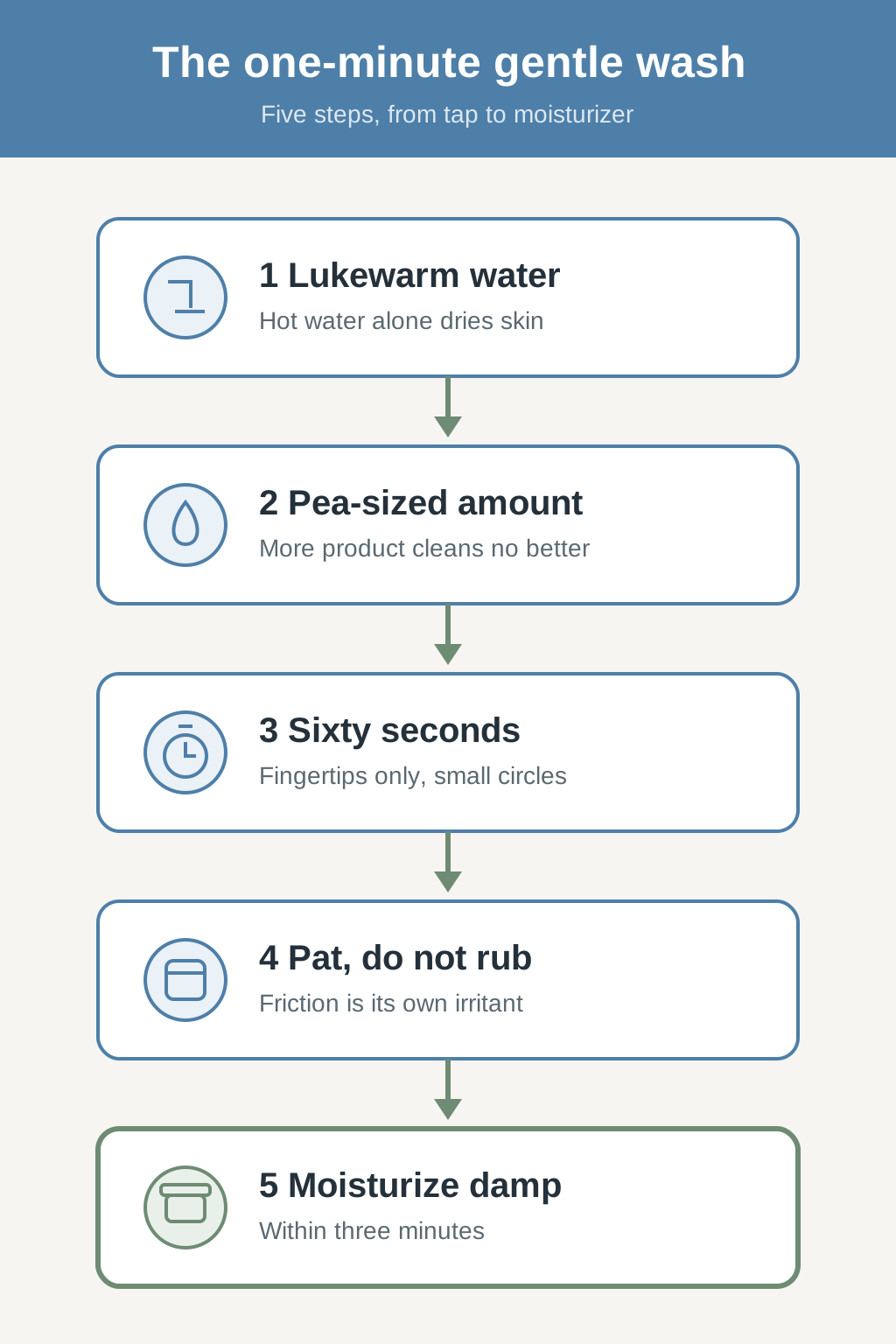
Pat dry with a clean towel and apply moisturizer while skin is still damp, inside about three minutes, while a sensitive dry skin face cleanser has left the surface at its most permeable. That window is the single highest-return habit in this article.
Skip the tools. Muslin cloths and silicone brushes add friction a sensitive barrier does not need, whatever the cleanser promises. Where the wash sits relative to your other products is covered in our guide to building a skin care routine in the right order.
Swapping cleansers is easier to judge when you write it down. This printable two-week tracker gives you AM and PM rows plus a daily tightness and redness box, for dry, combination or eczema-prone skin.
Within that same thirty-second window many people reach for a toner, so it helps to know how to choose a face toner before adding one to the routine.
If you wear makeup, the wash can only do its job once the makeup is already off, so start that first step by choosing a makeup remover by skin type.
Once your face is patted dry, follow the wash with a soothing moisturizer for sensitive skin chosen by label score and patch test, so the barrier you just protected stays calm.
The habits that keep a sensitive barrier irritated
- Double cleansing on nothing. With no sunscreen or makeup to remove, the second wash doubles surfactant exposure for zero benefit.
- Swapping at every flare. Changing your face wash for dry sensitive skin each time skin reacts hides the real trigger, which is usually an active, a season, or a hot shower.
- Acid straight after washing. Surface pH is still shifted and the barrier is at its most permeable; wait 20 minutes or move the acid to a different night.
- Expecting treatment. A facial cleanser for dry and sensitive skin is a removal step. Redness belongs to a moisturizer, a barrier cream, or a prescription.
- Letting the shower wash your face. Hot water running over your face undoes a careful sink routine in about a minute.
Questions readers ask before they switch cleansers
How long before a new cleanser proves itself?
Two weeks tells you about tolerance — stinging, tightness, new bumps. Six weeks is fair before you judge texture and background redness, because that is roughly one full epidermal turnover.
Can gentle face products be too gentle?
Yes, on two occasions: water-resistant sunscreen and long-wear makeup. Both need an oil or balm step, otherwise residue stays put and gets blamed on the moisturizer.
Can a cleanser cause purging?
Almost never. Purging is accelerated cell turnover from a retinoid or an acid. A rinse-off cleanser has neither the contact time nor the mechanism; what looks like purging is usually irritation.
When does stinging mean stop?
Burning that outlasts the rinse, redness that spreads past the application area, or new bumps along the jaw within 48 hours. Stop, go back to your previous cleanser, and reintroduce nothing for a week.
Can I use the same cleanser on my face and body?
Body skin is thicker everywhere except the neck and chest, so a face formula works on the body but costs more per wash. Going the other way — body wash on the face — is where people get into trouble.
One email a week, built around routines rather than product launches.
One barrier-friendly routine tip a week. No product dumps.
Thanks — you're on the list.


