

The best face wash for dry skin is a fragrance-free cream, milk or oil-balm syndet cleanser balanced near pH 5, built on mild surfactants like sodium cocoyl isethionate and carrying glycerin plus ceramides. Soap-based bars run pH 8.5 to 11 and strip stratum corneum lipids, which is what leaves skin tight after rinsing.
What makes a face wash for dry skin different?
A face wash suits dry skin when it lifts sebum and sunscreen with mild surfactants near pH 5 and leaves the stratum corneum's lipids and humectants in place. Dry skin is not simply skin that has been washed badly: its outermost layer is short on ceramides, cholesterol and free fatty acids, the mortar that holds corneocytes together and slows water escaping.
A cleanser's job is to remove sebum, sunscreen and airborne grime. The failure mode is that the same surfactants dissolve the barrier lipids along with the dirt, and swell keratin proteins so the surface stiffens as it dries. That stiffening is the tight, squeaky feeling people have been taught to read as clean. It is measurable damage: transepidermal water loss, the rate at which water evaporates through the skin, climbs for hours after a harsh wash and takes most of a day to settle.
Dryness also arrives from places no label can fix. Sebum output falls sharply after 40, indoor heating drops humidity below 30 percent in winter, statins and diuretics dry skin as a side effect, and wet-work occupations wash hands and faces dozens of times a shift. The dermatology profession keeps a full list in the dermatology association's list of dry skin causes, and it is worth checking before you blame your cleanser.
If you are still deciding what your skin actually is, the broader walkthrough of how to choose the best face wash for your skin type sorts the formats by skin type before you narrow to dryness.
How do you read a cleanser label for surfactants, pH and lipids?
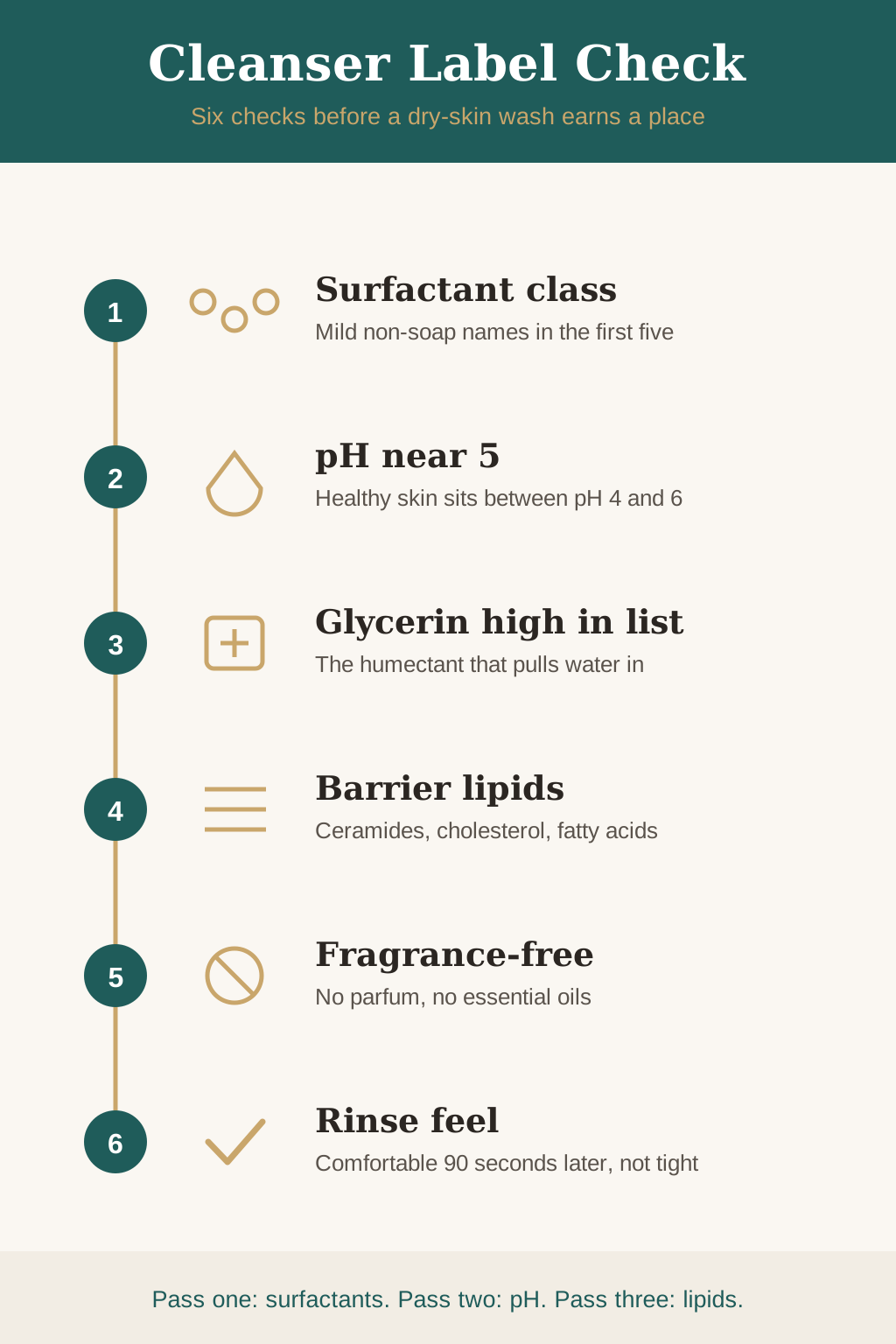
Read a cleanser label in three passes: the surfactant class inside the first five ingredients, any stated pH near 5, then whether glycerin, fatty alcohols or ceramides appear before the preservatives. Each pass takes about ten seconds and rules out most of a shelf.
Pass one: the surfactant class
Mild synthetic detergents are the ones worth your money. Sodium cocoyl isethionate, coco-glucoside, decyl glucoside, lauryl glucoside, sodium lauroyl sarcosinate and cocamidopropyl betaine all clean at skin-friendly concentrations without stripping lipid bilayers. The markers to avoid near the top of the list are sodium lauryl sulfate, saponified oils written as sodium palmate or sodium tallowate, and potassium hydroxide paired with a fatty acid, which is soap made in the bottle.
Why it matters is chemistry rather than marketing: traditional soap sits at pH 8.5 to 11, while skin sits between 4 and 6. A single wash can push surface pH two points alkaline and keep it there for hours, slowing the enzymes that rebuild the barrier. The review of how soaps and syndets differ in barrier damage puts syndets at pH 5.5 to 7 and concludes they are the preferred choice for compromised skin.
Pass two and three: pH and what gets left behind
Few brands print a pH, so treat a stated figure near 5 as a signal that the formulator cared. Then look for the three ingredient classes a good face cleanser for dry skin should carry: a humectant such as glycerin or panthenol, an emollient such as cetyl or stearyl alcohol, and a barrier lipid such as ceramide NP or cholesterol. A skin cleanser for dry skin that lists all three high enough to matter will feel cushioned instead of bare at the rinse.
Fragrance is the last cut. Parfum and essential oils are among the most common contact allergens in cosmetics, and a barrier already leaking water lets them reach living tissue faster. The tradeoff is real: fragrance-free formulas smell of nothing, and some people genuinely miss that. Our own seven label checks that spot a stripping cleanser walks the same scan in more detail.
Which cleanser format fits your level of dryness?
Cream and milk cleansers suit mild to moderate dryness, oil balms suit sunscreen and makeup removal, and low-foam gels suit dry skin that still gets congested at the T-zone. Format decides comfort more than any single hero ingredient does, because it sets how much surfactant has to be present at all.
Scored side by side, five formats separate cleanly on four traits: texture, surfactant class, typical pH band and rinse feel. Cream washes are thick and leave a soft emollient film. Milk and lotion cleansers pour, carry the least surfactant of the group and rinse cushioned. Oil balms use an emulsifier rather than a detergent system, so pH is not a meaningful measure for them. Micellar water is the fastest option and the one most often left on the skin, which is where its residue problem starts. Low-foam gels keep glucoside surfactants and drop sulfates entirely.
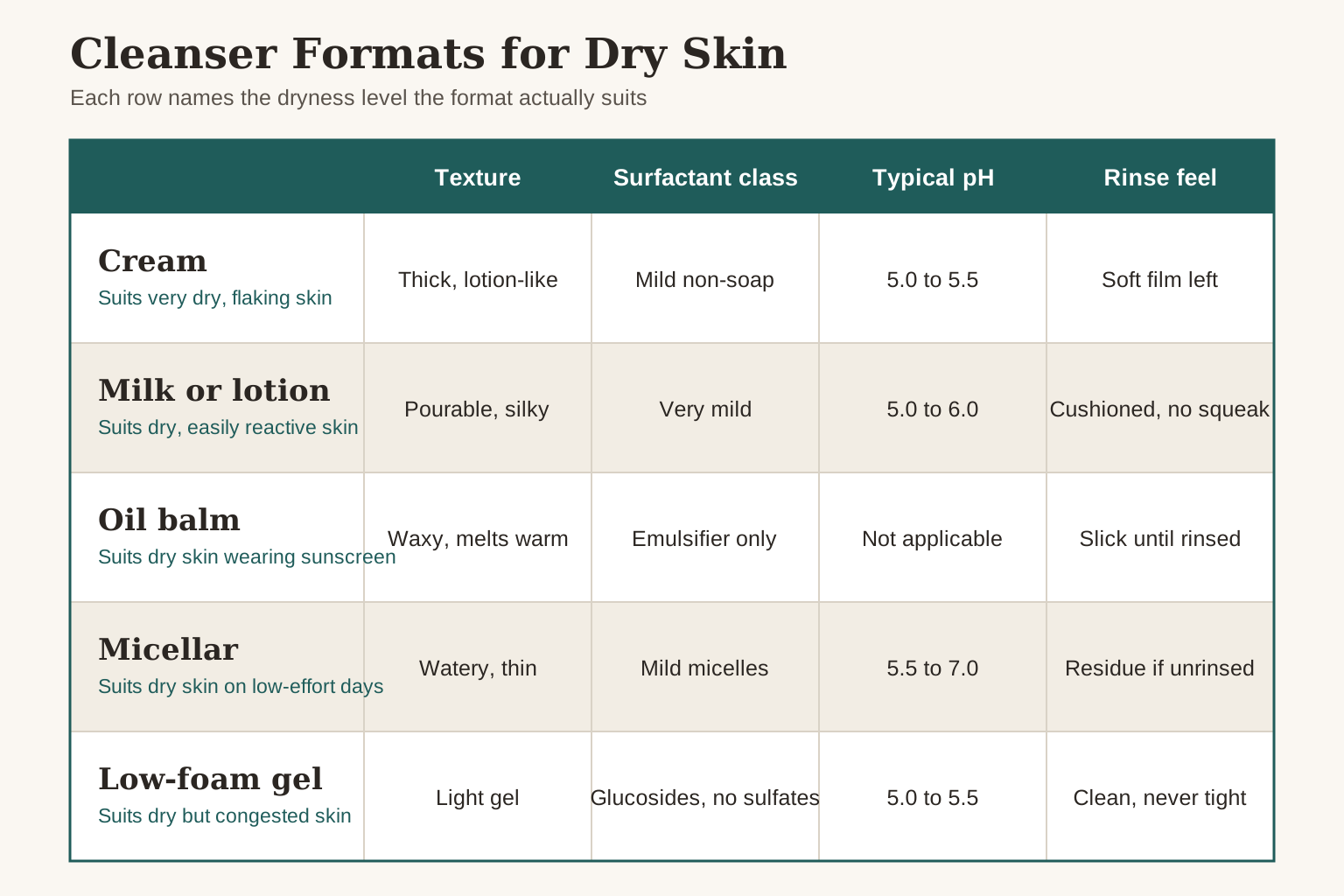
Rinse feel is the honest test. A moisturising cleanser for dry skin that leaves a film is doing its job in January and becoming a nuisance in July, when that same film traps sweat and sunscreen. If your skin reads tacky twenty minutes after washing, the film is too heavy for your climate, not for your skin type. Choosing a dry skin face cleanser is mostly choosing how much residue you are willing to wear.
Double cleansing earns its place on sunscreen and makeup days only. One balm pass to dissolve the filters, one short low-foam pass to clear the oil, and nothing more; two washes on a bare-skin day is just twice the surfactant exposure. For the removal half of that pair, picking an oil cleanser that dissolves sunscreen covers which oil bases emulsify cleanly, and six cleanser types and who each suits compares the formats beyond the five scored here.
Six questions, two minutes, and you get your skin type plus a sensitivity flag before you buy anything.
Best face wash for dry skin: picks for different needs
The strongest picks split by need: ceramide cream for barrier repair, fragrance-free milk for reactive skin, a balm for sunscreen removal, and a low-foam gel for dry but congested skin. One cleanser rarely covers all four, and the differences between them are worth more than the differences between brands.
If your dry skin is also mature skin past 40, the best face wash for aging skin follows the same rules: pH near 5, mild surfactants and ceramides.
Some links in this section are affiliate links. If you buy through them we may earn a commission, at no extra cost to you.
Price bands change what you give up rather than how well a wash cleans. Budget creams tend to use heavier fatty alcohols that feel waxier; mid-range formulas buy you a shorter ingredient list and a stated pH; the expensive end mostly buys texture and scent-free elegance. The best face wash for dry skin at any band is the one whose rinse feel you will tolerate every single night.
How should you pair a cleanser and moisturizer for dry skin?
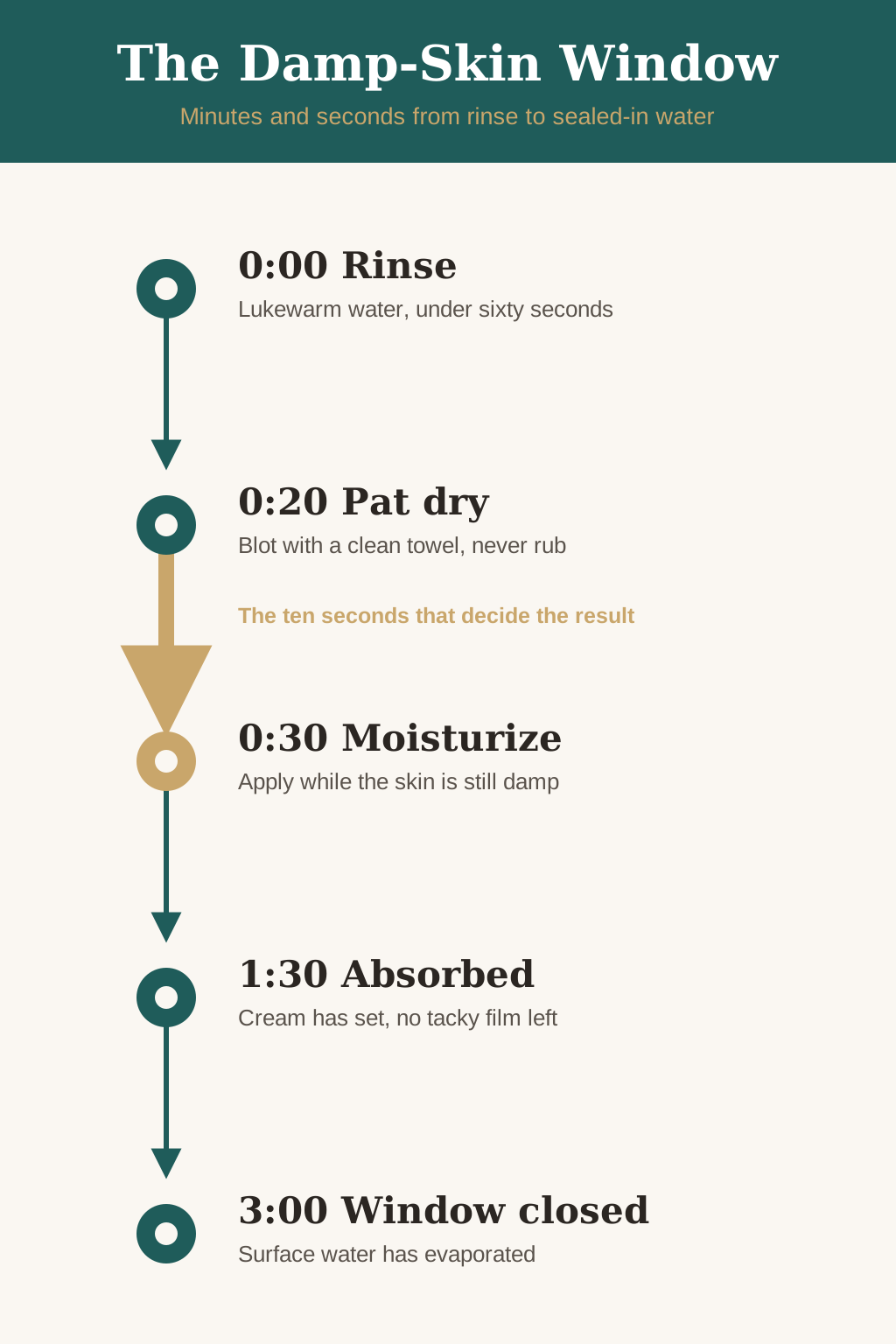
Pair a lipid-leaving cleanser with a moisturizer that layers humectant, emollient and occlusive, and apply it within three minutes of patting dry while the skin is still damp. A cleanser and moisturizer for dry skin are one system with two halves: the wash decides how much water is left in the stratum corneum, the cream decides how long it stays.
The damp-skin rule exists because the surface holds a short-lived excess of water straight after rinsing. A humectant applied into that window binds the water that is already there; the occlusive layer on top slows evaporation. Wait until the face is bone dry and glycerin has far less to work with, and in low humidity it can even pull water upward from deeper layers.
Ceramides make up roughly half the intercellular lipids in the stratum corneum, and the clinical review of ceramide-containing formulations found that ceramide-carrying products reduced transepidermal water loss and improved stratum corneum structure across twelve controlled trials. Texture should still track the season: a thin lotion when humidity is high, a cream or balm once indoor heating drops it under 30 percent.
Some links here are affiliate links; buying through them may earn us a commission at no extra cost to you.
For the cream half of the pair, dry skin moisturizers that actually hold water breaks the ingredient classes down by severity, and if you want an extra humectant step between the two, hydrating toner checks for dry, sensitive skin explains which ones are worth the shelf space.
How do you wash a dry face without stripping it?
Wash a dry face once at night and rinse with water in the morning, using lukewarm water, fingertips only, under sixty seconds of contact, then moisturize on damp skin. Three variables decide whether a face wash for dry face leaves skin comfortable or tight: water temperature, contact time and fingertip pressure. Technique moves the needle as much as formula does, and it costs nothing.
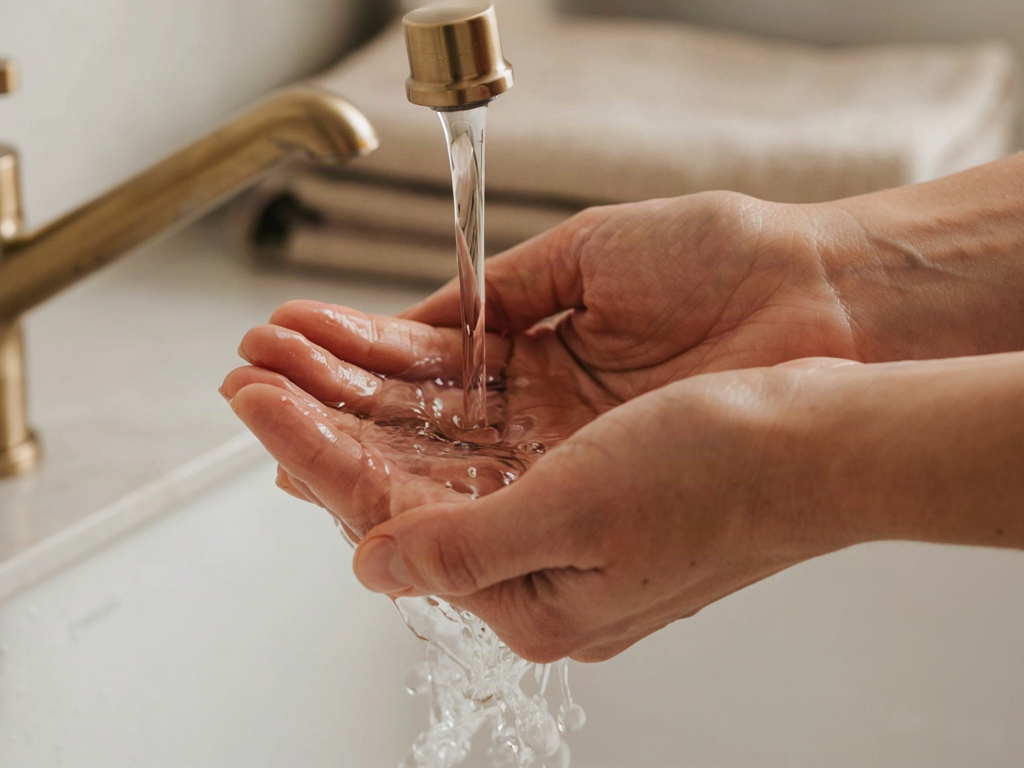
Water temperature is the first variable. Hot water melts sebum and raises the solubility of the barrier lipids, so a long hot wash strips more than the surfactant does on its own. Lukewarm means water you would call unremarkable on the back of your hand. Contact time is the second: surfactant damage scales with how long the formula sits on skin, and sixty seconds of massage removes as much sunscreen as three minutes does.
Use fingertips and nothing else. Washcloths, muslin squares and cleansing brushes add mechanical abrasion to chemical stripping, and on dry skin that combination is what turns flaking into cracking. Apply a pea-sized amount of your cleanser to damp skin, work it in small circles, rinse, then blot with a clean towel rather than rubbing.
Morning washing is optional for genuinely dry skin: a plain lukewarm rinse clears the night's sweat without touching the lipids rebuilt overnight. Skip the water-only morning if you use prescription retinoids or wake up with visible oil. A non drying facial cleanser belongs in the evening slot, before serum and moisturizer, and building a skin care routine in the right order sets out where every other step falls. The profession's own version of the routine, including the warm-water instruction, is written up in the face-washing technique dermatologists use themselves.
A printable seven-day tracker makes the change measurable, which helps if you are not sure whether the new routine is working or the weather simply turned.
Is your skin dry, dehydrated or sensitive?
Dry skin lacks oil and flakes year-round, dehydrated skin lacks water and feels tight while still looking shiny, and sensitive skin stings or flushes regardless of its oil level. Three questions separate them in under a minute.
- Do you see fine flaking around the nose, brows or jaw in every season? That is an oil deficit, and a cream or milk wash is the fix.
- Does tightness ease within an hour of drinking water or applying a humectant, with visible shine by midday? That is dehydration sitting on top of normal or oily skin.
- Does a new product sting, prickle or flush within two minutes? That is reactivity, and it overrides the other two answers when you choose.
Reactivity is why a shortlist of the best cleanser for dry skin dermatologist recommended formulas still needs filtering. Several of the gentlest barrier-repair creams carry fragrance, and a reactive face will reject them regardless of how good the lipid profile reads. Filter for fragrance-free first, then for texture.
Age, medication and indoor heating drive far more dryness than product choice does, and none of them respond to a different bottle. If flaking persists for six weeks on a mild routine, or you see cracking, bleeding or steady itch, that is a dermatology appointment rather than another cleanser. For reactive skin specifically, a gentle cleanser for sensitive, reactive skin narrows the surfactant list further.
Which washing habits keep dry skin tight?
Over-washing, hot water, weekly-plus physical scrubs, sulfate-heavy lather and a delayed moisturizer are the five habits that keep dry skin feeling tight long after the rinse. Each one is a habit rather than a product problem, which makes all five free to fix.
- Washing twice a day when a cleanser for dry skin is only needed once. Evening removes sunscreen and grime; morning adds a second surfactant exposure for nothing.
- Stacking a scrub or an acid on the same night as a stripping wash. Pick one active step per evening and give the barrier the other nights off.
- Judging a wash by how much it lathers. Foam tracks surfactant concentration, not cleaning power, so a rich lather on dry skin is a warning rather than a feature.
- Letting skin air-dry before moisturizer. The useful water is gone in about three minutes, and so is most of the benefit.
- Scrubbing with a towel instead of blotting, which adds friction to a surface that is already compromised.
Even a non drying facial cleanser cannot survive a routine built on these five, so fix the habits first and the product choice gets easier. When exfoliation does belong in the week, exfoliating dry skin safely without over-scrubbing sets the frequencies that dry skin tolerates.
If one small change a week is the pace you can keep, our weekly note is built for exactly that.
One cleanser-and-moisturizer tip a week. No product dumps.
Thanks — you're on the list.


