

The deciding factor in an eye makeup remover is the solvent, not the brand. Oil-based and biphasic formulas dissolve waterproof mascara film in about 20 seconds of contact; micellar water suits sensitive, lens-wearing eyes but needs two passes. Match solvent to makeup weight, press, never rub.
What does an eye makeup remover actually do?
An eye makeup remover is a solvent: oil-based formulas dissolve mascara film, water-based micellar formulas lift loose pigment, and the right one depends on what you are taking off. Mascara and long-wear liner are built from waxes, silicones and acrylate film formers, so plain water slides off them. Oils swell those films until they lose grip; micelles, surfactant spheres suspended in water, surround loose pigment and carry it onto the pad.
That makes contact time, not pressure, the measure of a good makeup remover. Twenty seconds with a saturated pad held still clears more than thirty seconds of rubbing, and costs fewer lashes.
Two things separate the best eye makeup cleanser from a face wash: it works near the pH of tear fluid, around 7.4, rather than the 5.5 a facial cleanser targets, and it carries no sulfates, which sting the lid margin within seconds. A liquid makeup remover therefore goes first, on dry skin.
A separate eyeshadow remover pass earns its 15 seconds because pressed shimmer is mineral flake, not pigment in a film. Reviews of how eye cosmetics migrate into the tear film record particles crossing the lid margin within minutes of application.
Beyond the eye area, our guide to six makeup remover formats and who each one suits applies the same logic to foundation and sunscreen.
Which eye makeup remover format suits your eyes?
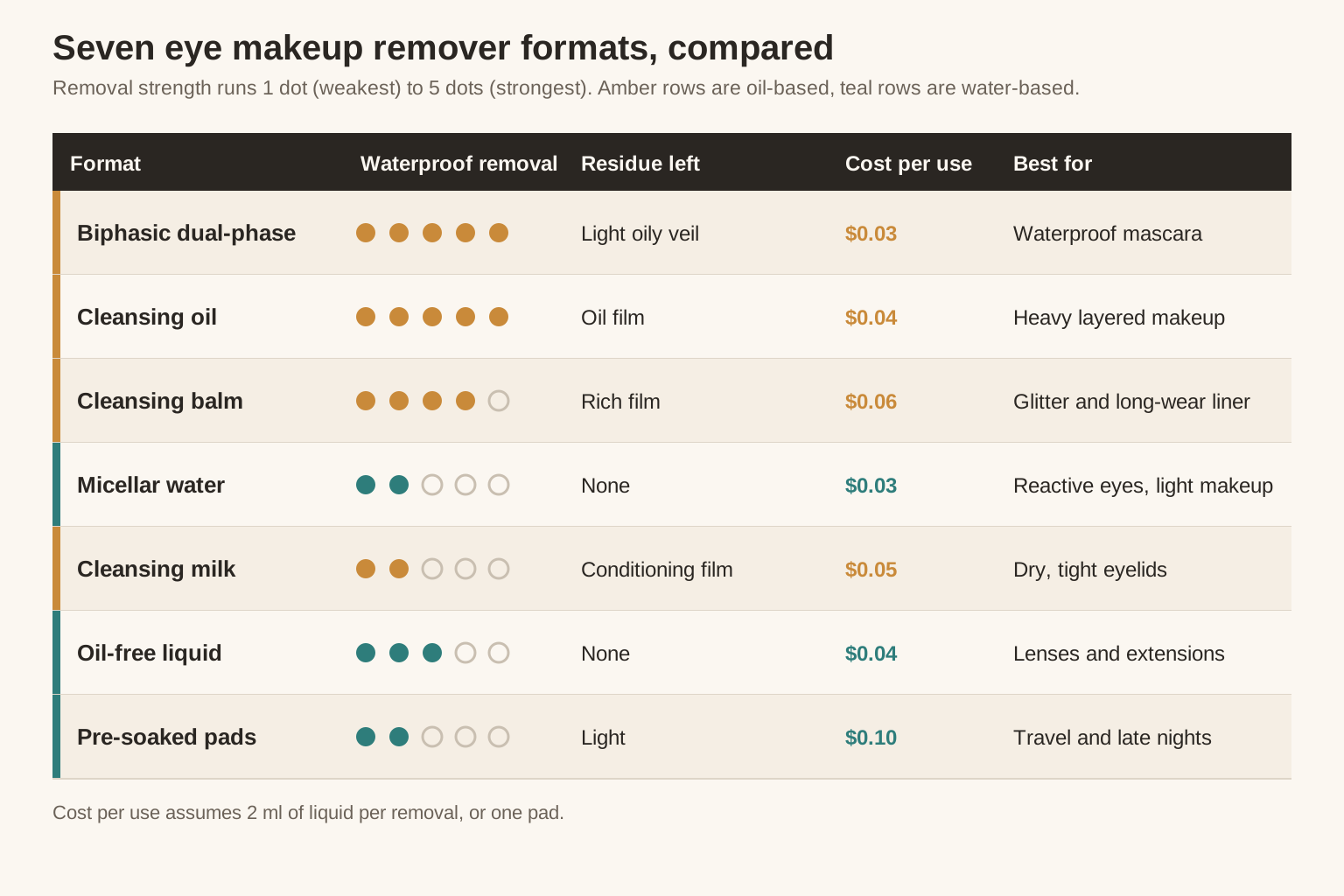
Seven formats cover the field - biphasic, cleansing oil, balm, micellar water, cleansing milk, oil-free liquid and pre-soaked pads - and each one trades removal strength against residue. Read the grid from strongest solvent to gentlest, then match it to the heaviest makeup you actually wear.
Biphasic dual-phase remover
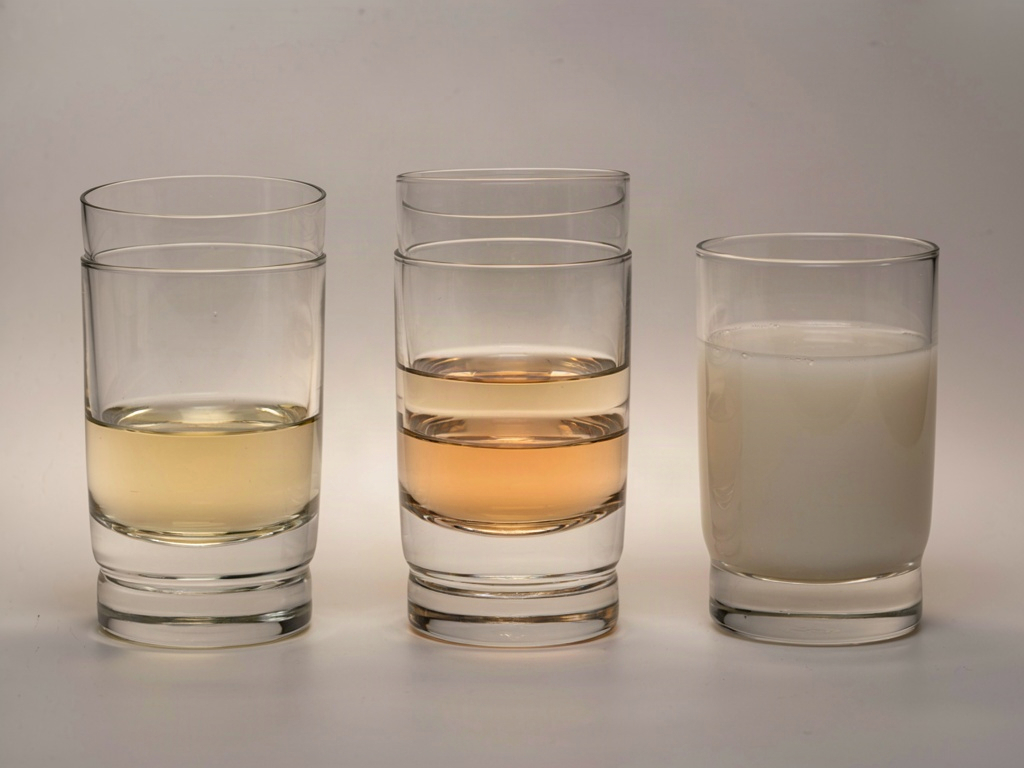
Two visibly separated layers, oil over water, shaken into a temporary emulsion. This is why biphasics own the best waterproof eye makeup remover category: the oil phase attacks film formers while the water phase rinses pigment away. The cost is a faint oily veil that needs a cleanse afterwards.
Cleansing oil
A pure oil blend with an emulsifier that turns milky under water. It is the most efficient oil based mascara remover for tubing formulas and heavy festival makeup, clearing a full eye in one pass. It blurs vision for a minute if it migrates, and it is overkill on a tinted-balm day.
Cleansing balm
A solid oil that melts at skin temperature, so nothing drips into the eye. Balms give the longest working time, which suits layered liner and glitter, but a jar invites fingers and the texture is too rich for anyone prone to milia around the lid.
Micellar water
The default water based makeup remover: micelles in water, no oil, no rinse needed for light makeup. It is the kindest option on reactive lids and the clearest choice before lenses go back in. It will not shift true waterproof mascara in under three passes, which is where lash loss starts.
Cleansing milk
A low-oil emulsion carrying glycerin and emollients, and the hydrating makeup remover answer for lids that feel tight by evening. It takes off shadow and non-waterproof mascara comfortably. Expect to double cleanse: the conditioning agents that make it feel good are the ones that linger.
Oil-free liquid remover
A single aqueous phase with mild solvents and no oil at all, which makes an oil free eye makeup remover the standard for contact lens wearers and lash extensions, where oil breaks the cyanoacrylate bond. It works slower on waterproof film and stings if it runs into the eye.
Pre-soaked remover pads
Convenience in a tub, at roughly 1.5 ml of liquid per pad. They travel well and they are the honest answer at 2 a.m. They rarely qualify as a great makeup remover at home: less solvent per pass invites rubbing, and cost per use runs two to four times a bottle.
If the oil route appeals, what to check before buying an oil cleanser covers the base oils and emulsifiers that decide how cleanly it rinses.
How do you judge a remover before you buy it?
Judge a remover on five label points: solvent type, fragrance, preservative load, pad or liquid format, and cost per use at your own removal frequency. Those five decide whether a bottle is the best make up remover for your face or a 200 ml mistake.
- Solvent type. The first three ingredients name the mechanism: an oil or ester means film-dissolving, a poloxamer or PEG means micellar.
- Fragrance. A fragrance free eye makeup remover leaves out parfum and the essential oils that most often sting; it cannot leave out preservatives, and phenoxyethanol is the usual compromise.
- Preservative load. Airless or single-dose packaging allows a lighter system, which matters on a reactive lid.
- Format. A liquid plus your own pad lets you control saturation; a tub does not.
- Cost per use. A 125 ml bottle at 2 ml a night is about 60 uses, so divide the price by 60 before calling a recommended makeup remover expensive.
The best mascara remover is the one whose solvent matches your mascara's film former. Tubing mascaras use water-soluble polymers that slide off with warm water and a milk; classic waterproof formulas use dimethicone and waxes that need an oil phase. That match is how you spot the best cleanser for waterproof mascara in under a minute, and federal safety rules for eye cosmetics explain why eye-area products are held to a tighter standard than face products.
The same checks run across the shelf, so choosing a gentle cleanser for sensitive skin and cleansing dry skin without stripping it use the same label logic for the rest of your face.
Four questions narrow the shelf to three removers that match your makeup weight, your sensitivity and your budget.
How do you take off waterproof mascara without rubbing?
Saturate a pad, hold it against closed lashes for 20 seconds so the solvent can soften the film, then sweep downward once and finish with a swab. The order matters more than the product: friction is what costs you lashes, and the 20-second pause is what removes the need for it.
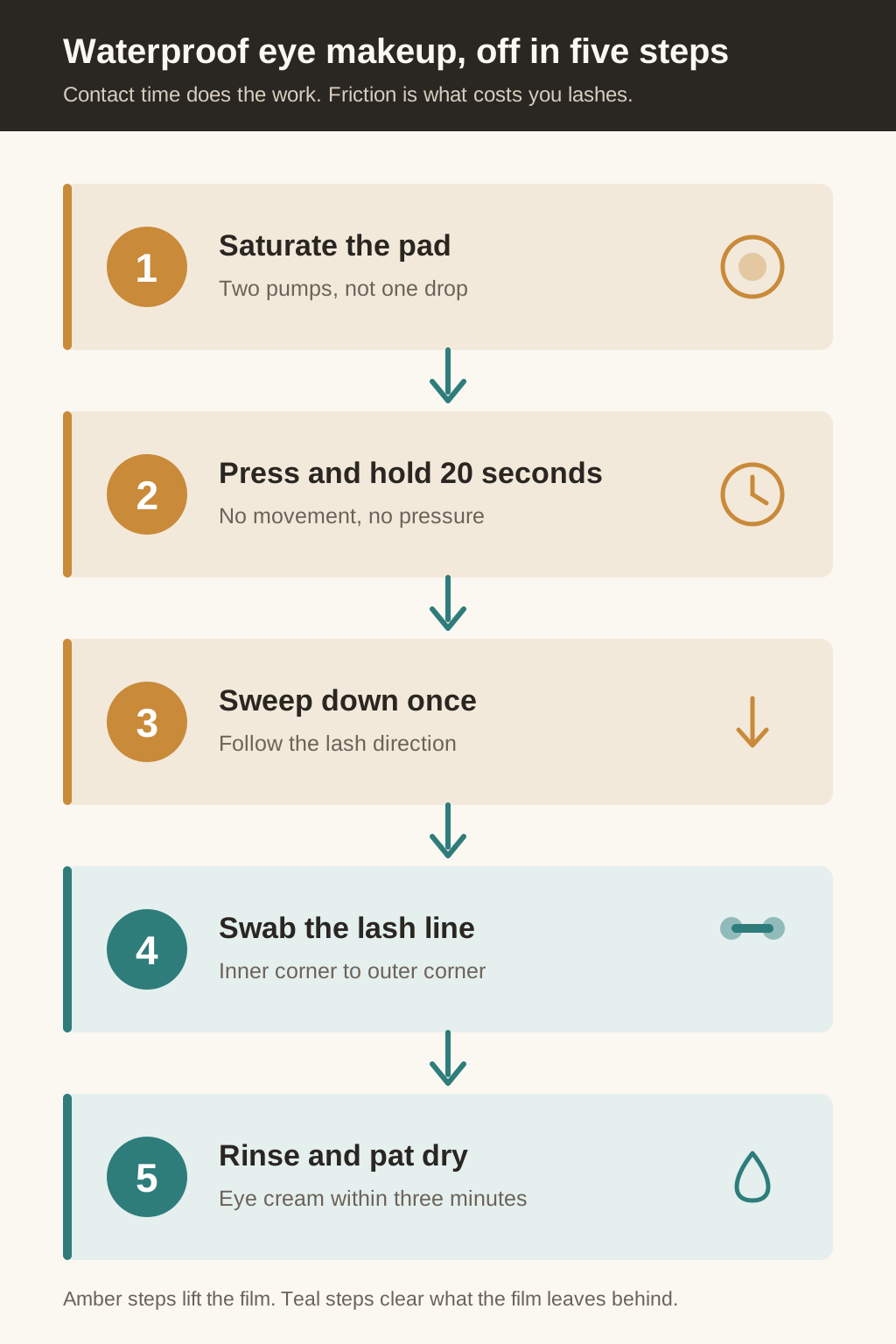
An eye makeup remover for mascara fails the moment you scrub. Rubbing drags the lid, pushes pigment under it and loosens lashes that were otherwise fine; lashes shed naturally at one to five a day, and aggressive removal easily doubles that figure.
Work an oil based makeup remover for waterproof mascara along the lash line and over the lashes themselves, never on the waterline. A University of Waterloo team ran a slit-lamp study of eyeliner particle migration and found 15 to 30 per cent more particles reaching the tear film when product went inside the lash line rather than outside it.
For tightlined liner, roll a cotton swab wetted with an eye makeup remover for waterproof makeup along the lower lash line, inner corner to outer, one pass per swab end. Shadow in the crease comes off with the flat of the pad, not the edge, because the edge is what drags the thin skin over the orbital bone.
On light days a plain liquid remover on a folded pad is enough, and it costs less per night than an oil. Heavier makeup earns a second, surfactant-based cleanse: any waterproof makeup remover strong enough to dissolve film leaves part of that solvent behind, and 30 seconds of a mild cleanser clears it.
Then step into the rest of your routine, where the order to layer your skincare steps sets out what follows a double cleanse.
Which remover should you buy for your situation?
Buy by need: a biphasic or oil formula for waterproof wear, a micellar liquid for reactive eyes, and an oil-free liquid when you wear contact lenses. Ranking removers against each other is close to meaningless: the formula that strips a festival eye in one pass is the one that stings a reactive lid.
Some links below are affiliate links. If you buy through them we earn a commission, at no extra cost to you.
The best waterproof makeup remover buys its strength with comfort, and the best drugstore makeup remover buys its price with added fragrance, so the best makeup remover for waterproof mascara is not automatically the gentlest. A good eye makeup remover lands near three to five cents per use. Budget for what follows, since eye creams that target dark circles work best on skin cleaned without dragging.
What works for reactive, dry or lens-wearing eyes?
Reactive eyes do best on a fragrance-free biphasic or micellar formula applied with a still pad, and lens wearers should remove lenses before any oil touches the lid. Fragrance and essential oils are the commonest triggers on eyelid skin, which is roughly 0.5 mm thick.
If your eyes still feel gritty after every removal, that is a symptom worth treating on its own, and these dry eye treatment options explain which one suits reactive, lens-wearing eyes.
That is why the best eye makeup remover for sensitive eyes is nearly always fragrance-free, light on preservatives and either biphasic or micellar: both work by soaking rather than foaming. A fragrance-free formula is the safer default when you cannot patch test first.
When the lid is already pink, tight or flaking, choose an eye makeup remover for sensitive skin with glycerin high on the list, and keep exfoliating acids off the orbital bone for a week. Press, lift, and never sweep the same pad twice over broken skin.
Take lenses out first, every time: oil that reaches a silicone hydrogel lens blurs vision for hours, and the lens traps any solvent against the cornea. Ophthalmologist guidance on cosmetics around the eyes explains why the waterline sits directly over the oil-gland openings.
Crusted lashes, a tender lump on the lid, or watering that has not settled after 48 hours are signals to see a clinician: blepharitis and styes need treatment, not a gentler pad. For the dryness that travels with them, hydrating toners for dry, sensitive skin are a calmer next step than an acid.
Six questions, two minutes, and you know your skin type and whether your eyes carry a sensitive flag.
What should you do in the three minutes after removal?
Rinse the oil film off, pat the lid dry without dragging, and apply eye cream within three minutes while the skin is still damp. Damp skin holds a humectant layer; dry skin lets it evaporate.
A makeup remover for waterproof makeup needs that follow-up cleanse because the oil phase stays behind by design. Skipping it leaves grit in the inner corner, smudged liner by morning and lashes clumped in threes.
Hygiene costs nothing: discard mascara three months after opening, close the cap so air cannot dilute the preservative system, and wash reusable pads weekly.
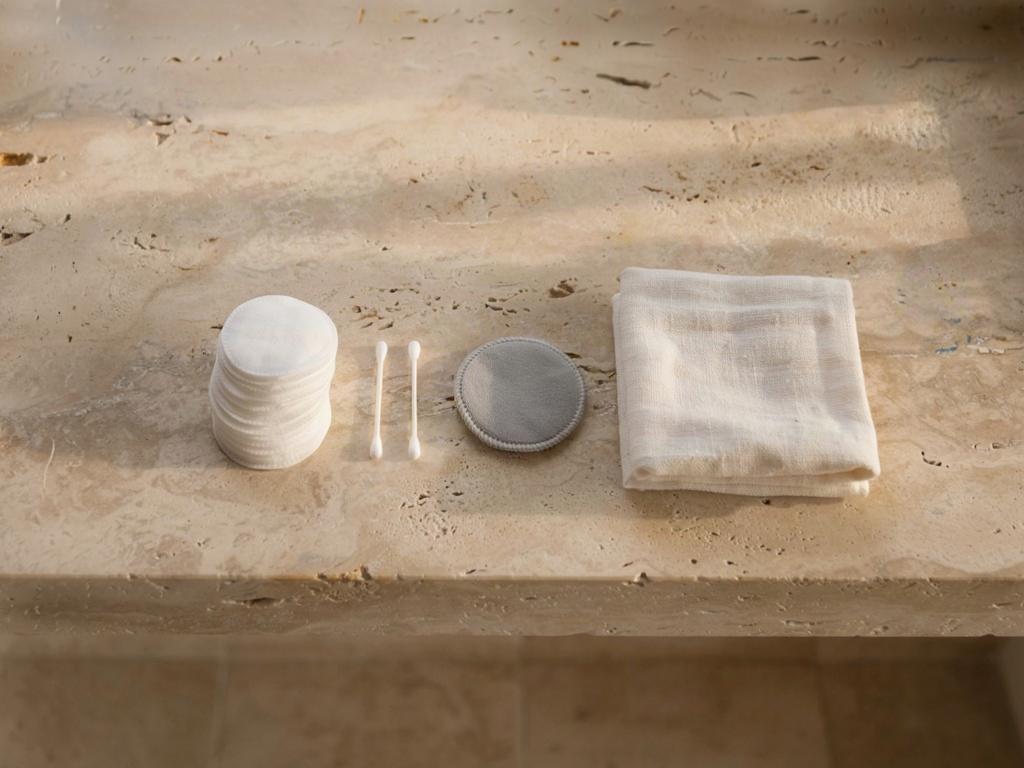
Then pick a good makeup cleanser for the rest of the face and keep the eye area a separate step, which matters if you are watching fine lines and creases around the eyes or puffiness and under-eye bag treatments.
Some links below are affiliate links; we earn a commission if you buy, at no extra cost.
Five printable pages, one per ingredient family, so any label reads in ten seconds at the shelf.
One short email a week on the eye area, not a product dump.
One eye-area tip a week. No product dumps.
Thanks — you're on the list.


