

Chapped lips need an occlusive, not a flavor: a fragrance-free ointment balm built on petrolatum, ceramides and dimethicone, plus SPF 30 with zinc oxide by day. Lips with chronic cheilitis lose 66.8 g/m2 per hour of water, so sealing that leak matters more than any soothing tingle. Expect two to three weeks.
Why do lips get chapped, and what does chapped lips care actually fix?
Lip skin carries no oil glands and only a few layers of stratum corneum, so a dry lip loses water fast and chapped lips care works by sealing that loss rather than adding water. The vermilion border has no sebaceous glands at all and a stratum corneum roughly three to five cells thick, against the fifteen or so layers protecting cheek skin.
That thinness shows up in measurements. In people with chronic cheilitis, measured water loss from lips in chronic cheilitis runs about 66.8 g/m2 per hour, while forearm skin on the same people reads normally. The barrier problem is local to the lip, which is why a body lotion does nothing for it.
So what is good for chapped lips is anything that slows evaporation. Humectants such as glycerin and hyaluronic acid pull water toward the surface, but with nothing sealing the top, that water leaves faster than it arrived. A lip balm for chapped lips is a barrier product first and a comfort product second.
Four drivers do most of the damage: cold dry air, lip licking, ultraviolet exposure, and irritant contact from flavor and fragrance. Fixing the balm without fixing the habit stalls progress. If you want the shortlist of formats dermatologists reach for, our guide to dermatologist-approved chapstick picks for dry lips sorts them by texture.
Which label checks separate a real lip balm for chapped lips from a scented tube?
Seven label checks decide whether a balm repairs or irritates: occlusive base, barrier lipids, mineral SPF 30, no fragrance, no flavor chemicals, no exfoliating acids, and a texture matched to when you apply it. Each takes ten seconds with the tube in hand.
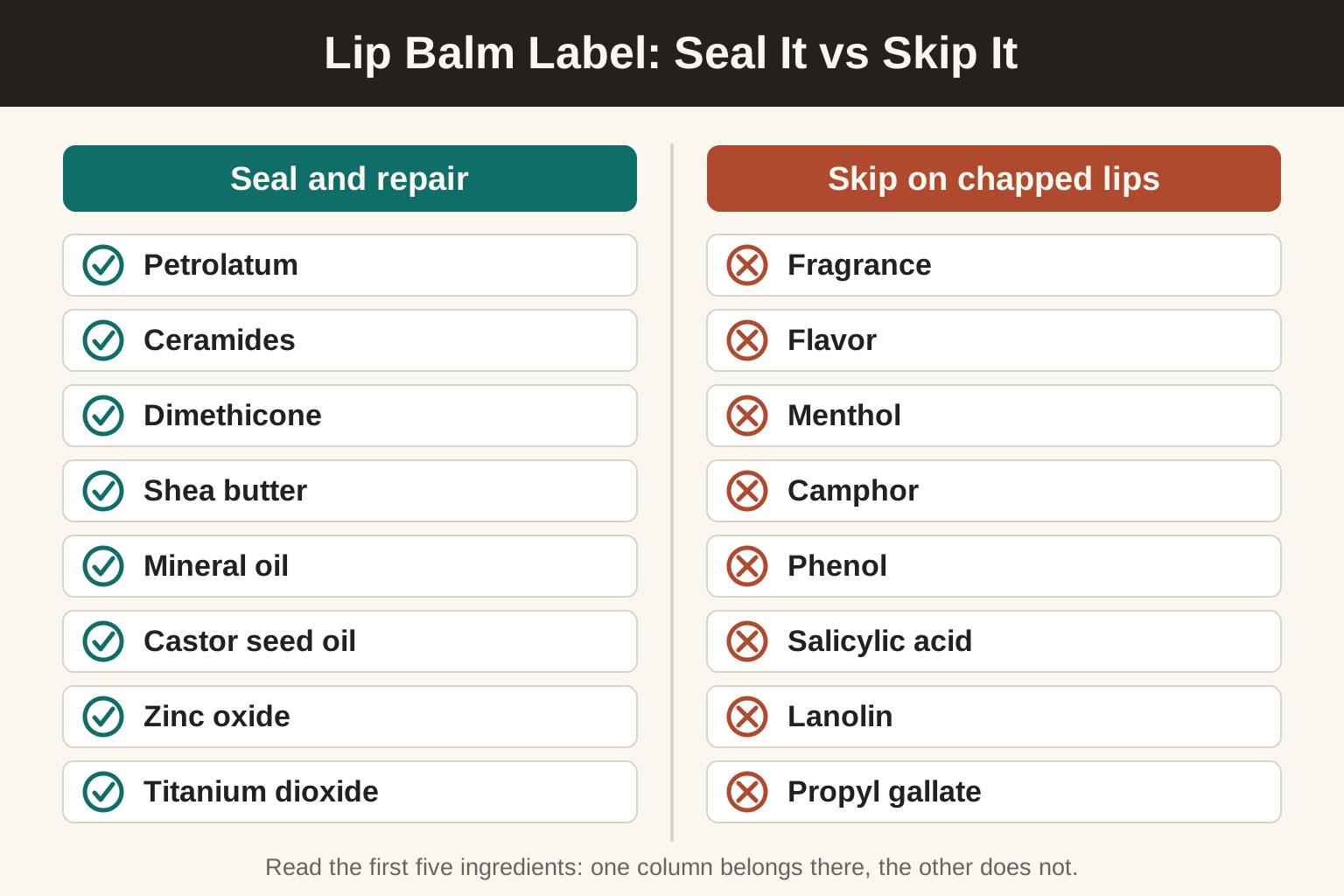
Petrolatum or another true occlusive in the first five ingredients
An occlusive is a water-insoluble film former: petrolatum, mineral oil, dimethicone, beeswax. Lists run in descending concentration, so one sitting sixth or lower is a rounding error. What to use for chapped lips is the tube that puts one near the top.
Ceramides and dimethicone for barrier repair
Petrolatum seals but does not replace lost lipids. Ceramides restock the mortar between corneocytes, dimethicone adds a lighter film, and the trade-off is cost: two to three times plain jelly.
SPF 30 with titanium dioxide or zinc oxide
The lower lip takes near-vertical sun with almost no melanin, so actinic damage concentrates there. SPF 30 is the floor, reapplied every two hours outdoors. On how lip SPF is tested: real sun protection for lips.
Fragrance-free and flavor-free, with no menthol or camphor
Menthol, camphor and eucalyptus read as relief while stripping lipids; cinnamon, citrus and peppermint flavor oils are common lip allergens. Readers asking what is the best thing for chapped lips usually own a balm failing this check.
No salicylic acid, phenol or propyl gallate
Salicylic acid dissolves the flakes you see and the barrier you do not; phenol and propyl gallate sit on dermatology avoid lists. The best chapped lips remedy reads boring, not active.
Lanolin only if your lips have never reacted to wool alcohols
Lanolin is an excellent occlusive and a documented lip allergen, which is why guidance splits on it. Worn it for years with no trouble? Keep it. Lips flaring unpredictably? Drop it and judge over two weeks.
Ointment in a tub for night, stick for pocket reapplication
The best thing for dry lips at night and in a pocket are two textures, not two brands: a tub ointment survives sleep, a stick reapplies cleanly and wears off in ninety minutes.
Affiliate disclosure: we earn a commission on purchases through these links.
Four questions return three balms filtered to your lip state, trigger and budget.
If you want color along with those seven checks, look at how tinted lip balm reads on lips before choosing a shade.
What to put on chapped lips right now for fast dry lip relief?
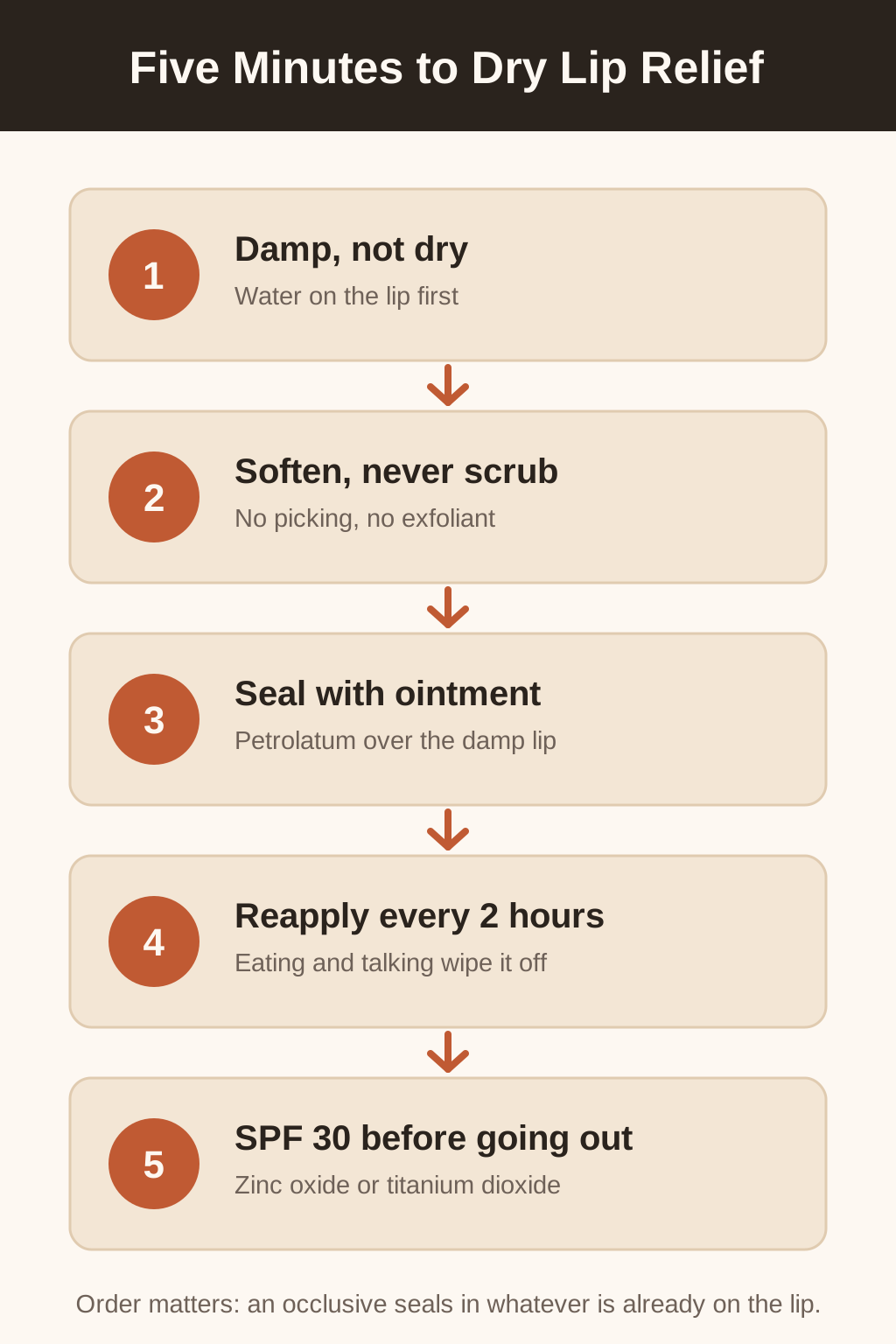
For fast dry lip relief, dampen lips with water, seal within thirty seconds using a bland petrolatum ointment, and repeat every two hours instead of scrubbing at flakes. Damp-then-seal works because an occlusive traps whatever water is already on the surface; applied to a bone-dry lip it holds a dry lip in place.
How to repair dry lips fast is mostly about removing friction. Scrubbing a fissured lip reopens it and restarts the healing clock, so the first 48 hours are for sealing only. Once the surface has closed, gentle lip exfoliation without damage becomes reasonable again, and DIY sugar scrub recipes you can mix at home cost almost nothing to try.
How to soothe dry lips in the first hour: bland ointment, no flavored balm, no acid treatment, nothing that tingles. Dry lip relief from one application holds roughly two hours before eating, drinking and talking wipe the layer away, which is why frequency beats thickness during the day.
Plant oils are a reasonable second tier. In laboratory work, research on virgin coconut oil and skin barrier proteins showed virgin coconut oil raising filaggrin and involucrin expression, which explains why oil-and-wax balms feel restorative. They still seal less than petrolatum, so treat them as comfort, not as the barrier.
Does a dry lips treatment overnight beat a daytime balm?
An overnight treatment works harder because a thick occlusive sits undisturbed for six to eight hours, while a daytime balm is eaten, drunk and wiped away within about ninety minutes. That single difference in contact time is the whole argument for a dedicated night product.
Night formats can be thicker because appearance and taste stop mattering: ointments, tub balms and lip masks all work at a viscosity nobody would wear to work. Dry lips treatment during the day trades staying power for wearability, so reapplication frequency replaces thickness.
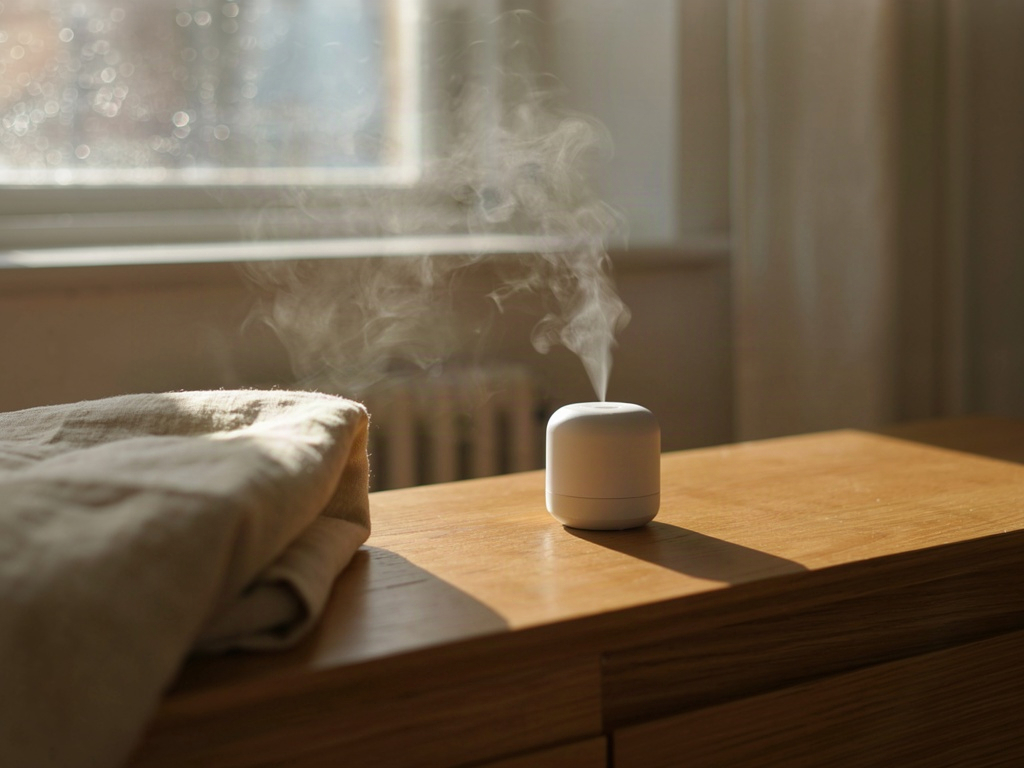
A dry lips treatment overnight has one common failure point, and it is the room. Bedroom humidity below 30% pulls water out of the lip all night; a humidifier is the cheapest half of the fix and costs about the price of two premium balms. What a night product cannot do is reverse sun damage or clear an allergic cheilitis.
Affiliate disclosure: we earn a commission on purchases made through these links, at no extra cost to you.
Two related label reads help here: overnight hydrating lip mask checks covers what a mask must contain to still be working by morning, and night cream label checks applies the same logic to facial skin.
What is the best treatment for dry lips that are cracked and bleeding?
Cracked, bleeding lips need a bland ointment over clean skin, zero acids and zero flavor, plus a clinician's review if a fissure has not closed within two weeks. A cracked lips treatment starts by stopping everything else: no exfoliant, no flavored balm, no matte liquid lipstick, no plumping gloss.
The best treatment for dry lips with an open split is the dullest one available, applied over clean, dry skin several times a day and again at bedtime. Petrolatum or a petrolatum-plus-ceramide ointment gives the film; nothing in it should sting on contact.
Honey is the folk remedy with real grounding: clinical evidence for honey on broken skin documents antibacterial activity and wound-healing use across burns and ulcers. Medical-grade product is standardised, the jar in the cupboard is not, so treat kitchen honey as a comfort measure on an intact lip only.
To fix chapped lips that bleed at the corners, treat the angular crack as a separate problem. Bilateral corner splits are frequently candidal or bacterial rather than dry, and they respond to an antifungal or antibacterial, not to more balm. Body-wide dryness alongside this pattern is worth addressing too, and best lotion for dry, flaking body skin covers the ingredient classes that hold water in thicker skin.
Affiliate disclosure: we earn a commission on purchases made through these links, at no extra cost to you.
How do you care for sensitive lips that react to most balms?
Sensitive lips do better on a three-ingredient ointment, patch tested behind the ear for five nights, with lanolin, fragrance, flavor and botanical extracts removed one at a time. The base is rarely the culprit; fragrance, flavor oils, lanolin, propolis and botanical extracts account for most reactions.
Strip back to the shortest list you can buy, then patch test behind the ear for five consecutive nights before a product returns to your lips. Reintroduce one product per week so a flare points at something identifiable rather than at your whole shelf.
A dry lips remedy that stings is doing harm. Tingle is irritation, not activity, and a formula that buzzes on contact will keep you reapplying it. The honest limit of this method: elimination testing takes about six weeks of patience, and a dermatologist patch test is far faster when reactions are severe or swelling is involved. Reactive skin usually needs the same discipline elsewhere, which is what sunscreen formulas for reactive, sensitive skin works through.
The printable cheat sheet names every lip ingredient to seek and every one to skip, in a version matched to whichever irritant your lips react to.
Which daily habits keep dry lips coming back?
Lip licking, mouth breathing, chewing metal objects, sun exposure and indoor humidity below 30% undo lip repair faster than any balm rebuilds it. Saliva evaporates within seconds and carries lip lipids with it, plus digestive enzymes that irritate on the way out, which makes licking the single habit that defeats chapped lips care most often.
Mouth breathing during sleep and at the gym dries the lower lip in a distinct horizontal band. Holding pens, keys and hair clips in the mouth adds metal contact irritation, and picking flakes turns a scaly lip into a bleeding one.
Sun is a year-round input, not a summer one, and actinic keratosis on the lower lip is the endpoint that makes daytime SPF prevention rather than vanity. Build the habit with an SPF lip balm kept in the car rather than the bathroom.
You cannot fix chapped lips by drinking more water alone; extra glasses help only if you were genuinely dehydrated. And a lip balm for chapped lips fails on schedule, not on formula, if you apply it twice on a day that needed six. Tingling plumpers are the other quiet saboteur, as lip plumpers and the tingle they cause explains.
When does lip dryness treatment need a dermatologist?
Book a dermatologist when lip dryness outlasts three weeks of bland ointment, when only the mouth corners crack, or when a rough white patch stays on the lower lip. Lip dryness treatment that has run three weeks on a correct occlusive and failed is a diagnostic question, not a shopping question.
The red flags worth an appointment are specific: one persistent white or rough patch on the lower lip, swelling, pus, and cracks confined to both corners. A cracked lips treatment that needs prescription help usually means a topical steroid for allergic cheilitis, an antifungal for angular cheilitis, or patch testing to name the allergen. For how lip and mouth changes are classified clinically, the medical reference on lip inflammation and lip sores is the plain-language reference.
Drug and deficiency causes are worth naming out loud: isotretinoin, chemotherapy agents, low iron, low B vitamins and thyroid disease all show up on the lip. Bring every product used in the last month and how long each was applied, since that list often contains the answer. Rebuilding the rest of your regimen afterwards is easier with correct skin care routine order.
One barrier-repair fix a week, lips included, if you want the next one by email.
One barrier-repair fix a week, lips included. No product dumps.
Thanks — you're on the list.


