

What a Lip Scrub Actually Removes
A lip scrub lifts flakes that are already dead and already loose. That is the entire job. The sugar or fine particle catches the edge of a lifting scale, the oil base carries it away, and the surface you are left with is flat enough for balm to sit on instead of bridging over ridges. Nothing in the jar reaches living tissue, and nothing in it treats the reason your lips dried out in the first place.
The same removes-only-what-is-loose principle governs the rest of your face and body, and our guidance on how to exfoliate skin safely sets out the frequencies and strengths each skin type tolerates.
That distinction decides whether exfoliating helps you or sets you back a week. Loose flakes come away with almost no pressure. Flakes that are still anchored tear, and a tear on the vermilion border bleeds, scabs and flakes again in three days — the same cycle, one layer deeper.
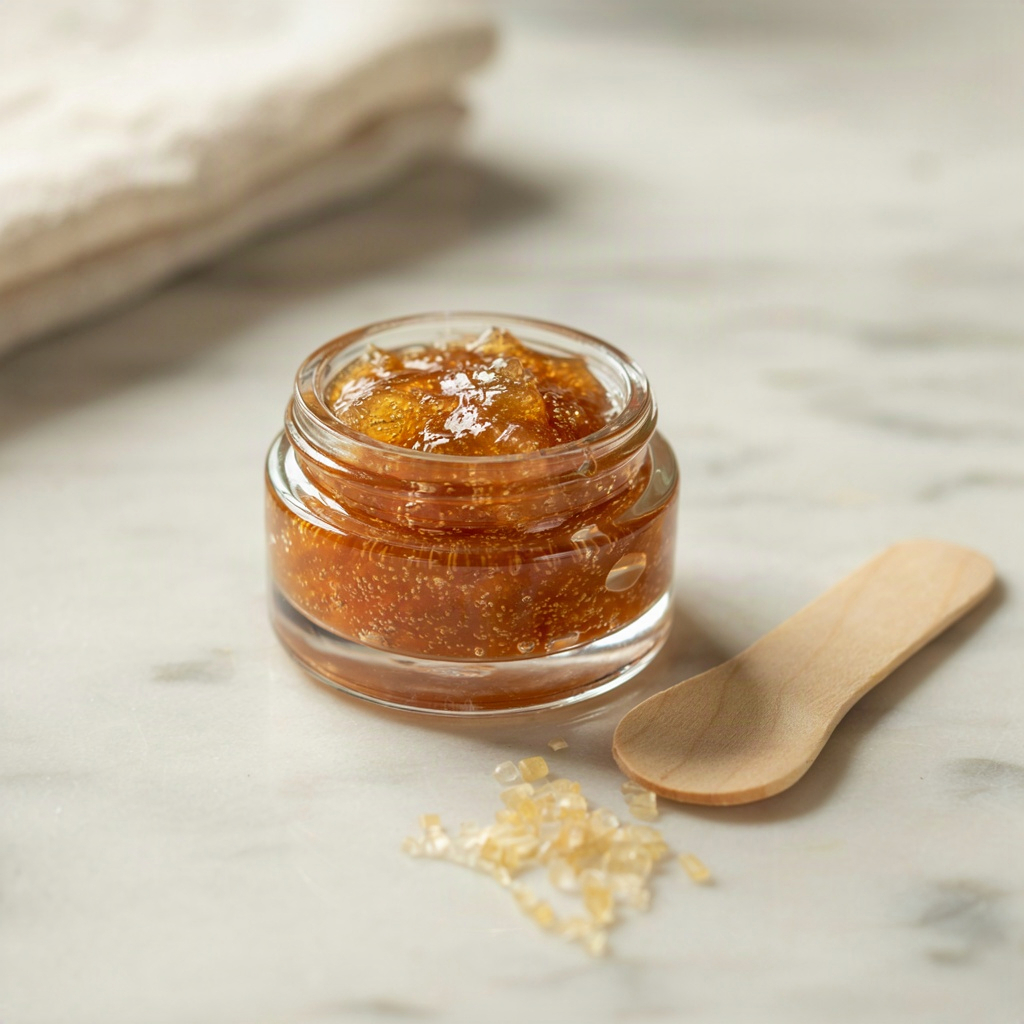
Use a two-second test before you reach for anything abrasive. Press a warm, damp cloth against your mouth for ten seconds, then draw it sideways with no pressure at all. If flakes come away on the cloth, your lips are ready to exfoliate. If they resist or sting, they are still healing, and the fix is occlusion rather than friction.
Dermatologists put ointment first for the same reason: dermatologists' tips for healing dry, chapped lips lead with petrolatum and non-irritating balm, not with abrasion. Treat exfoliation as the finishing step in a lip routine and the sealing balm as the treatment. Reverse that order and you will buy a second scrub because the first one "stopped working."
Why Lip Skin Reacts Differently Than the Rest of Your Face
The vermilion — the colored part of your lips — is not miniature face skin. Its outer layer is markedly thinner than the stratum corneum on your cheek, and it has no sebaceous or sweat glands underneath it to replace lost lipids. There is no oil film to rebuild, so every wash, every wipe and every windy walk removes protection your lips cannot manufacture again.
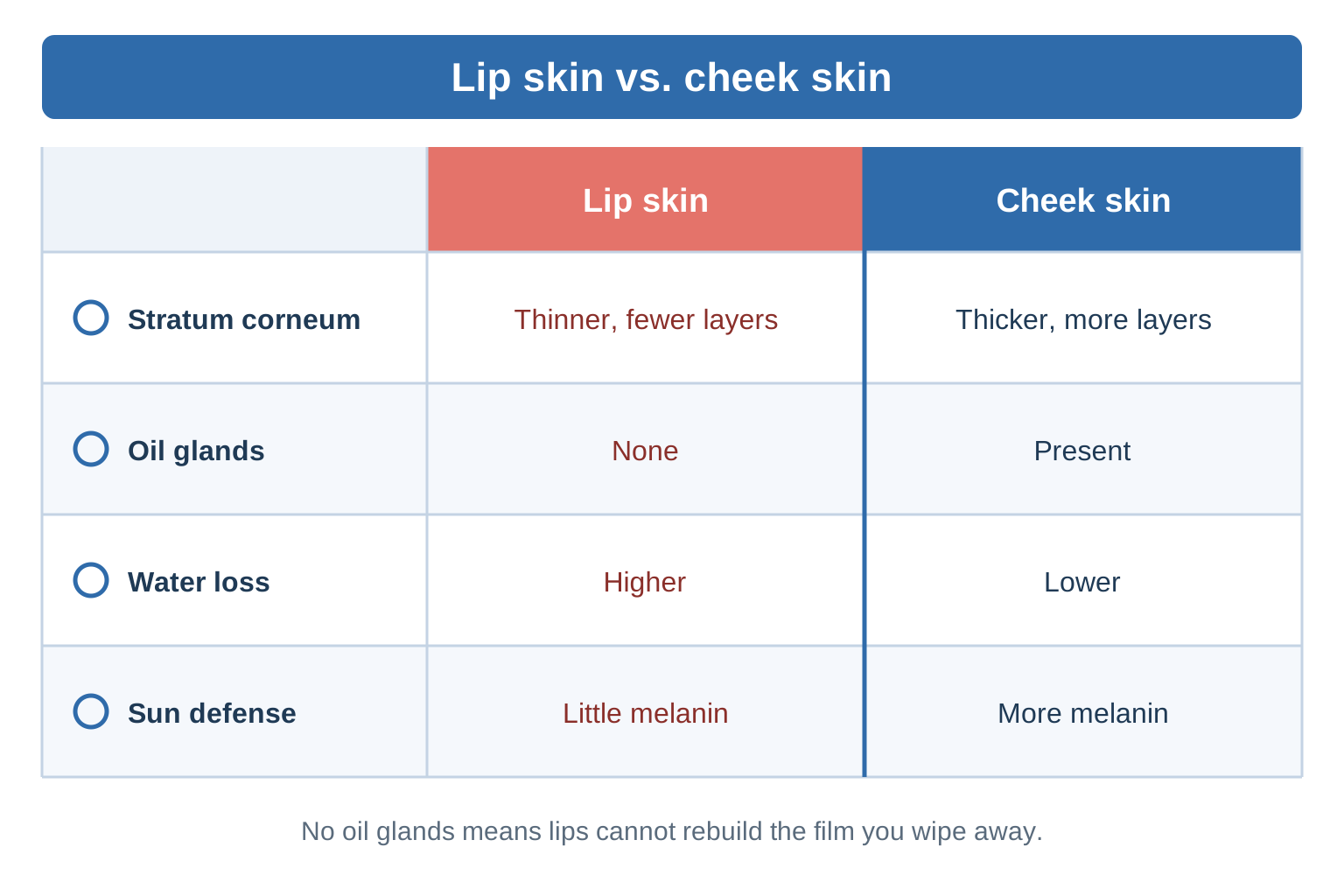
The measurable consequence is water loss. In a controlled comparison of people with chronic cheilitis against matched controls, measured barrier impairment in chronic cheilitis showed significantly higher transepidermal water loss and significantly lower capacitance on the lips — while forearm readings in the same people stayed normal. The barrier failure was local, not systemic. Your lips can be in trouble while the rest of your skin is fine.
Two everyday habits keep that barrier open. Licking deposits saliva that evaporates within a minute and takes surface moisture with it, so lips feel drier ninety seconds after each lick than they did before. Menthol, camphor and strong flavoring create a cooling sensation that reads as relief while low-grade irritation continues underneath.
Seasonal load matters too. The lip scrub lips actually need after a week of cold, dry indoor air is gentler and less frequent than the one that suits a humid summer routine, because the same grit meets a thinner, more brittle surface.
If your lips are peeling right now, the honest first move is a bland occlusive balm every few hours for several days. A shortlist of dermatologist-approved chapstick for dry lips is a better starting purchase than a scrub if you have to pick one.
What Great Lip Scrubs Have in Common
Great lip scrubs converge on three traits, and formulas that miss any one of them cause more problems than they solve. First, fine rounded particles rather than coarse angular ones. Second, an oil or butter base heavy enough that the grit stays suspended and slides instead of dragging. Third, no menthol, camphor, salicylate or heavy flavor oil, all of which sensitize skin that has no oil gland backup.
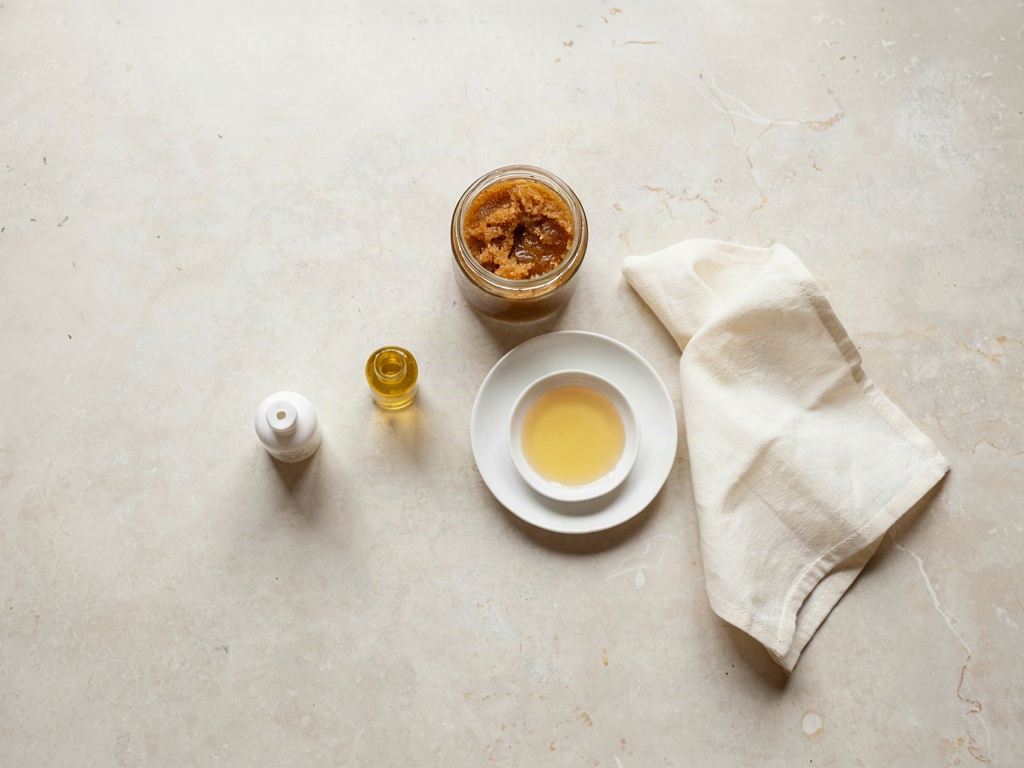
Sugar and salt behave differently under pressure, and the difference is not cosmetic. Sugar crystals dissolve as you work them, so the abrasion tapers off after roughly twenty seconds — the formula self-limits. Salt does not dissolve at the same rate and keeps its sharp edges through the whole massage. That is exactly why a body formula does not translate upward to your mouth.
You can spot the best lip exfoliating scrub by particle size and oil ratio rather than by flavor or packaging. Tip the jar: the contents should slump slowly like wet sand, not pour like sugar in a bowl. Dry, pourable grit means there is not enough oil to buffer the friction.
Worth paying for: jojoba and castor oils, which stay on the surface rather than absorbing; shea and cocoa butters for the occlusive tail after you wipe; and honey or glycerin, which hold water at the surface. Not worth paying for: exotic seed oils listed below the fragrance, vitamin claims in a rinse-off product, and anything sold on flavor.
The tradeoff with a rich oil base is real, though — it feels heavy under matte lipstick and it will migrate if you apply it right before a meal. If you would rather mix your own, our sugar exfoliating scrub for lips: DIY recipes that work covers ratios that hold together instead of separating in the jar.
Keep the ingredient logic on one page so you can check a label in the store instead of guessing at the shelf.
Exfoliating Lip Balm vs. Jar Scrub: Which One You Need
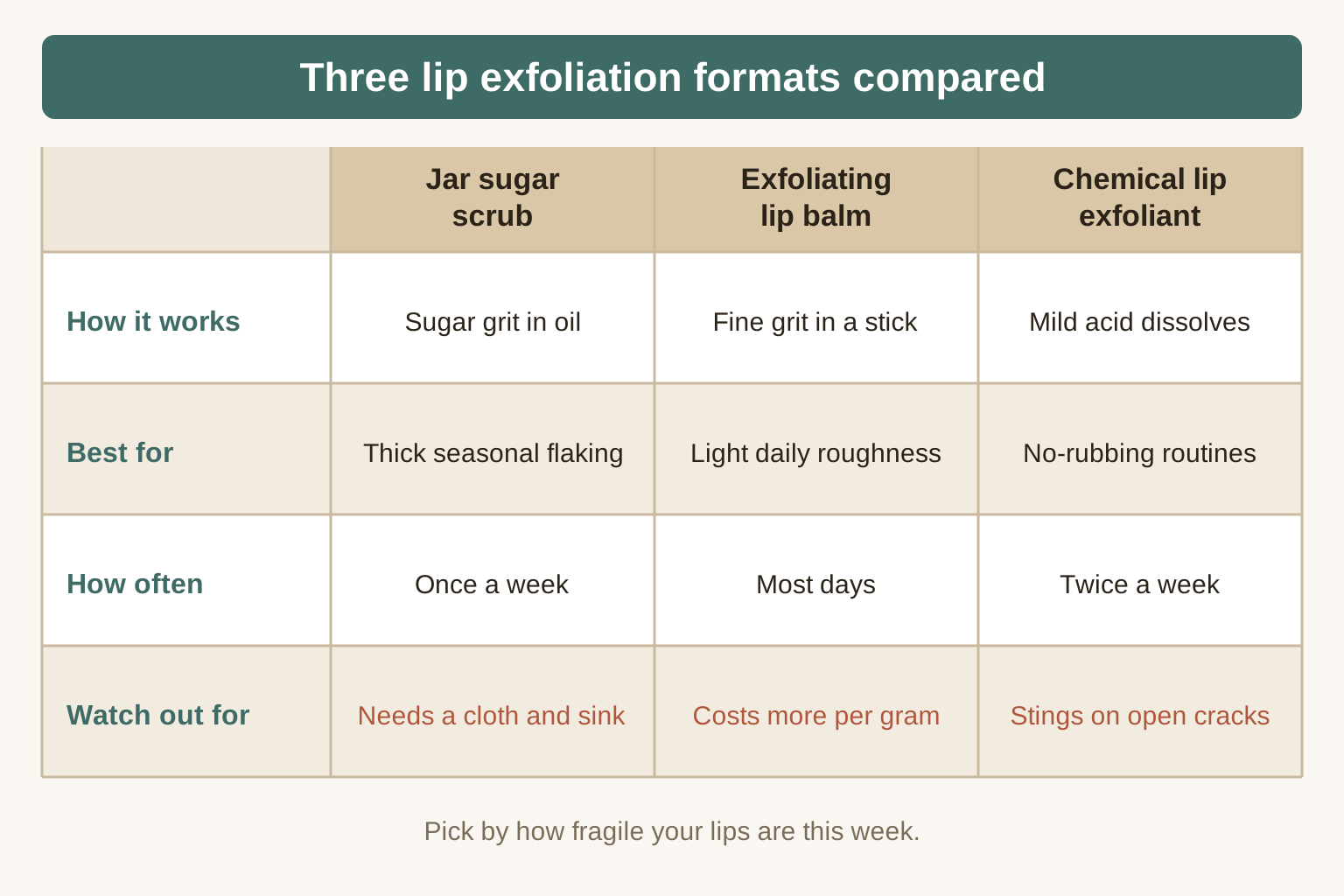
An exfoliating lip balm suspends much finer grit in a stick base, so it exfoliates and seals in a single pass with no cloth, no rinse and no sink. That makes it the format most people actually use consistently, which usually beats the format that works better in theory.
Face scrub lip scrub differences in grit size, oil base and rinse method explain why a facial exfoliator is the wrong tool here: face formulas assume a thicker outer layer and a functioning oil film, and they are designed to be rinsed under running water rather than wiped off dry lips.
Sometimes the best lip exfoliator is a balm you can use daily rather than a jar you use once a week. Choose the balm if your lips flake lightly but constantly, if you exfoliate at your desk, or if you have historically over-scrubbed. Choose the jar if you get thick seasonal peeling that a fine-grit stick simply skates over. The honest tradeoff: balms cost more per gram, remove less per use, and hide how much product you are applying.
Disclosure: we may earn a commission if you buy through the link below, at no extra cost to you.
If you are weighing this against a facial exfoliant you already own, the gentle face scrub guide to choosing a facial exfoliator explains where the grit thresholds diverge.
The Best Lip Scrub for Your Specific Lip Problem
Match the pick to the problem rather than to a ranking. Visible flaking, fragrance-reactive lips, winter cracking and texture that shows under lipstick are four different failures, and the formula that fixes one is often too rich, too fragranced or too fine for another. Each pick below names who it is for and what it costs you.
Disclosure: the picks below use affiliate links, and we may earn a commission at no extra cost to you.
Smoothing is not volume. If what you are chasing is fullness rather than texture, the lip plumping guide to plumpers that actually work is the more honest place to spend, since exfoliation only flushes the surface for an hour or two.
Answer four questions and get a shortlist of three that fits your lip condition, sensitivity and budget.
How to Use a Lip Scrub Without Damaging Your Lips
The sequence matters more than the product. Soften first with a warm, damp cloth held against your mouth for about ten seconds. Apply a rice-grain amount — less than you think, because excess just sits on the surface and never contacts a flake. Massage for thirty seconds in small circles using the pad of one finger, not a fingernail and not a toothbrush.
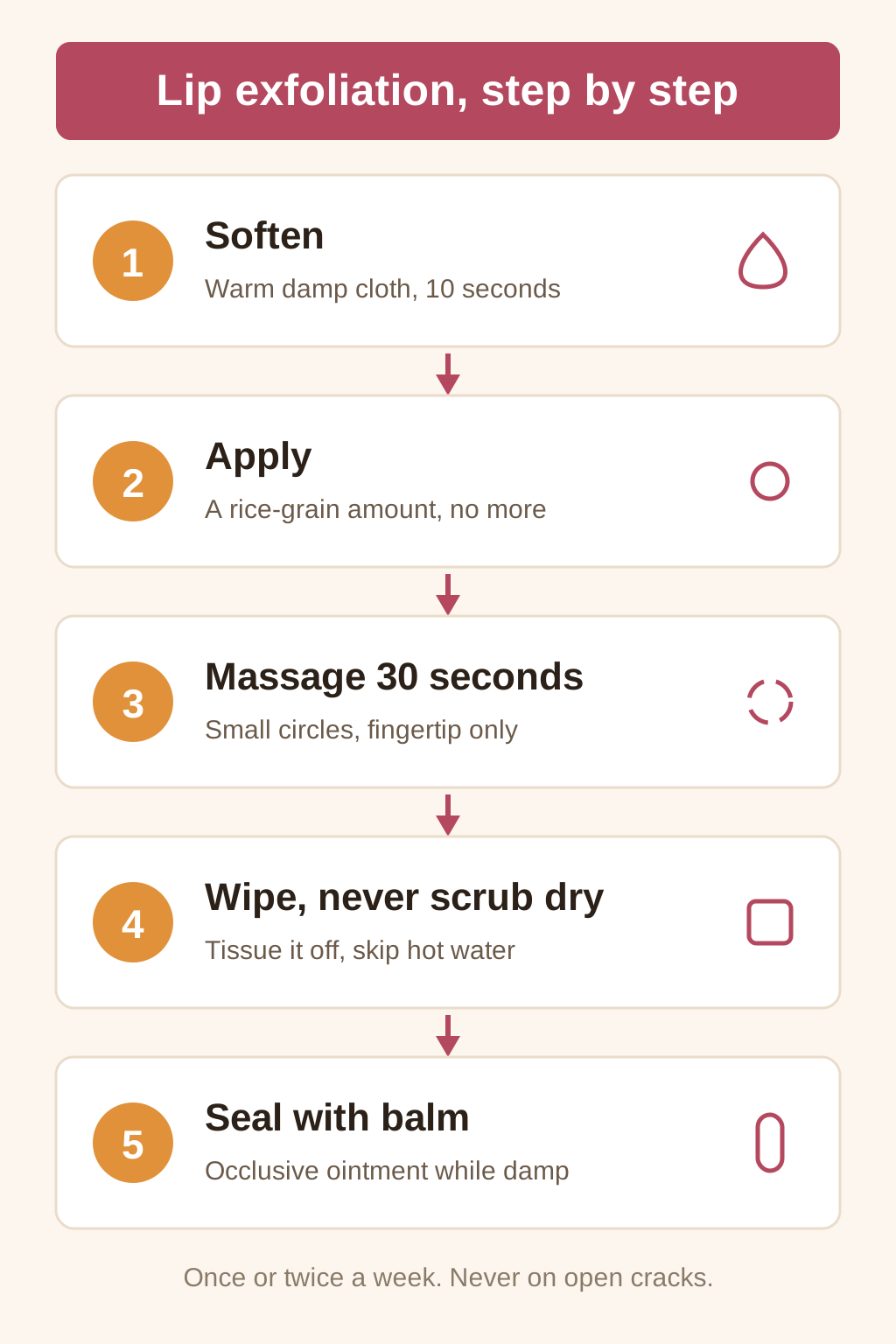
Then wipe rather than rinse. A tissue or soft cloth removes the grit while leaving the oil film behind; hot running water strips both and undoes the point of the oil base.
Finally, seal. Follow immediately with a plain occlusive ointment while your lips are still slightly damp, because occlusion works by trapping water that is already there.
Even a recommended lip scrub fails if you press hard or work for two minutes instead of thirty seconds. Pressure does not remove more; it removes the same flakes and irritates the tissue underneath. If your lips look flushed for longer than five minutes afterward, you used too much force. It is easier to see than to read, so watch how little pressure a scrub actually needs.
Frequency by condition: once or twice a week for lips in normal shape, once a week through cold, dry months, and not at all while any crack is open. General dermatology guidance on how to exfoliate safely at home makes the same point for facial skin — the more aggressive the method, the less often it belongs in your week.
Slot it in where it belongs rather than adding it everywhere; the how to build a skin care routine in the right order puts exfoliation in the weekly column, not the daily one.
Freshly smoothed lips take sheer color far more evenly, so it helps to know how a tinted lip balm reads on lips before you swipe one on right after scrubbing.
When to Stop Scrubbing and Call a Dermatologist
Four signals mean put the jar down. Stinging that continues after you have wiped the product off. Shiny, raw patches where the surface looks wet rather than matte. Bleeding or splitting at the corners of the mouth. Flaking that returns within twenty-four hours of a full exfoliation — that is a barrier that cannot rebuild, not a surface that needs more work.
Ordinary chapping generally clears with consistent self-care in two to three weeks. Anything that outlasts that window deserves an examination rather than a harder scrub, because the cause may be an allergic contact reaction, an underlying condition or a medication side effect. Clinical overviews of what cheilitis is and how clinicians treat it list thyroid disease, nutritional deficiency, retinoid-class medication and lip-licking dermatitis among the drivers no exfoliant will touch.
One pattern deserves particular caution: a persistently rough, pale or scaly patch on the lower lip that never fully resolves. That is more consistent with cumulative sun damage than with dryness, and exfoliating it is both ineffective and the wrong response. Book an appointment instead.
Prevention is unglamorous and effective. Daily lip sun protection does more for long-term texture than any scrub, and choosing the best lip exfoliator matters far less than wearing SPF on your mouth — our guide to SPF lip balm and real sun protection for lips covers what actually holds up outdoors.
Lip Scrub Questions Readers Actually Ask
Can I use a body or face scrub on my lips?
No. Both assume a thicker outer layer and a rinse under running water. A homemade sugar-and-oil mix counts as a recommended lip scrub only if the grit is fine and fully suspended in oil.
Does exfoliating make lips look fuller?
Briefly. Friction causes a mild flush that fades within an hour or two; past that point you are looking at irritation, not volume.
Is daily use of an exfoliating lip balm safe?
For most people, yes, with a light hand. If you overdid it, stop all abrasion for seven days and use ointment only.
Why does lip sunscreen keep coming up?
Because actinic cheilitis and cumulative UV damage to the lower lip is the long-term texture problem exfoliation cannot fix.
Get one practical lip care tip a week, nothing else.
One lip care tip a week. No product dumps.
Thanks — you're on the list.


