

Why Your Lips Burn Before the Rest of Your Face
The vermilion of your lip is three to five cell layers thick, against roughly fifteen on your cheek, and it carries almost no melanin. That is the whole story: sun protection for lips fails earlier than facial skin because there is less tissue to absorb the hit and no pigment to scatter it. The lower lip takes the worst of it, angled up toward midday sun the way a windowsill catches light.
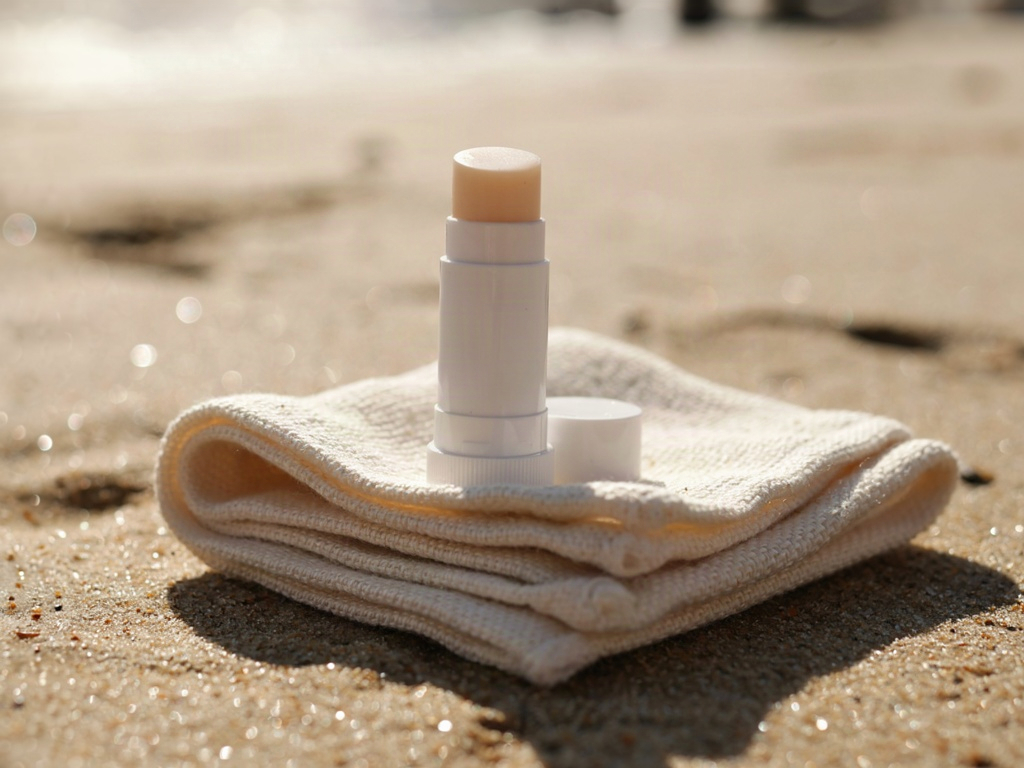
A plain balm does one job: it lays down an occlusive film so water stops evaporating out of the tissue. That is comfort, not defense. An SPF lip balm is a different product category with actual UV filters suspended in the wax, and swapping one for the other is the single most common mistake in lip care. If your current stick is a comfort formula, keep it for overnight and buy a filtered one for daylight.
For the comfort half of the job — cracking, flaking and overnight repair — see best chapstick for dry lips.
Lip SPF belongs at the end of your morning routine, after moisturizer and before anything tinted. Applying it last means nothing dilutes the film, and it gives you a clean habit anchor: keys, phone, lips.
Cumulative damage announces itself slowly. Watch for a vermilion border that blurs into the surrounding skin, persistent scaling on the lower lip that returns within days of exfoliating, and pale flat patches that never quite heal. Those are the visible edge of actinic cheilitis, and dermatologists treat the lip as a genuinely high-risk site.
The Skin Cancer Foundation explains why lip skin is a high-risk site for skin cancer, and why the lower lip accounts for the large majority of lip cancers.
What the SPF Number Actually Buys You on Your Lips
SPF is a UVB measurement, and the scale is not linear. An SPF 30 lip balm filters roughly 97 percent of UVB when applied at the tested density; an SPF 50 lip balm reaches about 98 percent. That single extra percentage point is what you are paying for when you jump tiers.
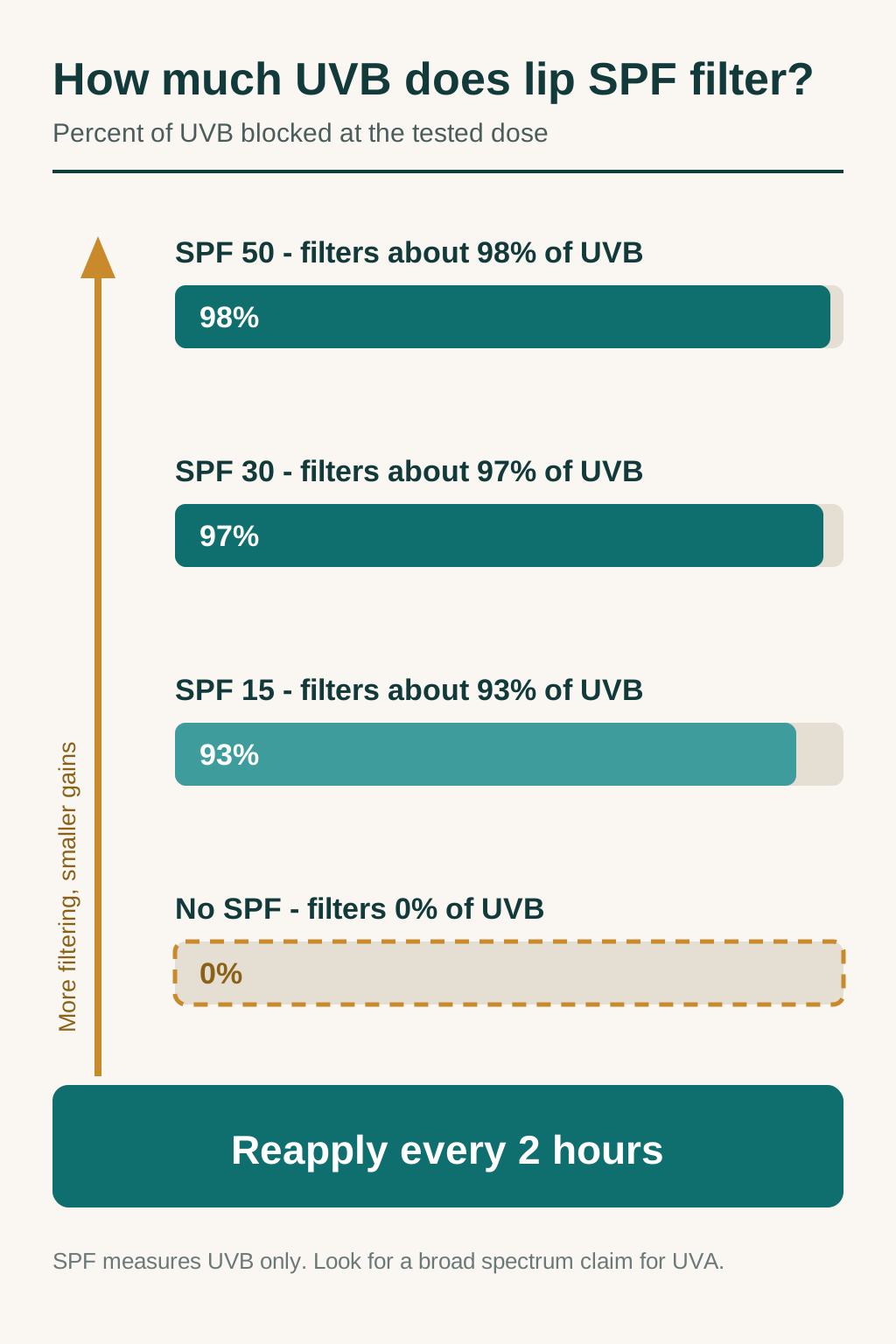
Which is why chasing the highest SPF for lips is rarely the deciding factor. A lip film is under constant mechanical attack — you eat, drink, talk and press your lips together hundreds of times an hour. A stick that survives a coffee cup at SPF 30 protects you more over a real day than one that wipes off in twenty minutes at SPF 50.
The practical floor is settled. Dermatology bodies recommend a lip balm with SPF 30 or higher for ordinary daily wear, and reserve SPF 50 lip protection for snow, open water, boats and altitude, where reflected UV doubles your effective dose. Anything below SPF 15 is a moisturizer with a marketing claim.
If the numbering itself still feels arbitrary, our explainer on highest SPF suntan lotion and what the SPF number means covers the arithmetic in full.
Broad spectrum matters more than the digit. SPF says nothing about UVA, and UVA is what degrades the collagen that keeps the lip border crisp. A product without a broad spectrum claim can post a big number and still let through the wavelengths responsible for thinning and blurring.
The rules behind those claims are not marketing language — see how SPF and broad spectrum labels are regulated, including what a water resistance figure in minutes legally means.
So how do you judge the best SPF for lips when two labels claim the same number? Look past the front of the pack: broad spectrum wording, water resistance in minutes, and a texture heavy enough to leave a visible film. Those three predict real-world performance better than the SPF value does.
Mineral or Chemical: Which SPF Lip Sunscreen Suits Your Mouth
Zinc oxide and titanium dioxide are particles. They sit on the surface of the lip and scatter light, which means a mineral lip balm sunblock works the instant it goes on and almost never stings a cracked lip. The cost is cosmetic: a chalky cast that reads grey in photographs and sits oddly over deeper lip tones.
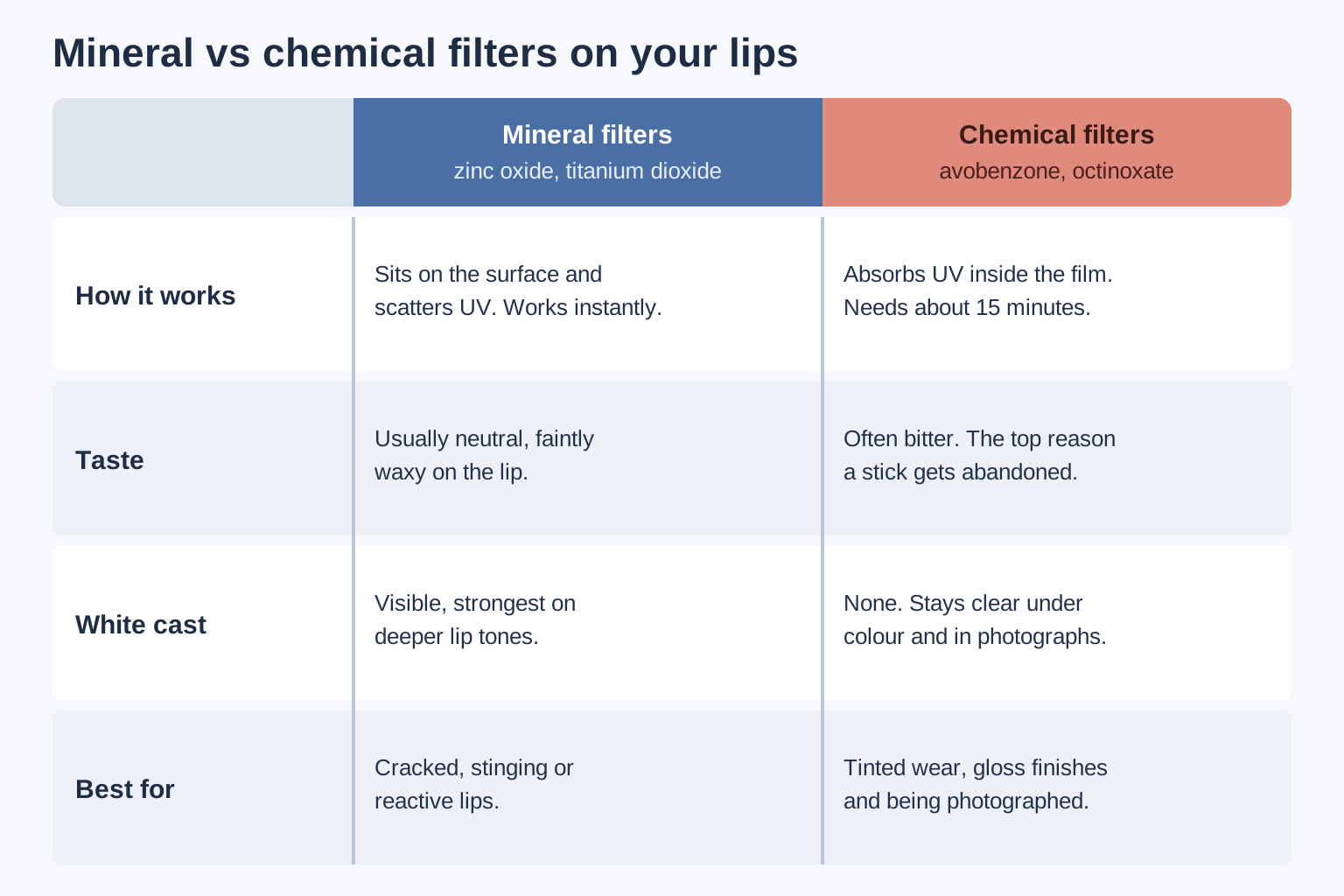
Avobenzone, octinoxate and their relatives absorb UV inside the film and convert it to heat. They disappear on the lip, which is why clear glossy formulas almost always use them. They are also the usual source of the bitter taste people blame on sunscreen for lips, and they need about fifteen minutes to become fully effective.
If the safety debate around organic filters is what is holding you back, this peer-reviewed review of organic UV filter safety is a more useful read than any ingredient blacklist.
Treat taste as a compliance problem, not a vanity one. A bitter sunscreen chapstick gets used once, migrates to the bottom of a bag and protects nothing for the rest of the season. The formula you tolerate at hour six beats the formula that scores better on paper at hour one.
- Cracked, stinging or newly healed lips: choose mineral and accept the cast.
- Photographed, tinted or worn under colour: choose a chemical or hybrid film.
- Reactive skin generally: the same filter logic applies face-wide.
The same tradeoff plays out above the lip line — see mineral sunscreen for face.
Reactive skin narrows the field further; our guide to sunscreen for sensitive skin covers which filters tend to be tolerated.
The base matters as much as the filter. Beeswax and candelilla build a stiff film that resists a coffee cup; shea, castor oil and lanolin feel better but slide. A formula heavy on volatile emollients feels luxurious for ten minutes and then leaves your lips bare.
How to Choose a Lip Balm With Sunscreen You Will Actually Reapply
Run five checks before you buy. Broad spectrum on the label. SPF 30 as the floor. A stated water resistance in minutes, usually 40 or 80. A filter type you can taste and wear. And a format that lets you lay down a genuinely thick layer rather than a polite smear.
If your lips are already cracked, healing comes first, so run the seven label checks for a lip balm for chapped lips before you judge any SPF formula.
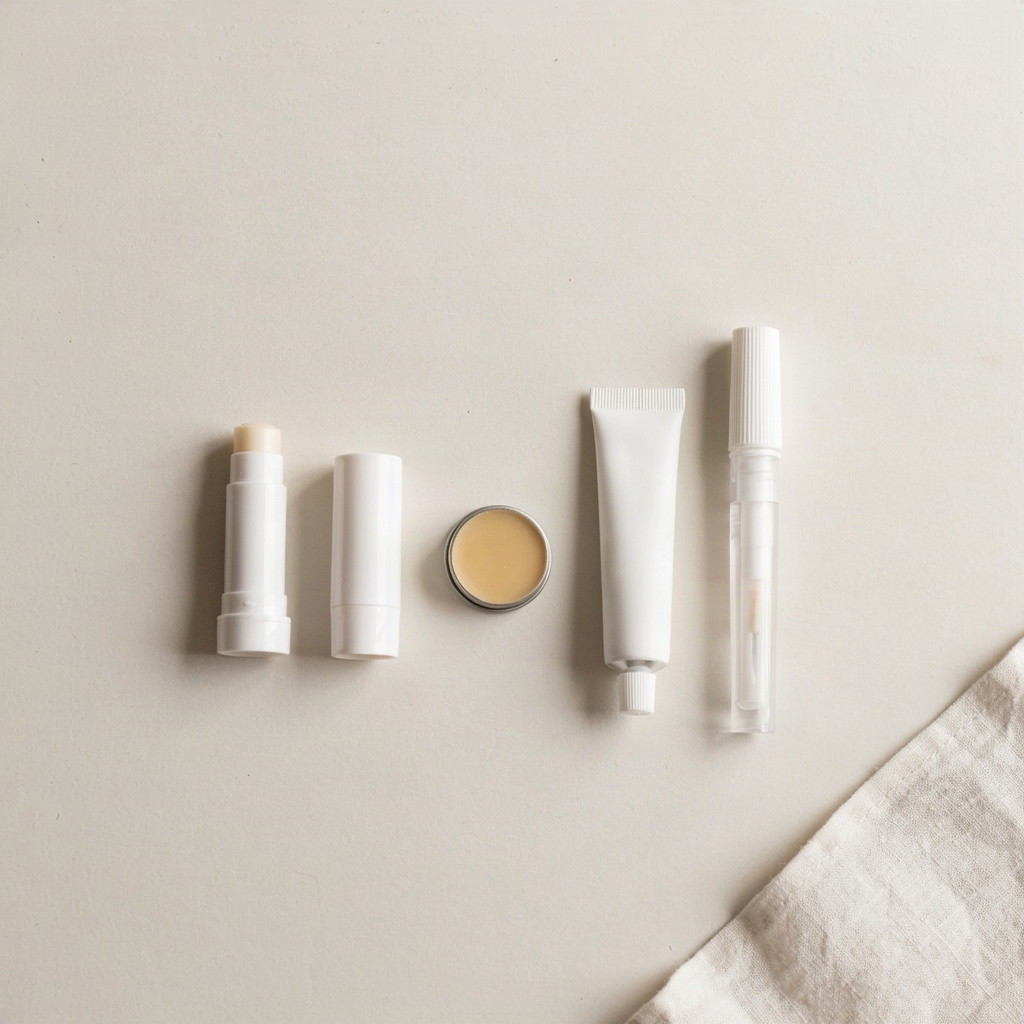
Format decides habit more than formula does. A twist-up SPF chapstick lives in a pocket and survives being sat on. A pot gives you the thickest film of any format but needs clean fingers, which rules it out on a trailhead. A squeeze tube meters generously and travels badly in heat.
Read the inactive list for cooling agents. Menthol, camphor, phenol and salicylic acid all feel soothing for a minute and then increase transepidermal water loss, which drives the reapply-and-peel cycle people mistake for addiction to lip balm.
For the repair side of that cycle, dermatologist guidance on healing dry, chapped lips is worth five minutes before you buy anything.
A sun protection chapstick that doubles as a lip moisturizer SPF saves a step, and that is a real benefit for anyone who will not carry two products. Check the tradeoff, though: heavy emollient loads dilute filters and shorten the film's working life, so a two-in-one usually needs reapplying sooner than a dedicated stick.
Where does a glossy SPF lip cream fit? It is the most comfortable format on chapped lips and the easiest to wear under colour. Expect a shorter wear window than a waxy stick, and expect to top it up after anything you drink.
The same evaluation logic scales up to your face — see how to choose an SPF moisturizer for your face.
The Best SPF Lip Balm for Four Different Days Outside
These picks are grouped by exposure rather than ranked, because the best SPF lip balm for a bus commute is the wrong one for a lake day. Each entry names the day it is built for and the tradeoff you accept in return.

One note on research before you shop: when you read a lip balm with SPF 50 reviews, weight the wear-time complaints far above the star rating. Reviewers who say a stick "disappeared after lunch" are telling you something the SPF digit cannot.
Some links below are affiliate links, and we may earn a commission if you buy through them. It does not change what we recommend or what we say about it.
Budget and texture pull against each other here. If money is the constraint, buy the cheapest formula whose taste and finish you can live with, then spend the difference on a second stick for the car — carrying two beats owning one expensive one. That is the honest answer to which is the top SPF lip balm and the best lip balm for sun protection: the one within arm's reach at hour three.
Tinted Options: Does a Lipstick With SPF Count as Protection
A lipstick with SPF is tested at 2 mg per square centimetre, the same density as any sunscreen. Nobody applies colour that thickly. In practice you are getting a fraction of the labelled number, which makes tinted colour a supplement to lip SPF rather than a replacement for it.
That said, a lipstick with sunscreen helps in two real ways. Pigment itself is a physical block, so opaque shades outperform sheer ones regardless of the SPF claim. And colour gets touched up through the day, which means the film renews on a schedule most people never manage with a clear stick.
Layer lip products with SPF in the right order: protective balm first, let it set for a minute, colour on top. Reverse that and the balm's oils lift the pigment and dilute the film you just laid down.
Choosing the best SPF lip products for a work day usually comes down to finish. A satin or matte tint with SPF gives you colour without the mirror shine that makes a lip look wet in overhead lighting, and a tinted lip sun cream is the fix for anyone whose clear mineral balm photographs chalky.
Some links are affiliate links; we may earn a commission at no cost to you.
The same pigment-plus-filter logic drives face products too — see our tinted sunscreen buying guide.
Shade choice is a separate question from protection, so it helps to know how a tinted lip balm shade reads on your own lips before you commit to wearing one every day.
How Much to Apply and When to Reapply
One thin swipe delivers roughly a quarter of the tested dose. Go back and forth two or three times until the film is visible, and carry it slightly past the vermilion border onto the skin — that transition zone burns as readily as the lip itself and is almost always missed.
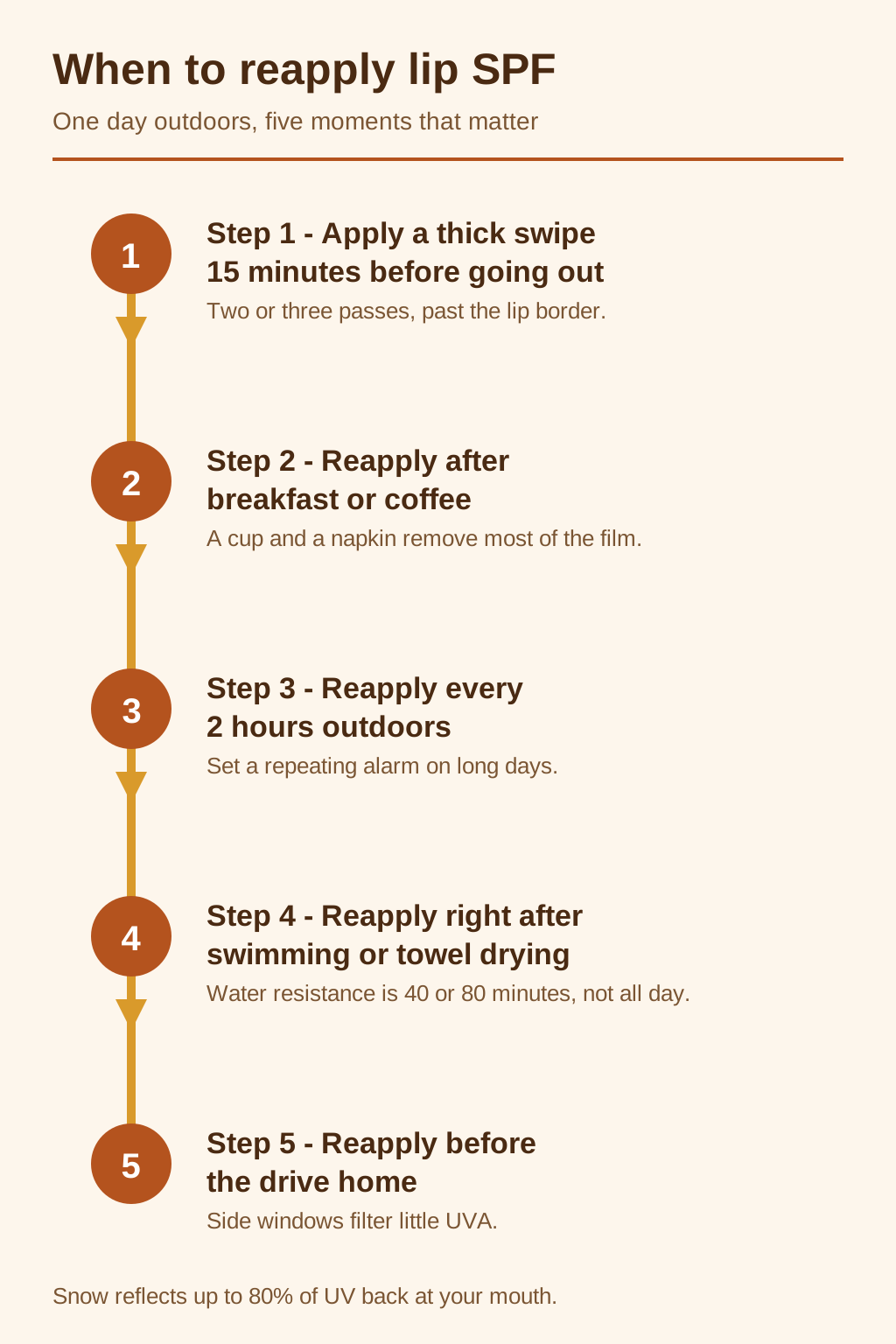
Reapply every two hours outdoors, and immediately after eating, drinking, swimming or towel drying. Lips are the only part of your sun protection that you actively remove with a napkin several times a day, which is why the schedule is stricter here than for your arms.
Winter is the season people skip. Snow reflects up to 80 percent of UV straight back up at your mouth, and UV intensity rises roughly 10 percent for every 1,000 metres of altitude. A ski day can deliver more lip exposure than an afternoon at sea level, in half the perceived heat.
Keep a second SPF lip balm in the car, the jacket you actually wear, or a bag you never unpack, so reapplying does not depend on remembering the first one. A midday top-up is easier when the product you carry is comfortable enough that you do not resent using it.
Realistic consumption surprises people. A full day outdoors at the correct dose uses a noticeable fraction of a standard 4 gram stick, so a single tube rarely survives a week of honest reapplication on a beach holiday. Buy two, and treat one running out as evidence you did it right.
Common Questions About Lip SPF
Does an SPF lip balm expire?
Yes, and the date matters more than it does for a plain balm. Filters degrade, avobenzone in particular loses efficacy with heat and light exposure, and a stick that has spent two summers in a glove box is not delivering its labelled number. Three years unopened, one year in use, and sooner if the texture has gone grainy.
Can you use face sunscreen on your lips?
In an emergency, yes. As a habit, no. Facial formulas are built to spread thin and absorb, so the film on a lip is far weaker than a balm's, and most taste unpleasant enough that you will lick it off within minutes. Use it once at the beach; do not build a routine on it.
Does a lip balm with sunscreen prevent cold sores?
It reduces one common trigger. Sunlight reactivates herpes simplex in many people, and consistent lip SPF is a standard recommendation for anyone with a sun-triggered pattern. It is prevention of a trigger, not of the virus, and it will not shorten a blister already forming.
What if every sunscreen for lips makes your mouth tingle?
Switch to an all-mineral stick first, since that removes the chemical filters most often implicated. If tingling persists, look at fragrance, flavour oils and menthol rather than the filters. Patch test on the skin just beside the lip for three days before committing.
Does SPF cancel out the moisturizing benefit?
No, but the balance shifts. Filters occupy space in the formula that emollients would otherwise fill, so a protective stick tends to feel lighter than a rich comfort balm. The standard fix is to run SPF through the day and a heavier occlusive balm overnight.
One sun-care tip a week, tested and short. No product dumps.
One sun-care tip a week, tested and short. No product dumps.
Thanks — you're on the list.


