

What Is SPF, and What Does SPF Stand For?
SPF stands for sun protection factor, and it is a ratio rather than a promise. In a lab, testers measure how much ultraviolet energy it takes to redden skin coated with 2 milligrams of sunscreen per square centimetre, then divide that by the energy needed to redden the same person's bare skin. A result of 30 means the protected patch absorbed thirty times more UV energy before it burned.
So what does SPF mean on a bottle? Filter strength, measured against a fixed dose. It is not a timer. The popular reading, that SPF 30 buys you thirty times longer outside, breaks down because UV intensity swings hour by hour and because almost nobody spreads on the tested dose.
Sunblock and sunscreen describe the same category. The word sunblock was dropped from US labels because no product blocks all ultraviolet light, so spf sunblock meaning and spf sunscreen meaning resolve to one definition, and what SPF stands for in sunscreen is identical on every bottle in the aisle.
One limit matters more than the number itself. SPF grades UVB, the wavelength that burns you, and says nothing about UVA, which drives pigment change and collagen breakdown. UVA cover comes only from the separate broad spectrum claim. If the daily moisturizer for every skin type you already use lists an SPF figure, look for that phrase before you treat it as your only protection.

What Does the SPF Number Mean on the Bottle?
Convert the rating into a percentage and the marketing collapses. SPF 15 filters about 93 percent of UVB, SPF 30 about 97 percent, SPF 50 about 98 percent and SPF 100 about 99 percent. Doubling the number never doubles the protection, because the scale measures the share of UVB stopped and that share is already near its ceiling by 30.
What does SPF 50 sunscreen mean in practice, then? Roughly 2 percent of UVB still reaches your skin instead of the 3 percent that gets through SPF 30. That is a one point gain in filtration, or a third less transmitted UVB. Both framings are accurate, and labels prefer the second because it sounds larger.
Use this as your working SPF sunscreen chart. The numbers answer what the number on sunblock means and what the number on sunscreen means with the same arithmetic, because it is the same test.
| Rating | UVB filtered | UVB reaching skin | Reapply |
|---|---|---|---|
| SPF 15 | 93% | about 7% | Every 2 hours |
| SPF 30 | 97% | about 3% | Every 2 hours |
| SPF 50 | 98% | about 2% | Every 2 hours |
| SPF 100 | 99% | about 1% | Every 2 hours |
The curve flattens because each step removes a share of what is left, not a share of the original total. Going from SPF 30 to SPF 60 halves the UVB that gets through, and still moves total filtration by only about one percentage point. a hospital explainer on what the SPF numbers mean lands on the same figures. If you would rather have the whole selection process than the arithmetic, start with how to choose sunscreen that actually protects.
Two minutes of video covers the same ground if you would rather listen than read.
SPF 30 vs 50 vs 70: What the Extra Numbers Buy
The comparison on paper
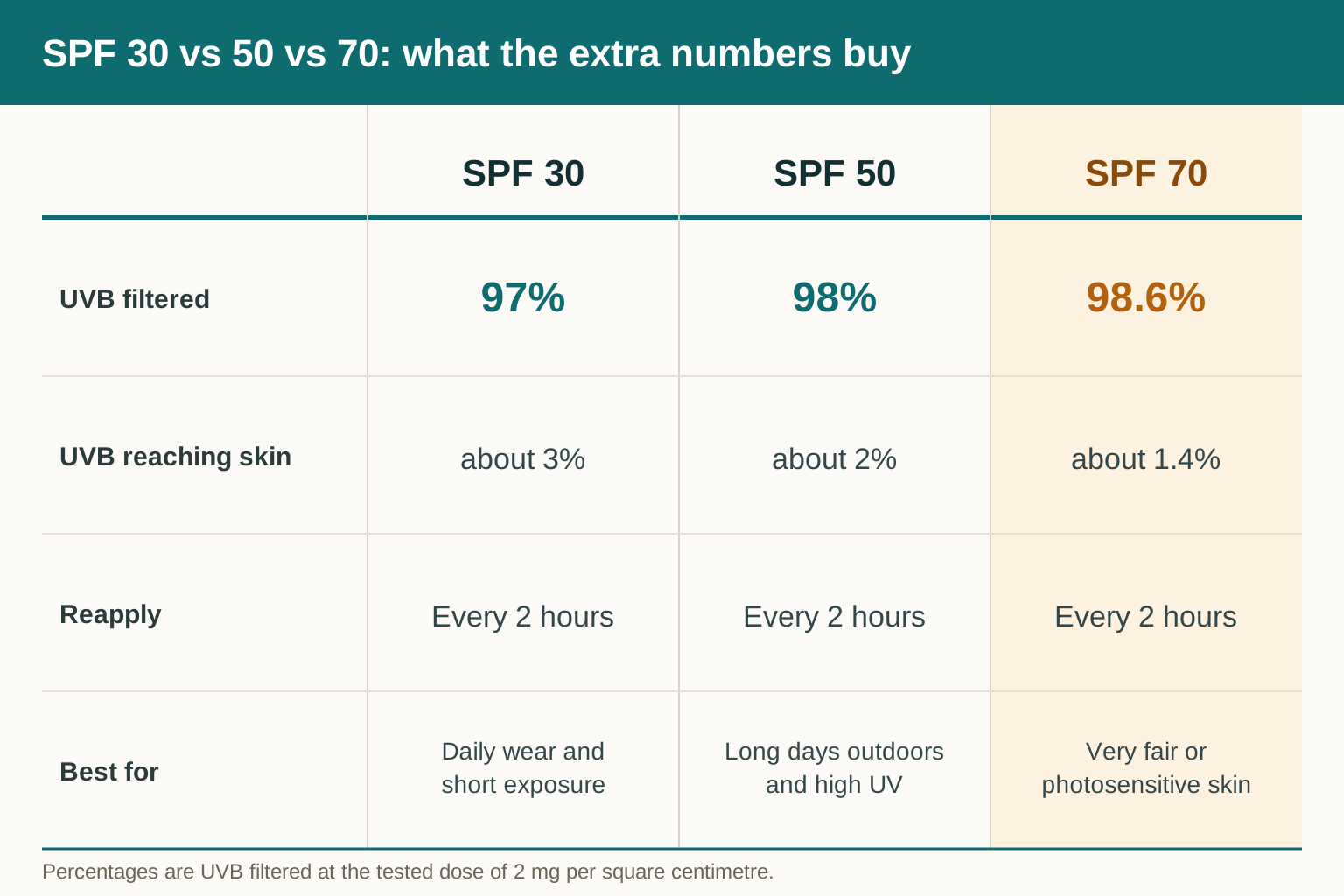
Line the three up at the tested dose and the gaps are narrow: SPF 30 filters about 97 percent of UVB, SPF 50 about 98 percent, SPF 70 about 98.6 percent. Moving from 30 to 70 removes roughly half of the UVB that was still getting through, and still shifts total filtration by about a point and a half.
Since those UVB percentages say nothing about UVA, the number only counts once the label also clears the checks for a broad spectrum sunscreen with SPF 30 or higher.
Cost and texture move faster than protection. A high rating usually means a heavier filter load, which buys a tackier film and a higher price per ounce. That matters because the deciding variable is not the label at all. It is whether you use enough and put it back on.
What happens when you under-apply
Protection does not scale neatly with the thickness of the film. Applying about a quarter of the tested dose, which is what most people manage on a beach day, drags an SPF 50 bottle down to roughly SPF 20 behaviour, and drags SPF 30 down to about SPF 12. Whichever way you phrase it, sunscreen 30 vs 50 or 30 SPF vs 50 SPF, dose beats rating.
That is why SPF 50 sunscreen vs SPF 30 rarely decides a burn. If you dislike how a formula feels and you spread it thin, the higher number is a rounding error. If you like the texture and use a full ounce, the lower number has already taken you to 97 percent.
Where SPF 70 stops mattering
SPF 50 vs 70 is the flattest comparison of the three. The extra twenty points buy about six tenths of a percentage point of UVB filtration, which is real in a lab and invisible on skin that gets towelled dry twice in an afternoon. Buy 70 because you like the formula or because you are unusually photosensitive, not because you expect it to extend your afternoon.
Highest SPF Suntan Lotion: How High Can the Number Go?
On US shelves the highest SPF suntan lotion you will find sits at SPF 100 or SPF 100+, though 70 and 80 are far more common. Australia and much of Europe stop labelling at 50+, on the reasoning that anything past that oversells a difference the wearer cannot feel.
The FDA has proposed capping US labels at SPF 60+ for the same reason: beyond that point the highest sun protection factor a bottle may claim is no longer meaningfully different from the one below it, and the number starts working as marketing rather than information. a cancer center review of very high SPF sunscreen reaches the same conclusion, putting SPF 100 at about 99 percent of UVB against 98 percent for SPF 50.
The trap is behavioural rather than chemical. A highest SPF sunscreen bought for a two week holiday is usually thicker and shinier than a daily formula, so people stretch it thinner, skip the face, and stop reapplying once they feel sticky. Each of those choices costs more protection than the label gained.
Wearability is the specification that actually counts. If a sheer tinted sunscreen is the one you will genuinely put on every morning, it protects you more than a bottle of the highest SPF that lives in a beach bag. The trade-offs of that swap are covered in tinted SPF with sheer coverage.

Is Higher SPF Better, or Is SPF 50 Good Enough?
Is higher SPF better? In a lab, yes, by a shrinking margin. On a beach, frequently no. the Skin Cancer Foundation on whether a high SPF protects better names the mechanism: very high numbers create a false sense of security, and people who believe they are covered stay out longer and reapply less.
Is SPF 50 good? For daily wear it is more than enough, and for a long day outdoors it is the sensible floor. Dermatology guidance settles on SPF 30 or higher for incidental exposure and SPF 50 or higher for extended outdoor activity, which makes 50 the single number that covers both without further thought.
Is SPF 50 better than 30? Marginally, and only if you apply both the same way. The gap between them is one percentage point of filtered UVB, while the gap between a full application and a thin one is worth roughly ten times that. So is SPF 50 better than SPF 30 in your bathroom? Only if the 50 is the one you enjoy wearing.
SPF 50 vs SPF 70 is a smaller argument again, and neither number rescues a formula you avoid. If yours stings or leaves your face flushed, the useful variable is the filter type rather than the rating, and sensitive skin sun protection picks walks through the options that avoid it. The cost of that switch is honest: mineral filters sit heavier and can leave a cast on deeper skin tones.
What SPF Do I Need for Today's UV Index?
Pick your SPF from the UV index rather than the season. The index runs from 1 to 11 plus, updates through the day, and sits in most weather apps. UV 3 is the point at which unprotected skin starts accumulating damage, and a clear March morning reaches it as readily as July.
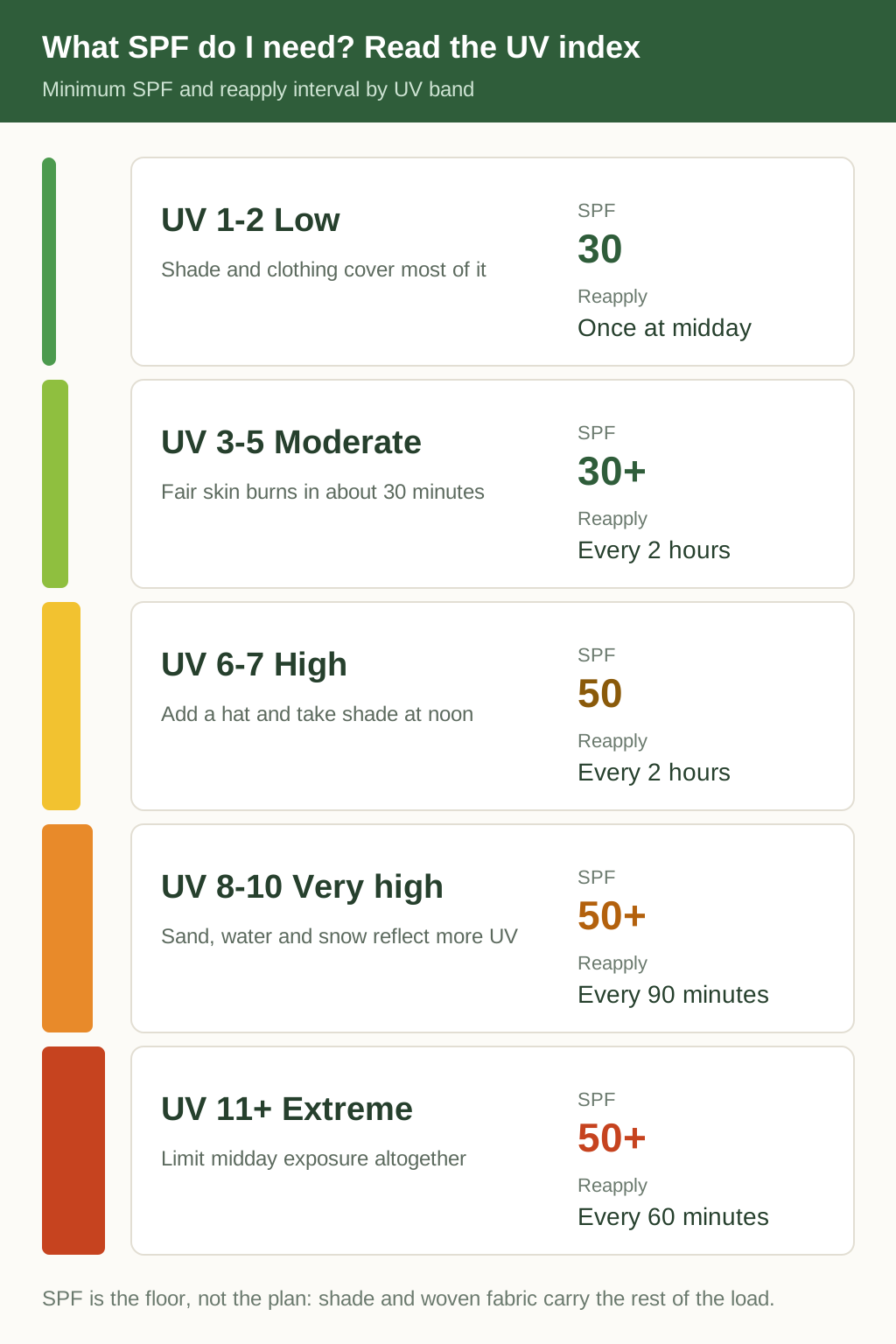
Sunscreen for high UV days has to account for reflection as well as direct light. Fresh snow bounces back up to 80 percent of incoming UV, dry sand around 15 percent and water around 10 percent, and the dose climbs roughly 10 percent for every 1,000 metres of altitude. A ski day at UV 5 can deliver more exposure than a beach day at UV 7.
When to move up a band
- Photosensitising medication, including some antibiotics, retinoids and diuretics.
- A recent peel, laser session or microneedling appointment.
- A personal or family history of skin cancer.
- Hours with no shade at all: a hike, a match, a boat.
If a body lotion is too heavy to wear under makeup, change shelves rather than skipping the step.
For the wider shelf, including SPF moisturisers that replace two steps with one, see face sunscreen and SPF moisturizer guide.
How Much Sunscreen to Apply and When to Reapply
SPF ratings are tested at 2 milligrams per square centimetre. For an adult body that works out at about one ounce, roughly a shot glass, and about a teaspoon for face and neck together. dermatology guidance on the shot-glass dose and two-hour reapply gives the same figures in plain terms. Most people apply between a quarter and a half of that.
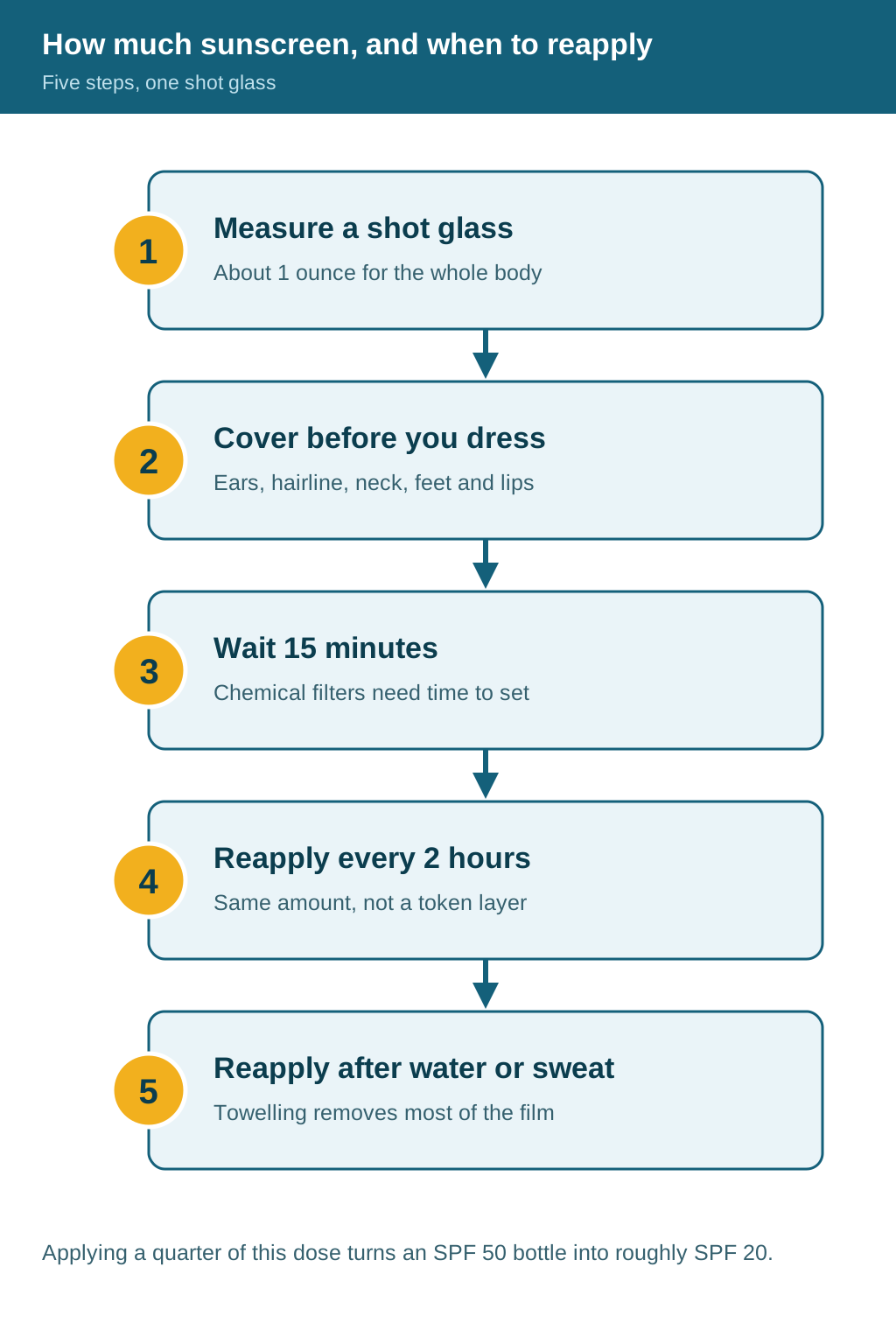
Order of operations matters as much as volume. Measure the dose, apply it to dry skin before you dress so nothing is missed under straps and waistbands, then wait about 15 minutes for chemical filters to settle into an even film before you go out.
The two hour clock is a maximum, not a target. Towelling off removes most of the film in a single pass, so reapply after swimming or heavy sweating even if you last applied twenty minutes ago. A water resistant 80 minute claim describes immersion in a lab, not being rubbed dry on a lounger.
The spots people miss
Ears, the hairline and part, the back of the neck, the tops of the feet, and the lips. Lips carry almost no protective pigment and cannot hold a lotion, so finish with an SPF lip balm before you leave the house, and put it back on every time you eat or drink.
Which SPF Is Best for You, and What to Buy Next
Which SPF is best comes down to three questions: what the UV index is where you spend the day, how many hours you are exposed, and how honestly you reapply. UV 1 to 5 with reliable reapplication, and SPF 30 is enough. UV 6 or above, or a day you know you will forget, and SPF 50 is the safer default. Reaching for the highest SPF on the shelf only helps if it does not quietly change how you behave.
Is SPF 50 good enough for almost everyone? Yes. The exceptions are photosensitising medication, a recent resurfacing treatment and a personal history of skin cancer, and those call for a conversation with a dermatologist rather than a bigger number.
If chemical filters irritate you, mineral zinc oxide formulas that work covers the zinc oxide alternatives, along with the white cast they can leave.
Whatever ends up in the cupboard, the habits still outrank the rating: shade between 10 a.m. and 2 p.m., a woven long-sleeve shirt, and a second coat you actually apply.
One short email a week on sun protection, no product dumps.
One sun-protection tip a week. No product dumps.
Thanks — you're on the list.


