

Why acne prone skin still needs a moisturizer
Stripping oil out of skin does not stop breakouts. It teaches the skin to compensate, and it wrecks the surface you are trying to clear: when the barrier loses water, the outer layer flakes, those flakes settle into the pore opening, and the follicle plugs faster than it did before. That is the mechanism behind the most common mistake in acne care, which is skipping cream to stay matte.
A moisturizer for acne prone skin does one narrow job well. It slows water loss through a barrier that benzoyl peroxide, salicylic acid and retinoids have already thinned, so you can stay on the treatment past the three-week mark where most people quit. Dermatologists treat it as a tolerance tool, not a cure.

Be clear about the limit before you spend anything. The best moisturizer for acne prone skin will not clear a single inflamed papule by itself; it reduces the tightness, redness and peeling that make people abandon the active that would have. If a product is marketed as both the hydration step and the acne treatment, you are usually paying twice for the weaker half. The same point runs through dermatologist guidance on moisturizing acne-prone skin: pick something bland, then let the medication work.
What non-comedogenic and acne safe moisturizer labels really mean
"Non-comedogenic" is not a regulated claim in the United States. No agency defines the testing, no agency audits it, and a brand can print it on a formula that has never been tested on a human face. Treat an acne safe moisturizer label as a shortlist filter, not as proof.
The comedogenicity ratings circulating in ingredient databases come largely from rabbit ear assays run in the 1970s and 1980s. Rabbit ear follicles clog from substances that do nothing on human skin, and the tests used pure ingredients at high concentration rather than the two percent that ends up in a finished cream. That is why an ingredient blacklist misleads: dose and formulation decide the outcome.
Read a moisturizer for breakout prone skin the way a formulator would. Check where the oils sit on the ingredient list, because anything below the fragrance line is usually under one percent. Count how many oils and butters appear in total rather than judging one. Look for film-forming silicones such as dimethicone, which seal water in without adding lipid load.
Gentle moisturizers for acne almost always share a shape: a short ingredient list, no added fragrance, no essential oils, no denatured alcohol high in the list. the research on how moisturizers repair the skin barrier covers the three ingredient classes that do the actual work, which is a better filter than any marketing badge.
Ingredients that help, and the ones that trigger breakouts
Every acne moisturizer is built from three ingredient jobs. Humectants such as glycerin and hyaluronic acid pull water into the outer layer. Emollients such as squalane fill the gaps between skin cells so the surface feels smooth. Occlusives such as dimethicone form a thin film that keeps the water from evaporating within the hour.
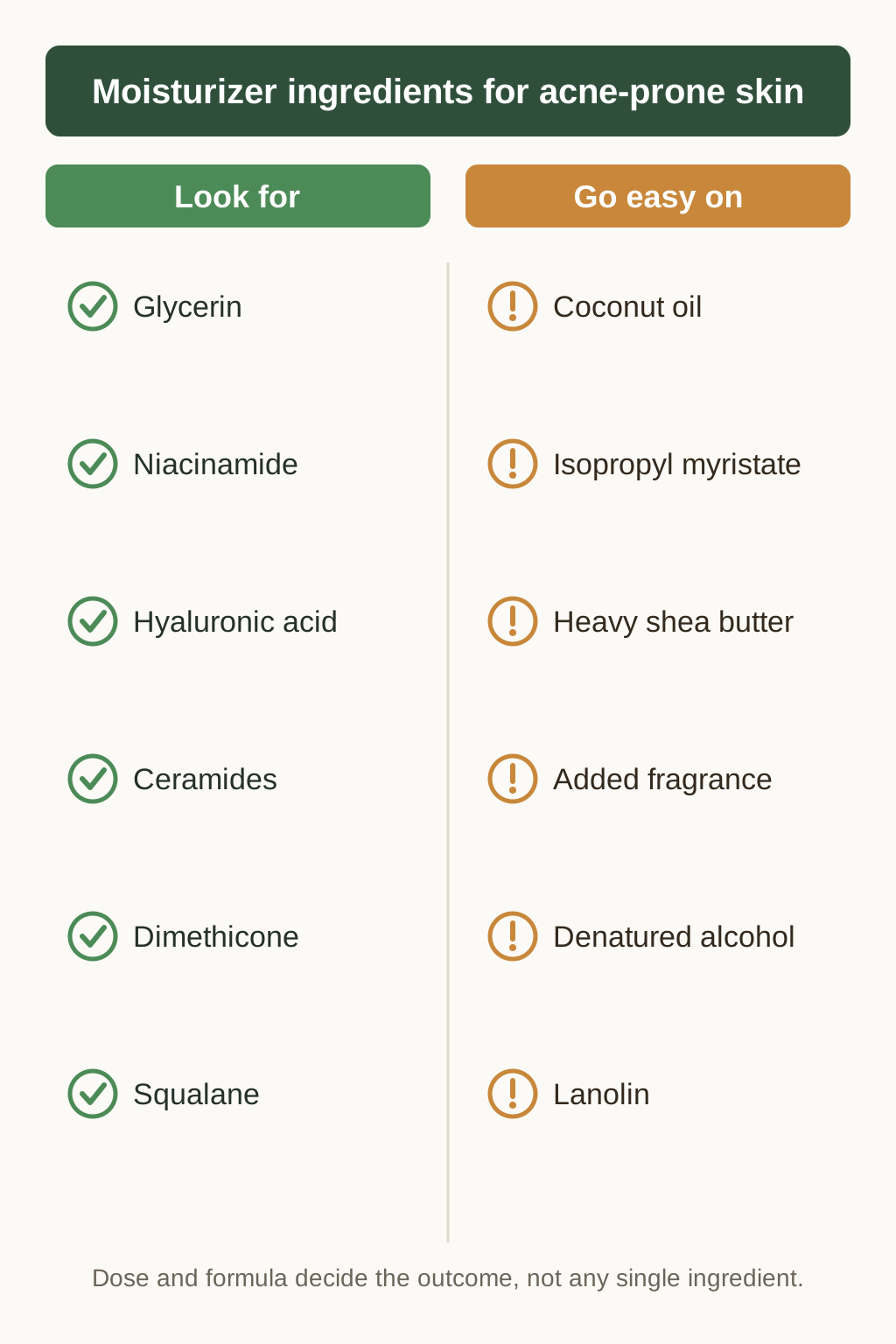
In a face moisturizer for acne prone skin, the reliable set is glycerin, niacinamide at four to five percent, hyaluronic acid, ceramides, dimethicone and squalane. None of them are exotic, and all of them appear in products under fifteen dollars. a peer-reviewed analysis of acne moisturizer ingredients found glycerin and dimethicone in the majority of the acne-targeted formulas it analysed, which tells you the category has converged for a reason.
The ingredients that show up most often in clogging complaints are coconut oil, isopropyl myristate, heavy shea butter high on the list, added fragrance and denatured alcohol. Fragrance and alcohol do not clog pores; they irritate, and irritated skin breaks out anyway. The distinction matters when you are deciding what to eliminate first.
Niacinamide is worth isolating because it does more than hydrate: it reduces sebum output and visible redness within about eight weeks of daily use.
We may earn a commission if you buy through the links below.
Match the texture to your skin type
Texture, not the ingredient list, is what makes a cream feel wrong. The same humectant blend can arrive as a watery gel or a thick balm, and the delivery decides whether it disappears in ninety seconds or sits on your cheeks all morning.
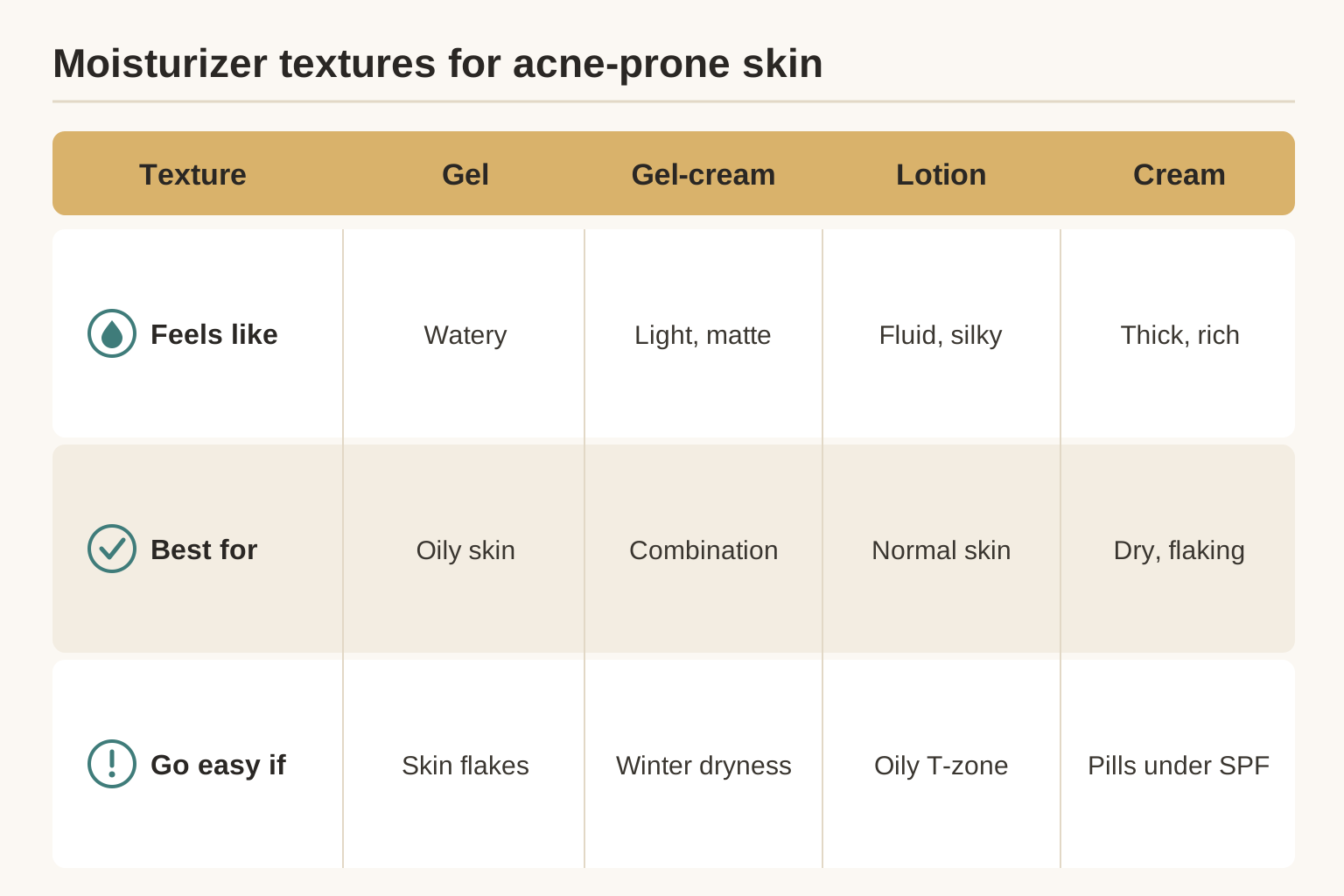
- Gel: water-based, absorbs in under a minute, no residue. A moisturizer for oily acne prone skin usually starts here.
- Gel-cream: a little emollient added, still matte. The safest default if you cannot categorise your skin.
- Lotion: pourable and light. A face lotion for acne prone skin suits combination skin that is oily at the T-zone and tight at the cheeks.
- Cream: higher lipid load, longer wear. Needed when a retinoid is peeling you.
Good lotions for acne prone skin and any other lotion for acne prone skin still need the same label check: no added fragrance, no heavy plant butters near the top. Texture narrows the field; the ingredient list still decides.
A moisturizer for dry acne prone skin is the exception to the lightweight rule. Dry, medicated skin needs ceramides and a genuine occlusive layer, and a gel will leave it flaking by lunchtime. If that is you, dry skin moisturizers that actually work is the better starting point, while seven things to check in an oily skin moisturizer covers the opposite problem.
We may earn a commission if you buy through the link below.
Not sure which category you fall into? Six questions, two minutes, and you get your skin type, a sensitivity flag and the texture that matches.
Our picks by skin type and budget
There is no single best moisturizer for breakout prone skin, only the right texture for the skin type and season you actually have. Each pick below solves one problem, and no two solve the same one. Every entry names what it gives up, because a formula tuned for oily skin will always disappoint dry skin and the reverse is equally true. Read the "Best for" line first and ignore the rest; the wrong match at any price performs worse than a plain drugstore cream aimed at your actual skin type. We may earn a commission if you buy through these links.
Two of these overlap enough that you should not buy both. If your cheeks flake only in winter, start with the combination pick and add the richer cream seasonally rather than running two moisturizers year-round. And if a pick is out of stock, match the texture and the humectant rather than hunting the exact name — this category has very little proprietary chemistry in it, which is why the price spread between the cheapest and the most expensive entry here rarely reflects a performance gap. The best facial moisturizer for acne prone skin is almost never the priciest one on the shelf.
If you would rather watch the textures behave than read about them, this walkthrough compares which formulas sit well on oily, breakout-prone skin and which ones do not.
Moisturizing while you use acne products and treatments
Benzoyl peroxide, adapalene and salicylic acid all thin the barrier during the first three weeks. That is why acne products treatment plans fail far more often from irritation than from a weak active: people stop at the peeling stage and conclude the medication did not work.

The sandwich method solves most of it. Apply moisturizer, wait ten minutes, apply the retinoid, then moisturize again. It measurably reduces stinging and flaking, and the cost is real: the buffering layer slightly slows how fast the retinoid works, so expect results a couple of weeks later than the label promises.
Gentle skin care products for acne matter here for a practical reason rather than a philosophical one. Every fragranced or foaming extra you add is another variable competing with the medication for your skin's tolerance budget. If you are starting a retinoid, how to choose and use a retinol serum explains the strength ladder.
Frequency is the lever most people never touch. Dropping a retinoid from nightly to every third night for two weeks resolves most irritation without abandoning the drug, and you can climb back once the flaking stops. Benzoyl peroxide behaves the same way: a shorter contact time, rinsed off after five minutes, keeps most of the antibacterial effect with far less dryness.
Give it time. how long acne treatments take to work puts most topical courses at six weeks before meaningful change, and how dermatologists treat acne with topical medication puts it at six to eight. Peeling that lasts past three weeks means step down in frequency, not push through. Acne products work with a moisturizer, not instead of one.
Where moisturizer sits in your morning and night routine
Morning order: cleanse, treat, moisturize, wait five minutes, sunscreen. The wait is not optional — sunscreen applied over a still-wet cream is what causes pilling, those small grey rolls that people blame on the sunscreen itself.
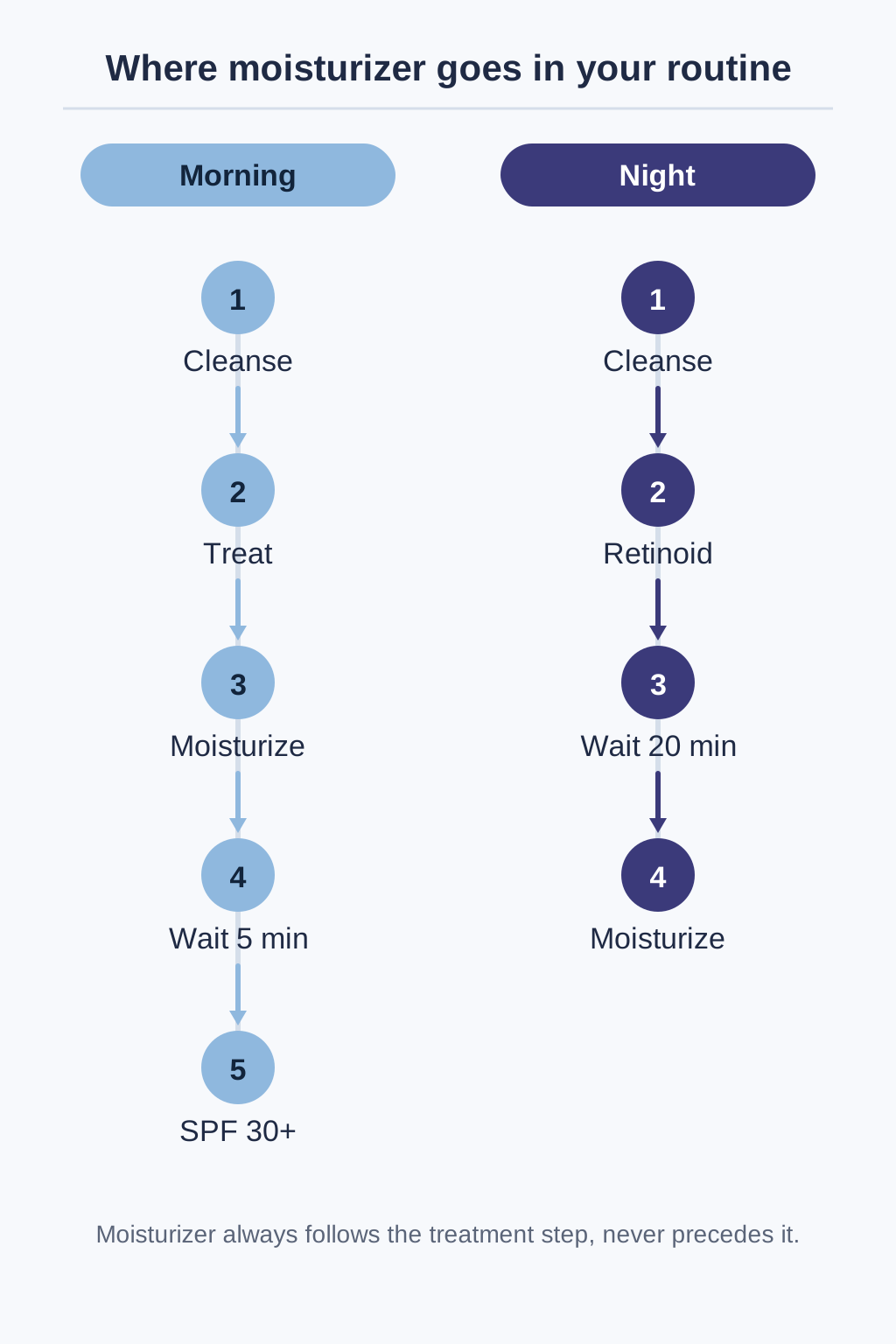
Night order: cleanse, retinoid on completely dry skin, wait twenty minutes, then moisturize. Applying a retinoid to damp skin increases penetration and irritation at the same time, which is why the twenty minutes exists.
Start with a low-foam gel cleanser and one nickel-sized amount of moisturizer, applied to skin that is still slightly damp. Finish the morning with a fluid mineral sunscreen, since several acne actives increase sun sensitivity.
Four acne skin care products is a complete routine: cleanser, treatment, moisturizer, sunscreen. Adding acne facial products faster than one every two weeks makes it impossible to identify which one caused a reaction. Choose skincare products for acne that stack cleanly, and see building a skin care routine in the right order or choosing an SPF moisturizer for daily protection if you would rather combine two steps.
Amount matters as much as order. A nickel-sized dose of moisturizer covers a whole adult face; more than that has nowhere to go and simply sits on the surface, which is what people mistake for a formula being too heavy. Sunscreen is the opposite — most people apply about a third of the tested amount, which is roughly a quarter teaspoon for the face alone.
Build the order around your own skin type and the actives you already own:
Moisturizing mistakes that keep breakouts going
Skipping cream entirely to dry out a moisturizer for pimples situation is the first one. Sebum output does not fall when you strip the skin; the surface just dehydrates, the flakes plug the follicle, and the oiliness rebounds within about a week.

Applying to bone-dry skin is the second. Humectants pull water from whatever is nearest, so on dry skin they draw it up from deeper layers and out into the air. Sixty seconds after rinsing, while the face is still damp, is the window.
Using a body lotion on the face is the third, and it is not snobbery: body formulas carry heavier occlusives and more fragrance because the skin there is thicker. A good moisturizer for pimple prone skin is not interchangeable with a rich night balm either.
The fourth is over-cleansing before you moisturize. Washing twice a day is the ceiling; a third wash after the gym with a foaming cleanser removes the lipids the moisturizer is there to replace, and you spend the evening rebuilding what you stripped at noon.
The fifth is churn. Swapping products every few days means nothing gets the four to six weeks it needs to prove itself, and you never learn which change helped. The same discipline applies upstream, which is why picking the right face wash for oily skin is worth the effort once rather than monthly.
How long to test a new moisturizer before you judge it
Give any new acne prone moisturizer four to six weeks, which is roughly one full skin cell turnover cycle plus a margin. Change one product at a time; two changes in the same fortnight means you learn nothing from either.
Distinguish a reaction from a coincidence. Stinging, burning or a rash within forty-eight hours is a reaction to the cream. Small bumps appearing over two to three weeks in areas you already break out are usually your normal pattern, not the moisturizer. If new comedones appear in a place you have never broken out before and persist past two weeks, that is when the product is the likely culprit.
Track it rather than trust your memory — an acne safe moisturizer for dry skin trial is easy to misjudge on recall alone. Print this and record breakouts once a day for a week.
Frequently asked questions about moisturizer and acne
What moisturizer is good for acne if you also use a prescription retinoid?
A fragrance-free cream with ceramides, applied twenty minutes after the retinoid. Skip acids and vitamin C in the same routine while your skin adjusts.
Can a facial moisturizer for acne prone skin be used on the body?
Yes, though it is an expensive way to cover a large area. The reverse rarely works: body lotions carry heavier occlusives than facial skin tolerates.
Does oily skin actually need moisturizer?
Yes. Oil is not water. Skin that feels greasy but looks dull and creases when pressed is dehydrated and oily at once, and it needs a humectant gel.
Get one practical routine tip a week, tested on breakout-prone skin.
One routine tip a week, tested on breakout-prone skin. No product dumps.
Thanks — you're on the list.


