

What Actually Makes a Good Lotion for Dry Skin
Dry skin is a water problem wearing an oil problem's clothes. The outer layer of your skin, the stratum corneum, is designed to hold roughly 20 to 30 percent water; when it drops below about 10 percent, the cells shrink, the edges lift, and you get flaking, tightness and that fine cross-hatched look on your shins. The best lotion for dry skin is simply the one that puts water back and then stops it leaving.
That is why so many lotions for dry skin feel great for an hour and useless by lunch. A thin, mostly-water formula evaporates and takes surface moisture with it, leaving the barrier exactly where it found it. What lotion works best for dry skin comes down to three readable variables: how much humectant it carries, how much oil sits behind that humectant, and whether it adds fragrance your skin then has to cope with.

A good lotion for dry skin should end the post-shower tight feeling the same day and visibly reduce flaking inside a week. If two weeks of twice-daily use changes nothing, the formula is too light for you, not too cheap.
Use this guide by severity rather than by price. The best lotion for skin that is merely dry in August is not the product you need for cracked shins in February. If you want the shorter version first, start with dry skin moisturizers and how to pick one that works, then come back for the texture and application detail below.
The Three Ingredient Families a Hydrating Lotion for Dry Skin Needs
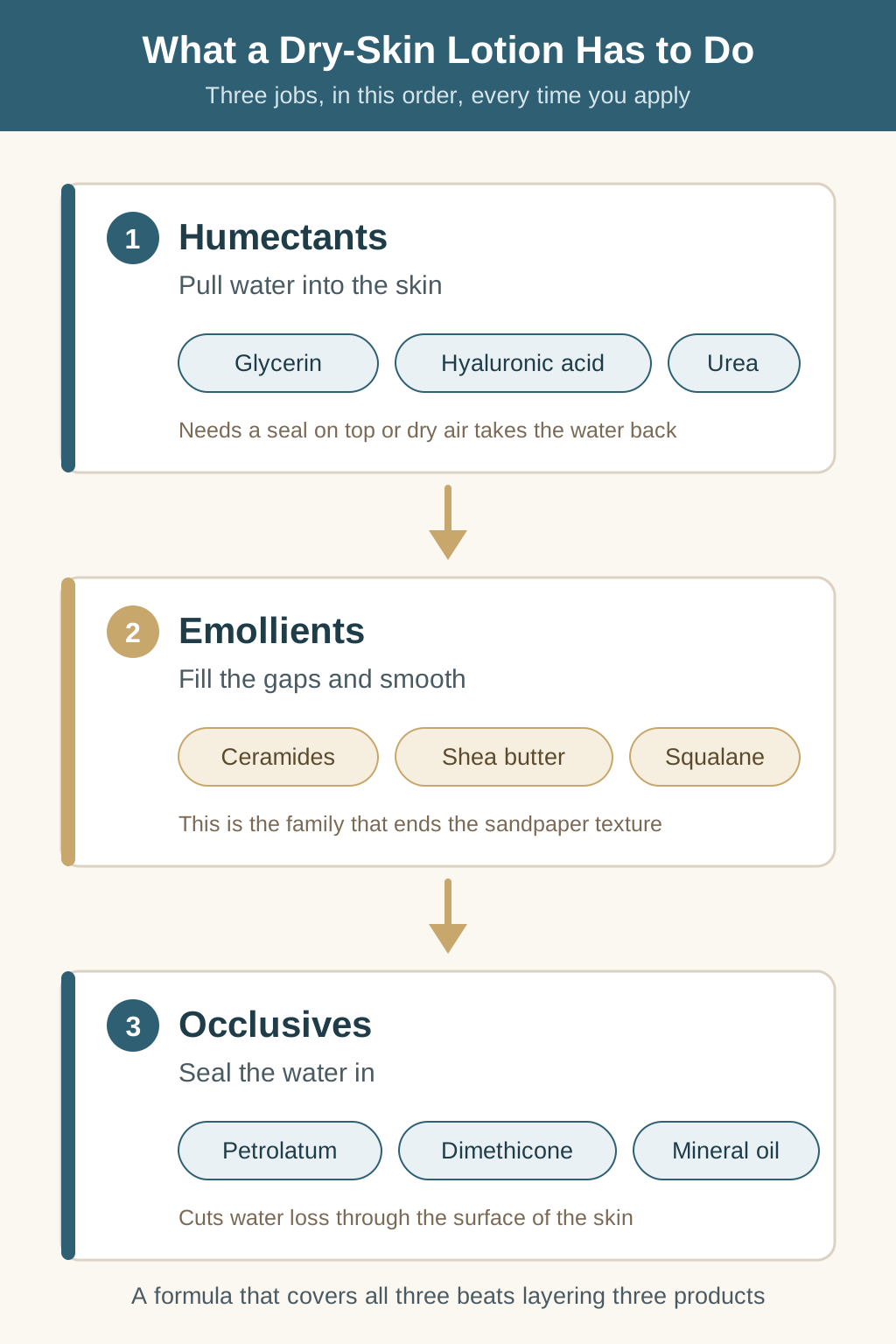
Every moisturizer on the shelf is a mix of three jobs. A hydrating lotion for dry skin that only does one of them will underperform no matter what the front of the bottle claims.
Humectants pull water in
Glycerin, hyaluronic acid, urea and lactic acid draw water into the upper layers. Glycerin is the workhorse: cheap, well studied, and effective across the 3 to 10 percent range most bottles use. If glycerin appears in the first five ingredients, the formula is doing real work rather than decorating.
Humectants alone have a catch. In a room below about 40 percent humidity they can pull water from deeper skin and hand it to the air, which is why a humectant-only gel can leave you drier in January than you started. Hyaluronic acid gets the marketing budget but behaves the same way and needs the same seal on top; timing and layering matter more than concentration, which is covered in when to use hyaluronic acid serum.
Emollients fill the gaps
Ceramides, shea butter, squalane and fatty alcohols slot between the corneocytes and smooth the lifted edges. This is the family responsible for texture: it is what stops skin feeling like fine sandpaper. Ceramides are the best-evidenced of them — a clinical review of ceramide-containing moisturizers found ceramide formulations matched or beat comparator moisturizers, petrolatum and hydrocortisone on hydration and water loss across a dozen controlled studies. That evidence is why the best moisturizing lotion formulas name them on the front of the bottle.
Occlusives seal it shut
Petrolatum, dimethicone, mineral oil and lanolin form a physical film that cuts transepidermal water loss. Petrolatum is the reference standard and reduces water loss by upward of 90 percent, but it is greasy and it marks fabric. Dimethicone gives you roughly two-thirds of the effect and disappears into skin, which is the trade most people actually want on arms and torso.
What to leave on the shelf: added fragrance, denatured alcohol high in the list, and essential oils. Dermatology guidance is consistent on this — see dermatologist tips for relieving dry skin — because a compromised barrier lets irritants through far more easily than an intact one.
Read the first five ingredients and you will know in twenty seconds whether the best body moisturizer for dry skin claim on the label survives contact with the formula. The best skin lotion for dry skin covers all three families in one bottle, so you are not layering three products before work.
Lotion, Cream or Ointment: Matching Texture to How Dry You Are
The only meaningful difference between these three is the oil-to-water ratio. Lotions carry the least oil and the most water, creams sit near an even split, and ointments are almost entirely oil with barely any water at all. More oil means more water held in and a greasier ten minutes getting there. the difference between lotions, creams and ointments for eczema-prone skin is a useful reference point if your dryness has tipped into eczema.
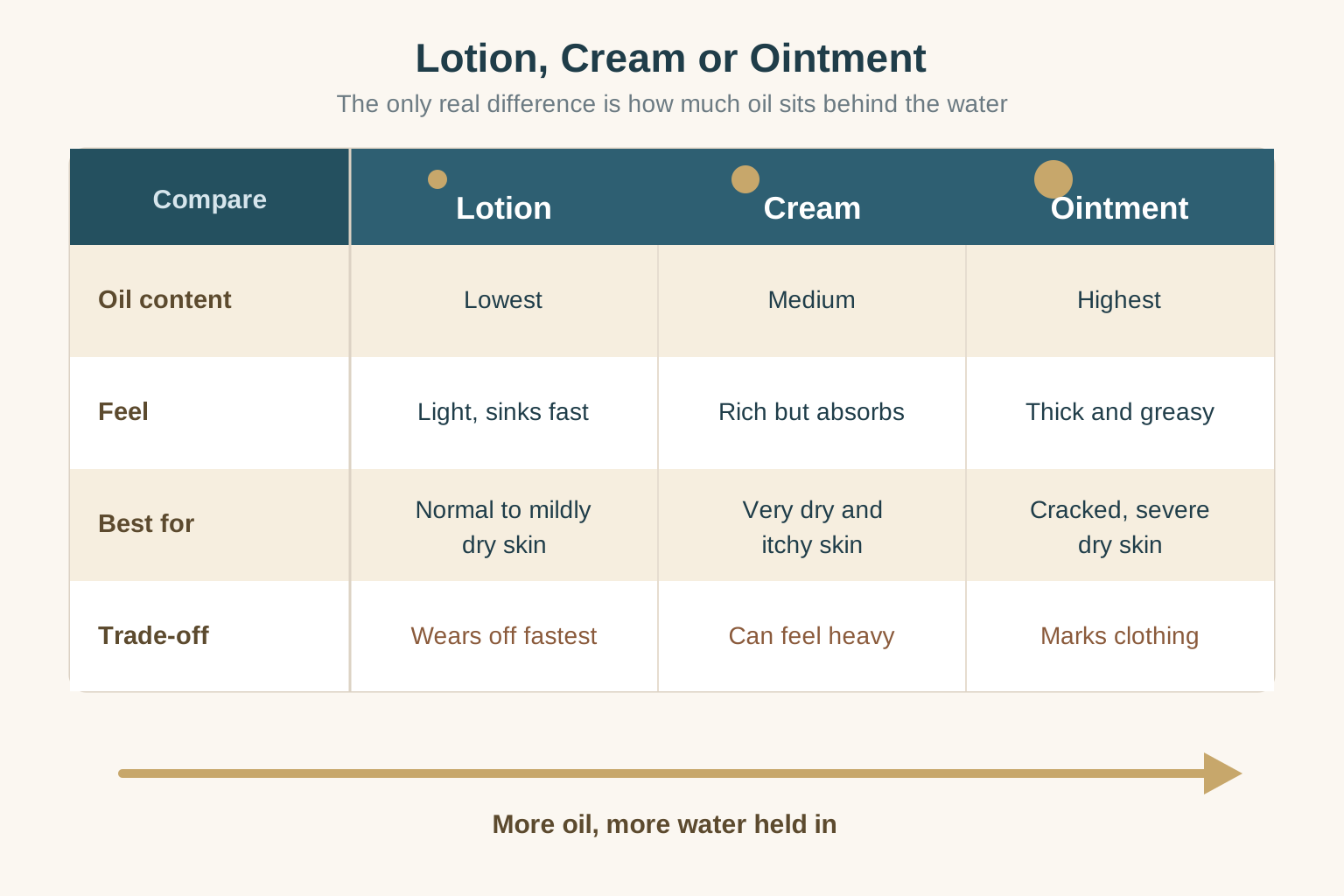
Choose a body moisturizer for dry skin by season and by site, not by one blanket rule. A lotion is right for arms and torso in summer. A cream belongs on legs from October onward. An ointment is a spot treatment for heels, knuckles and elbows, layered over a lotion rather than smeared everywhere.
The best body cream for dry skin trades absorption speed for staying power, and below the knee that trade is worth making. Expect two to four minutes before you can dress, which is the real cost of the category — not the price on the tub.

Two practical notes. Packaging matters: thick formulas rarely survive a pump, so the richest options come in tubs, and a tub is worse for hygiene when skin is broken — decant with a clean spoon rather than fingers. And judge cost per use, not price per bottle. The best creams for body care are the ones you apply by the palmful without flinching, which usually rules out the 50 ml jar.
Your face is a separate decision with its own rules, set out in best face moisturizer for every skin type — body formulas are usually too occlusive around the nose.
The Best Body Lotion for Dry Skin, Picked by What Your Skin Is Doing
Five picks, five different problems. There is no single winner here, because the best body lotion for dry skin depends on whether your issue is severity, itch, reactivity, season or how fast you need to get dressed. how dermatologists choose a moisturizer for dry skin follows the same logic: match the formula to the symptom.
One label note before the list. A dermatologist recommended lotion badge means a formula has been reviewed and is usually fragrance-free and non-comedogenic — a sensible shortlist filter, not proof it suits you. Treat a best dermatologist recommended lotion claim as a starting point and judge it on your own two-week test.
Some links below are affiliate links. If you buy through them we may earn a commission, at no extra cost to you.
Judge any of them on three signals after fourteen days: flaking, tightness in the ten minutes after a shower, and whether you reach for the bottle without reminding yourself. Be honest about the ceiling, though — the best lotion for really dry skin will not out-argue a 15-minute hot shower or a bedroom sitting at 20 percent humidity.
Not sure which of the five describes your skin? Six questions, two minutes, and you get your skin type plus the shelf filtered to it.
Best Lotion for Dry Itchy Skin, Peeling Skin and Sensitive Skin
Itch is inflammation, not just dryness. Once you are scratching, the best lotion for dry itchy skin needs something on top of the three families — colloidal oatmeal, or pramoxine if the itch is sharp enough to wake you. A lotion for dry itchy skin should feel cool on contact; refrigerating the bottle turns that into a genuine intervention rather than a nice touch.
If a moisturizer for dry itchy skin stings when you apply it, that is information, not a break-in period. Fragrance, denatured alcohol or an exfoliating acid is meeting a barrier that cannot handle it. Stop and switch: the best lotion for dry sensitive skin has a short list, no fragrance and no essential oils.
Peeling is a different mechanism again. A lotion for peeling skin after sunburn or a retinoid ramp-up should soften flakes chemically rather than have you scrub them off, and urea at 5 to 10 percent does exactly that. Physical scrubbing drags at intact cells and extends the whole cycle. For flaking on the face specifically, choosing a gentle face scrub for flaky patches sets out how gentle is gentle enough.
Some links below are affiliate links. If you buy through them we may earn a commission, at no extra cost to you.
Stop self-treating and see a dermatologist if cracks bleed, redness spreads, or itch disrupts your sleep for more than two weeks. That pattern points at eczema or a thyroid issue, and no lotion resolves either.
How to Apply Lotion for Severe Dry Skin So It Actually Holds
Application changes outcomes more than the product does. A lotion for severe dry skin applied to bone-dry skin at bedtime is being asked to conjure water out of nothing; applied to damp skin, it only has to keep what is already there.
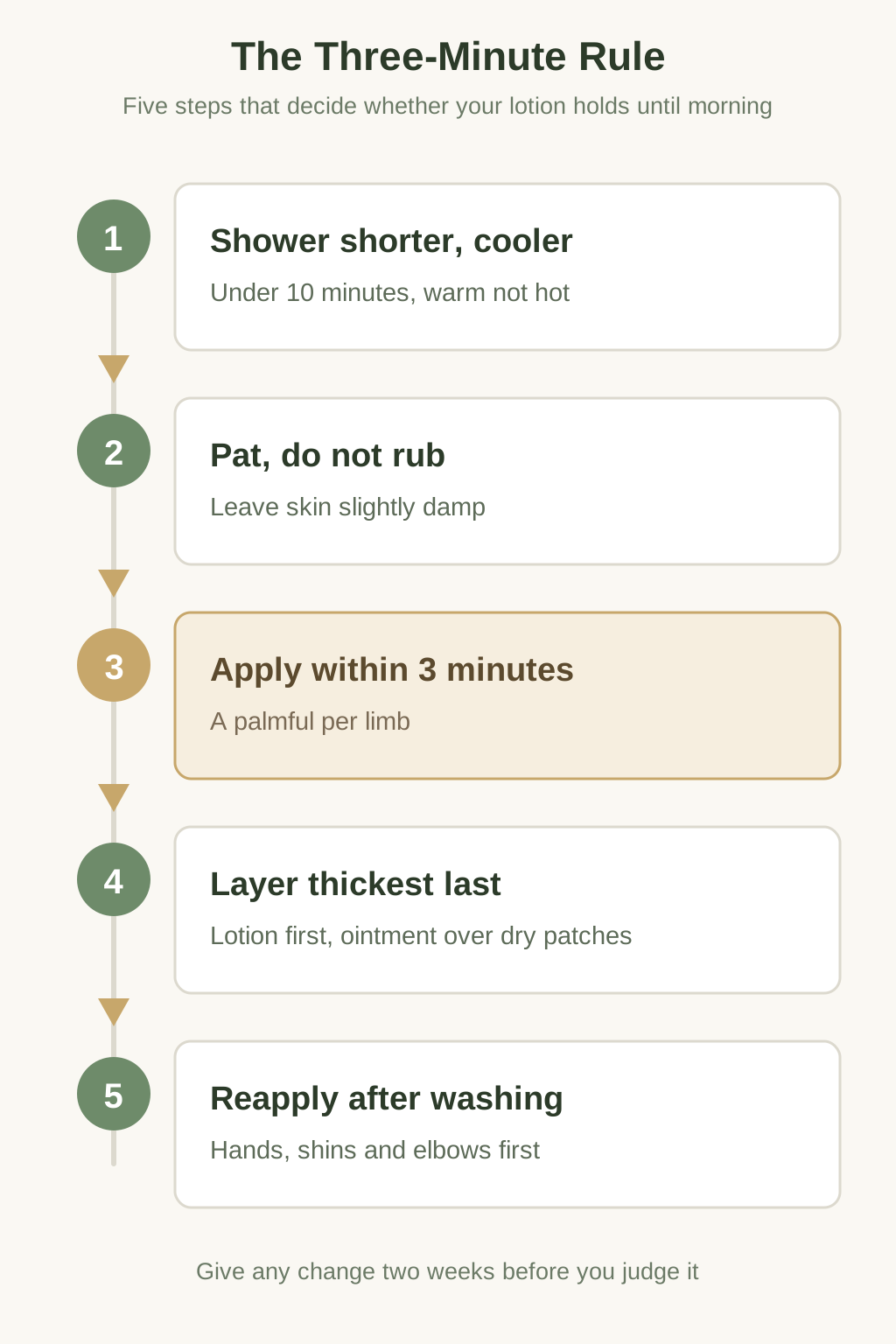
Four rules carry almost all of the benefit:
- The three-minute rule. Pat dry, leave skin visibly damp, and apply within three minutes of stepping out. After that the surface water has gone and you are starting from behind.
- Amount beats frequency. A palmful per limb, twice a day. Most people use about a third of what a lotion for extremely dry skin needs to change anything.
- Thinnest first. Lotion over the whole body, then an ointment only across the worst patches. Reversing that order means the second layer never reaches skin.
- Reapply after every wash. Hands and forearms lose the film each time, so keep a second bottle at the kitchen sink where you actually are.
Shower habits matter as much as the bottle: under 10 minutes, warm rather than hot, and a non-foaming wash, because hot water strips the very lipids the best lotion for severe dry skin is trying to replace. On still-damp legs you can also press in a few drops of body oil before the lotion goes on, which buys extra hold overnight.
Where this sits in the rest of your regimen is covered in how to build a skin care routine in the right order. Give any change two weeks before you judge it, not two days.
If you want the ingredient rules on one page you can tape inside a bathroom cabinet, this printable cheat sheet lists what each active does, when to apply it and what not to layer it with.
Best Lotion for Winter Dry Skin and Extra Dry Patches
Central heating routinely pulls indoor humidity under 30 percent, and below that threshold your skin loses water to the room faster than any lotion can replace it. That is the whole reason the best lotion for winter dry skin is a step thicker than the bottle that worked in July.

What is the best lotion for extra dry skin in February is often the same formula you used in August, with an occlusive layered over the worst areas. Fix the room as well as the skin: a cool-mist humidifier running overnight at 40 to 50 percent, cooler showers, and gloves outdoors so wind chill is not undoing the work.
Choosing the best body moisturizer for extra dry skin means checking shins, elbows and knuckles first. They have thin skin and few oil glands, so they go first and recover last. If those three are smooth, the rest of you is fine.
Lips, hands and face need their own products in winter; body lotion is too heavy for the face and too light for lips. For lips specifically, see dermatologist-approved lip balms for chapped lips.
Dry Skin Lotion Questions, Answered
Does a more expensive lotion hydrate better?
No. Price tracks packaging, fragrance and marketing far more closely than it tracks humectant and occlusive load. A basic glycerin-and-petrolatum tub outperforms most luxury lotions on water loss.
Can you use a body moisturizer for dry skin on your face?
On the jawline and neck, usually yes. Around the nose and forehead, heavier occlusives can trigger congestion, so switch to a facial formula there.
How often should I reapply the best moisturizing lotion?
Twice daily as a baseline, plus after every hand wash. Anything less and the film is gone before the next application.
Is a dermatologist recommended lotion always better?
It signals a tested, usually fragrance-free formula. It does not guarantee your skin agrees with it, so still run the two-week test.
Why does my lotion sting?
Fragrance, alcohol or an acid meeting an open barrier. Move to the best lotion for dry sensitive skin and the stinging should stop within days.
We send one dry-skin fix a week — ingredient rules, not product dumps.
One dry-skin fix a week. Real ingredients, no product dumps.
Thanks — you're on the list.


