

What a Skin Moisturizer Actually Does to Your Face
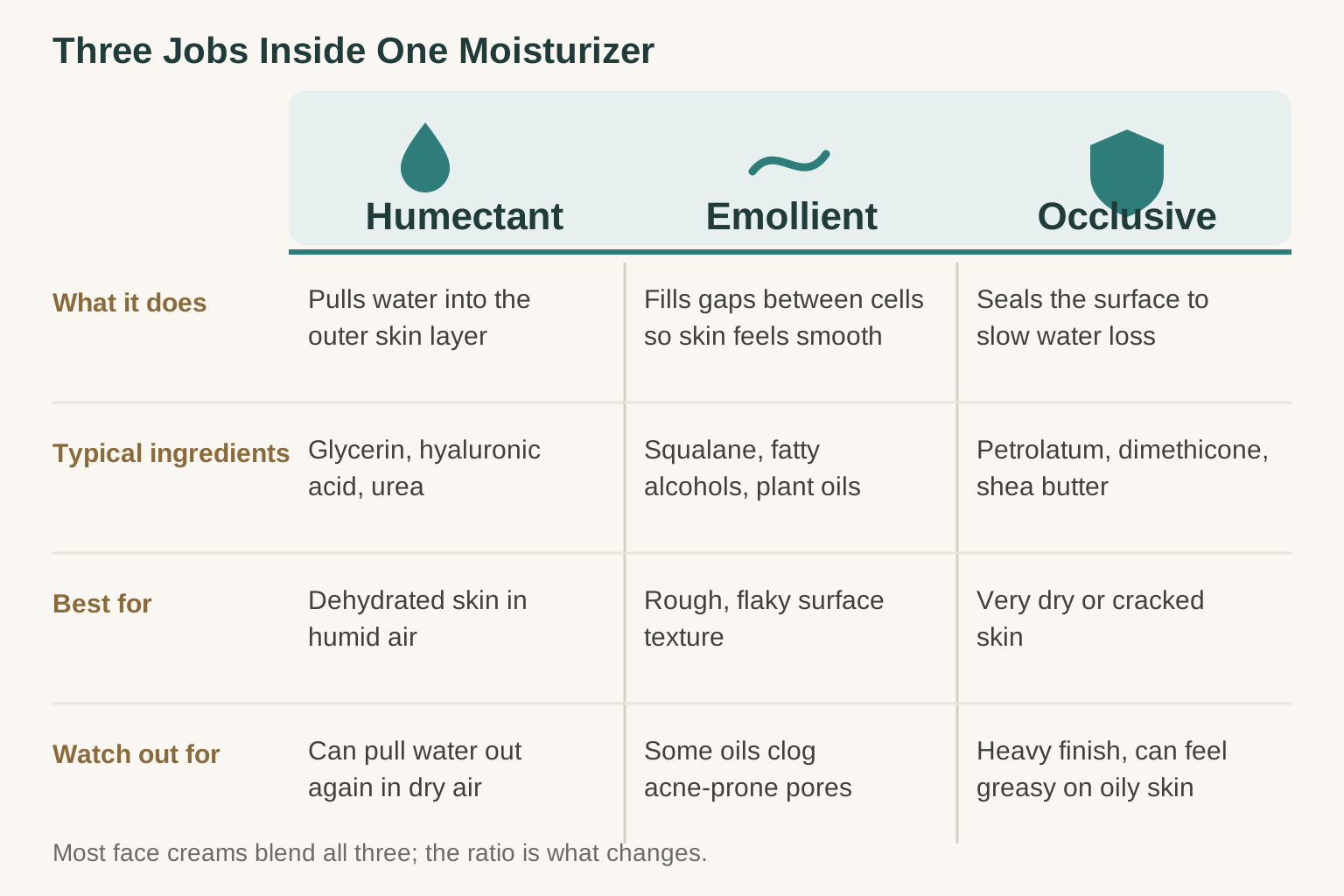
A skin moisturizer does three separate jobs, and most disappointment comes from buying a product that only does one of them. Humectants such as glycerin and hyaluronic acid pull water into the stratum corneum. Emollients such as squalane and fatty alcohols fill the gaps between shedding cells so the surface feels smooth. Occlusives such as petrolatum, dimethicone and shea butter slow transepidermal water loss for several hours.
Miss the occlusive step and the humectant you paid for evaporates, taking some of your own water with it in dry air. That is why a hydrating serum alone leaves skin tight by lunchtime.

Dry Skin and Dehydrated Skin Need Different Fixes
Dry skin lacks oil and stays dry all year. Dehydrated skin lacks water and can appear on an oily face in February. Deciding what to use to moisturize face skin starts there: oil-poor skin needs lipids, water-poor skin needs humectants plus a light seal. Treat dehydration with a heavy balm and you get congestion; treat true dryness with a watery gel and you get flaking by day three.
If you already layer hydrating actives, the timing matters more than the price — see When to Use Hyaluronic Acid Serum before you add another step. The molecular-weight story behind that ingredient is covered in peer-reviewed research on hyaluronic acid and epidermal hydration, which explains why high-molecular-weight forms sit on the surface rather than sinking in.
Face Lotion or Face Cream? It Is Mostly Oil-to-Water Ratio
A face lotion is roughly 70–85% water with a small oil phase, so it spreads fast and disappears. A cream carries more oil and emulsifier, so it stays put. Neither is inherently better formulated. The label word tells you the texture, not the quality of the ingredient list underneath it.
Use the texture word as a dose control instead. Lotion for a face that already runs oily, cream for skin that reads matte by mid-afternoon, ointment only for cracked patches you would otherwise cover with a bandage.
How to Choose the Best Moisturizer for Face Texture by Skin Type
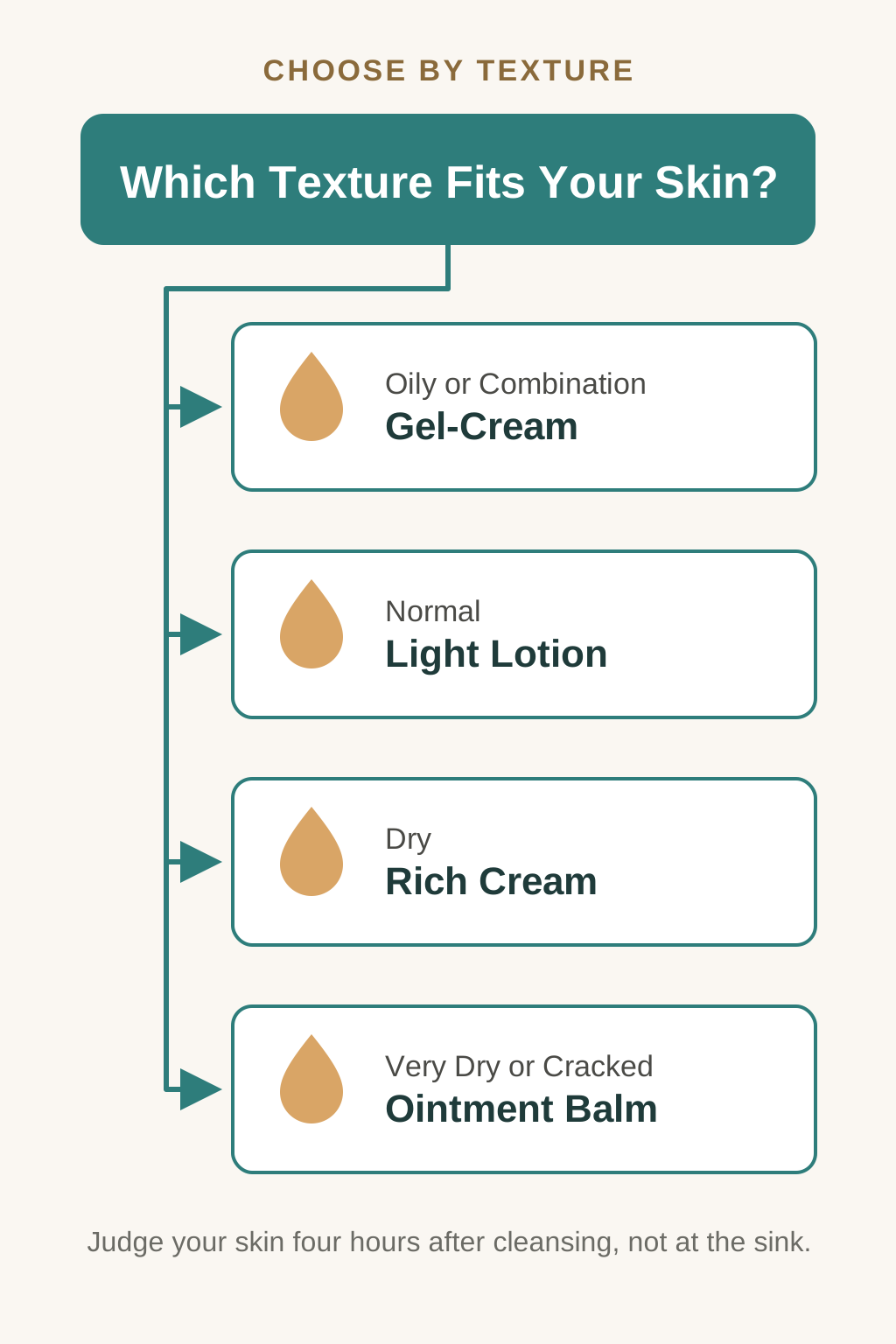
Judge your skin four hours after cleansing, not at the sink. Skin feels tight immediately after any cleanser, which is why so many people buy a cream three grades too rich and then blame the cream for their breakouts.
The Five-Question Triage
Answer these before you read a single review. Together they settle which moisturiser is best for the face you actually have:
- Shine test. Four hours after cleansing, is your T-zone visibly shiny? Yes means gel-cream territory.
- Tightness test. Does skin feel tight or itchy at the same four-hour mark? Yes pushes you one grade richer.
- Reaction history. Have fragranced products stung or flushed your skin in the past year? Yes rules out anything with parfum.
- Active load. Are you using a retinoid, benzoyl peroxide or an acid more than twice a week? Yes means you need a repair-focused cream, not a light one.
- Climate. Do you spend winters in dry indoor heat? Yes means you need two formulas a year, not one.
Both a shiny T-zone and a tight feeling means combination and dehydrated skin. The answer to what is the best moisturizer cream for face skin in that state is a water-led gel-cream everywhere, with a pea of richer cream on the cheeks only. Two textures, one routine, roughly ninety seconds. For a second opinion on ingredient selection, the American Academy of Dermatology's guidance on picking a moisturizer lists the same short set of ingredients worth paying for.
The tradeoff of the two-texture approach is real: it costs you a second product and about fifteen extra seconds each morning, and it is overkill if your skin behaves the same way in every season.
Ignore the Skin-Type Label on the Box
Brand skin-type labels describe a texture the brand chose, not a diagnosis. Two products both marked "for dry skin" can differ by 20 percentage points of oil phase. Your four-hour shine reading beats the box every time, and it updates with the weather, your age and whatever active you started last month.
Re-run the five questions twice a year — once in the first cold week, once in the first humid one. Most people need to change grade, not brand, and changing brand is what wastes the money.
Best Facial Moisturizer for Dry Skin: Rebuild the Barrier First
Dry, flaking skin is a barrier problem, and barriers are built from three lipid families at once: ceramides, cholesterol and free fatty acids. A cream that carries all three repairs faster than one loading a single hero ingredient at a headline concentration. Look for ceramides and glycerin in the first six ingredients rather than in the marketing copy.

Why Fragrance Is the First Thing to Cut
Fragrance is among the most common causes of contact reactions in leave-on facial products, and a compromised barrier lets more of it through. Choosing a fragrance free moisturiser for dry skin removes the single most likely trigger before you start troubleshooting anything else. Watch for the loophole: "unscented" can still contain masking fragrance, while "fragrance-free" should not.
A good face lotion for dry sensitive skin also needs an occlusive top note and time. Barrier lipids take roughly two to four weeks to normalise, so judging a cream after three days tells you about its texture and nothing about its repair. Dermatologist guidance on this point is consistent: dermatologist advice on applying moisturizer to damp skin recommends creams or ointments over thin lotions and application while skin is still damp.
Who this is not for: if your skin is oily and merely dehydrated, a ceramide-heavy cream will feel like a film by noon and can trap sweat along the hairline. The cost of the richer route is a slower morning routine and a greasier photo finish. Overnight, a thin layer of an occlusive balm over your cream — the technique often called slugging — cuts water loss further, at the cost of a pillowcase you will need to wash more often and a real congestion risk if your skin is not genuinely dry.
Two Signals That Your Cream Is Too Light
Flaking that returns within four hours of applying, and makeup that clings to patches by mid-morning, both mean the occlusive layer is too thin rather than the humectant being too weak. Adding another hydrating serum under a thin lotion makes both worse.
If dryness is your year-round baseline, Dry Skin Moisturizers That Actually Work goes deeper on texture grades.
What Is the Best Moisturiser for Oily Skin? Go Water Based
Oily skin still loses water. Sebum is not hydration — it is lipid, and it does almost nothing to hold moisture in the upper layers. Skin can be greasy at 2pm and measurably dehydrated at the same time.
A water based moisturizer answers that with a high water phase, a humectant such as glycerin, and a light silicone or squalane finish that sets matte within about two minutes. Gel-creams sit at the light end; oil-free lotions sit a grade above.

Layering Under Sunscreen Without Pilling
Pilling is usually a timing failure, not an incompatibility. Give a water-based layer 60 to 90 seconds to set before sunscreen goes on, and use a pea-sized amount rather than a coin. Rubbing a second layer into a half-dry first layer is what rolls the film into flakes.
Skipping Moisturizer Backfires
Strip oily skin with a foaming cleanser and no moisturizer and the surface responds by feeling tighter, which most people answer with more cleansing. The loop ends with a shinier, more irritated face, not a matte one. The honest limitation of gel-creams: in a dry-heated flat in January they can stop being enough by week two, and you will need a richer night formula alongside.
Three ingredients earn their place on an oily face: glycerin at the top of the list, niacinamide around 4–5% for sebum and redness, and a mattifying powder such as silica if you shine through by noon. Everything past that is texture marketing.
What to avoid: heavy plant butters, coconut oil, and thick petrolatum blends on the T-zone. They are excellent occlusives and genuinely wrong for skin that already produces its own lipid layer.
Test the finish before you commit: a gel-cream should disappear from the back of the hand in under two minutes with no tacky film left. Anything still sticky at three minutes will pill under sunscreen and slide under makeup by noon.
Best Moisturizer for Sensitive Skin: Fewer Ingredients, Fewer Reactions
Every additional ingredient is another chance to react. The best moisturizer for sensitive skin usually runs under fifteen ingredients, with no fragrance, no essential oils and no stacked botanical extracts. Lavender, ylang-ylang and citrus oils are fragrance by another name.
What is a good moisturizer for sensitive skin when redness, stinging or tightness happen most days? One built on glycerin, panthenol, colloidal oatmeal or niacinamide at a low percentage, with a simple occlusive. A soothing moisturizer of that kind calms without smothering pores.
Patch Test Before It Touches Your Face
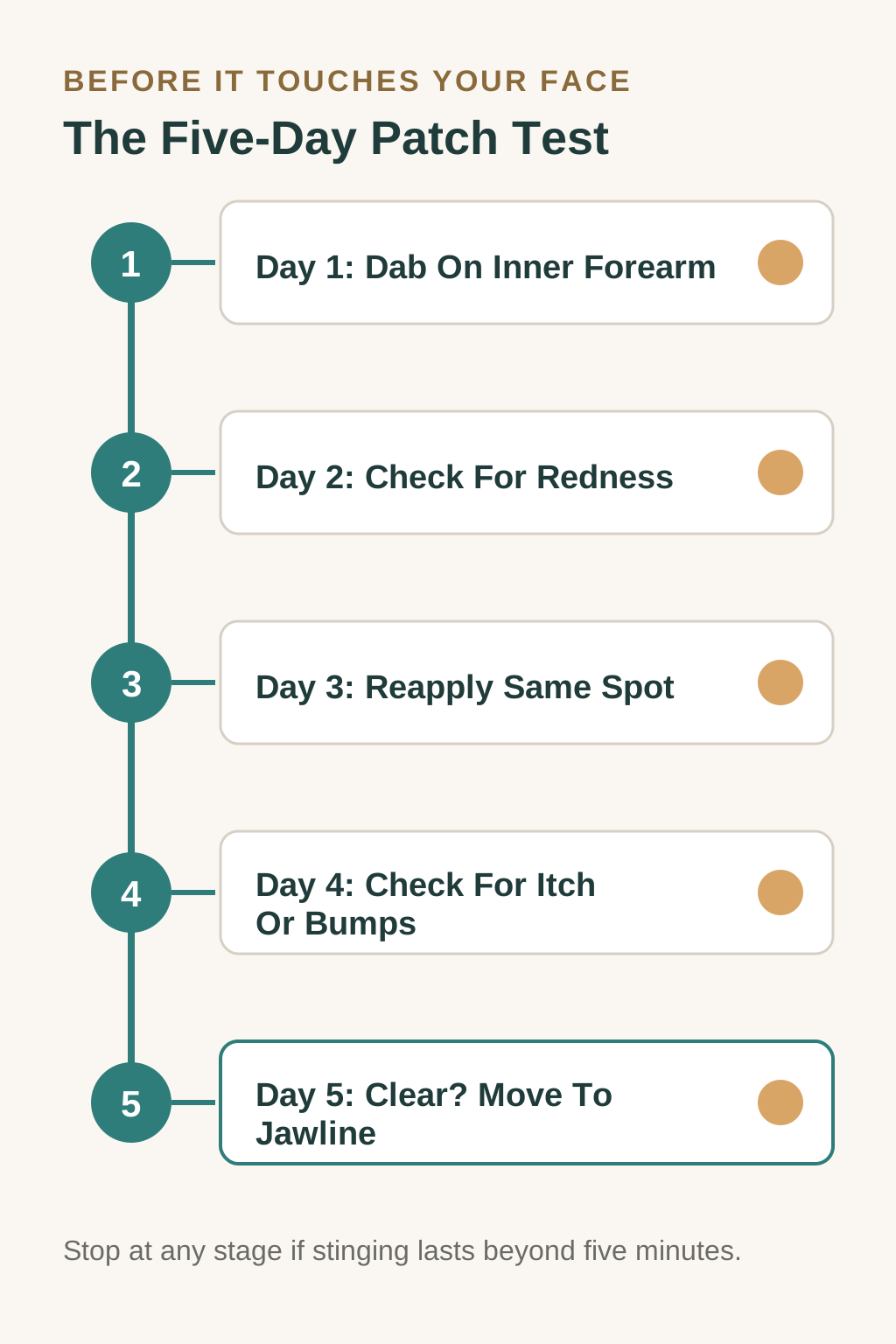
Any face moisturizer for sensitive skin should clear a five-day forearm test before it goes anywhere near your jawline. It costs you a week; a full-face reaction costs you a month of repair.
Which Label Words Are Regulated and Which Are Not
Shoppers comparing a good face moisturizer for sensitive skin against something marketed as the best lotion for sensitive face are usually comparing claims, not formulas. In the United States, "hypoallergenic", "dermatologist tested" and "sensitive skin" carry no binding standard. "Fragrance-free" is the only one of those four that maps to something you can verify by reading the ingredient list.
The practical read: a best face lotion for sensitive skin claim and a facial moisturizer for sensitive skin claim tell you the same amount, which is nothing. Flip the jar and count the fragrance aliases instead — parfum, aroma, linalool, limonene, geraniol.
The tradeoff of a minimalist formula is that it does one thing well and nothing else: no brightening, no firming, no glow filter. If you want actives, add them as a separate step you can withdraw the moment skin protests.
Sensitive Is a Symptom, Not a Skin Type
Stinging and flushing usually trace back to a specific cause: a damaged barrier from over-cleansing, rosacea, eczema, or contact allergy to one ingredient. A gentler cream helps all four, but only the first resolves with a product change alone. If redness persists past six weeks of a bland routine, the answer is a diagnosis, not a new jar.
One more practical filter: prefer pumps and tubes over open jars. Fingers in a jar introduce bacteria into a preservative system that reactive skin already has to tolerate at minimum strength.
Best Facial Moisturizer Acne Prone Skin Can Actually Tolerate
Retinoids and benzoyl peroxide work, and both dry skin out enough that people quit. Dryness, peeling and stinging are among the top reasons acne patients stop treatment in the first eight weeks. A moisturizer is not a compromise here — it is what keeps you on the treatment long enough for it to work.
The best facial moisturizer acne prone skin can live with is light, water-led, and applied in a specific order: retinoid on dry skin, then moisturizer 20 minutes later, or moisturizer first as a buffer if you are still adjusting. Buffering slightly reduces retinoid potency, which is the price of staying consistent.
What "Non-Comedogenic" Actually Certifies
Nothing, legally. No regulator defines or audits the term. It grew out of rabbit-ear comedogenicity testing that predicts human pore behaviour poorly, and it is applied to finished products that were never tested as a whole. A non comedogenic face moisturizer claim is a starting filter, not a guarantee.
What to do instead:
- Favour gel and fluid textures over balms and heavy oils.
- Introduce one new product at a time, and give it four weeks before judging.
- Track breakouts by location — new bumps only where you apply the product are meaningful, scattered ones usually are not.
Texture Beats Claims on Acne-Prone Skin
Rank by format first: gel, then gel-cream, then oil-free lotion, then cream. Within a format, the ingredient that most reliably causes trouble is a high concentration of isopropyl myristate or coconut-derived esters near the top of the list. Niacinamide and glycerin are safe bets in almost any concentration you will meet on a shelf.
The cost of the light route is real: on a retinoid in winter, a gel-cream alone often leaves the cheeks flaking, and you will need a richer formula on the cheeks only while keeping the gel on the T-zone.
Do not answer congestion with more scrubbing; the surface damage makes the moisturizer sting. Gentle Face Scrub Guide for Exfoliation covers how often exfoliation actually helps.
Day Cream, Night Cream, and the Best Face Moisturizer With SPF
A day cream earns its name when it does something the night version cannot: sit invisibly under sunscreen and makeup, and carry antioxidants such as vitamin C or E that matter while you are in daylight. A night formula can be richer because nothing has to layer over it.
For most people one well-chosen cream covers both slots. Dermatologists interviewed on the question mostly agree — what dermatologists say about separate day and night formulas makes the case that the split matters more as skin ages than it does at twenty-five.
SPF in a Moisturizer Only Works at the Full Dose
The best face moisturizer with spf is only as good as the amount you apply. Laboratory SPF is measured at 2 mg per square centimetre, which works out to roughly a quarter teaspoon for a face and a little more with the neck. Most people apply between a quarter and a half of that, landing an SPF 30 label somewhere near real-world SPF 8 to 15.
The honest limitation: a moisturizer with SPF is hard to reapply over makeup at midday, so it suits a desk-bound day and not a beach one. If you are outdoors for hours, use a dedicated product — Mineral Sunscreen for Daily Face Protection explains the filter differences. Once SPF is off the table, what is the best moisturiser for your face at night comes down to one thing: whether you wake up tight. If you do, go one grade richer before you go one price tier higher.
A workable compromise for a single-jar routine: keep one fragrance-free cream for both slots, and add a separate SPF 30 or higher in the morning rather than relying on a moisturizer's built-in number. You lose a step in convenience and gain the ability to reapply at two o'clock.
One caveat on antioxidants in a day cream: vitamin C degrades in a jar exposed to air and light. If a formula lists it high on the ingredient list but arrives in a wide-mouth pot, expect the benefit to fade within weeks of opening.
Best Drugstore Moisturizer or Prestige Cream: What the Price Buys
The active ingredients that carry a moisturizer — glycerin, ceramides, hyaluronic acid, petrolatum, dimethicone, niacinamide — are commodity materials. A pharmacy cream and a hundred-dollar jar can list the same first eight ingredients. That is why the best drugstore moisturizer routinely outperforms formulas costing five times more on barrier metrics.
Where the Extra Spend Genuinely Shows Up
- Texture and finish. Prestige formulas are often more elegant to wear, which matters if elegance is what keeps you consistent.
- Packaging. Airless pumps protect unstable actives; open jars oxidise and invite fingers.
- Fragrance-free versions. Reformulating without fragrance costs money, and budget lines often skip it.
Ranking what are the best face creams on the market by published evidence rather than packaging weight collapses the field fast: the winners are the ones with a coherent lipid blend and a fragrance-free option.
Is CeraVe a Good Face Moisturizer?
For most skin types, yes — its ceramide-and-hyaluronic-acid base is the template most budget lines now copy, and the range spans gel to ointment. Where it stops working: the richer lotions can feel heavy on oily skin in humidity, and several formulas in the line are not fragrance-free, so reactive skin still has to read the specific jar. A best drugstore face moisturizer pick is a starting point, not an exemption from the label check.
A useful price rule: spend the least on the cream and the most on sun protection and any prescription active. Those are the two categories where formulation and filter quality change outcomes measurably; a moisturizer mostly has to be tolerable, consistent and used daily.
The limitation of going cheap: budget lines reformulate often and quietly, so the jar you loved in March can list a different fifth ingredient in September. Photograph the ingredient panel of anything that works for you.
Applying the Best Face Moisturizer: Amount, Order and Timing
The best face moisturizer underperforms on bone-dry skin. Water evaporates from a freshly washed face within about a minute, so applying to damp skin gives the humectants something to hold and the occlusives something to seal. Pat with a towel, do not rub dry, and apply within 60 seconds.
Layering Order That Avoids Pilling
- Thinnest first: a water based moisturizer or hydrating serum, on damp skin.
- Wait 60 to 90 seconds so the film sets.
- Richest occlusive last at night; sunscreen last in the morning.
A pea-sized amount covers the whole face. More product does not mean more hydration — it means more residue and a higher chance of pilling under SPF.
Where People Lose the Benefit
Three habits undo an otherwise good routine: towel-rubbing instead of patting, waiting three minutes before applying, and skipping the neck and jawline, which dry faster than the cheeks because there is less sebaceous tissue there.
Frequency matters more than product on very dry skin. Twice daily is the floor; hands and face can take a third application whenever they feel tight, which in dry indoor heat is often mid-afternoon.
Warm the product between clean fingertips for two seconds, then press it in with flat palms rather than dragging. Pressing spreads a thinner, more even film and avoids tugging the thin skin below the eyes.
None of this rescues a routine that starts with a stripping wash — Choosing the Best Face Wash for Your Skin Type is the step to fix first.
Face Moisturizer Questions, Answered
What Is a Good Facial Cream for Combination Skin Year-Round?
Usually two of them. A gel-cream handles humid summers, when ambient moisture does half the work; a richer cream handles dry indoor heating, which can drop indoor humidity below 30%. Buying one product for both seasons means being slightly wrong for six months of the year.
How Long Before You Judge a New Formula?
Give it four weeks. Barrier lipids turn over in roughly two to four weeks, and surface smoothness improves before anything measurable changes underneath. Two signs mean stop immediately rather than wait: stinging that lasts beyond five minutes, and new bumps confined to exactly where you applied it.
Can One Product Cover Face and Body?
It can, downward: a facial cream works fine on arms and legs. The reverse is riskier, because body lotions often carry fragrance and heavier occlusives sized for skin that does not have facial pore density. If cost is the reason, buy the facial formula and use it everywhere.
Does an Expensive Cream Fix Wrinkles?
It softens the look of fine lines by plumping the surface with water, and that effect disappears the day you stop. Structural change needs a retinoid, sun protection or an in-office procedure. Judge a cream on comfort and barrier repair, and let the other two steps handle ageing.
Around the eyes, the skin is thinner and behaves differently — Eye Cream Picks for Dark Circles covers what changes there.
Write an email capture for a four-week skincare digest that sends one short lesson each week: how the skin barrier loses water, how to read an ingredient list from the top down, the correct layering order for serum, cream and SPF, and when to swap formulas as the seasons change.
Thanks — you're on the list.


