

An acne face wash is a cleanser carrying an active, benzoyl peroxide at 2.5 to 10 percent or salicylic acid at 0.5 to 2 percent, that stays on skin under 60 seconds. Strength matters less than contact time, a pH near 5.5, and washing twice daily.
What does an acne face wash actually do?
An acne face wash lifts oil, sweat and dead cells and leaves a short dose of an active on skin, which is enough to reduce surface bacteria but not to clear a deep cyst. That split explains most of the disappointment people feel after four weeks of diligent washing.
Sebum, sunscreen, makeup and the corneocytes your skin sheds every day sit on the surface and in the mouth of the pore. A surfactant emulsifies that load so water can carry it away. What no cleanser reaches is the inflamed plug several millimetres down inside a nodule, or the androgen signal that told the sebaceous gland to overproduce in the first place.
A rinse-off product still does measurable work. Benzoyl peroxide releases oxygen radicals that kill Cutibacterium acnes on contact, and salicylic acid is oil-soluble enough to begin loosening a plug within seconds. The dose is small, so the one variable you control is contact time: a 60-second massage gives roughly twelve times the exposure of a five-second splash.
Treat the wash as the floor of a routine rather than the routine itself. The leave-on step carries the strength; an acne cleanser clears the day's load and leaves skin in a state where that step can work. If you are still choosing a base texture, the differences between gel, cream, foam, balm, micellar and powder decide more than the active does, and six cleanser formats compared is the quickest way to see which one your skin tolerates.
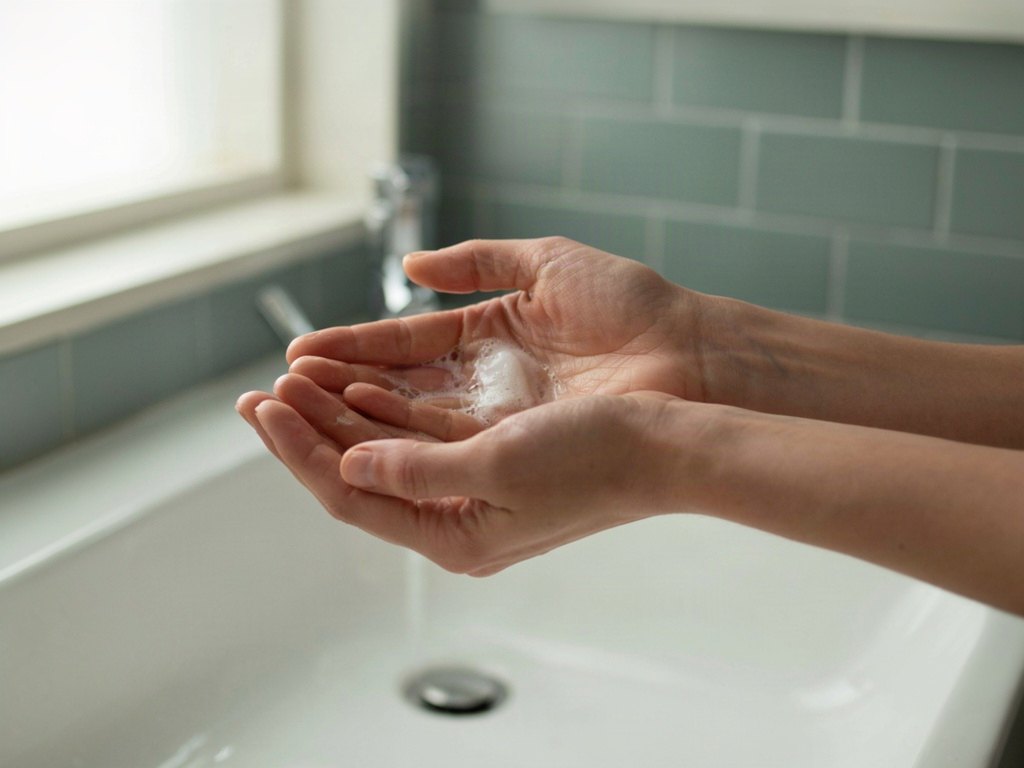
Which actives work in an acne cleanser, and at what strength?
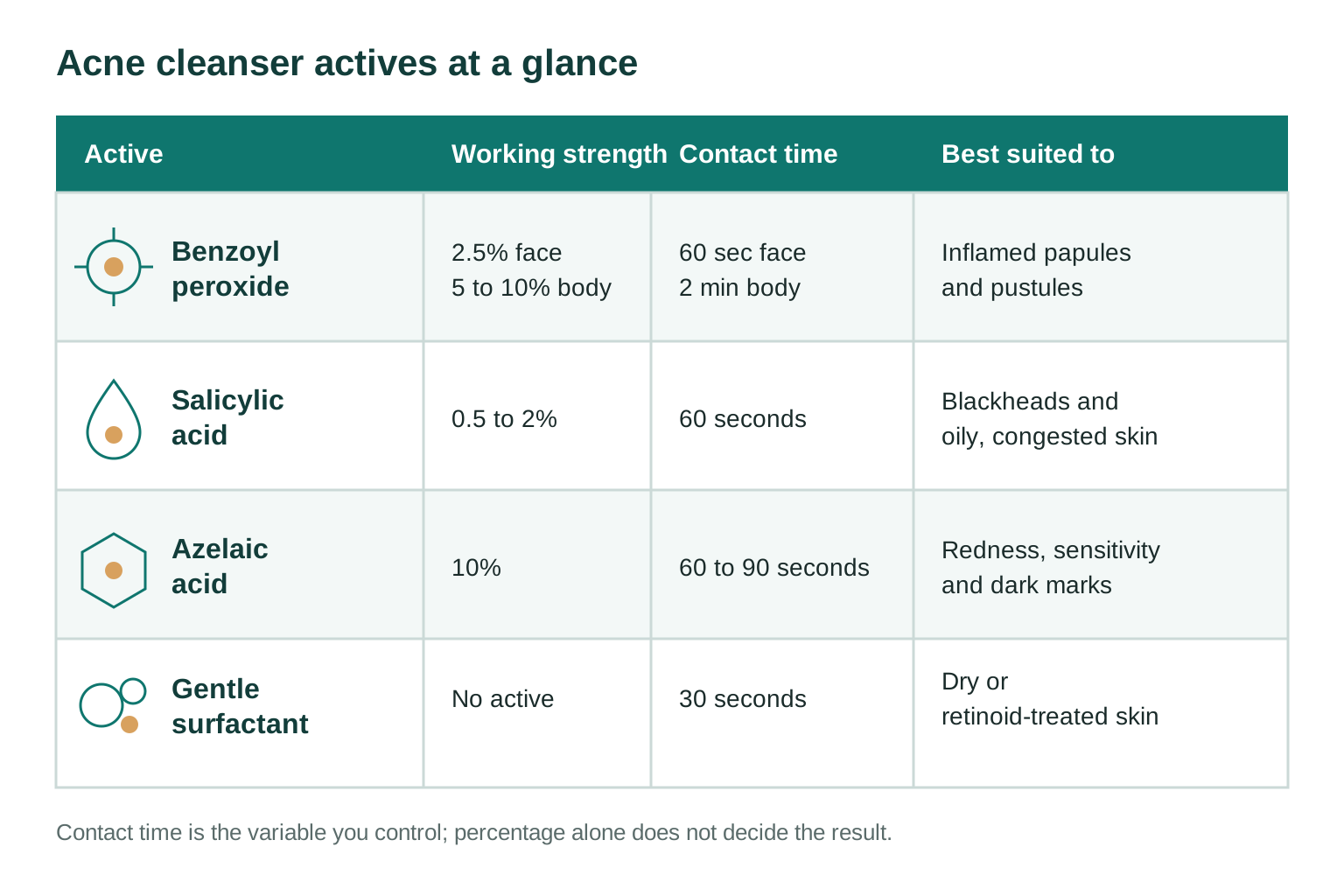
Benzoyl peroxide at 2.5 percent and salicylic acid at 0.5 to 2 percent do most of the work in a rinse-off cleanser, and higher percentages mostly buy irritation. Four options are worth knowing, and they are not interchangeable.
Benzoyl peroxide, 2.5 to 10 percent. Controlled trials have found 2.5 percent as effective as 10 percent against inflamed lesions, with markedly less dryness and stinging. Reserve 5 to 10 percent for the back and chest, where skin is thicker and a shower rinse is quick. Expect it to bleach white towels and dark shirts within a few washes.
Salicylic acid, 0.5 to 2 percent. A beta hydroxy acid that is oil-soluble, so it travels into the pore rather than sitting on top of it. This is the active for blackheads, closed comedones and rough texture, and the one to choose if your breakouts are congestion rather than angry red papules.
Azelaic acid and plain gentle surfactants. When both of the above sting, a 10 percent azelaic acid wash calms redness and fades post-inflammatory marks more slowly but far more comfortably. A fragrance-free, sulfate-free cleanser with no active at all is a legitimate choice when the strength lives in your leave-on treatment instead.
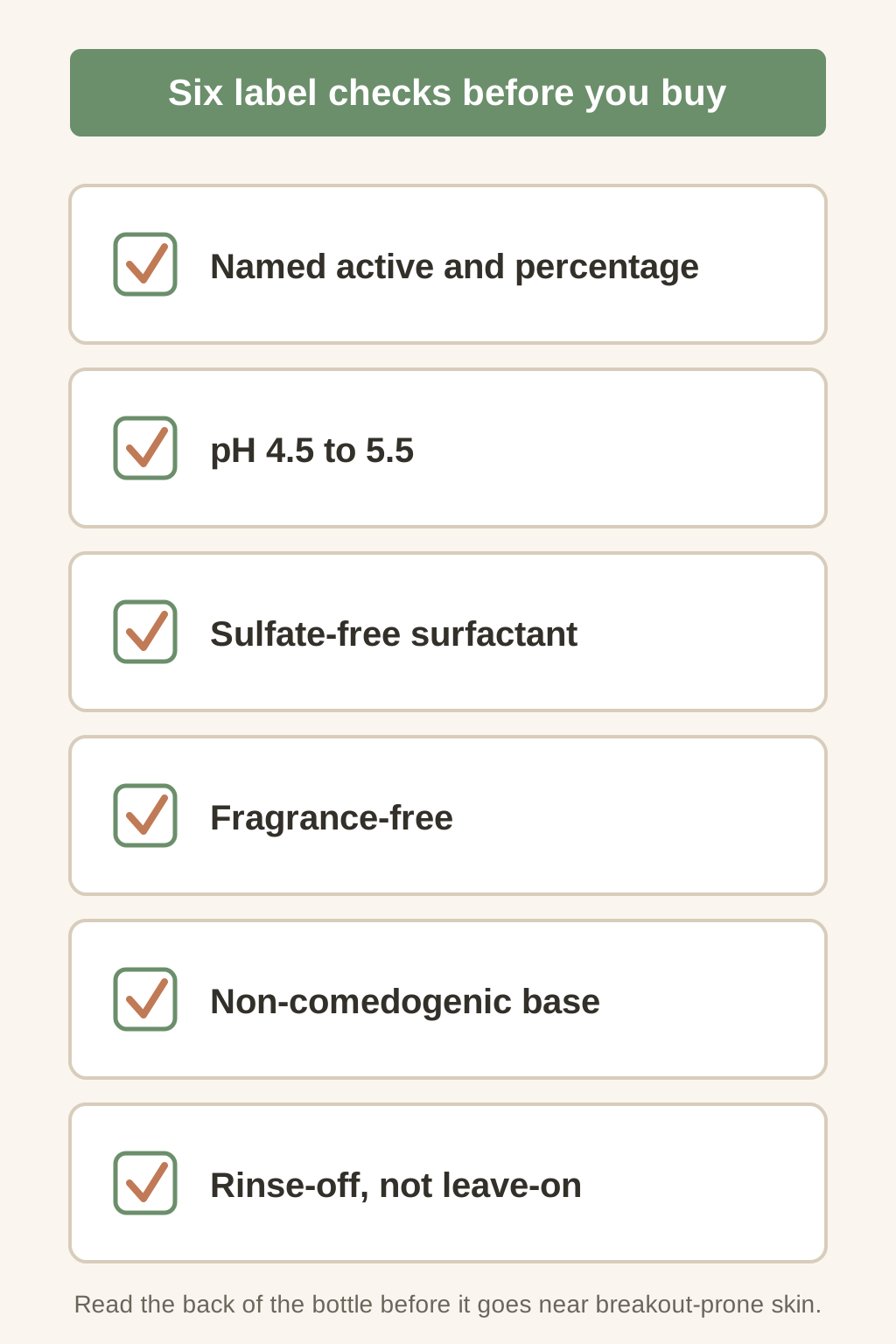
Percentage is the number on the front; contact time is the number that changes outcomes, and laboratory work on surfactant damage to the stratum corneum shows how quickly a harsh base undoes what an active gains — see research on how cleansers affect the skin barrier for the mechanism. If salicylic acid looks like your active, the salicylic acid cleanser checks worth making before you buy cover pH, base and strength in order.
| Active | Working strength | Contact time | Best suited to |
|---|---|---|---|
| Benzoyl peroxide | 2.5% face, 5–10% body | 60 seconds face, 2 minutes body | Inflamed papules and pustules |
| Salicylic acid | 0.5–2% | 60 seconds | Blackheads, congestion, oily skin |
| Azelaic acid | 10% | 60–90 seconds | Redness, sensitivity, dark marks |
| Gentle surfactant, no active | None | 30 seconds | Dry or retinoid-treated skin |
A one-page sheet per active — what it does, when to use it, what not to layer it with — is worth keeping in the bathroom cabinet.
How do you match an acne face wash to your skin type?
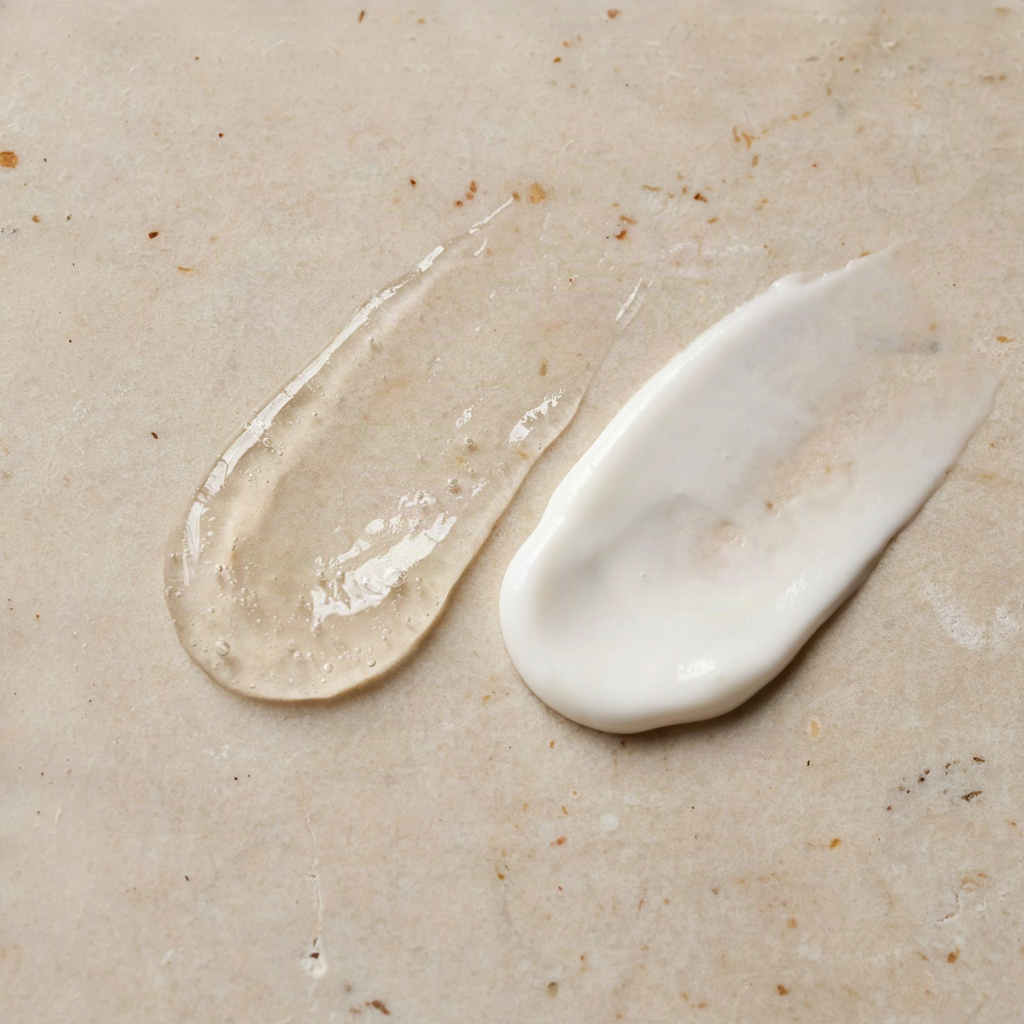
Match texture to oil level: gel and foaming washes suit oily breakout-prone skin, cream and milky washes suit dry or retinoid-treated skin, and fragrance-free bases suit reactive skin. The active is the second decision, not the first.
If foam is the texture you reach for, it helps to know which skin types suit a foaming cleanser before you build a routine around one.
A face wash for oily acne prone skin should rinse without a residue you can feel. Gel and low-foam formulas built on amino-acid surfactants clear sebum at pH 5.0 to 5.5 without the squeaky finish that signals a stripped barrier. The tradeoff is real: they feel less dramatic than a high-foam sulfate wash, and people who equate tightness with cleanliness often give up on them in week one. Oily skin has its own rules, and best face wash for oily skin goes further on sebum control than an acne guide can.
Skin that breaks out and flakes at the same time — usually skin on adapalene, tretinoin or a strong acid — does better with a cream or milky base and no active in the cleanser at all. Sensitive skin adds two more filters: no added fragrance and no denatured alcohol, both common triggers of stinging that gets mistaken for the acid working. Dermatology guidance on oil control is worth reading alongside this, and dermatology guidance on managing oily skin sets out what actually reduces shine.
Combination skin can split the difference: a gel with salicylic acid at night when makeup and sunscreen need removing, and a plain cream cleanser in the morning when there is nothing to remove but sweat.
Not sure which camp you are in? Six questions, two minutes, and you get your skin type, a sensitivity flag and your top concern.
The best acne face wash picks, by skin type and concern
Four picks cover the common cases: oily skin, chest and back breakouts, dry breakout-prone skin and sensitive skin, each chosen for a different concern rather than as one overall winner. What separates the best acne cleansers from a plain foaming wash is a named active at a stated percentage, a barrier-friendly pH and a surfactant system that does not strip — and the best cleanser for acne is rarely the strongest one on the shelf.
Some links below are affiliate links; if you buy through them we may earn a commission, at no extra cost to you.
If reactivity is your main constraint rather than oil, a gentle cleanser for sensitive skin is the safer starting point than any medicated wash.
Four steps narrow the shelf to three cleansers that fit your skin type, concern and budget.
How should you wash so the acne face wash actually works?
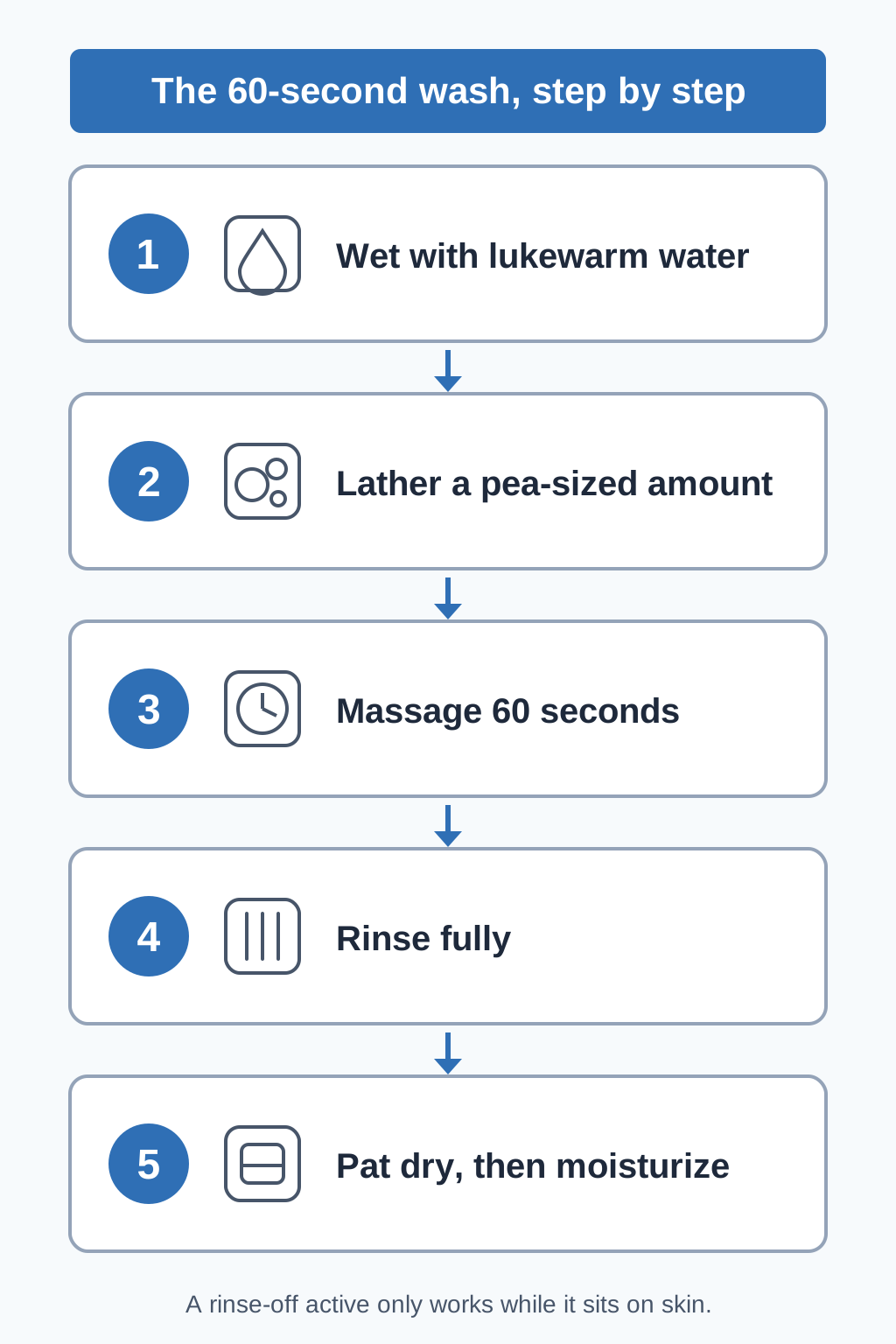
Wash twice a day with lukewarm water, massage a pea-sized amount for about 60 seconds, rinse fully, then pat dry and moisturize within three minutes. Hot water strips lipids and triggers rebound oil within hours; a pea-sized dose covers the whole face, and doubling it puts no extra active on skin.
Twice a day is the ceiling for most people, plus a plain rinse after heavy sweating. A third or fourth wash raises transepidermal water loss, and the barrier responds by producing more sebum — the opposite of the goal. Work a gentle cleanser into damp skin with your fingertips only; brushes and cloths add friction that inflamed skin does not need.
What follows the rinse matters as much as the wash. Apply an oil-free moisturizer while skin is still damp, then your treatment at night or a broad-spectrum sunscreen in the morning. Non-comedogenic hydration is not optional on an active regimen, and moisturizer for acne prone skin sets out which textures stay out of pores. Readers who want an extra step between the two will find the toner for oily skin label checks decide whether one is worth adding at all.
Two housekeeping details save frustration: keep white towels for benzoyl peroxide, since it bleaches fabric permanently, and change pillowcases twice a week. Dermatology bodies publish practical washing advice worth checking against your own routine, and dermatologist skin care tips for acne-prone skin covers the basics in one page.
What should you avoid in a face cleanser for breakouts?
Skip gritty scrubs, high-foam sulfate bases, denatured alcohol and added fragrance, and never stack a strong exfoliating wash with a leave-on acid on the same night. Each of these damages the barrier faster than the active repairs the pore.
Crushed shell and stone fragments have irregular edges that tear the roof off an inflamed pustule, spreading bacteria and leaving a mark that outlasts the spot by months. Spinning brushes do the same with more force and more surface area. A face cleanser for breakouts should feel like nothing; abrasion is not the mechanism.
Sodium lauryl sulfate produces the dense foam people associate with clean skin and raises skin pH toward 9, which takes hours to recover. Denatured alcohol gives a fast matte finish and dehydrates the barrier behind it. Added fragrance is a leading cause of contact reactions in acne-prone skin, and the stinging is regularly mistaken for the acid working.
Layering is the third trap. An acne cleanser with 2 percent salicylic acid plus a leave-on glycolic serum is double exfoliation, and the result is usually a shiny, tight, peeling face by day four — the safe frequencies are set out in how to exfoliate skin safely, and dermatologists publish the same limits in safe at-home exfoliation guidance from dermatologists. When skin needs oil control without more acid, the niacinamide serum strengths worth paying for are the gentler route. Coconut-oil-heavy balms and occlusive mineral-oil bases round out the list to skip on faces that clog easily.
How long does an acne wash take to clear breakouts?
Give an acne wash 6 to 12 weeks before judging it, because a full skin cell turnover cycle plus one or two breakout cycles has to pass before any change is real. A microcomedone forms roughly eight weeks before it surfaces as a visible spot, so the pimple you see today was set in motion long before the bottle arrived.
Weeks one to three are the noisy phase. A genuine purge shows up as small papules in the areas you already break out, and it settles by week six. Irritation looks different: stinging within a minute of washing, tightness that lasts, flaking around the nose and chin, and new spots in places that were previously clear. Purging means keep going at a reduced frequency; irritation means stop the active and rebuild the barrier for a fortnight.
Measure instead of guessing. Take a photo in the same spot at the same time of day under the same light once a week, and count inflamed lesions rather than judging by feel. Change one product at a time, and hold every other step steady — swapping three things at once makes the result unreadable. Locking the rest of the order first helps, and building a daily skin care routine is the baseline worth fixing before you start counting.
When is an acne face wash not enough?
A wash is not enough for cystic, nodular or scarring acne, or when twelve consistent weeks change nothing; those cases need prescription retinoids or oral treatment from a dermatologist. Deep, painful lumps that last weeks sit far below anything a 60-second cleanser can touch.
Three signals should send you to a clinic rather than another shelf: nodules or cysts, any acne that is already leaving pitted scars or persistent dark marks, and a regimen you have followed twice daily for twelve weeks with no measurable drop in lesion count. Scarring is the one that rewards speed — the earlier the treatment, the less permanent texture is left behind.
A dermatologist can add prescription-strength topical retinoids, oral antibiotics for a defined course, hormonal treatment, or isotretinoin for severe disease, plus in-office extraction and intralesional injections for a single stubborn lesion. The background on lesion types and what each responds to is set out in the clinical picture of acne and its treatment options. The wash stays in the routine either way; the best cleanser for acne supports a medical plan rather than replacing one.
If one practical routine tip a week is useful to you, the list below is where it lands.
One skincare routine tip a week. No product dumps.
Thanks — you're on the list.


