

What a Top Anti Aging Cream Can and Cannot Do
A top anti aging cream works on the outermost 0.1 mm of your skin. That is enough to hold water in the stratum corneum within a day or two, enough to smooth surface texture over four to eight weeks, and not nearly enough to lift a fold that has been creased by twenty years of the same smile.
Set the timeline before you set the budget. Hydration shows up almost immediately, which is why a cream feels like it worked the first night. Fine lines respond at four to eight weeks. Deep nasolabial folds and forehead bands respond barely at all, because they are driven by muscle movement and fat-pad loss, not by dryness.
Almost all wrinkle creams are sold as cosmetics rather than drugs. That legal category is the reason an anti age claim on a jar is allowed to say "reduces the appearance of lines" but not "regenerates collagen": appearance claims are cosmetic and reversible, and the effect fades within weeks of stopping. Wording that promises to change the structure of skin is a drug-level claim, and it belongs on a prescription tube.

Why Skin Wrinkles: Collagen Loss, Sun Damage and Repeated Movement
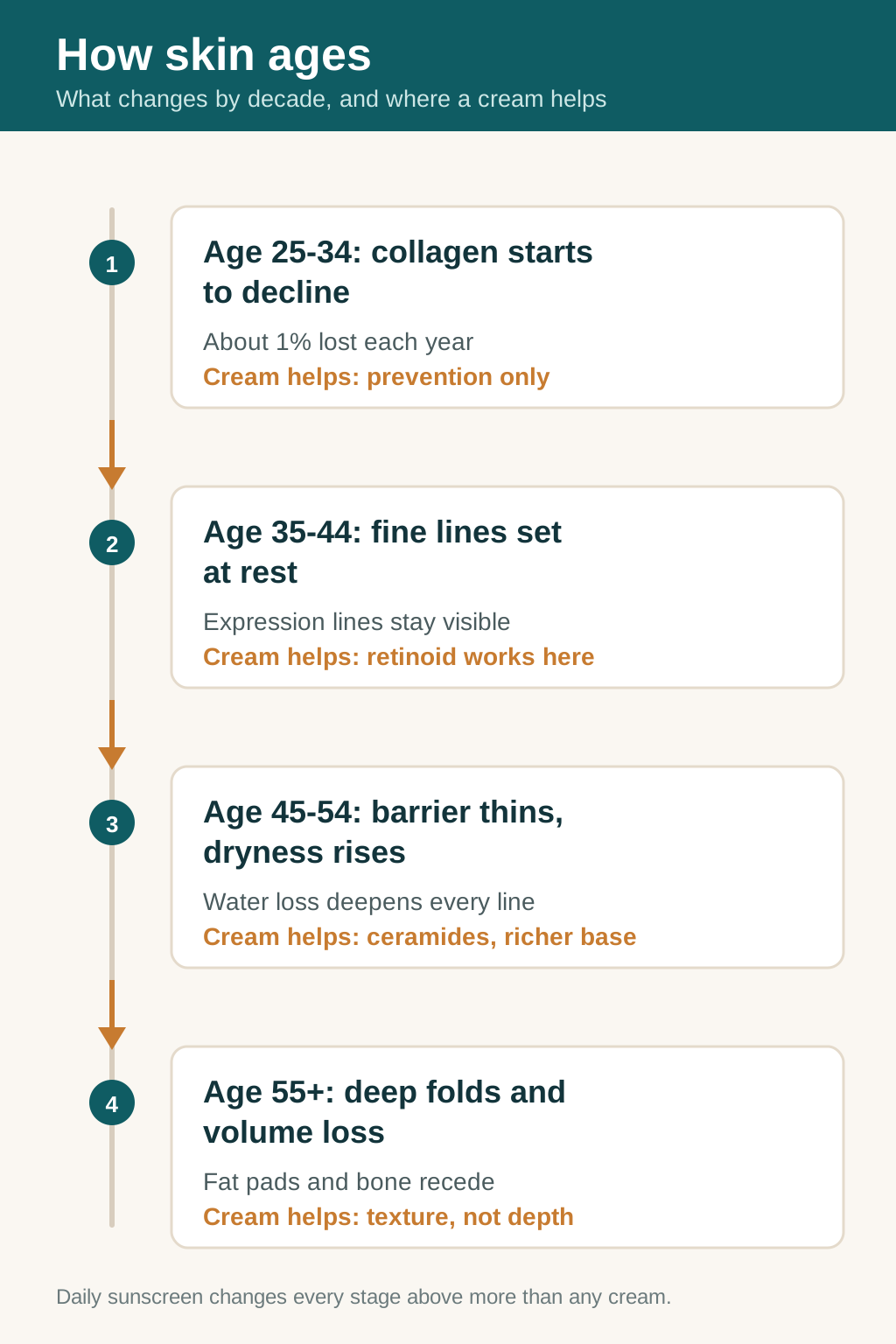
Three forces produce every line on your face, and a wrinkles anti aging routine influences all three by very different amounts.
- Intrinsic collagen decline. Dermal collagen falls by roughly one percent per year from the mid-twenties. Nothing in a jar stops the clock; a retinoid can raise procollagen production enough to partly offset it.
- Photoaging. Ultraviolet exposure degrades elastin and accelerates collagen breakdown. This is the largest modifiable share of visible facial aging, and it is the one sunscreen controls directly.
- Repeated movement. Every squint and frown folds the same dermal fibres. After enough repetitions the fold sets at rest. Topicals soften how it catches light; they do not unfold it.
So if you are asking how do i stop wrinkles, the honest ranking is not a ranking of products at all. Daily sun protection first, a retinoid second, and everything else — vitamin C, peptides, ceramides, facial massage — competing for a distant third.
What helps with wrinkles at the tissue level splits cleanly into two mechanisms. Retinoids signal fibroblasts to build new collagen, a slow structural change measured in months. Humectants such as glycerin and hyaluronic acid pull water into the outer layer and plump lines temporarily, a change measured in hours. Both are useful. Only one of them is cumulative.
That split is also how you should split your money. Prevention is cheap and works on skin you still have; correction is expensive and works partially. A sensible skincare for anti ageing budget puts most of it into the sunscreen you will use every morning for the next decade.
For a broader clinical view of how aging skin changes and what care it needs, see Harvard Health guidance on caring for aging skin.
The Ingredients That Actually Soften Wrinkles
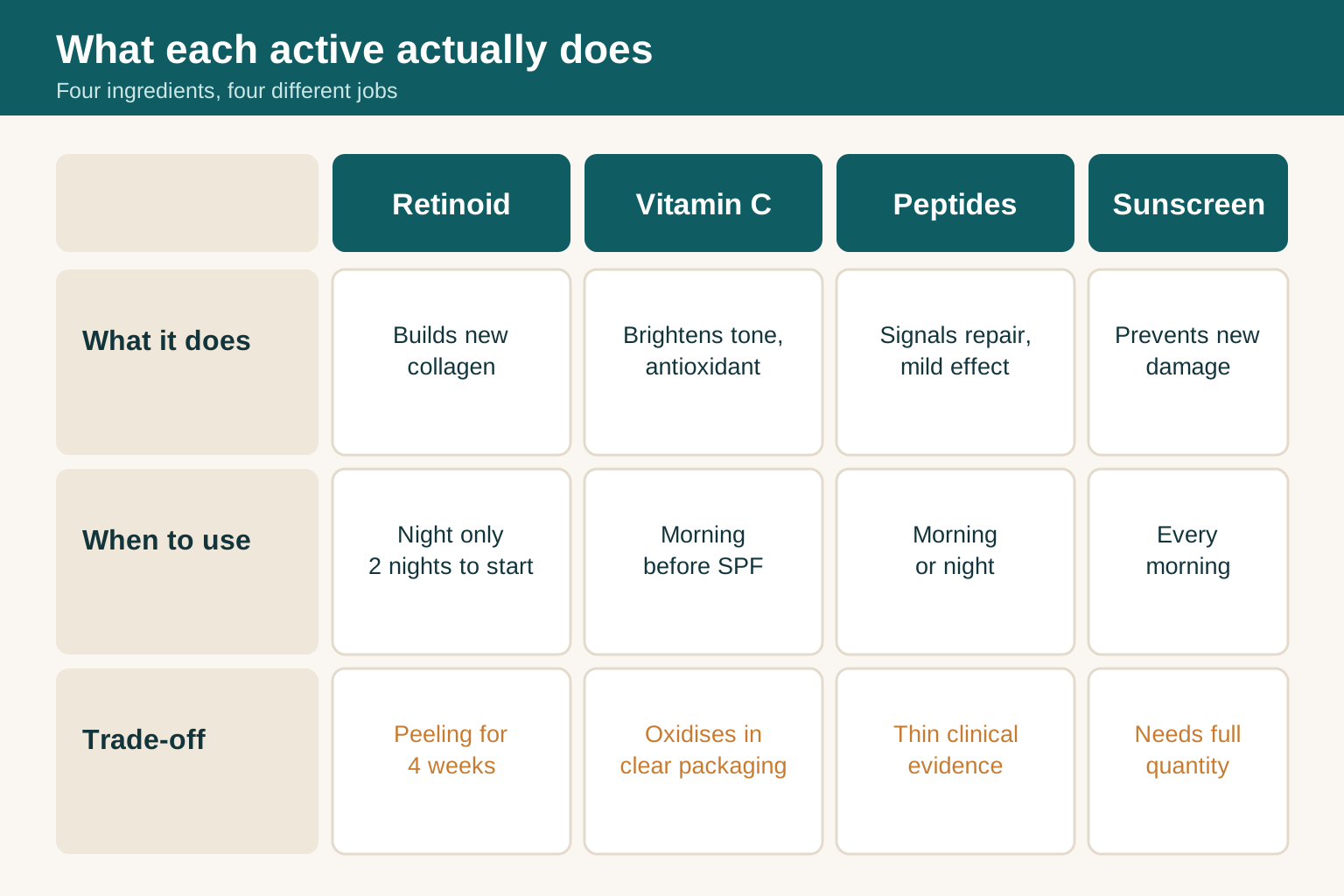
Judge a formula by its active and its concentration, not by its price. Six ingredients carry most of the evidence behind the best anti aging products, and they are not equally strong.
- Retinoids — the only widely available topical class with repeated controlled trials behind wrinkle improvement. Over-the-counter retinol at 0.1 to 1 percent, or retinaldehyde, takes twelve weeks; prescription tretinoin works faster and irritates more.
- Sunscreen — the best-evidenced anti-wrinkle product you can buy, and the only one that prevents new damage rather than treating old damage.
- Vitamin C — 10 to 20 percent L-ascorbic acid at low pH, in opaque air-restricted packaging. It brightens reliably and supports collagen synthesis modestly.
- Peptides — gentle, low-irritation, and far more modest than the marketing implies. Reasonable for people who cannot tolerate retinoids.
- Niacinamide — 4 to 5 percent improves barrier function, redness and pigment. It layers with almost anything.
- Ceramides and glycerin — no collagen effect, but they hold water and stop the flaking that makes lines look deeper.
Most products for wrinkles pair exactly one active with a hydrating base, and that restraint is deliberate. Stacking retinol, an acid and vitamin C on the same night reliably produces peeling, and peeling skin scatters light unevenly, which makes wrinkles more visible, not less. Anti aging and anti wrinkle are marketing labels rather than regulated categories, so the ingredient list on the back is the only check worth making.
A moisturizer for fine lines does a different job from a treatment. It fills and hydrates so lines catch less shadow by mid-morning; the effect is real, immediate and entirely temporary. A best deep wrinkle cream, honestly described, improves surface texture and light reflection — it does not shallow out an etched fold.
If you are starting the treatment step from scratch, our retinol serum guide for beginners covers strengths, buffering and the first eight weeks.
Some links below are affiliate links, and we may earn a commission if you buy through them. It does not change what we recommend.
How to Choose an Anti Aging Cream for Your Skin Type
Texture is the first filter, because a cream you dislike is a cream you stop using in week three. Oily and combination skin does better with a gel-cream that absorbs in under a minute and sits flat under sunscreen. Dry skin needs a balm-textured cream with occlusives that slow overnight water loss; a light lotion for wrinkles will feel pleasant and be gone by 2 a.m.
An anti aging cream for sensitive skin is defined by what it leaves out: no added fragrance, no essential oils, no denatured alcohol high in the list, and no high-strength acids sharing the jar with the active. Expect slower results as the price of fewer flare-ups.
Skin care for mature skin needs one further adjustment. A thinner barrier tolerates less contact time, so short-contact retinoid use and a heavier occlusive layer on top usually beat a stronger product used bare.
Three checks answer the wrinkle face cream best question faster than any review:
- Which active, at what strength, and how far up the ingredient list does it sit?
- Does the texture match your skin type and your climate?
- Is the packaging opaque and air-restricted? Retinol and vitamin C degrade in a clear jar.
A face moisturizer wrinkles claim is enough on its own if your only complaint is dryness and light crepiness. If lines are visible at rest, you need a separate treatment step, and the cream becomes the layer that seals it in.
The best face care for aging skin is the short routine you actually finish at 11 p.m. — three steps done nightly beat eight steps done twice a week.
For a deeper comparison of formulas by skin type, read our guide to the best face cream for aging skin.
Dermatology bodies publish their own selection checklist; see dermatologist criteria for selecting anti-aging products.

Not sure which of these describes you? Six questions, two minutes, and you get your skin type plus the one concern to treat first.
Top Anti Aging Cream: 5 Picks That Actually Work
Five picks, five different readers. A top rated face cream for wrinkles for dry skin is the wrong buy for someone whose T-zone shines by noon, so match the angle before you compare labels. Every pick is judged against the top facial creams for wrinkles criteria above: active, texture, packaging. Some links below are affiliate links and we may earn a commission.
-
Retinol night cream for deep wrinkles
The evening workhorse. Retinol is the only over-the-counter active with repeated trial data on wrinkle depth, and a cream base buffers it better than a serum for first-time users. Treat it as the top anti wrinkle night cream in your routine and give it twelve weeks. Not for anyone pregnant, breastfeeding, or already using a prescription retinoid. Cost: two to four weeks of dryness while your skin adjusts.
-
Fragrance-free cream for sensitive skin
Built around what it omits: no fragrance, no essential oils, no denatured alcohol near the top of the list. The active is kept mild — a peptide blend or 4 percent niacinamide rather than retinol — so the barrier stays intact. Not for someone chasing fast change; this is the slow, uneventful option. Cost: visible improvement takes closer to sixteen weeks.
-
Ceramide cream for dry mature skin
A balm-textured occlusive with ceramides, cholesterol and fatty acids. It does not build collagen; it stops the transepidermal water loss that makes every existing line read deeper by morning. Apply to slightly damp skin so it seals water in rather than sitting on dry keratin. Not for oily skin — it will feel heavy and can trigger congestion along the jaw.
-
Lightweight cream for oily aging skin
Oily skin ages too, and it is routinely under-moisturised because heavy creams feel intolerable. A niacinamide gel-cream hydrates, calms redness and absorbs fast enough to sit under sunscreen by 7:30 a.m. Not for anyone with genuinely dry skin, who will need to layer something occlusive on top of it at night.
-
Budget cream for early fine lines
For skin in its late twenties and thirties, where the job is prevention rather than repair. A simple glycerin-and-emollient cream used generously every night beats a luxury jar used sparingly twice a week, because compliance is the variable that actually moves results. Not for anyone with set creases — no amount of hydration reaches them. Cost: it will not do anything dramatic, and it is not supposed to.
How to Layer Your Routine Morning and Night
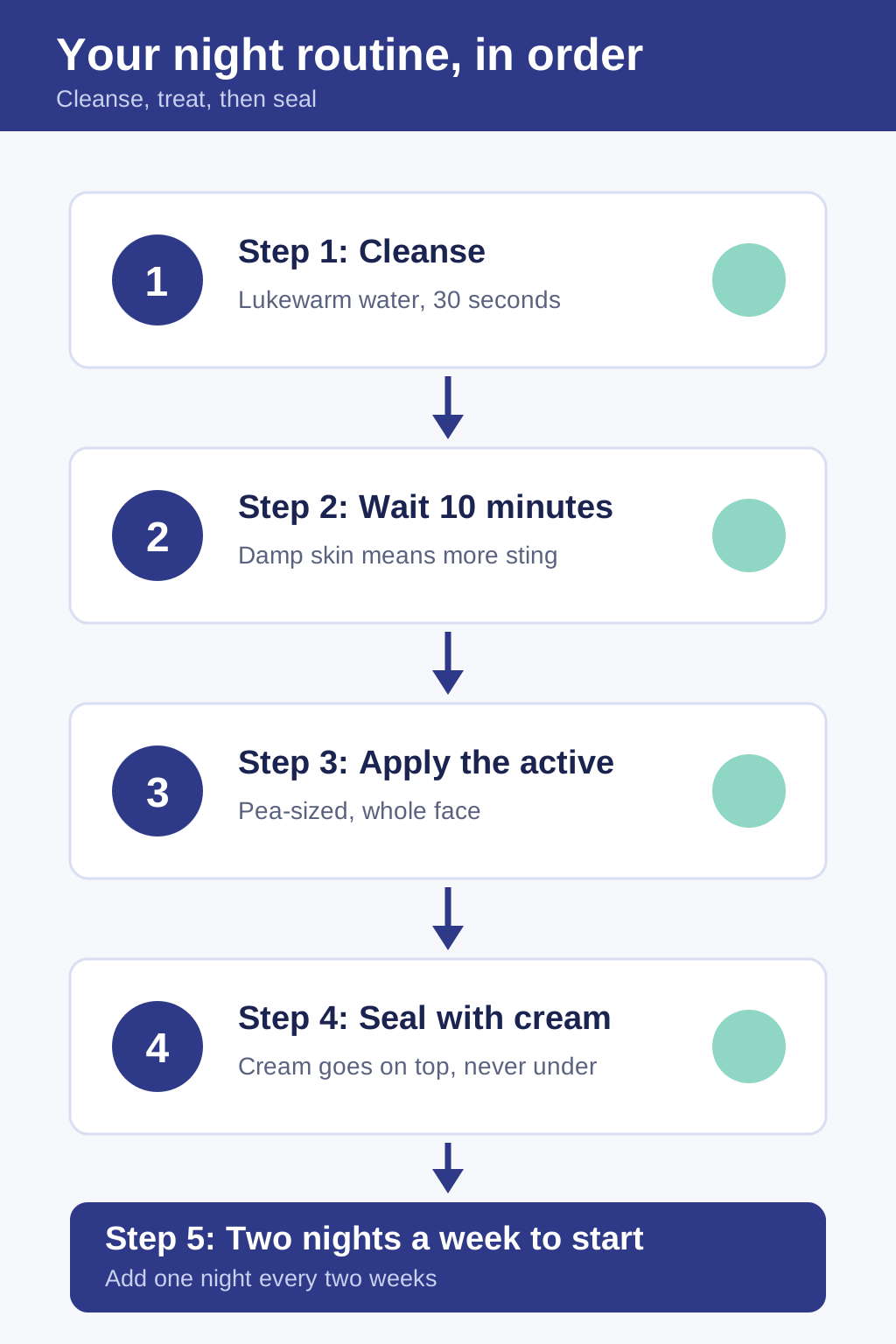
The evening order is cleanse, treat, then seal. A face cream for wrinkles goes on after the active, never before it — a heavy cream underneath blocks the retinoid from reaching the skin it is supposed to signal.
Wait about ten minutes after cleansing so skin is properly dry. Retinoids applied to damp skin penetrate faster and irritate more. Start two nights a week and add a night every fortnight; the peeling phase is when most people quit, and buffering — cream first on the sensitive zones around the nose and eyes, active on top — removes most of it.
Mornings are simpler: hydrate, then sunscreen. If you use vitamin C, it goes on before both.
When a label reads anti wrinkle and firming, treat it as a claim to verify rather than a description. Turn the jar over: if the actives sit below the fragrance, you are buying texture and scent.
The full step order, including toners and exfoliants, is in our guide on how to build a skin care routine step by step.
The orbital area is thinner and moves more, so it often needs its own product; see our guide to eye cream for creases and crow's feet.
Already own two or three actives and unsure what can share a night? This checker returns a safe, caution or avoid verdict for each pair, plus an AM or PM slot for every one.
How to Prevent Wrinkled Skin Before It Starts
Four habits carry almost all the preventive evidence, and only one of them involves a cream you rub in at night.
- Daily broad-spectrum sunscreen. The single highest-return step in any lineup of skin care products for aging skin, and the only one shown to slow visible photoaging in controlled trials.
- Not smoking. Tobacco constricts dermal capillaries and degrades collagen; the perioral lines it causes are unmistakable.
- Sleeping on your back. Side sleeping presses the same cheek into a pillow for roughly 2,500 hours a year, and those compression lines eventually set.
- Consistent moisturization. Not a collagen effect, but well-hydrated skin scatters light more evenly, so existing lines read shallower.
Quantity is where sunscreen usually fails. A pea-sized dot delivers a fraction of the labelled SPF; the face and neck need roughly a quarter-teaspoon, reapplied when you are outdoors for hours. Use a broad-spectrum sunscreen every morning, including in winter and behind glass, because UVA passes through window panes.
The best products for aging skin belong to a week of ordinary habits, not to one dramatic routine. Three consistent steps every night for a year outperform a ten-product overhaul abandoned in March.
What wrinkle products face routines need also differs from body care. Facial skin is thinner, has more sebaceous glands, and moves hundreds of times a day, so it tolerates lighter textures and needs actives that body lotion never carries.
If you are still picking a formula, start with choosing sunscreen with SPF that actually protects.
For the underlying mechanism, read how sun exposure drives photoaging and premature lines.

What Results to Expect and When to See a Dermatologist
Photograph your face in the same light on day one. Memory is a poor instrument for change this gradual.
- Week 1: hydration and a softer surface. This is water, not collagen.
- Week 4: smoother texture, more even tone, and the end of any adjustment peeling.
- Week 12: the first honest read on fine lines. If nothing has moved by now, the formula is wrong for you.
A moisturizer for wrinkles cannot fix volume loss, sagging along the jaw, or a fold that stays visible when your face is completely still. Book a dermatologist when a line deepens quickly, when a pigmented spot changes shape or colour, or when a product has irritated your skin for more than two weeks.
In-office options run on a different scale. Prescription tretinoin costs nothing in downtime but four to six weeks of adjustment. Fractional lasers buy real remodelling for three to seven days of visible redness. Neuromodulators soften movement lines for three to four months per session.
Stop rules matter as much as start rules: persistent stinging, new small bumps, or a rash means pause the active, drop back to cleanser and moisturizer for two weeks, then reintroduce one product at a time.
If laxity rather than lines is your main concern, read our guide to skin tightening cream that firms sagging skin.
One short email a week, one evidence-backed change to try, and no lists of products you did not ask about.
One evidence-backed wrinkle tip a week. No product dumps.
Thanks — you're on the list.

