

What a Skin Care Routine Actually Does for Your Skin
A skin care routine is four jobs performed in a fixed order: clean the surface, treat one specific concern, hydrate what you just cleaned, and protect it from ultraviolet light. Every product you own belongs to one of those four jobs. If a product does not obviously answer one of them, it is a preference, not a step.
The order matters because each job changes the surface for the next one. Cleansing strips the film that would block a serum. A serum delivers an active into skin that is briefly more permeable. A moisturizer traps the water still sitting on the surface. Sunscreen sits on top because its job is a physical and chemical filter, not absorption.
Expect slow feedback. The epidermis renews itself in roughly 28 days in your twenties and closer to 45 days past 50, so a skin beauty routine should be judged on 8 to 12 weeks of consistent use, not three mornings. Pigment and fine lines move on that clock; irritation and hydration move within days.
Three products used every single day outperform ten used at random, because a compromised barrier responds to steady lipid and water replacement rather than to ingredient variety. If you want the mechanism behind that, dermatology references on what a damaged skin barrier actually needs explain how occlusives and humectants slow water loss through the stratum corneum.
Be clear about the ceiling. A routine will not resurface an atrophic acne scar, will not shrink a pore's structural diameter, and will not replace a prescription for rosacea, cystic acne or eczema. It reduces water loss, softens texture, evens tone gradually, and prevents a large share of photoaging. That is a real return, and it is also the whole return.
How to Build a Skincare Routine: Start With Your Skin Type
Before you buy anything, run the one-hour bare-face test. Wash with a plain non-foaming cleanser, apply nothing at all, and read your face at the 60-minute mark. Tight and slightly rough means dry. Shine across the forehead, nose and chin means oily. Shine only in that T-zone with tight cheeks means combination. Stinging, flushing or blotchy warmth means the sensitive flag, which can sit on top of any of the other three.
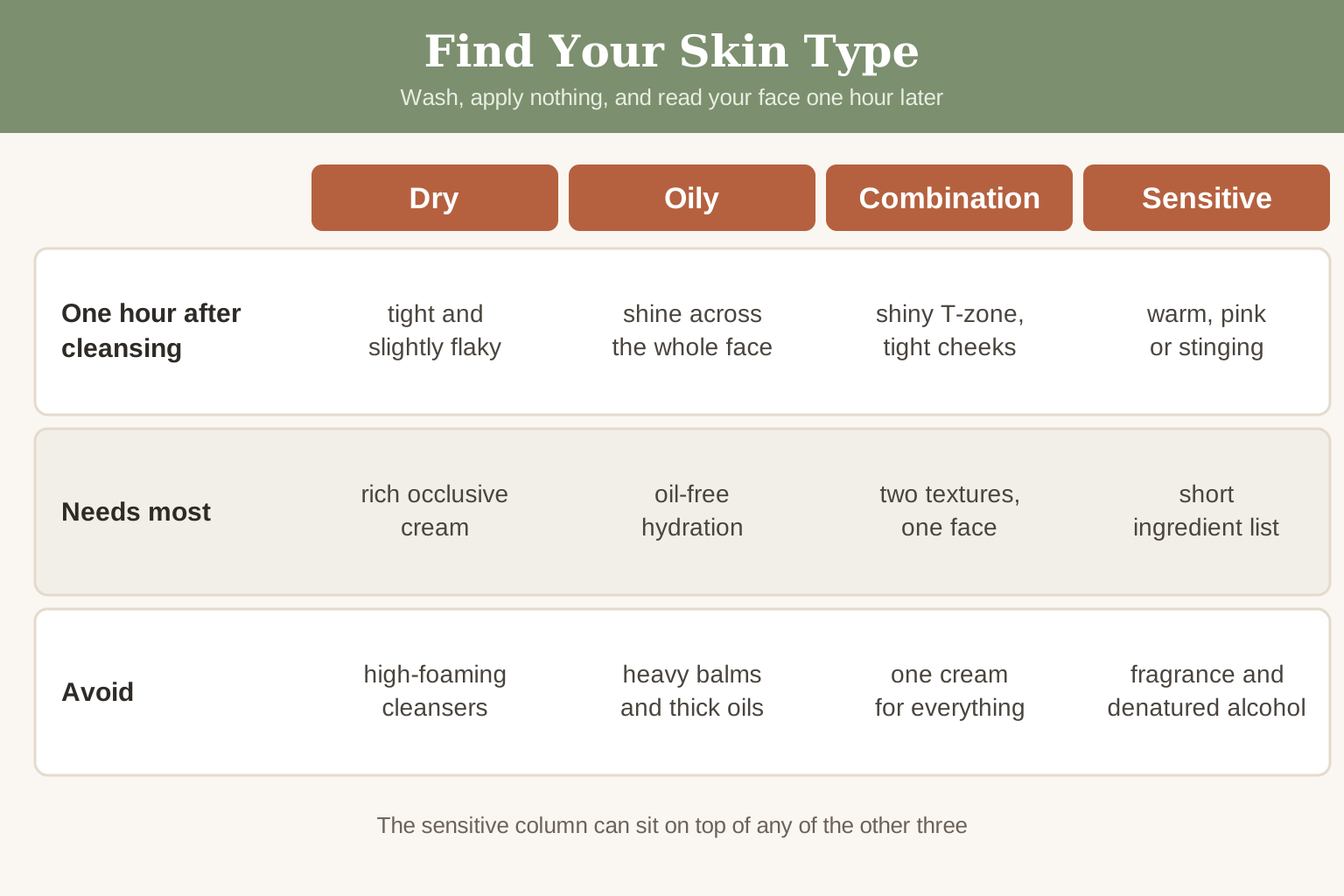
How to create a skincare routine around your type, not a trend
Knowing how to create a skincare routine around a type rather than a trend is the whole trick to building one that survives contact with real life. Type decides texture and cleanser strength; concern decides the one active you add. A shopping list assembled from a video you liked decides nothing, which is why it usually ends in a drawer of half-used bottles.
How to start a skincare routine from zero
Start with three products: a cleanser matched to your type, a moisturizer, and a broad-spectrum sunscreen. Live with that for two weeks. Then add one new product every two weeks, never two at once, so that a reaction has exactly one possible cause. This is slower than it sounds and it is the only way to trace irritation without discarding the entire shelf.
How to choose the right skincare routine as your skin changes
Your skin will change, so how to choose the right skincare routine is a seasonal question, not a permanent one. Cold, dry indoor air raises water loss; a gel moisturizer that works in July often stops being enough in January. Hormonal shifts, a move to a different climate, and a new medication all justify a re-test.
Knowing how to find the right skincare routine does not require testing everything at once. Patch test actives only, on the jawline, for three consecutive nights before you take them near the eyes. Basics such as cleanser and moisturizer can go straight onto the face. How to create a skin care routine you keep comes down to affording the repeat: something you can use daily beats something you will ration, because the dose that works is the one you actually apply.
Not sure which column describes you? Six questions, two minutes, and you get your skin type plus your top concern.
Once you know the type, the cleanser is the first purchase to get right, and our guide on how to choose the best face wash for your skin type covers the surfactant differences in detail.
Skin Care Routine Steps: The Order That Actually Matters
The five skin care routine steps run in this sequence: cleanse, treat, moisturize, protect, and exfoliate on a weekly cadence rather than a daily one. Four of those happen every day. The fifth is deliberately rationed.
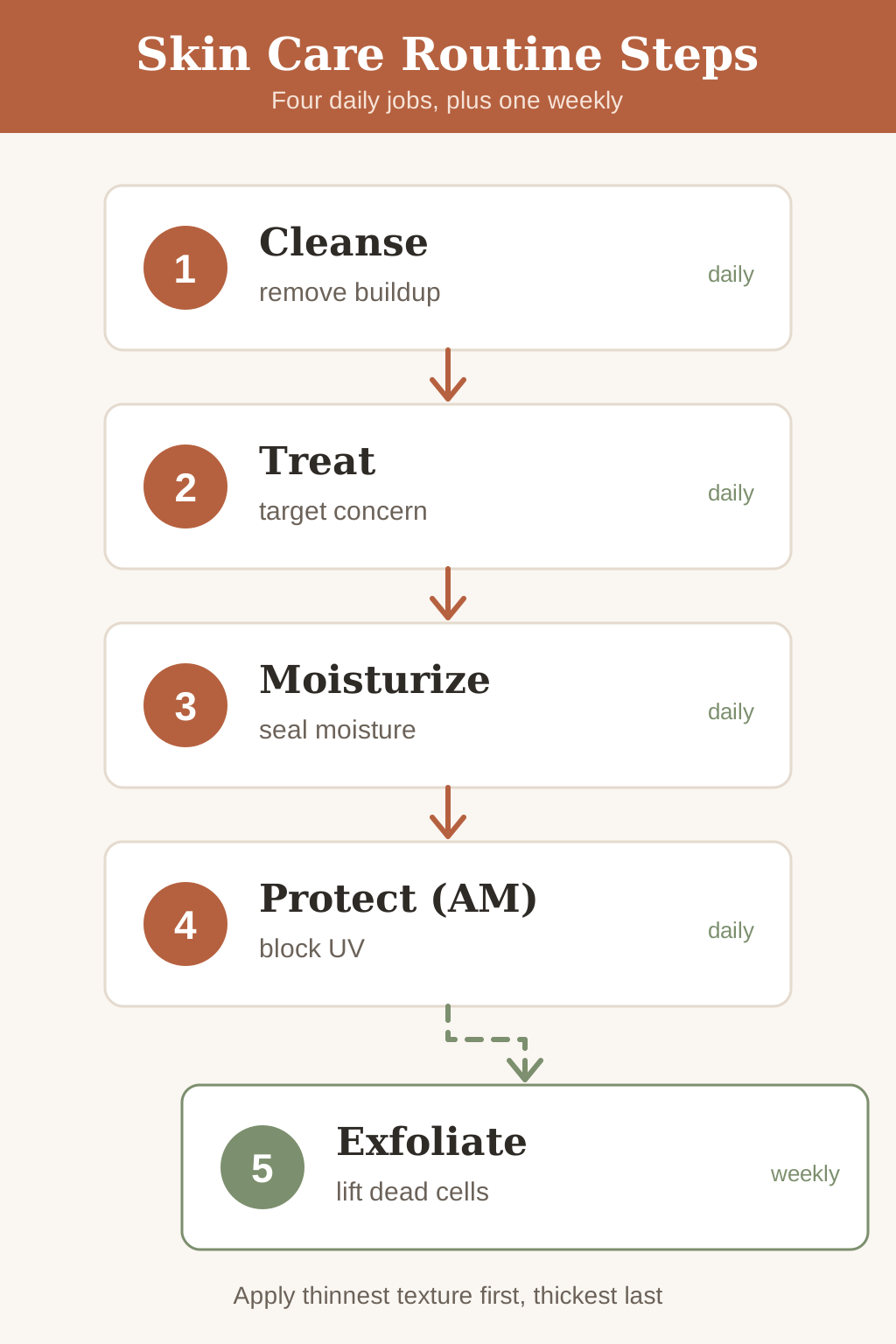
Thin to thick, every time
Apply products from the lowest viscosity to the highest. A water-based serum cannot push through a layer of petrolatum or dimethicone, so a cream applied first turns the serum behind it into an expensive top coat. The practical order is: watery essence or toner, serum, lotion or cream, then oil or sunscreen last.
Cleanser chemistry matters more than most people assume here. Research on research on cleanser pH and skin irritation found that surfactant systems can increase dryness and irritation regardless of the marketing claim on the front of the bottle, which is why a cleanser that leaves your face squeaky is working against the four steps that follow it.
The skin treatment steps people invert most often
Three inversions cost real results. Sunscreen applied before moisturizer leaves a patchy film and an unpredictable SPF. A retinoid applied to damp skin after cleansing increases penetration and, with it, peeling. Vitamin C layered after a rich cream barely reaches the skin at all. Each error costs absorption, irritation tolerance, or both.
Face routine steps that are genuinely optional
- Toner — useful if your skin feels tight between cleansing and moisturizer, otherwise skippable.
- Essence — a hydrating layer, not a treatment; it duplicates a good humectant serum.
- Face oil — an occlusive finisher for dry skin, a pore-clogging risk for oily skin.
- Sheet mask — a 15-minute hydration boost with no lasting effect past about 24 hours.
Hydrating layers are where timing quietly decides the outcome, and our breakdown of when to use hyaluronic acid serum explains why a humectant on bone-dry skin in low humidity can make things worse.
Skin care routine order morning and night differ because the two shifts have different jobs. Daylight is a defensive shift: antioxidants and a UV filter. Night is a repair shift, when barrier lipid synthesis and cell turnover peak, so that is when retinoids and exfoliating acids belong. One rule spans both: apply moisturizer within about 60 seconds of cleansing, while the surface is still visibly damp.
If you would rather have the sequence written for your own skin and budget than assemble it yourself, the builder returns an ordered five-step routine with one product slot per step.
Your Morning Face Care Routine, Step by Step
A complete morning face care routine takes under three minutes and has four moves: rinse or gently cleanse, apply an antioxidant serum, moisturize, then finish with sunscreen. Nothing else is required, and adding a fifth product usually costs you time you will eventually decide you do not have.

If your skin is oily, a full cleanse in the morning removes overnight sebum. If it is dry or sensitive, a water rinse is enough and a second daily surfactant wash is the most common self-inflicted cause of tightness. That is the honest tradeoff: skipping the morning cleanse leaves a trace of last night's product, and for dry skin that is a fair price.
What is a good face care routine before makeup?
Each layer needs setting time or the next one pills. Give a serum about 60 seconds, moisturizer about a minute, and sunscreen a full two to three minutes before foundation. Rushing that sequence is the reason product balls up along the jaw and around the nose.
Antioxidants belong in daylight because they work alongside a filter rather than instead of one; if you are choosing that step, start with our comparison of the best vitamin C serum for face.
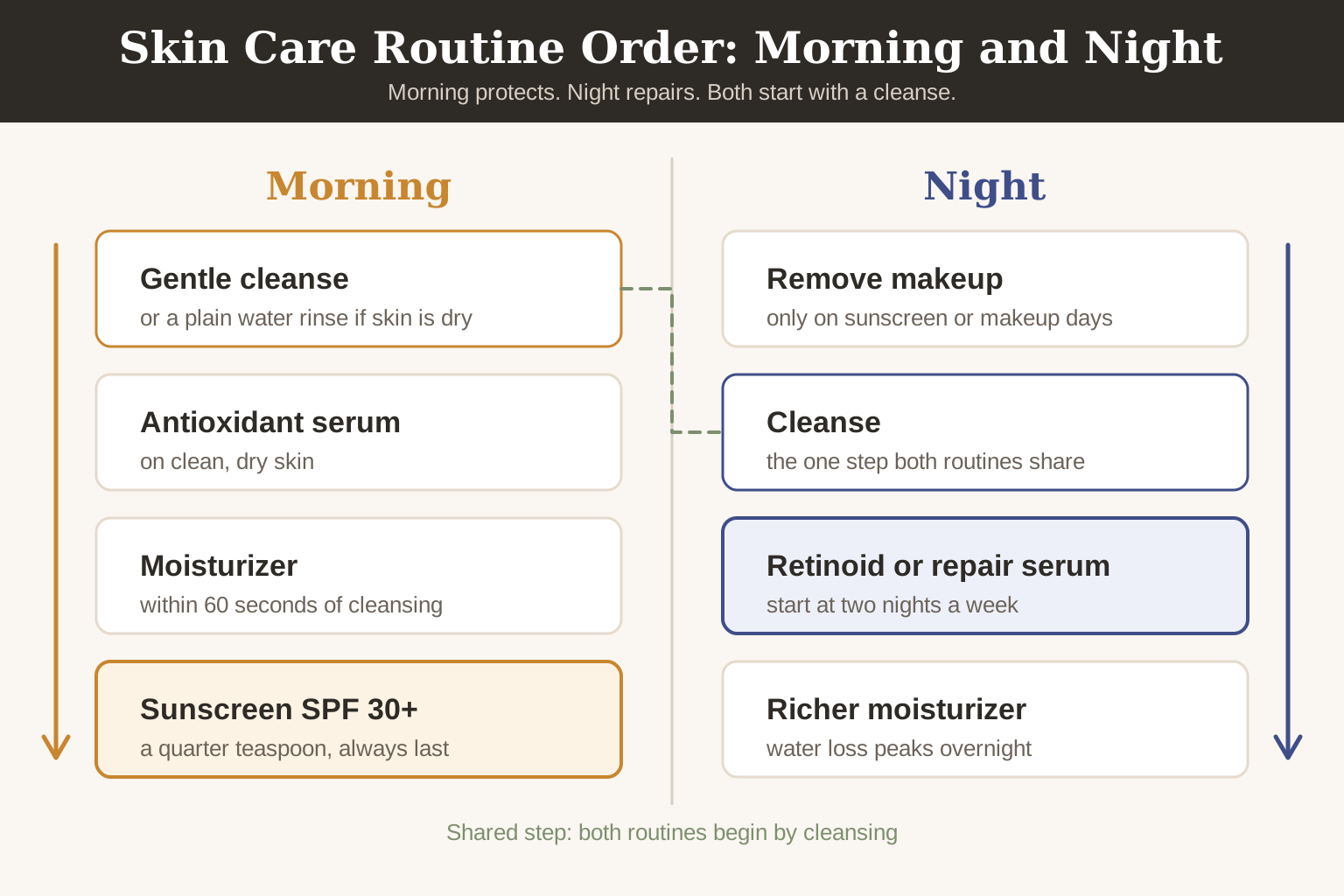
What face products should I use in daylight, and which at night?
Daylight products are defensive: antioxidant serum, moisturizer, sunscreen, and niacinamide if you use it. Retinoids, strong AHAs and BHAs, and benzoyl peroxide belong at night, partly because several degrade or increase photosensitivity, and partly because you gain nothing by using an irritant during the hours you most need an intact barrier.
Sunscreen dose is where most routines quietly fail
The face alone needs roughly a quarter teaspoon, or about 1.2 millilitres, to reach the SPF printed on the bottle. Most people apply between a fifth and a half of that, which turns an SPF 50 into something closer to an SPF 15 in practice. Dermatology guidance on dermatologist answers on how much sunscreen to use covers the reapplication interval outdoors, which is roughly every two hours and immediately after swimming or heavy sweating.
If your skin feels tight in the gap between cleansing and moisturizer, add one damp-skin layer such as a hydrating toner pressed on with your palms before the serum. It costs 15 seconds and it is the only optional morning step worth defending.
Your Night Routine: What Skin Repairs While You Sleep
Double cleansing earns its place on exactly two kinds of day: days you wore sunscreen, and days you wore makeup. An oil or balm dissolves the filters and pigments a water-based cleanser leaves behind. On a bare-face day it is one surfactant pass too many and the cost is a drier morning.
How to introduce a retinoid without peeling for a month
Start at two nights a week, use a pea-sized amount for the entire face, and buffer it by applying moisturizer first for the first four weeks. Build to alternate nights only once you have gone three weeks without flaking. A retinol serum is the usual entry point, and the honest cost is a purge window of four to six weeks in which texture can look worse before it looks better. Anyone pregnant, breastfeeding, or already on a prescription retinoid should skip it entirely.
Our full retinol serum guide: how to choose and use retinol covers strengths, encapsulation, and how to tell a purge from a genuine reaction.
Why the night half of the routine diverges
Skin care routine order morning and night stops overlapping after the cleanse, because transepidermal water loss and cell turnover both peak overnight. That makes the evening the efficient window for anything that accelerates turnover, and it makes a richer occlusive moisturizer more useful at 11pm than at 8am.
What not to layer on the same night
- A retinoid with an AHA or BHA — stacked irritation with no added benefit; alternate nights instead.
- Vitamin C with benzoyl peroxide — the peroxide oxidizes the ascorbic acid and you lose both.
- Two exfoliating acids in one evening — the barrier does not distinguish between brands.
Resist the urge to intervene physically. Guidance on why squeezing a pimple leaves a scar is blunt about the outcome: squeezing pushes contents deeper, raises inflammation, and converts a two-day blemish into a mark that can last months.
A skin beauty routine at night needs restraint around the eyes. The skin there is roughly a third the thickness of cheek skin, so use a rice-grain amount, tap it along the orbital bone rather than under the lash line, and expect months rather than weeks of change. Our guide to under eye black cream: how to fade dark circles explains which kinds of darkness respond to topicals and which do not.
Dermatologist Recommended Skin Care Products for Each Step
What skin care products should I use at each step?
The question of what skin care products should I use gets easier when each slot has to justify itself with one ingredient. The best skin care routine is simply the shortest one that covers all four jobs without leaving a gap. Dermatologist recommended skin care leans on a short list of evidenced actives: UV filters, retinoids, vitamin C, and niacinamide. Everything else is optional, pleasant, or unproven.

Some links below are affiliate links, which means we may earn a commission if you buy through them, at no extra cost to you.
Step 1 · Cleanse
How to pick skin care products from the label
How to pick skin care products comes down to reading the first five ingredients rather than the front of the bottle. Sodium lauryl sulfate high on a cleanser list predicts tightness; glycerin, ceramides or a mild amphoteric surfactant predicts comfort.
Step 2 · Treat
Antioxidant serums oxidize. If the liquid has turned deep amber, its useful life is over, which is why bottle size should match how fast you finish it.
Step 3 · Moisturize
Texture decides adherence. The best skincare routine on paper fails if a cream feels greasy enough that you start skipping it, so weigh feel as heavily as the ingredient list. Our best face moisturizer buying guide sorts formulas by finish as well as by active.
Step 4 · Protect
If you are asking what skin care should I use when you can only buy one thing this month, buy this one. Nothing else in the routine prevents as much cumulative photoaging per dollar, and mineral filters can leave a cast on deeper skin tones, which is a real cost worth testing in daylight before committing.
Step 5 · Exfoliate weekly
Frequency, not strength, is what usually goes wrong. Dermatology advice on how to safely exfoliate at home sets different ceilings by skin type, and if you prefer a physical option, our gentle face scrub guide: choosing a face exfoliator covers particle shape and pressure.
Even dermatologist recommended skin care products need patch testing, because tolerance is individual and no ingredient list predicts your reaction. Three nights on the jawline is the whole protocol.
A Sensitive Skin Care Regimen: The Same Steps, Fewer Irritants
A sensitive skin care regimen keeps all four jobs and subtracts irritants instead of steps. The first three things to remove are added fragrance (listed as parfum or fragrance), denatured alcohol high on the list, and essential oils, particularly citrus and lavender. Those three account for a large share of avoidable reactions.

A skincare routine for sensitive skin introduces one active at a time and gives it three full weeks before a verdict. Reactive skin needs a longer observation window than resilient skin, because delayed contact reactions can take ten days to appear.
A skin care routine for sensitive skin also swaps formats. Cream and milk cleansers replace high-foaming surfactants, mineral filters often replace chemical ones, and a short ingredient list beats a long one with a promising hero active. Repairing the barrier is a matter of ceramides, cholesterol and fatty acids, and the background on what a damaged skin barrier actually needs explains why occlusives are doing most of the work.
Some links below are affiliate links, which means we may earn a commission if you buy through them, at no extra cost to you.
Stinging is not a sign that something is working. A tingle that fades inside 60 seconds is tolerable; burning that persists past a minute, or that returns on the second application, means stop rather than push through. Sun protection is the step reactive skin most often abandons, so our notes on sunscreen for sensitive skin: what to buy and why are worth reading before you give up on SPF.
Know the boundary. When redness arrives with scaling, papules, or a burning that outlasts the product, that is a dermatology visit rather than a formulation problem. Seborrheic dermatitis, perioral dermatitis and rosacea all masquerade as sensitivity and none of them resolve with a gentler cleanser.
Building a Skin Regimen on a Budget: The Must Have Beauty Products
A complete skin regimen costs less than most people expect: a cleanser, a moisturizer and a sunscreen, replaced roughly every three to four months, is the entire non-negotiable list. Everything after that is an upgrade with diminishing returns.
What is the best skin regimen for the money?
What is the best skin regimen for the money is really a question about cost per use, not price per bottle. A 50 ml sunscreen used at a quarter teaspoon daily lasts about seven weeks; a 200 ml cleanser lasts about four months. Divide price by uses and the ranking often inverts.
The must have beauty products that earn a permanent slot
- Cleanser — used twice daily, the highest-frequency item you own.
- Moisturizer — the only product that directly reduces water loss.
- Broad-spectrum sunscreen — the single highest-return purchase in the routine.
Three categories can wait: eye cream duplicates a good moisturizer for most people, toner is optional by definition, and any device under a few hundred dollars rarely outperforms a consistent topical routine.
Paying more genuinely buys three things: sunscreen texture you will actually reapply, retinoid stability in opaque airless packaging, and reliably fragrance-free formulation. It does not reliably buy a better cleanser.
Watch shelf life. An opened vitamin C serum oxidizes within a few months, and a jar sunscreen loses filter integrity faster than a tube, so buy the size you will finish rather than the size with the better unit price.
Print the seven-day tracker if you want to see, in writing, whether you actually did the routine this week; it comes in an AM and PM version per skin type.
How to Establish a Skincare Routine You Will Actually Keep
Anchor the routine to a habit you already have twice a day. Sunscreen goes beside the coffee maker, the night steps go next to the toothbrush. Habits attach to existing cues far more reliably than to intentions, and a bottle you cannot see is a bottle you will skip.
How to have best skin a year from now
Over a year, three things move the needle in this order: sunscreen every day, one active introduced at a time and used long enough to work, and enough sleep to let overnight repair happen. Product count is nowhere on that list.
Track it for four weeks before you judge it, photograph your face in the same light on day 1 and day 28, and change one variable at a time. If two things change at once, you learn nothing from the result.
One routine tip a week, plus the products worth the shelf space.
Thanks — you're on the list.

