

What separates the best skincare products from everything else on the shelf
Three categories carry decades of controlled trial evidence: broad-spectrum sunscreen, prescription-strength and cosmetic retinoids, and moisturizers that pair a humectant with an occlusive. Everything else on a bathroom shelf is a refinement of those three. That is why the best skincare products almost always start there, and why a routine missing sunscreen cannot be rescued by a fourth serum.
Judge a formula, not a campaign. Four things separate good skin care products from expensive water: a stated active concentration on the carton, a pH suited to that active (glycolic acid works near 3.5, niacinamide near 6), opaque air-restricting packaging for anything that oxidizes, and a texture you will still tolerate in week six.
Concentration without tolerability is money burned. A 1% retinol you use twice before quitting does less than a 0.2% formula you use three nights a week for a year, which is why the best skincare choice for one reader is the wrong one for another with an identical concern.
Answering what are some good skincare products for you starts with a four-week test: one new product at a time, applied at the same time of day, photographed in the same light on the same day of the week. Add two products at once and you learn nothing about either. If you want a second opinion on what belongs in a minimum routine, dermatology researchers have published which skin care products dermatologists say you actually need, and the list is shorter than most shelves.
The best skin care outcome comes from consistency and daily sun avoidance far more than from any single bottle. No topical product reverses structural ageing, tightens a jawline, or permanently shrinks a pore. Products that promise it are selling the gap between what skin does and what a photograph suggests.

The must have skincare products: five slots that do the real work
A complete routine is five slots, not five shelves. Three are non-negotiable and two are conditional, and the difference between them is where most budgets go wrong.
The three must have skin care products
A cleanser that removes sunscreen without stripping, a moisturizer that holds water in, and a broad-spectrum SPF 30 or higher used every morning. That is the whole compulsory list. The reason the must have face products list stays short is mechanical: every additional step raises the chance of irritation and lowers the chance you finish the bottle before it expires.
Cleanser choice is driven by what you need to remove, not by how your skin feels afterwards — tightness is a warning, not a sign of cleanliness. If you are not sure which formula suits you, start with picking a face wash for your skin type before you shop. Moisturizer choice runs on the same logic, and moisturizer buying guide for dry and oily skin will narrow it faster than reading ingredient lists cold.
The two conditional slots
A treatment serum and a weekly exfoliant earn their place only once the first three are automatic. Recommended face products for a beginner cost less than the treatments people reach for first, because a basic cleanser and an SPF 30 do most of the visible work in the first six months.
Hydration is not the same slot as moisture
Dehydrated skin is short of water and looks dull and crepey by evening; dry skin is short of lipids and flakes. A humectant serum applied to damp skin addresses the first, while ceramides and occlusives address the second. Most people who already own must have skin products own one and not the other, and buying a second cream when you needed a humectant is the most common wasted purchase in skincare.
Affiliate disclosure: we may earn a commission on purchases made through the links below, at no extra cost to you.
The best face care products for you fill an empty slot rather than duplicate a full one. Audit what you already own, category by category, before adding anything — most shelves hold three treatments and no sunscreen.

Which must have skincare products apply to you depends entirely on skin type and sensitivity, and six questions settle that faster than another thousand words.
Best skincare brands: what actually separates leading skin care lines
A brand is a supply chain and a formulation philosophy, not a quality guarantee. Judge best skincare brands one product at a time: the same house that makes an excellent barrier cream often sells a mediocre vitamin C, because those two formulas solve unrelated problems.
Four signals distinguish leading skin care lines from good packaging:
- Published active concentrations, not "contains retinol" on a claims panel.
- Batch codes and a period-after-opening symbol printed on the unit, so you can date what you are using.
- In-house or contracted clinical testing with the participant count and trial length stated.
- A stable range that is not quietly reformulated every season under the same name.
Good skin care lines usually specialise. The best skin care line for barrier repair is rarely the strongest on pigment, and mixing lines across your five slots costs nothing in efficacy — there is no formulation reason for a cleanser and a sunscreen to share a logo. Anyone selling a full-range "system" is selling basket size.
Top skincare brands and top skin care lines dominate search results because of distribution and awards budgets, not because their actives outperform cheaper equivalents at the same percentage. A 10% niacinamide is a 10% niacinamide, whichever counter it sits on.
Recommended skin care brands worth following do two unglamorous things: they say what changed when they reformulate, and they list the full INCI in the same order on the website as on the carton. You can verify a claim before you buy, too — public databases publish ingredient safety ratings you can look up yourself for tens of thousands of formulas.
The limitation: none of these signals predict whether a product suits your face. They tell you the company is measurable, not that the formula is right for you.
Best of skin care products by skin type: five picks worth the shelf space
Five picks for five different readers: skin that stings after washing, skin that reads flat and uneven, skin showing its first fine lines, skin that feels tight within minutes, and skin that gets daily sun. Each pick names who it suits, the one thing it does better than its shelf-mates, and the tradeoff you accept in return. Top skin care products in a roundup should never all come from one shelf, because a routine is built across categories rather than stacked inside one. Choosing the best product skin needs is a matching problem, not a ranking problem, and good face products fail mostly by landing on the wrong face.
Affiliate disclosure: we may earn a commission on purchases made through the links below, at no extra cost to you.
Where a best facial product claim rests on a single small study, say so rather than borrowing the study's headline. For deeper comparisons on two of these shelves, see vitamin C serum picks dermatologists approve and choosing a daily face sunscreen with SPF.

High end cosmetic brands versus drugstore: what the extra money buys
Price tracks packaging, texture, fragrance and distribution far more closely than it tracks active concentration. High end cosmetic brands and mass-market lines frequently share contract manufacturers and raw-material suppliers, which is why two products with near-identical INCI lists can differ tenfold in price.
Premium genuinely wins in three places: stabilised vitamin C systems that survive past week six, encapsulated retinoids that deliver the same active with less irritation, and airless pumps that keep an oxygen-sensitive formula usable down to the last dose. Those are engineering costs, and you can measure them.
Premium does not win on sunscreen filters, ceramide moisturizers or basic cleansers. A ten-dollar mineral SPF and a hundred-dollar one carry the same filters at the same percentages and deliver the same protection when applied at the same quarter-teaspoon dose. You are paying for finish and scent.
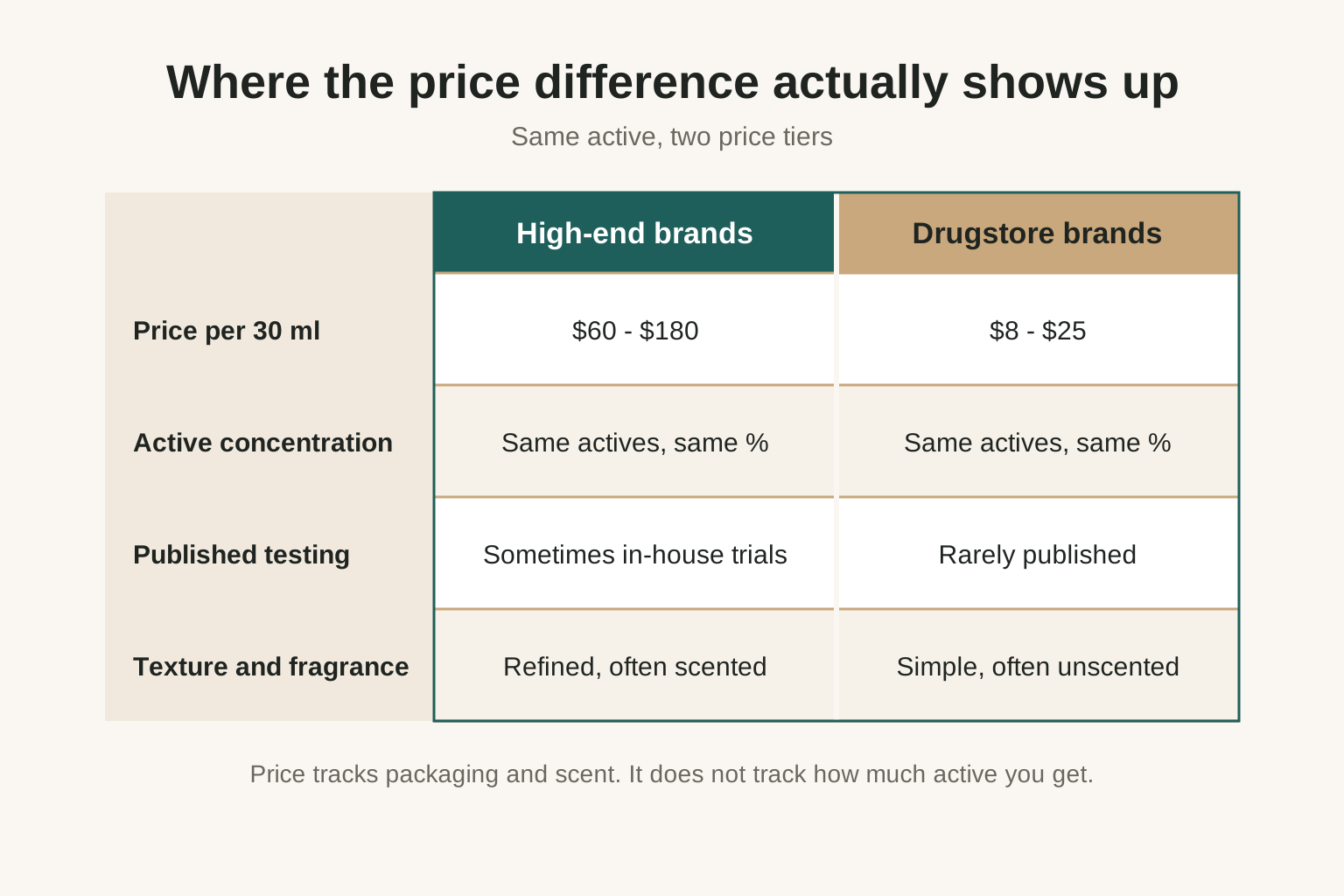
Any top 10 skin care lines list is a distribution ranking wearing a quality costume. Treat top brands skin care rankings as a shortlist to test against your own skin, not a verdict. The honest answer to what is the best skin care brand in the world is that no single house wins every category, and the same applies to what is a good skin care brand for your specific face: it depends on which of your five slots is empty.
The only tiebreaker that does not originate with the seller is outside evidence: independent meta-analyses of anti-ageing topicals pool randomised trials and report effect sizes for an active at a stated concentration — a number that does not change when the same molecule is decanted into heavier glass.
The order to apply them: layering rules that decide whether a product works
Thinnest to thickest, water before oil. Cleanse, tone, treat, moisturize, then sunscreen in the morning; the same order at night without the SPF. A serum applied over a cream sits on top of it and does close to nothing, which is the most common reason an expensive bottle "stops working".
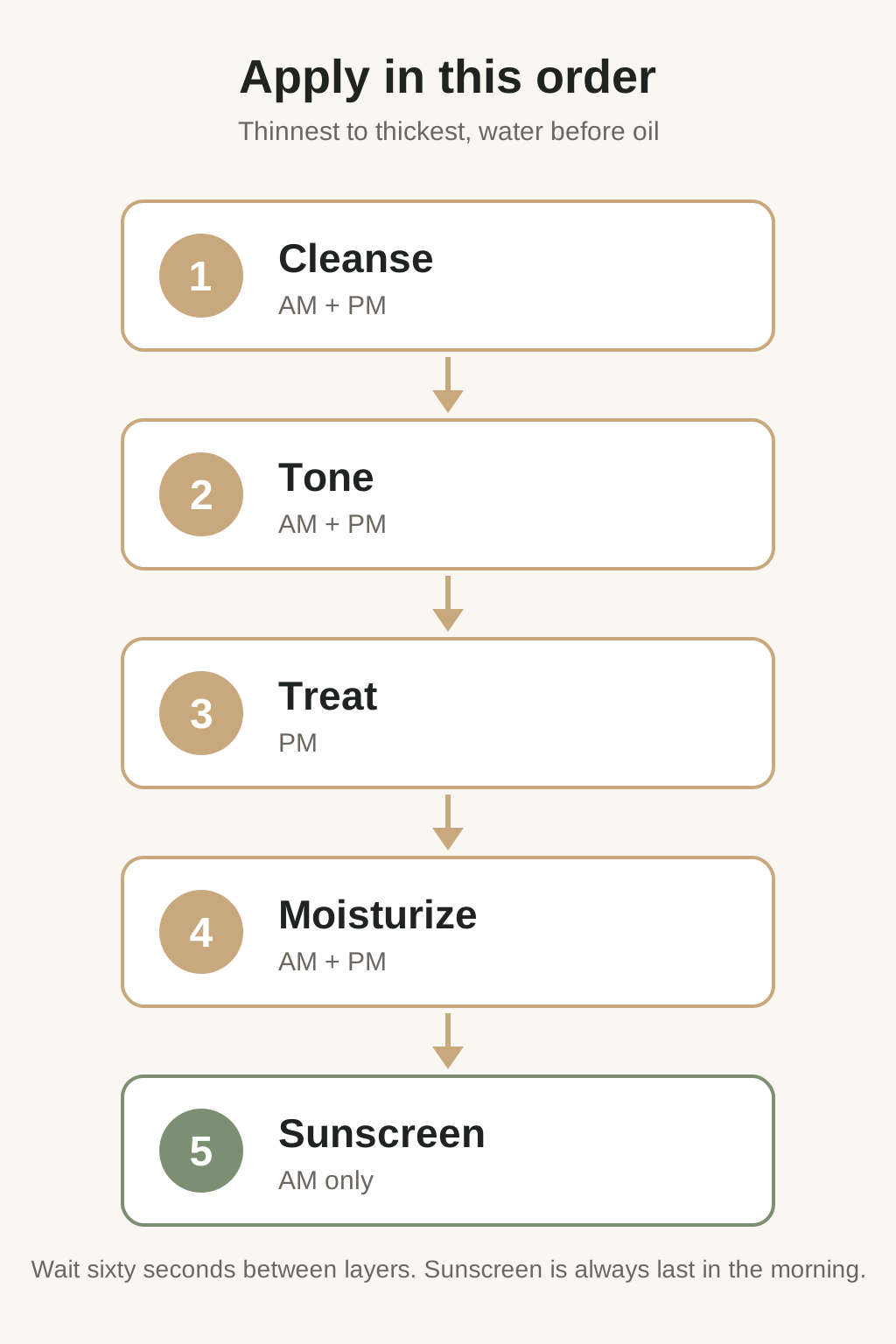
Wait times matter more than product count. Give each layer sixty seconds to absorb and pilling largely disappears; apply a humectant to a face still damp from rinsing and it pulls water in rather than out of the skin. The weekly exfoliant takes the treat slot on its own night, never alongside a retinoid — a leave-on chemical exfoliant once or twice a week is enough for congested texture, and more is where irritation starts.
Pairs to separate
- Retinoid and an AHA or BHA on the same night: alternate nights instead.
- High-percentage L-ascorbic acid and a strong acid together: split them across morning and evening.
- Benzoyl peroxide and a retinoid applied simultaneously: use one in the morning, one at night.
That short list answers what skincare products should i use together more usefully than any ranking. Everything else layers safely. If you are still building your first sequence, how to build a skin care routine in the right order covers the timing in detail, and retinol serum guide and how to use it explains how to ramp the hardest slot without a month of flaking.
Sunscreen is the last skincare step in the morning and the first thing people drop when a routine gets long — the strongest practical argument for keeping the whole thing to five slots.
Answer four questions and get an ordered five-step routine, with one product slot per step, that you can shop against.
Award winning skin care products: what a beauty award actually measures
Most award winning skin care products are selected by editor panels testing over a few weeks. That process measures texture, finish, scent and first impressions well. It does not measure twelve-week outcomes on pigment, lines or barrier function, because the trial ends before those outcomes exist.
Read the methodology line before the winner list and check four things: how many testers, how long they tested, whether the brand paid an entry fee to be considered, and whether testers knew which brand they were using. Awards that publish tester counts and trial length are worth several times more than awards that publish only a badge.
Used correctly, an award is a strong filter for cosmetic elegance — will this cream feel good enough that you keep using it — and a weak one for efficacy. Treat a badge as a reason to shortlist, then apply the same four-week test you would give any other purchase. The limitation is worth stating plainly: a product can win three awards and still be the wrong texture for your skin in February.
Common questions: what skincare products should i use, and what to skip
What are some good skincare products for a first routine?
A gentle cleanser, a ceramide moisturizer and a broad-spectrum SPF 30, bought in that order and used for a month before you add anything. Total cost can stay under forty dollars.
What is a good skin care brand for sensitive skin?
Any line that publishes a fragrance-free range and complete ingredient lists, introduced one product at a time with a five-day gap. Sensitivity is a reaction pattern, not a brand you can buy your way out of.
How long before I judge a product?
Four weeks for hydration and tolerance, twelve weeks for texture and pigment. Never judge on the first two days of stinging — and never keep using something that stings past day five.
What should I skip?
Multi-step routines sold as a boxed set, anything promising to shrink pores permanently, and adding a second active in the same week as the first. When budget is tight, sunscreen stays daily and everything else is negotiable.
One tested pick and one honest caveat, once a week, if that is useful to you.
One tested skincare pick and one honest caveat, every Thursday. No product dumps.
Thanks — you're on the list.

