

Best Sunscreen for Sensitive Skin: What to Buy and Why
What Sensitive Skin Actually Reacts To in Sunscreen
The stinging you feel ten seconds after application almost never comes from the SPF number. It comes from what surrounds the filter: added fragrance, denatured alcohol used to make a formula dry down fast, and older organic filters such as oxybenzone. A useful sunscreen for sensitive skin is judged on its inactive ingredient list first and its SPF second.
That distinction matters because irritation and allergy are different problems. Irritation is dose-dependent and shows up within minutes as heat, prickling or flushing. Allergic contact dermatitis is immune-driven, appears twelve to seventy-two hours later, and usually looks like a bumpy, itchy patch that maps exactly to where you applied. Knowing which one you have changes what you buy next.
For the underlying evidence, see this narrative review of UV filters and contact dermatitis risk, which reports that true allergic reactions to UV filters are far less common than the internet suggests.
Sun protection for sensitive skin has to cover more than UVB
UVB causes the burn, UVA drives the long-term damage, and visible light plus infrared heat triggers flushing in rosacea-prone and melasma-prone faces. That is why an SPF-only number is an incomplete answer: real sun protection for sensitive skin needs broad-spectrum coverage, and often an iron oxide tint for visible light.
How to read SPF honestly
SPF 30 filters roughly 97 percent of UVB. SPF 50 gets you to about 98 percent. The jump from 30 to 50 buys you about one percentage point, not double the protection, and reactive skin usually gains more from a shorter ingredient list than from a bigger number. Choose the spf for sensitive skin you will actually reapply.
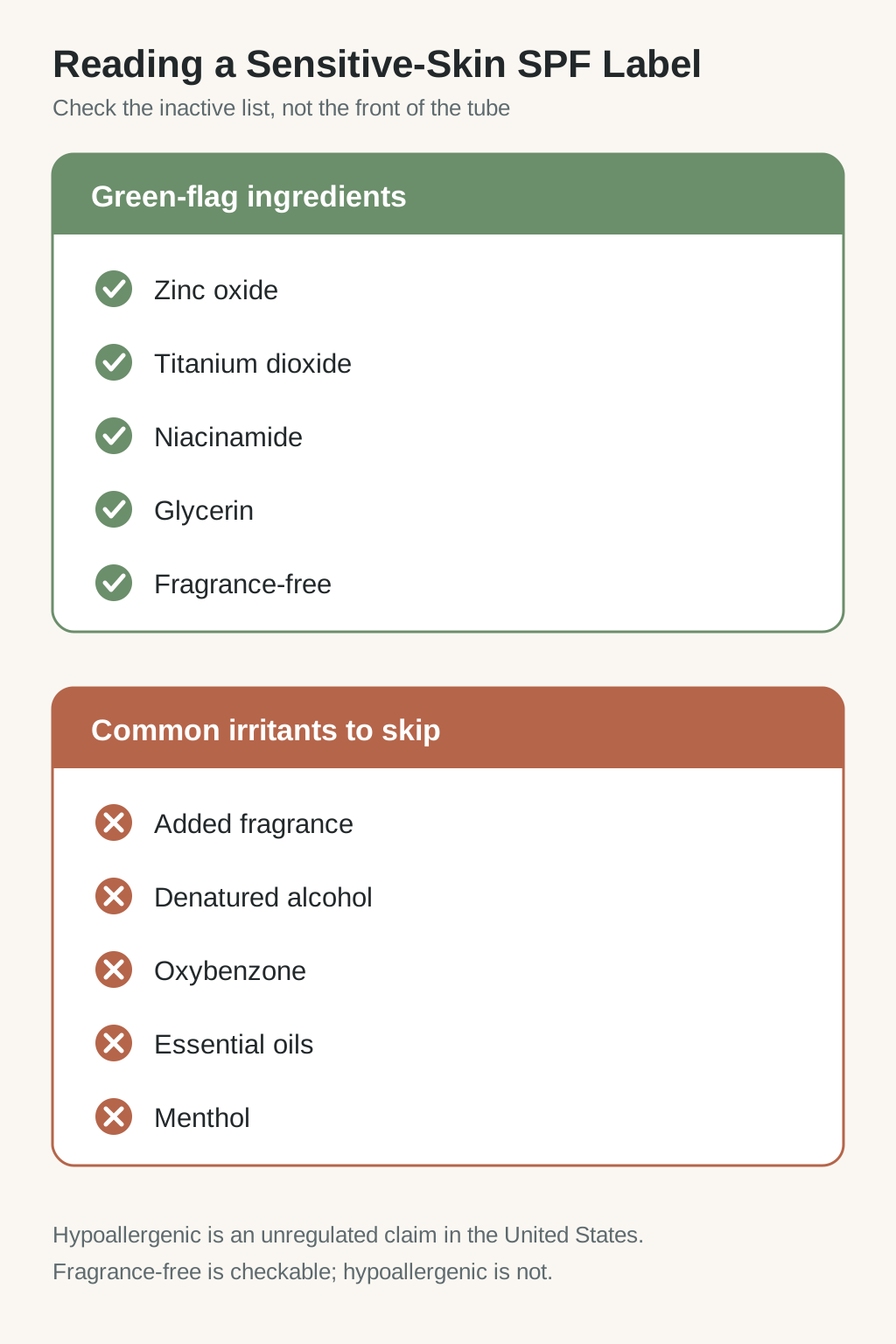
What separates a genuinely gentle sunscreen for sensitive skin from a marketing claim is boring and checkable: a short inactive list, no added fragrance, no essential oils, and no alcohol denat in the first five ingredients.
If you want the deeper version of the SPF math, read How to Choose SPF That Actually Protects.

Mineral vs Chemical Filters for Reactive Skin
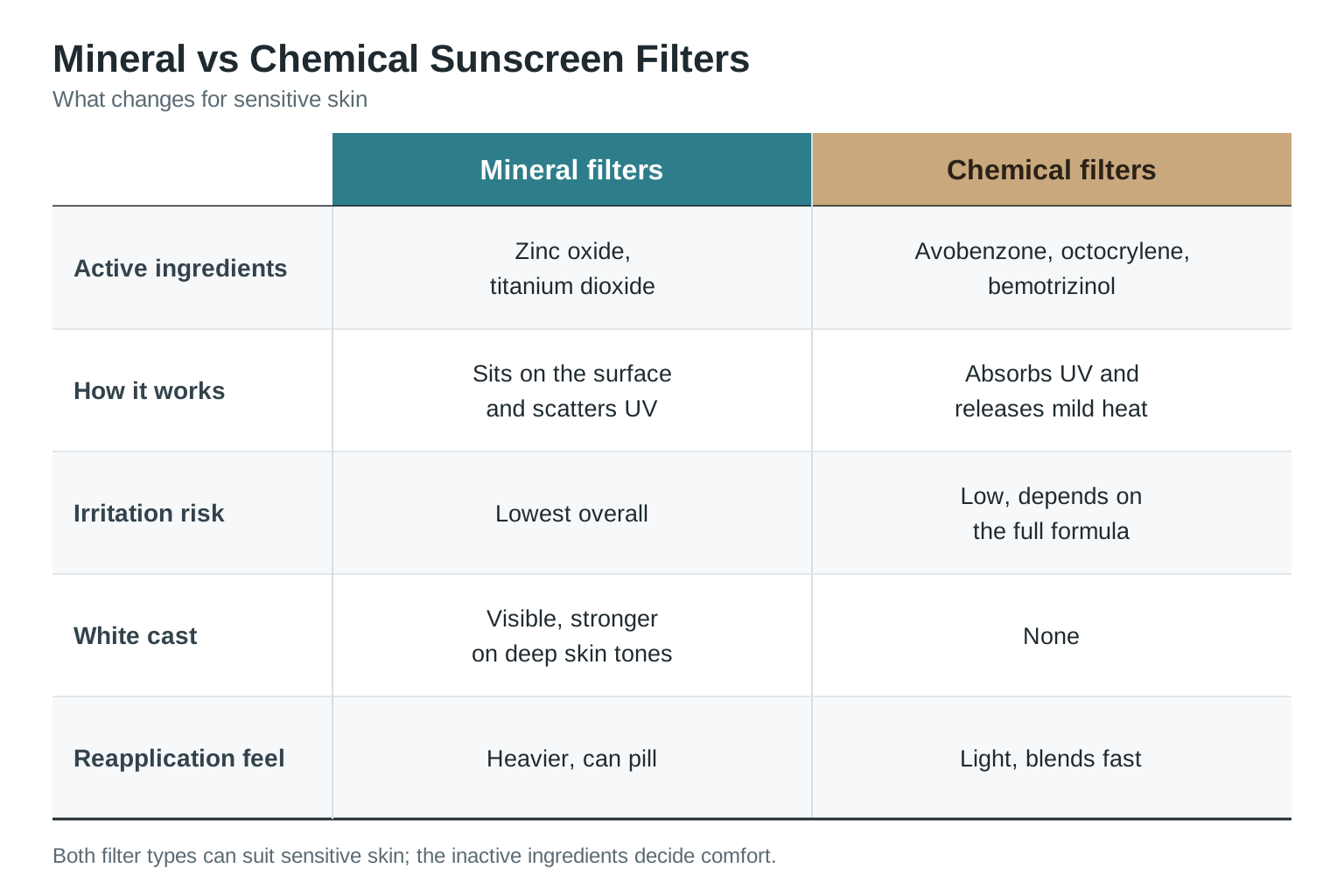
Mineral filters, zinc oxide and titanium dioxide, sit on the stratum corneum and scatter or absorb radiation at the surface. Organic filters, the ones marketed as chemical sunscreen for sensitive skin, absorb UV and release it as a small amount of heat. For a face that flushes at the first sign of warmth, that heat conversion is a real, if minor, drawback.
When the sting is not the filter
Plenty of people buy a mineral formula, still burn on contact, and conclude their skin is beyond help. Usually the emulsifier, the preservative system, or the solvent load is the culprit. A best sunblock cream for sensitive skin can fail on any of those three, which is why swapping brands within the same filter family often solves the problem.
The tradeoff nobody advertises
The lowest irritation risk comes packaged with the worst cosmetic experience. A high-zinc sensitive skin sunblock leaves a white or grey cast, sits heavier, and can pill under makeup. That is the honest price. If you have deeper skin and cannot accept a cast, an untinted mineral formula is not for you, and a hybrid or tinted option is the better trade.
Modern organic filters complicate the old advice. A clinical study of an organic filter sunscreen in sensitive skin found that a well-formulated organic filter cream improved sensitivity scores over eight weeks and produced no allergic reactions on patch testing.
So the practical question is not mineral versus chemical in the abstract. It is whether the best sunblock for sensitive skin for your face is fully mineral, a mineral-organic hybrid, or a newer organic blend built around filters like bemotrizinol. Test one variable at a time.
If you have already decided on minerals, go deeper with Best Mineral Sunscreen for Face.
Decoding Label Claims Before You Trust Them
Hypoallergenic sunscreen is not a regulated term in the United States. No agency defines it, no test is required, and no brand has to prove anything to print it. It signals intent, not evidence, and it is the single most over-trusted word on a sunscreen box.
What the claim does and does not promise
A hypoallergenic spf label usually means the brand excluded a list of common allergens and, at best, ran a repeat insult patch test on a few dozen volunteers. It does not mean the formula was screened against your specific allergens, and it does not cover irritant reactions at all. "Fragrance-free" is a more useful word, because it is checkable against the ingredient list.
Seals that carry more weight
Third-party marks beat a hypoallergenic sunscreen for sensitive skin claim printed by the brand itself. The National Eczema Association Seal of Acceptance and comparable dermatology-body recognition require a submitted ingredient review. They are not a guarantee, but they are a filter someone else applied.
For the baseline rules, the American Academy of Dermatology sunscreen FAQs recommend broad-spectrum coverage at SPF 30 or higher and point reactive skin toward titanium dioxide and zinc oxide.
Pick the best spf for sensitive skin from the Drug Facts panel rather than the front of the tube. It names every active filter and its percentage, and it states water resistance as 40 or 80 minutes. Anything claiming "sunblock", "waterproof" or "sweatproof" is using language US labeling rules do not allow.
Choosing Face Sunscreen for a Sensitive Complexion
Face formulas are engineered differently from body formulas. The best face sunscreen for sensitive skin runs thinner, uses fewer heavy occlusive oils, and is built to sit under moisturizer and makeup without pilling. Using a body lotion on your face is the fastest route to clogged pores and midday slip.
Texture decides whether you keep wearing it
A sensitive face sun cream in a fluid, milk or gel-cream texture spreads with less rubbing, and less rubbing means less mechanical redness. Thick creams need working in, and working in is friction. If you have ever finished applying sunscreen looking flushed, texture was probably the reason.
The eye area is where stinging starts
Migration into the eyes is the most common complaint with sun cream for face sensitive skin. Sticks and high-zinc balms migrate least because they do not liquefy with sweat as readily. Apply to the orbital bone rather than the lid margin, and give it two minutes to set before you blink hard.
Tint is a functional ingredient, not decoration
Iron oxides block visible light, which untinted mineral and organic filters largely miss. For anyone managing redness or melasma, a tinted sunscreen for sensitive face routine measurably outperforms a clear one. The cost is shade matching, and a mismatched tint looks worse than no tint at all.
More on shade and finish in our Tinted Sunscreen Buying Guide.
Layering without pilling
Pilling happens when a silicone-heavy sunblock for face for sensitive skin meets a gel moisturizer that has not fully absorbed. Wait sixty to ninety seconds between layers, press rather than rub, and keep the layer count to three: treatment, moisturizer, sunscreen.
How much you actually need
Adequate sunblock sensitive face coverage is roughly two finger-lengths for face and neck, or about a quarter teaspoon for the face alone. Most people apply a third of that and get a third of the labeled SPF. Reapply every two hours of real sun exposure.
Fitting it around makeup
Reapplication is where sun protection for sensitive face routines collapse. A mineral powder or a stick over makeup is imperfect but real; touching up with nothing is not. Powders deliver less than lab-tested amounts, so treat them as a top-up rather than your only layer.
Matching the formula to your skin type
What counts as the best face sun protection for sensitive skin changes by type: oily skin does better with a matte organic or hybrid fluid, dry skin with a cream containing glycerin and ceramides, and rosacea-prone skin with a tinted high-zinc formula that also calms visible redness.
Body Formulas That Cover Large Areas Without Stinging
Body sunscreen covers roughly ten times the surface area of a face, so every irritant in the formula arrives in ten times the dose. A good suntan lotion for sensitive skin therefore holds to the fragrance-free rule more strictly, not less, and skips the "tropical" scents most body SPFs are sold on.
Apply to dry skin, before you dress
A suntan lotion for sensitive skin goes on best fifteen minutes before exposure, on completely dry, unbroken skin. Applying over damp skin dilutes the film, and applying under clothing you immediately pull on creates friction that sets off prickling on already reactive limbs.

Swimming, sport and sweat
For water and sport, the best sun tan lotion for sensitive skin is one labeled 80-minute water resistant, reapplied immediately after towel-drying. Towel-drying removes more product than swimming does. Water resistance costs you finish: those formulas are tackier and heavier by design.
Pair it with a bland moisturizer
Body sun cream for sensitive skin performs better over a fragrance-free emollient applied ten minutes earlier. Hydrated skin spreads product more evenly and needs less rubbing. The tradeoff is time, and on a hot morning most people will not spend it.
For the emollient half of this routine, see Dry Skin Moisturizers Worth Buying.
Rosacea, Eczema and Post-Procedure Skin
During an active flare, the barrier is compromised and everything penetrates further than it should. Sunscreen for extremely sensitive skin in that window means pausing retinoids, acids and vitamin C entirely, and simplifying to one filter plus one emollient until the skin settles.
The zero-tolerance list
Rosacea, eczema and freshly lasered or micro-needled skin need sunscreen for hypersensitive skin with no added fragrance, no essential oils, no drying alcohol, and the shortest preservative system available. Formulas built around a single preservative and a handful of emollients are worth paying more for here.
When even mineral formulas burn
If a zinc formula still stings, the filter is rarely the problem. Check the alcohol content, the solvent load, and the film formers used to make the product water resistant. A sun cream for very sensitive skin with a simple cream base often succeeds where a "sport" version of the same brand fails.
Where sunscreen stops being the answer
Sun cream for extremely sensitive skin has a ceiling. Wide-brimmed hats, UPF 50 clothing, UV-filtering window film and simply moving your outdoor time before ten in the morning do work sunscreen cannot. The cost is planning and, for clothing, real money.
Exfoliation habits feed directly into reactivity — see Gentle Face Scrub and Exfoliator Guide.
Patch Testing, Applying and Removing Without Irritation
A three-day patch test is the cheapest diagnostic you own. Apply a pea-sized amount to the inner forearm and a second dab along the jawline, wait a full twenty-four hours, and check for redness, bumps or a persistent sting before you commit a full tube. It is also the only reliable way to confirm that the best sun protection for sensitive skin on paper is the best one for your face.
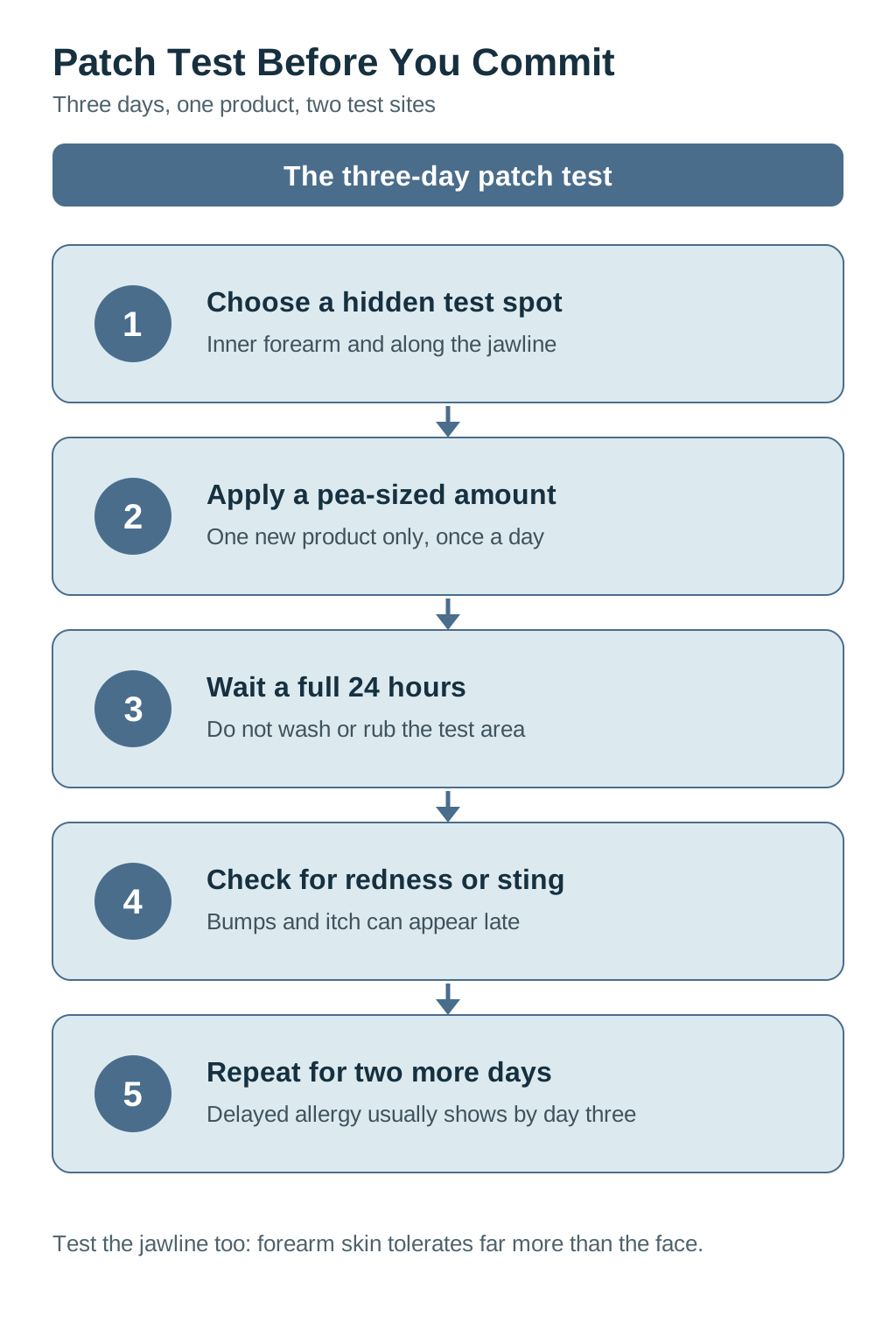
Two sites matter because forearm skin tolerates far more than facial skin does. A formula that passes on the arm and fails on the jaw is common, and testing only the arm is how people end up with a flare across the whole face.
Quantity, order and timing
Applying the labeled amount is what makes sun protection for sensitive skin work in practice: a quarter teaspoon for the face, reapplied every two hours outdoors, and after swimming or towel-drying regardless of the clock.
The CDC sun safety facts on reapplication and the UV Index are blunt about this: protect your skin whenever the UV Index reaches 3 or higher, and reapply after two hours in the sun.
Removing SPF without stripping the barrier
Water-resistant filters need a gentle cleanser, not a scrub. Use lukewarm water and a non-foaming, low-surfactant wash, one pass, sixty seconds. Scrubbing strips the barrier the sunscreen spent all day protecting, which is how a good SPF routine still ends in irritation.
Compare cleanser types in Face Wash Picks for Your Skin Type.
Mistakes to Avoid and Quick Answers
Most failures with the best sunscreen for sensitive skin are habits, not products.
- Under-applying. A third of the labeled amount gives you roughly a third of the protection.
- Skipping reapplication. No SPF number extends the two-hour window.
- Keeping expired tubes. Without a printed date, three years from purchase is the outer limit.
- Writing off cloudy days. UVA passes through cloud and window glass largely unchanged.
- Testing three new products at once. When something flares, you learn nothing.
Does SPF in makeup count?
Only if you apply the tested amount, which for foundation would be several times a normal layer. Treat it as a bonus over a dedicated sunscreen.
Do I need sunscreen indoors?
Near a window, yes. Standard glass blocks most UVB but transmits a large share of UVA, which drives pigmentation and photoaging.
Does a higher SPF irritate more?
Not inherently. Higher SPF often means a higher filter load and more solvent, so the formula matters more than the number.
Write an email capture offering one tested sun protection for sensitive skin tip a week, promising short notes on gentle formulas and no product spam.
Thanks — you're on the list.


