

Why Creases Form Around the Eyes, and What Skincare Can Change
Eyelid skin measures roughly 0.5 mm thick, about a fifth of the skin on your cheek, and it carries almost no oil glands. It loses water faster, buckles sooner, and shows every night of short sleep. That is the whole reason an eye cream for creases exists as a separate category rather than a marketing invention.
Two different marks get lumped together. A static crease sits in the skin while your face is at rest, the result of collagen loss and years of folding. An expression line only appears when you smile or squint. Topicals can soften the first and hydrate around the second, but no anti wrinkle eye cream erases crow's feet, because the muscle underneath keeps contracting either way.
Most people start hunting for products for eye wrinkles at a specific moment: the face moisturizer that used to keep the area smooth stops holding past midday, and concealer starts settling into lines by lunchtime.
Habits do more damage than the shelf suggests. Sleeping face-down on one side, squinting outdoors without sunglasses, and rubbing at seasonal allergies each contribute more to the eye cream for under eyes problem than the price of the jar you buy next.

What an Anti Aging Eye Cream Can and Cannot Do
There is a legal line running through this aisle. A cosmetic is allowed to change how skin looks; a product claiming to alter the skin's structure or function is, by definition, a drug and needs approval before sale. That is why the carton on an anti aging eye product says "reduces the appearance of fine lines" rather than "rebuilds collagen" — the wording is a regulatory choice, not a modest one. If you want the detail, regulators publish how regulators separate a cosmetic claim from a drug claim in plain language.
Two clocks run at once. Humectants pull water into the top layer and plump a shallow line within hours, which is why a new jar feels like it worked overnight. Collagen and elastin change on a scale of months, which is why even the most effective anti wrinkle eye cream needs a full 12 weeks before you can judge it fairly.
Be clear about the ceiling. A good eye cream for wrinkles will not fix under-eye hollowing, a shifted fat pad, true skin laxity, or pigment driven by allergy or genetics. Those are volume and medical problems, and they answer to fillers, lasers, or an antihistamine, not to a 15 ml pot.
Treat superlatives as noise. The phrase "best eye wrinkle cream on the market" outruns every published trial in the category. Claim words worth trusting name a specific active at a specific percentage; claim words worth ignoring are "clinically inspired," "instantly lifts," and "up to 90% of women agreed."
The Ingredients That Separate a Top Rated Eye Cream From a Basic Moisturizer
Retinol and retinaldehyde carry the strongest evidence behind any best anti aging eye cream. Trials on retinoids in the periorbital area report measurable change in line depth from roughly week four, building through week twelve, alongside a well-documented cost: flaking, stinging, and a fortnight of looking worse before better. A systematic review of topical tretinoin for photoaging covers the prescription end of the same family. If you want the full picture on strengths and schedules, read our Retinol Serum Guide: How to Use Retinol.
The supporting cast each does one narrow job. Peptides signal for firmness and take eight to twelve weeks. Niacinamide at 2–5% evens tone and steadies the barrier in four to eight. Caffeine constricts vessels and shifts fluid for a few hours, nothing more. Knowing which one you actually need stops you overpaying for an anti wrinkle eye cream that treats the wrong complaint.
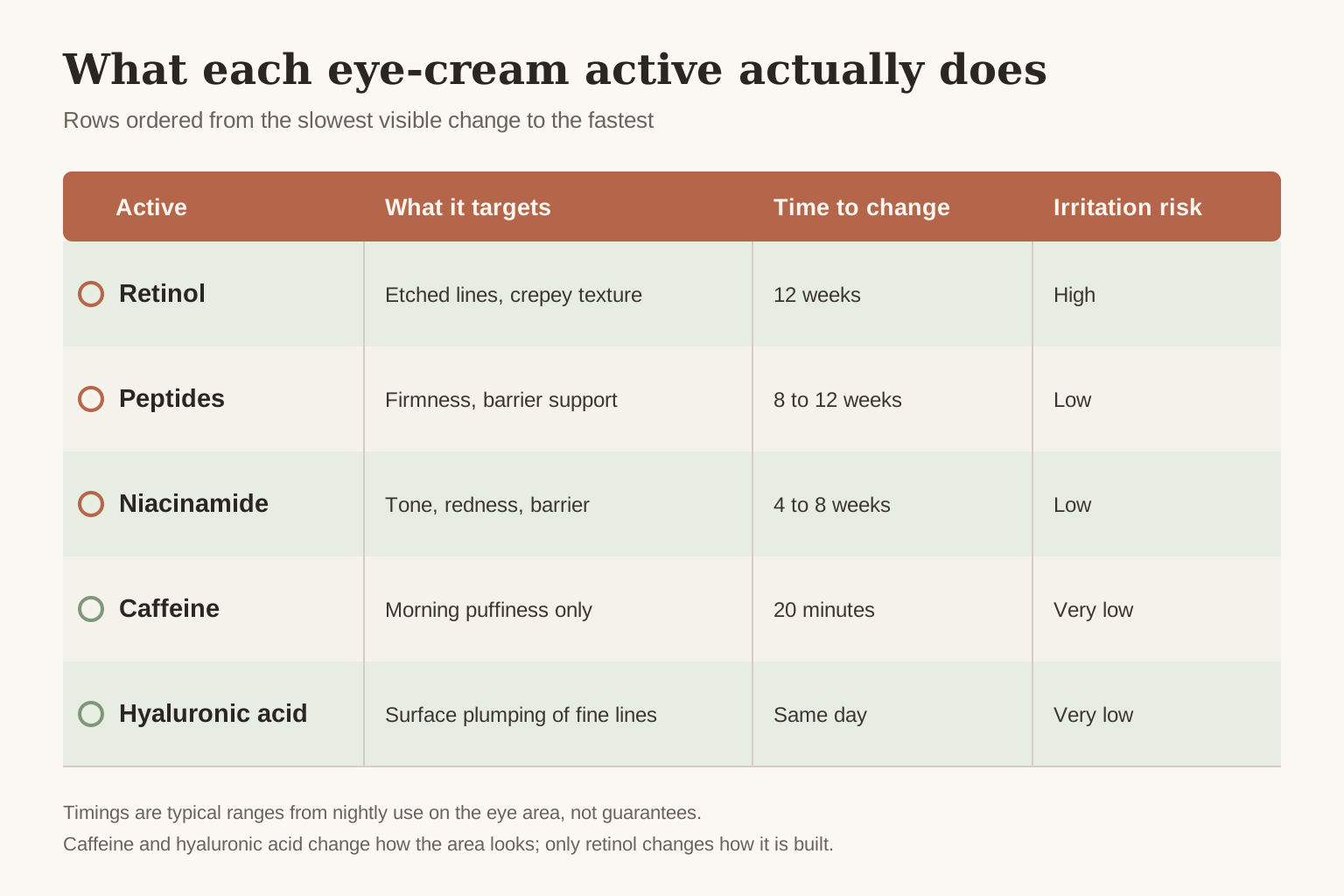
Hyaluronic acid, glycerin and ceramides deliver the same-day plumping that most best eye cream for fine lines reviews are actually describing. That effect is real and it is temporary; it resets every time the skin dries out.
What to check on the carton
A stated percentage, an opaque airless pump, and a short ingredient list are what separate a top rated anti wrinkle eye cream from a jar that oxidizes by week six. Retinol degrades in light and air, so a clear tub with a screw lid is a formulation decision working against you. Fragrance, denatured alcohol high in the list, and essential oils disqualify otherwise best anti wrinkle eye products for anyone with reactive eyelids.
Already running actives elsewhere on your face? Check what can share a night with retinol before you add a sixth product.
How to Choose the Best Eye Cream for Wrinkles by Age and Skin Type
In your thirties the job is prevention and barrier support: humectants, a light lipid, and daily SPF over the area. The best anti wrinkle eye cream for 40s shifts toward a low-strength retinol plus a heavier occlusive on top, because by then texture change is visible at rest, not only when you smile.
After menopause, skin lipid production drops sharply and water escapes faster. That is what makes the best eye cream for mature skin richer in ceramides, cholesterol and fatty acids rather than simply stronger in actives — a higher retinol percentage on dry, thinned skin buys irritation, not speed.

Texture is the deciding variable. Dry, oily and reactive skin need different bases even among top eye creams for mature skin, and the wrong texture is the single most common reason a jar gets abandoned half-full: too rich and it pills under concealer, too light and it has vanished by the time you reach the office.
Reading the label in thirty seconds
When what you actually typed into the search bar was "what is the best rated eye cream," the honest answer is a label check: is the active percentage stated, is the packaging opaque and airless, and where does fragrance sit in the list? Three yes answers beat any star rating.
If you already use a facial retinoid, fit a best eye cream for aging skin around it rather than on top of it — alternate nights, or let the facial retinoid drift close to the orbital bone and keep the eye product to hydration only. The same logic applies across the rest of your routine, covered in Face Cream for Aging Skin That Actually Works.
Not sure which camp you fall into? Six questions, two minutes, and you get your skin type plus the eye concern that should drive the pick.
Best Eye Cream for Creases: Picks by Concern
Angles rather than a ranking, because the top eye cream for wrinkles depends entirely on which complaint bothers you at 8 a.m. Read the "Best for" line first and ignore the rest.
Affiliate disclosure: we earn a commission on purchases made through the links below, at no extra cost to you.
Price, Value and the Top Anti Wrinkle Eye Creams Worth Paying For
Run the math per milliliter before the math on the brand. A 15 ml prestige jar at $90 and a 15 ml drugstore tube at $22 both hold about six months of twice-daily use at a grain of rice per application. That is $0.50 a day against $0.12 a day for the same volume.
What the extra money genuinely buys in a best anti wrinkle eye cream is stability, airless packaging, and cosmetic elegance — the texture that makes you use it every night rather than most nights. It does not reliably buy a higher active percentage. Several $100 formulas list retinol below the preservative.
A drugstore best cream for lines under eyes matches a luxury formula whenever both state the same active at the same strength in comparable packaging, which happens more often than the price gap suggests. Two situations break the tie: when the cheaper version comes in a clear jar that will oxidize the retinol, and when its base is so heavy or so fragranced that you stop reaching for it.
Watch the small print in the anti aging eye cream aisle. Auto-ship discounts that renew at full price, "refill" systems where the refill costs 80% of the original, and jar sizes that quietly drop from 15 ml to 12 ml between reformulations all inflate the real annual cost. The same value questions apply across your routine — see Face Moisturizer Buying Guide for Every Skin Type.
How to Apply Eye Cream So It Actually Works
Use a grain of rice for both eyes. That is the correct dose of a best cream for wrinkles around eyes; more does not absorb, it migrates into the eye and stings by 2 a.m. Dot it along the orbital bone — the ridge you can feel under the eye socket — not on the mobile lid, and let the product travel inward on its own as the skin warms.
Order matters. Eye cream goes on after a water-based serum and before any heavier facial moisturizer or facial oil, so nothing occlusive blocks it. If you are still working out the sequence, our guide on How to Build a Skin Care Routine in Order sets out the full order. On nights you use your treatment eye cream, apply it to dry skin, not damp — damp skin drives actives deeper and multiplies the sting.
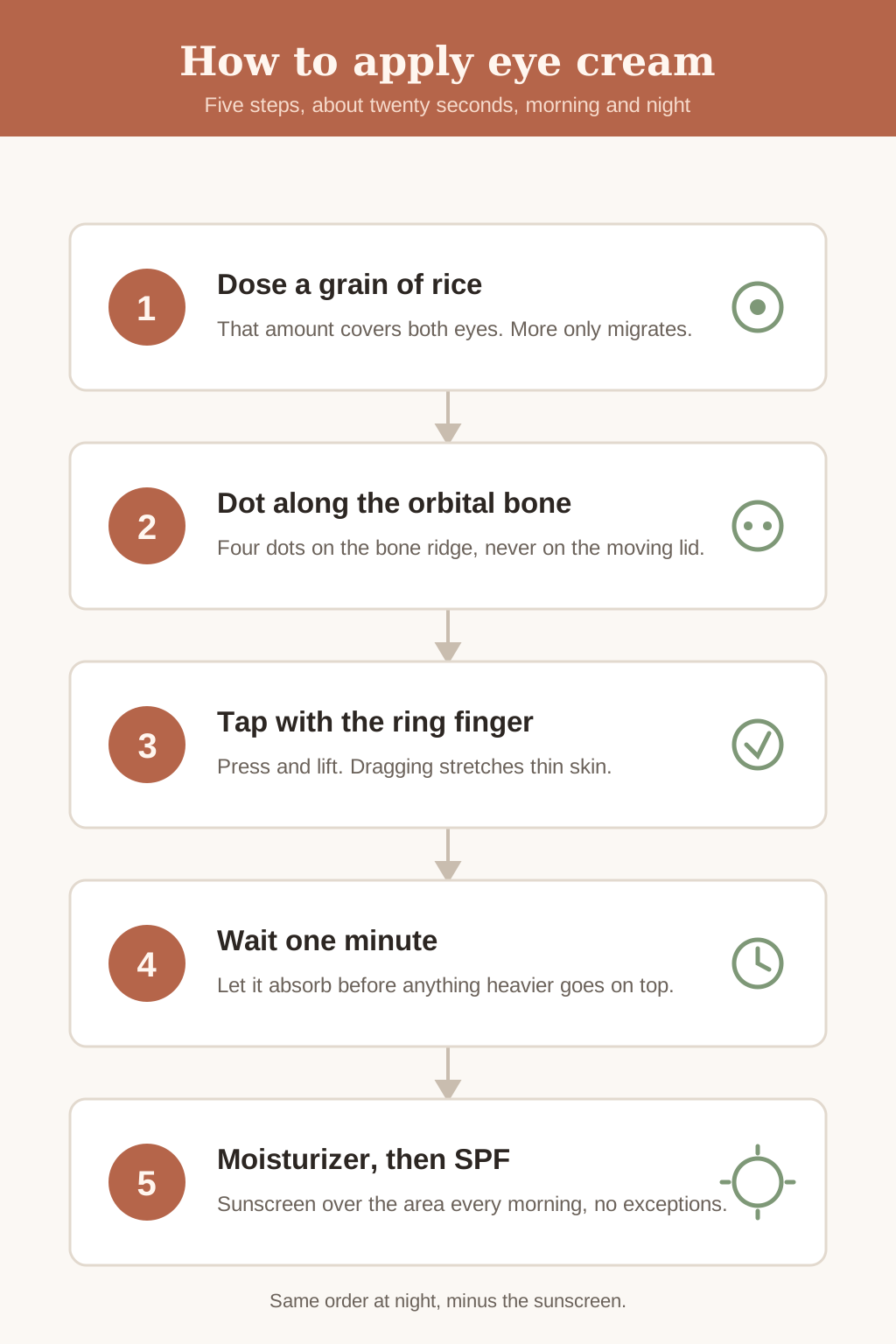
Tap with the ring finger, which presses with the least force of any finger, and keep the product about a centimeter clear of the lash line. Press and lift; dragging stretches skin that has no structural support to spring back.
Building tolerance without a bad fortnight
Ramp a retinol eye cream for under eye wrinkles over four weeks: two nights in week one, alternate nights in weeks two and three, nightly from week four only if the skin stays calm. Buffer with plain moisturizer underneath if it stings. The distinction between prescription retinoid versus over-the-counter retinol explains why prescription strengths need a slower ramp than this one.
Every morning, take sunscreen over the eye area. If a chemical filter stings, switch to a mineral stick you can press on without rubbing.
Print the tracker below if you want a record of which nights you actually applied it — that is the only way week 12 tells you anything.
Puffiness, Dark Circles and Under-Eye Bags Are Not Creases
Three different problems get treated as one. Fluid is swelling that peaks on waking and fades by mid-morning. Pigment is a brown or grey tint that stays constant in every light. Shadow is structural — a hollow casting a dark line, unchanged by any cream. Only the first two respond to an eye cream for under eyes at all.
Caffeine and a cold compress move morning swelling for two to four hours. That is the honest ceiling on top under eye bag creams, and it is worth knowing before you spend $60 expecting a permanent change. Pigment answers better to vitamin C, niacinamide and daily SPF over months.
Stop buying products for eye wrinkles and see a dermatologist if swelling appears suddenly on one side, if the area itches or scales, or if the darkness is clearly a hollow rather than a tint. Our guide to Choosing a Circle Eye Cream for Dark Circles covers the pigment case in detail.
In the meantime, a peach-toned concealer neutralizes blue-grey better than a skin-tone one, and sunglasses stop the squinting that deepens the crease you are treating.
A Realistic 12-Week Timeline for Results
Weeks 1 to 2 are hydration only. The surface plumping makes a good eye cream for wrinkles feel like it worked overnight, and it will vanish within a day of stopping. Nothing structural has happened yet.
Weeks 4 to 6 are where dermatology bodies say most anti-aging products first show anything measurable — the AAD's own guidance on how long anti-aging products take to show results puts the floor at six weeks and sometimes three months. This is also the window where retinol flaking peaks and most people quit.

Week 12 is the earliest point a most effective anti wrinkle eye cream shows a change in line depth rather than in how the skin feels. Judge it there, not before.
Photograph the same eye, in the same window light, at the same time of day, every two weeks. Memory is a terrible instrument for judging an anti aging eye product, and the daily protection that decides the outcome is covered in Best Face Sunscreen and SPF Moisturizer Picks.
Mistakes, Myths and Questions About Eye Cream for Creases
The expensive mistake is running a best anti aging eye cream while skipping sunscreen. UV degrades collagen faster than retinol rebuilds it, so you spend twelve weeks and a fair amount of money to stand still.
Does eye cream have to be separate from face moisturizer?
Usually not. A fragrance-free facial moisturizer applied to the orbital bone does the hydration job. Two cases justify a separate product: when your face cream contains an acid or a strong retinoid that is too aggressive for eyelid skin, and when you want an active — caffeine, encapsulated retinol — dosed specifically for the area.
Do fridge storage and jade rollers change anything?
Cold constricts vessels, so both genuinely reduce morning puffiness for an hour or two. Neither changes a crease, and neither improves how well the formula works. Refrigeration does help retinol stay stable if your bathroom runs warm.
So what is the best rated eye cream?
There is no single answer worth trusting, and any article that gives you one is guessing on your behalf. Match the pick to the complaint: retinol for etched lines, ceramides for dryness, caffeine for morning fluid, vitamin C for pigment. Then give it twelve weeks before you decide.
One short note a week on what actually works around the eyes, and a flag when a formula quietly changes.
One eye-area tip a week, and an honest note when a formula changes.
Thanks — you're on the list.


