

What a Gentle Face Exfoliator Actually Does
Your skin replaces its outer layer on a schedule that slows with age: roughly every 28 days in your twenties, closer to 40 days or more by your fifties. A face exfoliator shortens that lag by removing dead corneocytes that have overstayed, which is why texture looks softer and makeup sits flatter within about two weeks of consistent use.
The label phrase "exfoliating exfoliant" tells you nothing. What matters is the agent doing the work and its strength: rounded grains at a low percentage of the formula, or an acid at a stated concentration and pH. If a jar names neither, you are buying a promise rather than a mechanism.

The scrub gentle face principle fits in one line: enough polish to lift flakes, never enough friction to leave skin stinging when water hits it. Dermatologists describe the safe version as about 30 seconds of light circular motion followed by a lukewarm rinse, and the American Academy of Dermatology's guidance on exfoliating safely at home sets the same ceiling on pressure and duration.
Be clear about the limits. A gentle exfoliator smooths surface roughness, fades the dull grey cast of built-up dead cells and helps serums absorb faster. It will not erase deep static wrinkles, resolve cystic acne, or permanently shrink pore diameter, because pore size is largely structural. Anything sold on those three claims is overselling what removing a few micrometres of dead tissue can do. The honest ceiling is a smoother surface and better product absorption, which is worth having but is not a treatment.
Physical Scrubs vs Acids: Which Exfoliating Method Fits
Mechanical polish and acid chemistry solve the same problem on different clocks. A scrub sweeps away flakes that were already loose, so the result is visible the moment you towel off. An acid weakens the bonds holding corneocytes together, so the change accumulates over three to four weeks and keeps going as long as you keep using it.
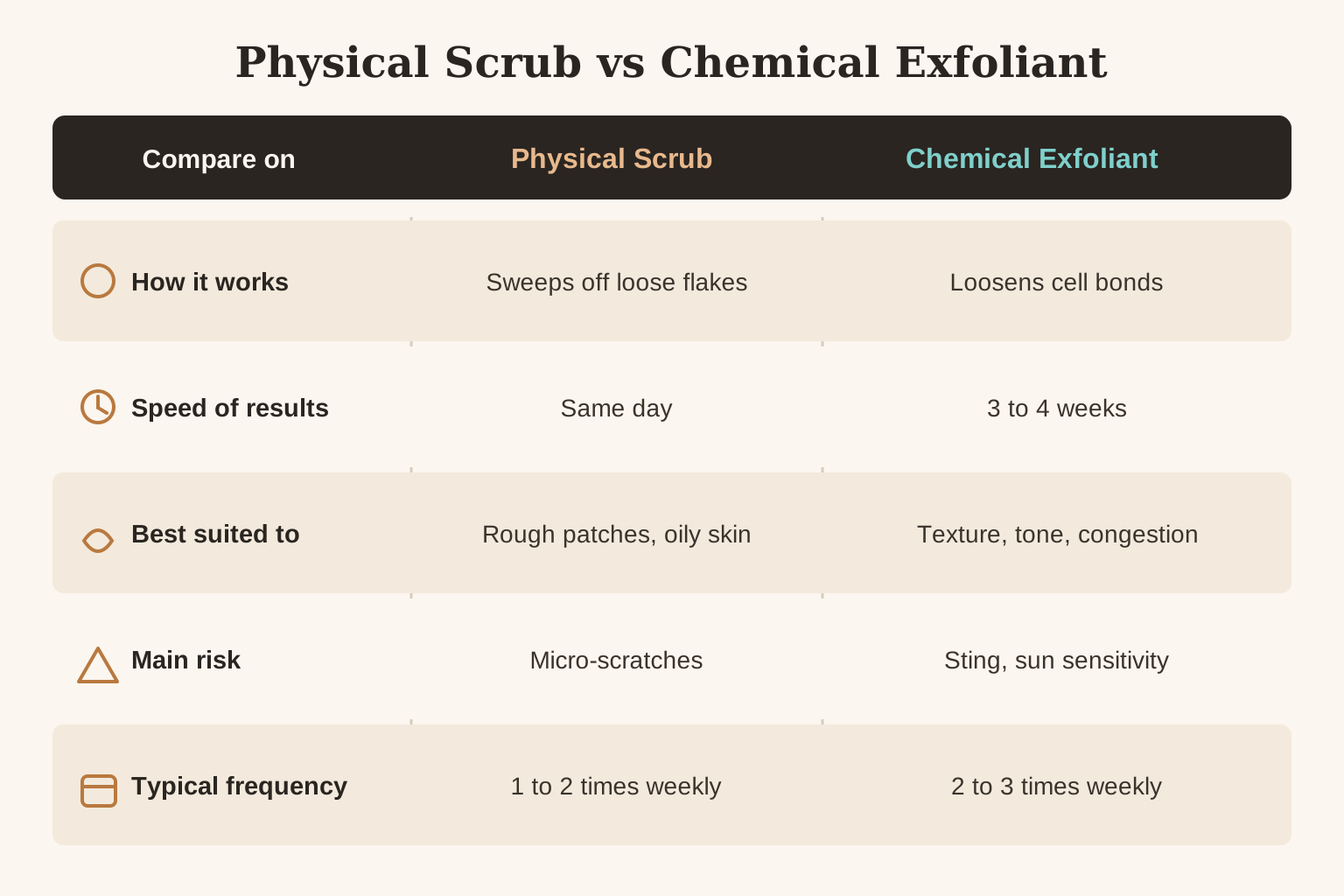
Judge the best chemical exfoliant by three numbers, not by the front label: which acid, what percentage, and at what pH. Glycolic acid has the smallest molecule of the common alpha hydroxy acids and penetrates fastest, which is exactly why it stings dry skin. Lactic acid at the same percentage works more slowly and holds water while it does. peer-reviewed research on how alpha hydroxy acid concentration changes the outcome makes the tradeoff explicit: low concentrations behave very differently from high ones, and pH and free-acid content decide as much as the number on the box.
Salicylic acid sits in its own category because it is oil-soluble and travels down into the follicle instead of staying on the surface. a clinical review of salicylic acid as a peeling agent describes it as breaking cell junctions rather than dissolving keratin, and puts everyday cosmetic use at roughly 0.5 to 2 percent, far below the 20 to 30 percent used for in-office peels.
An exfoliating scrub for face routines still earns its place in three situations: rough patches you need gone before makeup that morning, flaky skin after a cold snap, and skin that reacts to every acid you have tried. The cost is control, since pressure varies every time you use it.
Grit is not one material. Rounded jojoba beads and finely milled sugar roll across the surface. Crushed shell, stone fragments and coarse seeds have fractured edges that score skin, and that microscopic scratching is what turns a scrub into a week of redness. If you cannot feel individual particles when you rub a pea-sized amount between two fingers, the grind is fine enough for facial skin.
The Best Exfoliator for Face Care, by Skin Type
Skin type decides the method before it decides the product. Buying the highly rated option for someone else's skin is the most common way people end up with a barrier that stings under tap water.
Sensitive skin
An exfoliator for sensitive skin should be fragrance-free, low in free acid, and used no more than twice a week. The best exfoliator for sensitive face is usually a polyhydroxy acid such as gluconolactone: its larger molecule penetrates more slowly, which trades speed for tolerance. If you want visible change in a week, this is not the route for you.
Dry and flaking skin
An exfoliator for dry face has to hydrate while it resurfaces, or it trades flakes for tightness. The best face exfoliator for dry skin leans on lactic acid in a humectant base, and the best face scrub for dry skin uses a cream carrier so the grains stay suspended and never drag. Pair either with a moisturizer that actually holds; our guide to Dry Skin Moisturizers: How to Pick One That Works covers what to layer on afterward.

Oily and congested skin
Surface grit cannot reach a blocked follicle; it only reddens the skin above it. Salicylic acid dissolves into sebum and works inside the pore, which is why it clears blackheads that scrubbing merely inflames. The tradeoff is dryness at the edges of the T-zone if you use it daily, so most oily skin does better at three nights a week than seven. Oily skin is also the type most likely to over-scrub, because the immediate matte finish feels like progress.
Combination skin
Zone the routine instead of buying two products. Acid on the T-zone twice a week, nothing on the cheeks, and one shared moisturizer. That costs you a minute of attention per application and saves you a second purchase.
Shortlists of top rated face exfoliators are a starting point, not a verdict. A 4.6-star average tells you how a formula performed across thousands of unrelated skin types; the ingredient list tells you how it will perform on yours. Read the reviews written by people who named a skin type matching your own, and ignore the rest of the average entirely.
Exfoliating Cleanser or Standalone Facial Exfoliator
An exfoliating cleanser has 30 to 60 seconds of contact with your skin before it goes down the drain. That short window caps how much any acid inside can accomplish, which makes it the safer starting point and also the weaker one.

A standalone facial exfoliator earns its place when texture is your main complaint rather than a passing rough patch. A leave-on acid keeps working for hours instead of seconds, and that duration is the whole reason it outperforms a rinse-off product on stubborn roughness. It also gives you far more room to overdo it.
What separates a good exfoliating cleanser from a stripping one is the surfactant system first and the exfoliating agent second. A sulfate-heavy base will leave skin tight no matter how mild the acid it carries, and Cleveland Clinic on exfoliating without triggering irritation makes the same point about matching intensity to tolerance rather than chasing a stronger formula.
Choose the best exfoliating cleanser for face use rather than repurposing a body wash. Facial skin is roughly a third as thick as skin on your back and carries far more sebaceous glands, so a formula calibrated for shoulders will overshoot on cheeks. The same logic applies in reverse: a facial formula on your legs is an expensive way to under-treat them.
- Wash-off route: lower risk, slower results, one step in your routine.
- Leave-on route: faster results, higher irritation risk, an extra product to buy and remember.
The practical test is simple. The best exfoliating cleanser is the one you can use three nights a week with no sting, no tightness and no flaking on night four. Anything that fails that test is too strong for you regardless of how it is reviewed.
An exfoliating face wash suits mornings when skin feels congested rather than dry. The best exfoliating face wash rinses clean and leaves skin comfortable, not squeaky, because that squeak is the sound of a stripped barrier. If your cleanser is the problem rather than your exfoliant, start with How to Choose the Best Face Wash for Your Skin Type.
How to Use a Face Scrub Without Wrecking Your Barrier
Order of operations matters more than the product. Cleanse first so the scrub works on skin instead of on the day's sunscreen and sebum, apply to damp skin so the grains glide, and keep total contact under 60 seconds.
- Cleanse with a plain non-foaming wash and leave skin damp.
- Apply a pea-sized amount and work in light circles with fingertips only for about 30 seconds.
- Rinse with lukewarm water, never hot, and press dry rather than rubbing.
- Apply a humectant serum while skin is still damp, then a moisturizer on top.
- Wear sunscreen the following morning without exception.
The pressure test is the part most people fail. Fingertips only, no washcloth stacked on top of a scrub, and no cleansing brush in the same session. Two mechanical tools at once is how a two-minute step becomes a two-week recovery. If you find yourself pressing harder to feel the grains working, the product is too mild and the answer is a different formula, not more force.
Water evaporating off freshly exfoliated skin leaves it tighter than before you started, so the serum goes on within a minute of the rinse, not after you have brushed your teeth. Sunscreen the next morning is not optional either: acid exfoliation can raise sun sensitivity for up to a week after you stop using the product, which is the reasoning behind the American Academy of Dermatology's guidance on exfoliating safely at home. If you dislike a white cast, the Complete Buying Guide to Tinted Sunscreen for Face covers formulas that disappear on more skin tones.
Recommended exfoliating facial scrub habits come down to timing: two nights a week, never on the same night as a retinoid, and never within a week of waxing, threading or starting a new prescription active. Waxing already removes surface cells; adding a scrub on top of it is how people end up with raw patches along the upper lip.
How Often to Exfoliate: A Realistic Weekly Schedule
Frequency is the dial most people turn too far. Sensitive skin does well at once a week, dry skin at once or twice, normal skin at two to three, combination skin at twice a week on the T-zone only, and oily skin at up to three.
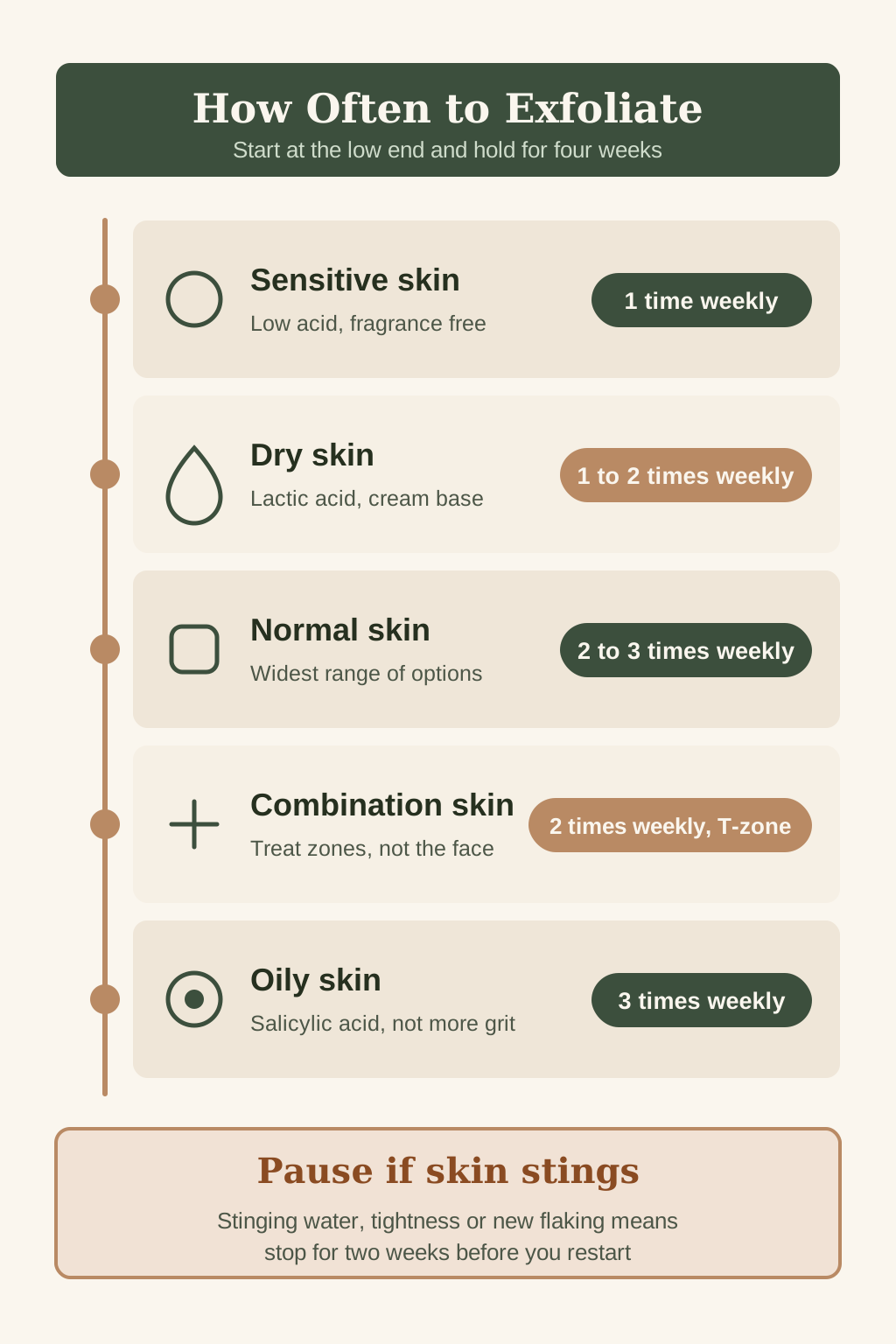
A skin smoothing exfoliator stacks badly with other actives. Retinoids, benzoyl peroxide and low-pH vitamin C all work on the same tissue, and layering them the same night multiplies irritation without multiplying results. Alternate nights instead, and keep at least one night a week completely active-free. A workable pattern for most people is acid on Monday and Thursday, retinoid on Tuesday and Friday, and nothing but moisturizer on the remaining nights.
Give any new schedule a full 28-day turnover cycle before you judge it, and change one variable at a time. If you swap product, frequency and moisturizer in the same week, a reaction tells you nothing about its cause.
Build a gentle exfoliant for face use around the weeks your barrier is already under stress: long flights, cold dry weather, or the first month of a new prescription. Those are the weeks to halve your frequency rather than push through, and the difference is measurable: skin that is already losing water faster than usual has less margin for a second stressor. A hydrating mask can fill the gap; see 7 Best Face Masks for Glowing Skin, Dermatologist-Backed for options that add moisture instead of more resurfacing.
Over-Exfoliation Signs, Recovery, and Shopping Traps
Over-exfoliated skin rarely looks damaged at first. It looks good, then it stops. Catch it by the early signals: water that stings on contact, a waxy shine with no oil behind it, tightness by mid-afternoon, sudden reaction to a fragrance you tolerated last month, and small breakouts along the jaw.

The recovery protocol is deliberately boring. Stop every acid and scrub for 10 to 14 days, switch to a non-foaming cleanser, and layer a ceramide-rich cream morning and night before you reintroduce anything. Cleveland Clinic on exfoliating without triggering irritation is worth reading before you restart, because the reintroduction is where most people repeat the mistake.
Shopping is where the damage usually starts. Lists of best face scrub products are often ordered by discount depth or affiliate payout rather than by formula, and the ranking changes the week a retailer runs a promotion. A list that reshuffles every sale season is tracking margin, not performance.
Roundups of best face scrubs and best rated exfoliator badges rarely disclose how long testing ran, across how many skin types, or whether irritation was tracked at all. A three-day trial on four people is not a tolerance study, and nothing on the page will tell you which it was. When a roundup does publish its method, that transparency is worth more than the ranking it produced.
The phrase best clean exfoliator describes an ingredient exclusion policy, not a gentleness rating. A fragrance-free synthetic formula is frequently kinder to reactive skin than a botanical one built on essential oils and fruit acids. If brightness rather than texture is what you are after, an antioxidant serum does more; see Best Vitamin C Serum for Face: Dermatologist-Approved Picks.
Face Scrub Questions Readers Ask Most
Scrub or acid for blackheads on the nose?
Acid. A blackhead is oxidised sebum inside the follicle, and grit cannot reach below the surface. Physical polishing reddens the surrounding skin and leaves the plug in place; salicylic acid dissolves into the oil and clears it over two to three weeks. Expect maintenance rather than a cure, since sebum keeps arriving.
Can you use the best face scrub for face care every day?
Rarely, and never on a night you also apply a retinoid. Daily grit removes cells faster than your skin can replace them, and the cost shows up as sensitivity two to three weeks later rather than immediately.
Does the best facial exfoliator have to cost more than $30?
No. Price tracks packaging, fragrance and marketing more than it tracks active concentration. What does track with price is formulation quality around the active: buffering, humectants and a stable pH. A $12 lactic acid at 5 percent can outperform a $60 one at the same strength in a harsh base.
What should a beginner try first?
Start with a rinse-off product once a week for a month. Best exfoliating face scrub choices for beginners are cream-based with rounded particles; skip anything with crushed shell, and skip at-home peel kits entirely. If you have active acne, rosacea or melasma, a dermatologist should set the plan instead, because exfoliating inflamed or pigment-prone skin without supervision reliably makes both conditions worse.
Write a short email capture offering a four-week skin texture course delivered one lesson per week: week one sets a baseline routine, week two introduces a single exfoliating step, week three adds sun protection habits, week four troubleshoots reactions. Promise no more than one email a week and name what the reader will be able to judge by the end.
Thanks — you're on the list.
